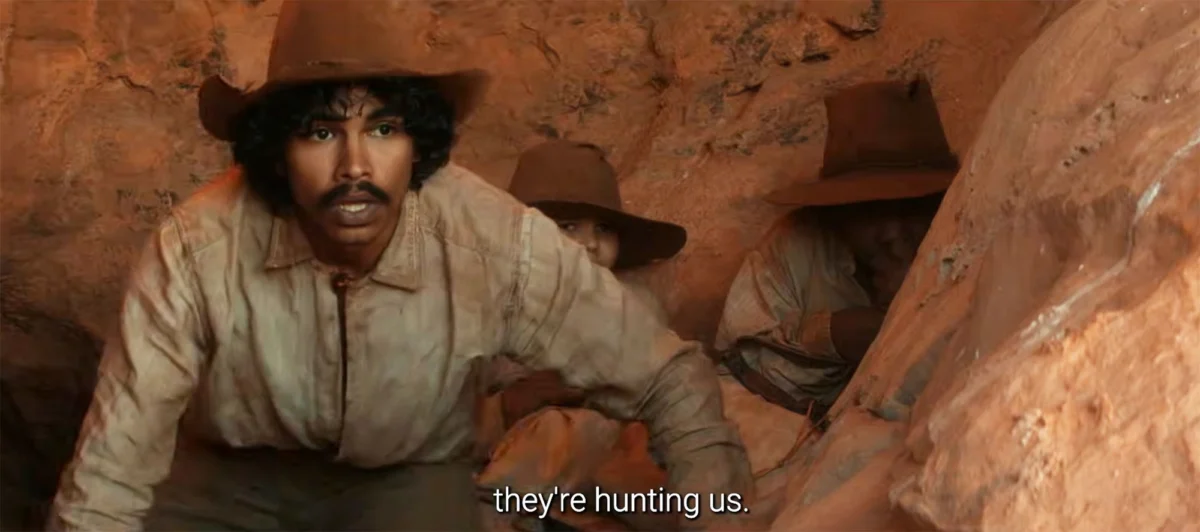
Paradise City has officially unveiled the first promotional trailer for Wolfram, the highly anticipated survival thriller from acclaimed Aboriginal Australian filmmaker Warwick Thornton. Set against the harsh, unforgiving backdrop of the Central Australian desert during the 1930s, the film serves as a thematic expansion of the universe established in Thornton’s 2017 award-winning masterpiece, Sweet Country. Following its world premiere at the 76th Berlin International Film Festival (Berlinale) in February 2026, the film has garnered significant critical attention for its unflinching portrayal of colonial cruelty and the indomitable spirit of Indigenous youth. While a definitive wide-release date has yet to be finalized, the trailer offers a visceral glimpse into a narrative that blends the conventions of the "Outback Western" with a poignant historical drama centered on survival, reckoning, and the search for home.
A Narrative Expansion of the Sweet Country Universe
Wolfram is positioned not as a direct sequel, but as a companion piece to Sweet Country, sharing the same atmospheric "universe" and historical DNA. This connection suggests a continuation of Thornton’s exploration of the "Frontier Wars" and the systemic injustices faced by First Nations people during the early 20th century. Where Sweet Country focused on an aging farmhand on the run, Wolfram shifts the perspective to the youngest victims of the colonial machine.
The story follows three Indigenous children who are forced into child labor within the tungsten (wolfram) mines of the Northern Territory. The arrival of two "swaggering outlaws" in a remote mining town serves as the catalyst for a wave of violence and exploitation, prompting two siblings and a companion to break free from their white masters. Their escape initiates a perilous trek across the "sweet country" of the central desert, a landscape that is simultaneously beautiful and lethal. This journey is framed as both a physical escape from bondage and a spiritual quest for identity and familial reconnection.
Production Pedigree and Creative Leadership
The film marks the latest collaboration between Warwick Thornton and the production powerhouse Bunya Productions, led by producers Greer Simpkin and David Jowsey. Thornton, who serves as both director and often his own cinematographer, has built a career defined by visually arresting storytelling and a commitment to Indigenous perspectives. His previous works, including the Camera d’Or-winning Samson & Delilah (2009) and the spiritual drama The New Boy (2023), have established him as a leading voice in global cinema.

The screenplay for Wolfram was penned by Steven McGregor and David Tranter, the writing duo behind Sweet Country. Their involvement ensures a narrative consistency in tone and historical accuracy. Tranter’s own family history in the Northern Territory has frequently informed the authenticity of the dialogue and the specificities of the Central Australian setting. The production team utilized locations in the MacDonnell Ranges and the surrounding desert regions to capture the authentic scale of the outback, emphasizing the isolation that defines the characters’ struggle.
Historical Context: The Wolfram Mines and 1930s Labor
The title of the film refers to wolframite, the primary ore of tungsten. During the 1930s, wolfram mining was a significant industry in Central Australia, particularly as global tensions rose ahead of World War II, increasing the demand for tungsten in armaments and industrial tools. Historically, these mines were often located in extremely remote areas where the rule of law was secondary to the whims of mine managers and pastoralists.
In the context of 1930s Australia, Indigenous labor was frequently exploited under the "Aboriginals Protection and Restriction of the Sale of Opium Act" and similar state-based legislations. These laws often allowed for the forced removal of children from their families to work as domestic servants or laborers, a practice that formed part of the broader Stolen Generations history. Wolfram highlights a specific facet of this exploitation—the use of children in the dangerous and unregulated mining sector. By setting the film in this era, Thornton and his writers provide a stark look at the economic foundations of the colonial frontier, built on the backs of disenfranchised Indigenous populations.
Critical Reception and Festival Performance
The debut of Wolfram at Berlinale 2026 was met with a largely positive response from international critics. Reviewers have praised the film for its "strong emotional investment," particularly regarding the performances of its young leads. Early critiques suggest that Thornton has successfully avoided the tropes of the "victim narrative," instead focusing on the resilience and agency of the children as they navigate the desert.
The Hollywood Reporter and Variety both noted the film’s visual language, describing the cinematography as "dusty and immersive," a hallmark of Thornton’s style. Critics pointed out that while the film contains moments of intense cruelty, it is balanced by a sense of wonder and connection to the land. The "mostly positive" reviews at Berlinale have set the stage for a robust festival run, with the film expected to appear at the Sydney Film Festival and the Toronto International Film Festival (TIFF) later this year.

Cast Profiles and Performance Highlights
The ensemble cast is led by Deborah Mailman, one of Australia’s most celebrated actresses. Mailman, a veteran of both stage and screen (The Sapphires, Total Control), brings a grounded gravitas to the film. While her specific role has been kept under wraps in the early promotional materials, she is believed to play a maternal or protective figure who represents the enduring strength of the Indigenous community amidst the chaos of the mining frontier.
The film also features:
- Erroll Shand: Known for his gritty roles in Australasian dramas, Shand portrays one of the primary antagonists, embodying the "outlaw" element that disrupts the mining town.
- Thomas M. Wright: An actor and director (The Stranger) known for his intense character work, Wright’s presence adds to the film’s dramatic weight.
- Joe Bird and Ferdinand Hoang: Both actors round out a diverse cast that reflects the multicultural reality of the 1930s outback, which included European settlers, Indigenous Australians, and Asian migrants involved in trade and mining.
The standout performances, however, are reportedly from the young actors playing the siblings. Thornton has a documented history of eliciting powerful, naturalistic performances from non-professional or first-time Indigenous actors, a tradition that appears to continue in Wolfram.
The Evolution of Indigenous Australian Cinema
Wolfram represents a significant moment in the continued evolution of Indigenous filmmaking in Australia. For decades, stories of the outback were told through a colonial lens, often relegating Indigenous characters to the periphery. Thornton’s work, alongside other filmmakers under the Bunya Productions banner, has shifted this paradigm, placing First Nations experiences at the center of the "Western" genre.
Industry analysts suggest that Wolfram will contribute to the ongoing global interest in "First Nations Cinema," a movement that prioritizes Indigenous sovereignty over narrative and visual representation. By utilizing the "Outback Western" format, Thornton reaches a broad international audience while delivering a sophisticated critique of historical labor practices and the enduring impact of colonization on the Australian landscape.

Technical Specifications and Visual Style
The trailer showcases Thornton’s signature use of natural light and wide-angle lenses to capture the vastness of the Australian interior. The color palette is dominated by ochres, deep reds, and the harsh white light of the midday sun, creating a sensory experience that emphasizes the heat and thirst central to a survival thriller. The sound design, hinted at in the promo, utilizes the silence of the desert punctuated by the industrial clatter of the mines, heightening the tension between the natural world and the encroaching colonial industry.
Distribution and Future Outlook
As of late March 2026, a specific theatrical release date for Wolfram has not been announced. Following the trailer’s release on YouTube, Paradise City and its distribution partners are expected to gauge audience interest and finalize a rollout strategy that likely includes a limited theatrical release in Australia followed by international streaming or boutique cinema distribution.
Given the success of Thornton’s previous films on the awards circuit, Wolfram is anticipated to be a strong contender for the AACTA Awards (Australian Academy of Cinema and Television Arts) and may see further recognition in the 2027 awards season. For now, the film stands as a testament to the power of Indigenous storytelling and a reminder of the complex, often painful histories embedded in the Australian soil.
The film’s journey from the mines of the 1930s to the international screens of 2026 reflects a broader cultural reckoning. As the trailer concludes with the haunting question, "You gentlemen looking for adventure?", it serves as a provocative invitation for the audience to witness a side of Australian history that is as much about the endurance of love and family as it is about the struggle for survival.