The peculiar and enduring legacy of The Shaggs, a band whose existence was shaped by familial prophecy and whose music defied conventional understanding, is being re-examined in the new documentary film, "We Are The Shaggs." This exploration delves into the lives of sisters Dorothy, Betty, and Helen Wiggin, whose journey from a secluded upbringing in Fremont, New Hampshire, to becoming an unlikely touchstone for avant-garde music is as astonishing as it is poignant. Their story, steeped in the fervent belief of their father, Austin Wiggin Jr., in a palm reader’s pronouncements, offers a unique lens through which to view parental ambition, artistic expression, and the subjective nature of musical appreciation.
A Father’s Faith and a Family’s Fate
The genesis of The Shaggs can be traced back to Austin Wiggin Jr.’s childhood, when his mother’s palm reading foretold a future filled with specific, almost mythical, events. These included having two sons she wouldn’t live to see, marrying a strawberry blonde, and her daughters forming a popular band. By 1965, with the first two prophecies having materialized, Austin Jr. became convinced that the third was destined to unfold. This conviction led him to withdraw his daughters – Dorothy, Betty, and Helen – from school, dedicating their lives to the pursuit of musical superstardom.
The sisters’ lives were subsequently orchestrated by their father’s unwavering vision. A rigorous daily regimen was imposed, encompassing mail-order homework, calisthenics, and relentless band practice under his watchful eye. The sisters, whether they embraced it or not, became "The Shaggs," their identities intrinsically tied to this musical endeavor. Their world became remarkably insular, with excursions outside their home primarily limited to church, essential shopping, and a weekly performance every Saturday at the Fremont town hall. For five years, they played to an audience of their peers, a generation they were largely isolated from, creating a profound sense of detachment from the typical experiences of adolescence.
Betty Wiggin, now 75, reflects on this period with a quiet sadness. "We missed out on a lot," she stated. "I grieve that a little bit. When you hear people talk about high school – ‘You know how it was in gym class,’ this and that – well, I have no idea, you know?" The role of their mother, Dot, in this arrangement was one of passive support. According to Betty, "She supported what our father wanted and went along with it." Dot herself added, "She never really said how she felt," suggesting a potential internal conflict or a resignation to her husband’s fervent beliefs.

The Birth of an Unconventional Sound
The Shaggs’ musical output, particularly their sole studio album, "Philosophy of the World" (1969), became a source of both bewilderment and adoration. Characterized by what many describe as an "accidentally avant-garde" style, the band seemed to operate outside the established norms of music theory. Their perceived naivety regarding fundamental elements like tuning and timing resulted in a sound that was profoundly divisive. Critics were often perplexed, with one commentator from LA Weekly’s Album Network describing the album as "a mass murder, too horrible to comprehend, yet it really happened." In stark contrast, Kurt Cobain, the late frontman of Nirvana, famously included "Philosophy of the World" among his five favorite albums, highlighting the band’s enduring impact on influential artists.
Dorothy "Dot" Wiggin, 77, the lead guitarist, vocalist, and songwriter, acknowledges the unique qualities of their music. "We thought our guitars were in tune," she recalled, a statement that underscores their unvarnished approach to music-making. "I guess that shows how much we didn’t know." This lack of conventional musical training, however, is precisely what many admirers find so compelling.
Musician Jesse Krakow, a self-proclaimed "Shaggs purist" who has meticulously covered their work and collaborated with Dot, offers a more analytical perspective. "The Shaggs were doing all these crazy, interlocking things – they just weren’t conscious of it," he explains. Krakow points to complex musical structures within their songs, such as hemiola, decrescendos, and ritardandos, noting their resemblance to the experimental compositions of artists like Frank Zappa, Captain Beefheart, and Igor Stravinsky. This suggests that while unintentional, The Shaggs’ music possessed a sophisticated, albeit unstudied, complexity that resonated with experimental musical minds.
A Prophecy Fulfilled, A Band Dissolved
The final prophecy of Austin Wiggin Jr.’s mother – that his daughters’ band would achieve popularity – did indeed come to pass, though not in the manner typically associated with musical fame. The sisters’ journey took an abrupt turn in 1975 with the death of their father from a heart attack. This event marked the immediate dissolution of The Shaggs. Helen, who had previously been ostracized by Austin for marrying without his approval, even at the age of 28, had already left the group. Betty notes Helen’s quiet defiance: "She was stronger than most of us because she’s the one that went out and found a boyfriend."
Despite the immense influence their father had on their musical careers, the sisters express a measured sense of respect. "We feel respectful towards our dad for what he did for our music," Betty stated. However, it was only after his passing that a sense of liberation emerged. "We could do whatever we wanted, then," Betty explained. "We couldn’t do much before."
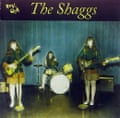
Following their father’s death, the sisters largely distanced themselves from their musical past. They sold most of their equipment and seldom spoke of their time in the band. Their lives shifted towards more conventional paths, taking on roles in cleaning and caretaker work, and establishing families of their own. "It was different, trying to start without music, because we didn’t have that many friends or anything," Betty reflected. "But we did go to work and meet people, got married."
An Unlikely Re-emergence and Enduring Influence
The trajectory of The Shaggs’ fame took a series of unexpected turns, largely fueled by chance encounters and a growing appreciation for their unique sound. A significant turning point occurred when Frank Zappa, a towering figure in experimental music, encountered their album. After 900 of the 1,000 copies of "Philosophy of the World" went missing shortly after its release, a copy found its way to Boston’s WBCN radio station. During a session, Zappa reportedly took the album with him and famously declared The Shaggs to be "better than the Beatles," a statement that, while hyperbolic, drew considerable attention to the band.
Their music remained largely in obscurity until the early 1980s, when Keith Spring, a saxophonist for the blues-rock group NRBQ, discovered "Philosophy of the World" at the record store where he worked. He introduced the album to his bandmates, who, in 1980, reissued it on their Red Rooster label. This re-release reignited interest in The Shaggs and led to the subsequent release of "Shaggs’ Own Thing," a compilation of unreleased recordings. This collection notably featured "Painful Memories," the only song written by Betty. "I was thinking I’d like to write another one but nothing ever came to my mind," Betty shared, hinting at the singular creative spark that produced that poignant track.
The critical reception of "Philosophy of the World" continued to evolve. The Village Voice hailed it as a "landmark of rock ‘n’ roll history," while Rolling Stone offered a more colorful assessment: "the most stunningly awful wonderful record." The band’s influence even extended to other artists. Patti Smith, a punk icon, was so enamored with The Shaggs that she and bandmate Lenny Kaye adopted the nicknames "Foot Foot" and "My Pal Foot Foot," respectively, in tribute to Dot’s cat. Krakow further notes that Kurt Cobain’s guitar solo on Nirvana’s hit "Come As You Are" shares a melodic resonance with The Shaggs’ approach, specifically in its repetition of the song’s core melody. "It’s amazing, really," Betty mused about the band’s unexpected legion of admirers. "We wouldn’t have expected that – we didn’t even know until years later."
"We Are The Shaggs": A Documentary’s Mission
The documentary "We Are The Shaggs," directed by Ken Kwapis, aims to provide a comprehensive and empathetic portrayal of the Wiggin sisters’ extraordinary story. Kwapis’s stated intention is to "humanize and dignify" their experiences, offering a platform for musicologists and collaborators to discuss their enduring legacy. "When I first heard the Shaggs in 1980, it was an odd experience," Kwapis recounted. "It came from such a sincere place." He describes their lyrics as "heartfelt and personal," drawing parallels to the songwriting of Brian Wilson of The Beach Boys, yet acknowledges the "unusual musical texture." The filmmaking process, Kwapis admits, taught him a valuable lesson: "Making the film taught me to check my prejudices at the door. And not just when it comes to the arts."

The film captures Dot and Betty reuniting for performances, stepping back into the spotlight for the first time in years. These occasions have included sharing a billing with the legendary Sun Ra Arkestra in 1999, where they were met with enthusiastic fan reception, and appearing at Wilco’s Solid Sound festival in 2017. Today, The Shaggs’ songs garner millions of listens on Spotify, and their unique origin story has even inspired an off-Broadway play, further solidifying their place in cultural history.
Reflections on a Life Shaped by Music
Despite the acclaim and the enduring fascination with their music, the sisters hold complex feelings about their forced entry into the music industry. When asked if she would repeat her musical career if given the chance to go back in time, Betty responded, "Truthfully, I don’t think I would have done any of it." She articulated a desire for a simpler, more conventional life: "If they hadn’t been forced into music by their father, we would have just had a normal life."
Dorothy echoed these sentiments, adding, "I might have still wrote lyrics but I’m not sure I would have wrote music. We probably would have gone to high school and socialised." However, she concluded with a note of acceptance and pride in the outcome, stating, "But I feel proud as to what it’s become and all the followers and fans that we have." The story of The Shaggs, therefore, is not just a tale of unconventional music, but a profound narrative about the consequences of extreme parental ambition and the enduring human spirit’s capacity to find meaning and even pride in the most unexpected of circumstances.