The release of the science fiction epic Project Hail Mary has sparked immediate discussion regarding its potential longevity in the upcoming awards season. While the film has secured its position as a commercial powerhouse in the spring market, industry analysts are beginning to evaluate whether its lead performer, Ryan Gosling, can translate this early momentum into a Best Actor nomination at the 99th Academy Awards. This speculation arises during a period of shifting Oscar trajectories, particularly following the 2025 ceremony where Michael B. Jordan’s victory for Sinners demonstrated that early-year releases can overcome the traditional "awards season" bias if the performance is sufficiently resonant.
Central to the discussion of Gosling’s prospects is a recurring chronological pattern that has defined his history with the Academy of Motion Picture Arts and Sciences. Since his emergence as a leading man, every year in which Gosling has secured a Best Actor nomination has ended in the number six. A nomination for Project Hail Mary in 2026 would maintain this decadal cycle, marking a twenty-year span of elite-level recognition that mirrors the evolution of his professional identity from an independent film darling to a global box office anchor.
The Foundation of a Dramatic Pedigree: 2006 and Half Nelson
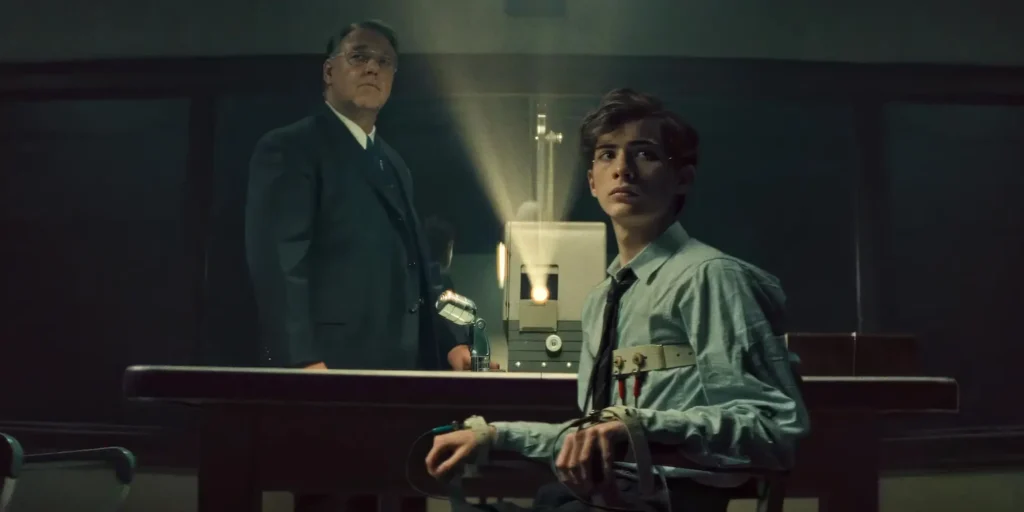
The genesis of Gosling’s relationship with the Academy began in 2006 with the release of Half Nelson. Directed by Ryan Fleck, the film was a stark departure from the project that had previously made Gosling a household name: the 2004 romantic drama The Notebook. While The Notebook established his viability as a romantic lead, Half Nelson served as a definitive statement of his range and commitment to character-driven narratives.
In Half Nelson, Gosling portrayed Dan Dunne, a junior high school teacher struggling with a severe crack cocaine addiction while attempting to inspire his students in a Brooklyn classroom. The performance was characterized by a lack of vanity and a nuanced depiction of internal conflict, earning him his first Academy Award nomination for Best Actor at the age of 26. At the time, he was one of the youngest performers ever nominated in the category.
This nomination was significant not only for its prestige but for the signal it sent to the industry. It validated Gosling’s ability to lead a low-budget independent feature ($700,000 production budget) to the highest levels of critical acclaim. The 2006 cycle established the first pillar of his career: the "serious actor" who could navigate the complexities of flawed, humanistic characters.
The Decade of Refinement: 2007 to 2015
Following his initial nomination, Gosling entered a ten-year period of prolific and varied work that, despite high critical marks, did not result in further Best Actor nominations. This era saw him collaborating with some of the industry’s most distinctive directorial voices. He starred in Derek Cianfrance’s Blue Valentine (2010) and The Place Beyond the Pines (2012), Nicolas Winding Refn’s Drive (2011), and Adam McKay’s The Big Short (2015).
While films like Blue Valentine saw his co-star Michelle Williams receive a nomination, and The Big Short earned a Best Picture nod, Gosling himself remained outside the Academy’s final five for Best Actor. Analysts often point to this period as a time of "credibility building," where Gosling eschewed traditional blockbuster roles in favor of "brooding" or "difficult" characters. By the mid-2010s, he had cultivated a reputation for enigmatic, minimalist performances that made him a critical favorite, even if the Academy’s voting blocks were focused elsewhere.
The Movie Star Transition: 2016 and La La Land
The second pillar of the "six" cycle arrived in 2016 with Damien Chazelle’s La La Land. This film represented a pivotal shift in Gosling’s career trajectory, blending his established indie sensibilities with the grand scale of a traditional Hollywood musical. As Sebastian Wilder, a jazz pianist torn between personal ambition and romantic devotion, Gosling was required to showcase technical skills in piano, dance, and song, all while maintaining the dramatic depth he had honed over the previous decade.

La La Land was a massive commercial success, grossing over $448 million worldwide. It also served as a major Oscar contender, tying the record for the most nominations (14) in history. Gosling’s second Best Actor nomination in 2016 signaled his transition from a respected dramatic actor to a "bankable movie star." The Academy recognized his ability to carry a high-concept, big-budget studio film that appealed to both critics and general audiences. This nomination effectively bridged the gap between his early work in Half Nelson and the blockbuster phase that would follow.
Project Hail Mary and the 2026 Trajectory
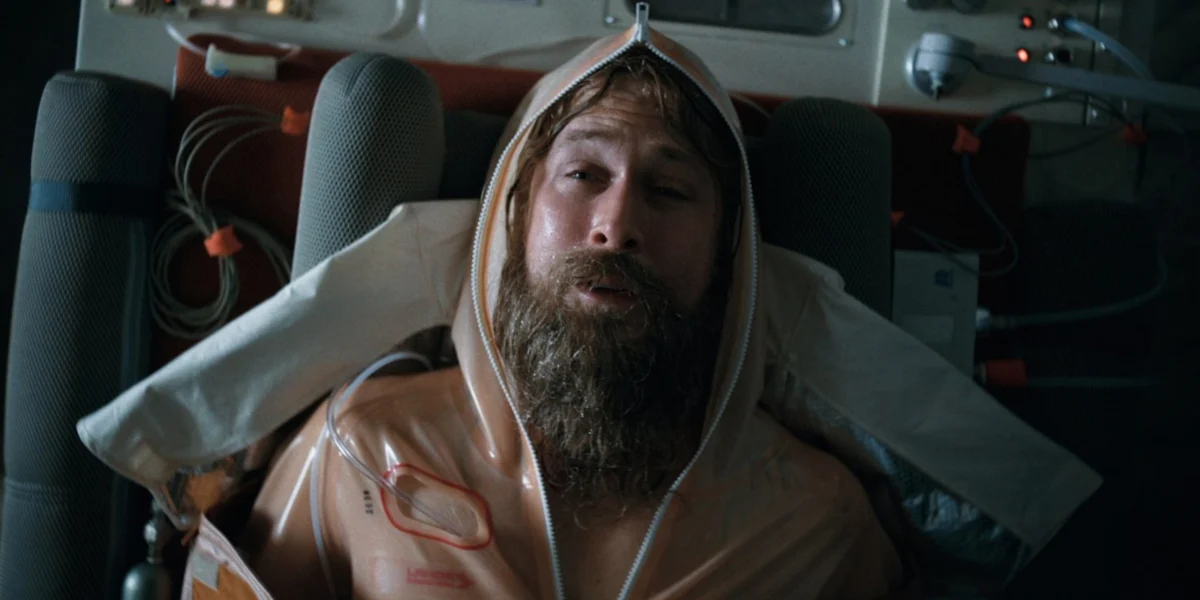
A decade after the success of La La Land, Project Hail Mary enters the cultural zeitgeist as the potential third pillar in Gosling’s decadal pattern. Based on the bestselling novel by Andy Weir and directed by the duo of Phil Lord and Chris Miller, the film places Gosling in the role of Ryland Grace, a schoolteacher-turned-astronaut who wakes up on a spacecraft with no memory of how he got there, eventually realizing he is humanity’s last hope for survival.
The role of Ryland Grace offers a unique synthesis of Gosling’s previous nominated roles. Like Dan Dunne in Half Nelson, Grace is a teacher with profound personal vulnerabilities. Like Sebastian in La La Land, he is a man driven by a singular passion who must navigate an extraordinary set of circumstances. However, Project Hail Mary introduces a new level of difficulty: for a significant portion of the film, Gosling is the only human performer on screen. This "solo" nature of the performance is a traditional favorite for the Academy, drawing comparisons to Tom Hanks in Cast Away or Matt Damon in The Martian.
Comparative Analysis of Performance Styles
| Film | Year | Role Type | Key Performance Element |
|---|---|---|---|
| Half Nelson | 2006 | Dramatic/Indie | Internalized struggle, gritty realism |
| La La Land | 2016 | Musical/Romantic | Technical versatility, charismatic leading man |
| Project Hail Mary | 2026 | Sci-Fi/Spectacle | Solo screen presence, emotional range in isolation |
Industry Context and Competitive Landscape
The path to a 2026 nomination is not without obstacles. Historically, the Academy has shown a preference for films released in the final quarter of the year. However, recent trends suggest a loosening of this "awards corridor." The 2025 win for Michael B. Jordan in Sinners, a film that premiered well before the traditional fall festival circuit, provides a modern blueprint for Gosling’s campaign. If Project Hail Mary can maintain its critical standing and commercial relevance through the summer and fall, it may avoid the "early-year fade" that often affects spring blockbusters.
Furthermore, the 2026 race is expected to be highly competitive. Rumors regarding Tom Cruise’s performance in the upcoming film Digger suggest a strong veteran contender, while several unannounced fall projects from major studios are likely to yield late-season favorites. Gosling’s advantage lies in the scale and technical achievement of Project Hail Mary. As an "outer space spectacle," the film provides a canvas for a performance that is both physically demanding and emotionally resonant.
Statistical and Historical Implications
Should Gosling receive a nomination in 2027 (for his work in 2026), he would join an elite group of actors who have maintained a consistent presence in the Best Actor category across three different decades. His previous nominations in 2006 and 2016 established a rhythm that reflects the broader shifts in Hollywood’s casting priorities—from the gritty realism of the mid-2000s to the genre-bending revivals of the 2010s, and now to the high-concept, intellectual sci-fi of the 2020s.
It is also worth noting Gosling’s 2023 nomination for Best Supporting Actor in Barbie. While this falls outside the "Best Actor" and "year ending in six" pattern, it serves as a crucial data point for his current standing with the Academy. The Barbie nomination proved that Gosling is currently in a "high favor" period with voters, possessing the momentum required to stay in the conversation even when his films are released outside the primary awards window.
Conclusion: The Culmination of a Career Evolution
Project Hail Mary represents more than just a successful adaptation of a popular novel; it serves as a benchmark for Ryan Gosling’s third decade as a major force in American cinema. The film’s ability to combine massive special effects with a deeply personal, character-driven narrative provides the ideal platform for an actor of Gosling’s specific history.
If the decadal pattern holds true, the announcement of the Best Actor nominees in January 2027 will feature Gosling’s name for the third time in twenty years. This would solidify his legacy as an actor capable of evolving alongside the industry, transitioning from the classrooms of Brooklyn to the soundstages of Hollywood musicals, and finally to the isolated reaches of deep space. While the official start of the awards season remains months away, the data, the history, and the initial reception of Project Hail Mary suggest that Ryan Gosling is once again positioned to be a primary protagonist in the race for the Oscar.