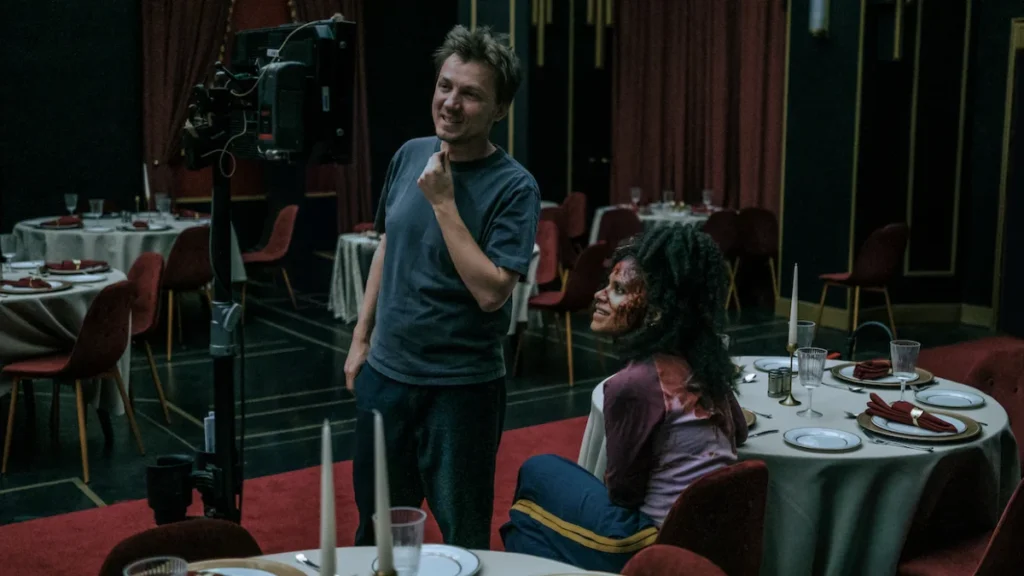
French writer-director Julia Ducournau, celebrated for her visceral and boundary-pushing body horror films Raw (2016) and the Palme d’Or-winning Titane (2021), is poised to release her third feature, Alpha, on March 27 via NEON. While audiences familiar with her previous work may perceive a significant tonal shift, Ducournau herself views Alpha not as a departure, but rather a deeper exploration of her continuous thematic obsessions, particularly the intricate dynamics of love and family, albeit presented through a distinctly grounded and dramatic lens. This perspective was articulated during a recent conversation with acclaimed filmmaker Robert Eggers, whose own meticulous historical recreations in films like The Lighthouse (2019) and the forthcoming Nosferatu (2024) and Werewulf (2026) share a common thread of interrogating modern issues through historical contexts.
Thematic Evolution: Beyond Explicit Body Horror
Ducournau’s earlier films established her as a master of body horror, using grotesque physical transformations to explore themes of identity, sexuality, and societal pressures. Raw, her collegiate cannibal breakout, depicted a veterinary student developing an insatiable craving for human flesh. Titane, her sophomore feature, pushed these boundaries further with a protagonist who develops a disturbing affinity for cars and becomes pregnant by one. In contrast, Alpha is described by Ducournau as "a very grounded family drama," despite still integrating physical transformation as an integral narrative device. She contends that her core fascination with love and human connection remains constant. "There’s a continuity in what I’m trying to do—I keep digging deeper, in a continuous movement, into the same themes," Ducournau explained to Eggers. "What I’m always trying to dissect is love: what it means, what shapes it takes, how unconditional love can bond two people who are strangers to each other." This continuity, she argues, is exemplified in Alpha through the evolving relationship between the titular character and her estranged uncle.
The explicit body horror elements, which were central to the marketing and reception of her earlier works, are recontextualized in Alpha. While physical changes still drive the narrative, they serve a more symbolic and emotionally resonant purpose within a domestic setting. This shift reflects a deliberate choice by Ducournau to explore her recurring motifs of transformation and identity not as a "gimmick," but as a means to uncover deeper truths about human relationships and societal prejudice.
Alpha: A Grounded Family Drama Rooted in Reality
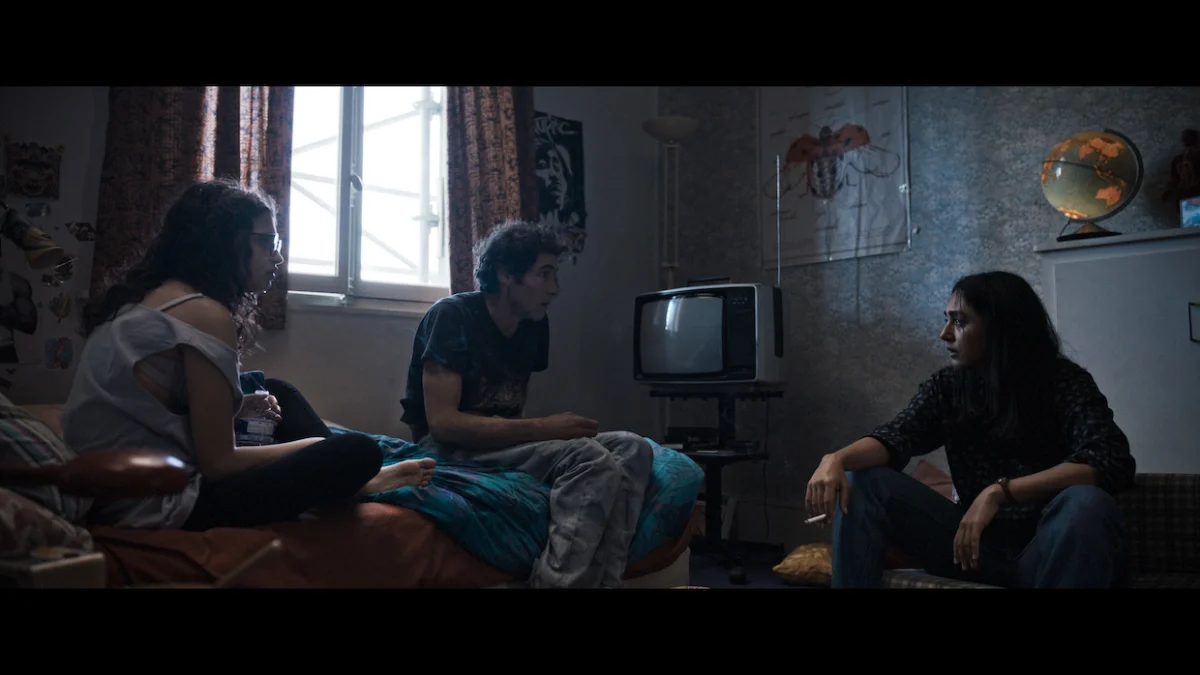
At the heart of Alpha is 13-year-old Alpha (Mélissa Boros), a character whose background mirrors Ducournau’s own French and Algerian heritage. The film is set against the backdrop of a fictional public health crisis that eerily echoes the AIDS epidemic, which severely impacted France throughout the 1980s and 90s. This viral outbreak causes a bizarre transformation, replacing organic tissue with marble and morphing blood into red sand, a unique visual metaphor for calcification and decay.
Alpha’s mother, portrayed by Golshifteh Farahani, is one of the few compassionate doctors working in a hospital ward dedicated to these patients. Their care is often neglected by other staffers, illustrating a familiar stigma: meals "forgotten" in hallways, heart rate monitors flatlining for hours, all provoked by an irrational fear of physical contact with the infected. The atrophying patients in the quarantined ward are predominantly queer men and addicts, including Alpha’s uncle Amin (Tahar Rahim), a chronic heroin user who has been living with the disease for years. The narrative intensifies when Alpha receives a crude stick-and-poke tattoo at a house party, igniting her mother’s paranoia that her daughter might succumb to a similar fate as her estranged brother. As the three are forced to coexist under one roof, the film skillfully intertwines past and present timelines, revealing the profound mental and emotional toll exacted by repressed grief and unresolved trauma within the family unit.
Personal Roots and Societal Reflections
Ducournau’s decision to directly mine her own upbringing for Alpha marks a significant step in her storytelling. Her dual French and Algerian heritage is reflected in Alpha, providing a personal anchor for the film’s exploration of cultural identity and familial bonds. The public health crisis depicted is a thinly veiled commentary on the social and medical realities of the AIDS epidemic. Historically, the AIDS crisis in France, as in many other nations, was characterized by fear, misinformation, and the marginalization of affected communities, particularly gay men and intravenous drug users. The film’s depiction of neglect and stigma in the hospital ward draws a direct parallel to the systemic failures and societal prejudices that exacerbated the suffering of those afflicted by AIDS.
By presenting a fictional disease with such visually striking symptoms, Ducournau externalizes internal suffering and societal judgment. The marbleization and red sand elements are not merely fantastical; they serve as potent metaphors for the dehumanization and alienation experienced by those deemed "other" by society. This careful construction allows the film to engage with sensitive historical and social issues while maintaining its unique artistic voice.
Crafting Emotional Depth: Casting and Rehearsals
The nuanced, moving, and grounded performances in Alpha are a testament to Ducournau’s meticulous casting and distinctive directorial approach. Tahar Rahim and Golshifteh Farahani, both highly regarded in French cinema and increasingly recognized internationally, were Ducournau’s first and only choices for their respective roles. She admired their acting prowess but also their public personas, particularly Farahani’s vocal activism for women’s rights and Rahim’s brave engagement and physical approach to character. Ducournau values actors who embrace a "physical approach to character before any intellectualization," aligning perfectly with her own filmmaking philosophy.
For the crucial role of Alpha, Ducournau made a conscious decision not to cast an actual minor, despite the character being 13 years old. Given the dark subject matter and the central theme of the birth of sexuality in the context of a pandemic and disease transmission through blood and fluids, she believed casting a 13-year-old would make "a political statement about fear spreading in society and trickling down to younger generations." Instead, she sought young women who could read as younger than their age. Mélissa Boros, 19 at the time of shooting, was a non-actress whose "awkward" and "quirky" demeanor perfectly encapsulated the physical uncertainties of adolescence. This choice allowed for a deeper exploration of a changing body without the ethical complexities of working with a minor on such sensitive themes.
Ducournau’s rehearsal process differs significantly from that of Robert Eggers, who favors extensive blocking rehearsals to lock in physical grammar and pacing. Ducournau, however, opts for a more organic approach, eschewing formal blocking rehearsals to allow characters’ movements to evolve naturally within a space. This is particularly crucial for scenes involving physical transformation, where she wants the actor to "appropriate the new body, to experience the pain and the new feelings that come with it, and to work with it on set in real time." She prioritizes attunement to the actors’ physical state daily, working with their bodies rather than against them. The exceptions are stunts and choreography, such as the "almost like a dance" sequence where Alpha and Amin are found sleeping in sync, which are meticulously rehearsed. Beyond these, extensive conversations about the script and life experiences form the bedrock of her preparation, fostering an "intimate relationship" and "full trust" with her actors, as was the case with Tahar Rahim.

The Artistry of Transformation: Marbleization and Visual Language
The striking imagery of marbleized bodies, where organic tissue is replaced by noble stone, was a foundational concept for Alpha. Ducournau explained its symbolic significance: "Marble is such a noble material, traditionally used to depict those who are elevated above us—saints, kings, the figures in cathedrals. People who are somehow more than human. I wanted to use that noble material to elevate the lives and deaths of people who have been deemed lesser by this society. To reveal them, to show respect for their journey, and in a way to memorialize them." This aesthetic choice serves to challenge preconceived notions of beauty and worth, urging the audience to apprehend the humanity of the patients rather than perceiving them as "other."
Ducournau was acutely aware of the potential for her visual style to be misconstrued, particularly given the strong reactions (including fainting) to her previous films. For Alpha, maintaining the humanity of the patients was paramount, making it crucial to avoid leaning into "genre spectacle." The film, she insists, is not a genre film but a "very grounded family drama" where unrealistic iconography feels entirely real within its world. The conundrum of beauty—whether audiences would find the marbleized bodies aesthetically pleasing—was resolved through the character of Alpha. In a pivotal waiting room scene, Alpha encounters an infected man, whose teacher calls him an "Apollo." Alpha’s simple, genuine response, "No, but you’re beautiful. That’s true," becomes the directorial instruction. Her innocent curiosity and pure conviction redefine beauty for the audience, transcending the director’s subjective viewpoint.
Ducournau’s artistic influences extend beyond cinema, heavily drawing from painting, photography, and sculpture. While acknowledging the undeniable influence of David Cronenberg, she and her cinematographer primarily discuss art references: "We always talk about paintings and photography. We send each other references constantly, go to museums together, and talk about light." She cites a Winslow Homer painting from the 1890s, with its "freakishly modern" and unapologetic use of light, as an inspiration for a scene in Titane. More broadly, artists like Francis Bacon, Robert Mapplethorpe, Frida Kahlo, and Louise Bourgeois are continuous touchstones, informing her daring approach to composition and narrative focus.
The Filmmaker’s Process: From Writing to Sculpture
The solitary and often arduous process of screenwriting is described by Ducournau with a candidness that resonates with many writers. She tells students that writing is "ninety-eight percent despair and chaos—no hope, no glory—and two percent ecstasy." This sliver of ecstasy, however, is the fuel that makes the process worthwhile. Having initially intended to be a screenwriter, Ducournau views directing as an organic extension of writing. "Instead of the computer, it’s the camera; instead of sentences, it’s the choices you make on set. For me, it’s constant writing." Even post-production, she asserts, is "sharpening" the initial intention, likening the entire filmmaking journey to sculpting a rough rock into its final form.
This continuous refinement means that if the finished film too closely resembles the initial script, Ducournau feels "I missed something. Something has to happen between the script and the finished film—something transcended through all those choices." This philosophy underscores her commitment to allowing the creative process to evolve and deepen the narrative’s impact.
Her passion for specific scenes, even those that don’t overtly advance the plot, can lead to battles with producers. She fought hard for a particular lunch scene in Alpha, which consumed two days of a forty-one-day shoot and incurred significant cost. For Ducournau, this scene was essential for conveying "such a deep sense of this family—the way they’ve denied parts of their history in order to keep standing and loving each other, the way taboo operates within the family unit." This scene holds immense personal significance, drawing directly from her own childhood experience of navigating a chaotic, matriarchal family with a French father and Algerian mother, where communication transcended language barriers through "something animal." The scene explores Alpha’s struggle to find her place amidst a cacophony of "bickering and love and yelling and laughter," ultimately addressing the profound question of "elected family"—the conscious daily choice to maintain and strengthen familial bonds, whether by blood or by choice.
A Chronology of Ducournau’s Vision
Julia Ducournau’s filmography, while relatively concise, has made an indelible mark on contemporary cinema:
- 2016: Raw (original Grave) – A provocative coming-of-age horror film that premiered at Cannes Critics’ Week, earning critical acclaim and establishing her unique voice.
- 2021: Titane – This audacious body horror thriller won the prestigious Palme d’Or at the Cannes Film Festival, making Ducournau only the second female director to receive the award.
- 2024: Alpha – Set for release on March 27 via NEON, this film marks a thematic maturation, blending elements of family drama with her signature exploration of physical and emotional transformation.
Each film builds upon the last, demonstrating a consistent, evolving artistic vision rather than radical shifts.
Broader Implications: Ducournau’s Enduring Themes
Alpha stands as a testament to Julia Ducournau’s evolving artistry and her unwavering commitment to exploring the complexities of human existence. By shifting from the overt provocations of body horror to a more introspective family drama, she demonstrates a directorial maturity that allows for a deeper emotional resonance. The film’s engagement with themes of public health crises, societal stigma, and inherited trauma provides a timely and poignant commentary on contemporary issues, drawing parallels to historical events like the AIDS epidemic without resorting to sensationalism.
Ducournau’s bravery in confronting difficult subjects, her meticulous approach to character development, and her distinctive visual language, informed by a rich tapestry of artistic influences, solidify her position as one of the most compelling voices in modern cinema. Alpha is not just a film about physical transformation; it is a profound meditation on the resilience of the human spirit, the enduring power of love, and the complex, often chaotic, nature of family bonds. It offers audiences a compelling narrative that challenges perceptions, evokes empathy, and underscores the continuous, sculpted journey of self-discovery and connection.