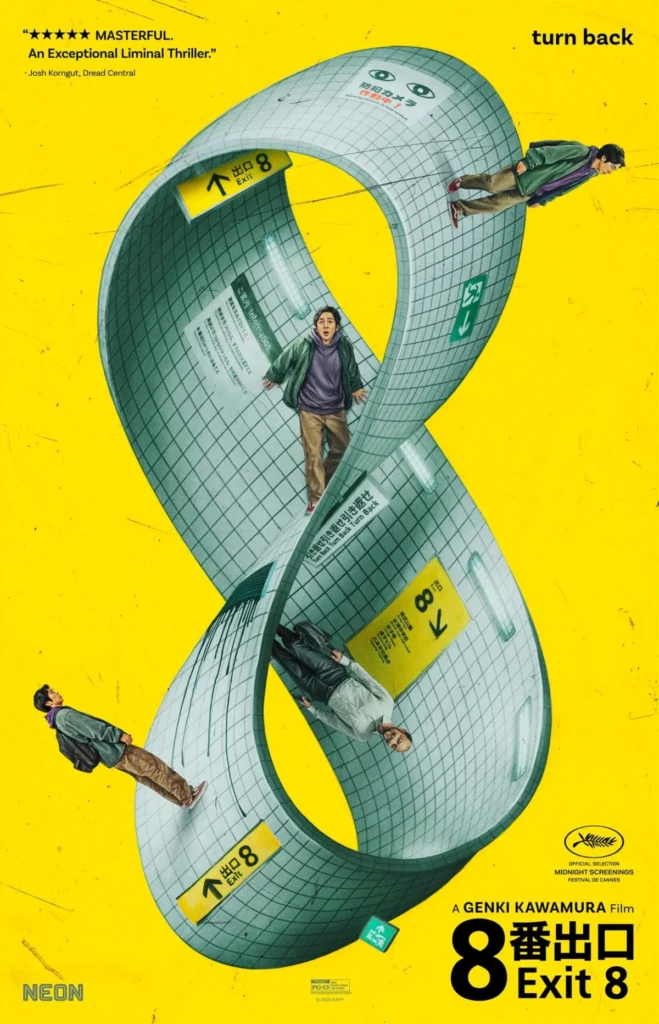
Neon is set to release the critically acclaimed Japanese liminal horror film, Exit 8, in theaters this Friday, April 10th, 2026. The film has already garnered significant praise, with Josh Korngut of Dread Central hailing it as "the best video game adaptation ever made" and an "exceptional liminal thriller." This final trailer offers a glimpse into the unsettling premise and surreal visuals that have captivated early audiences and critics alike.
The Labyrinthine Descent: Plot and Premise
Exit 8 plunges viewers into a nightmarish scenario where the protagonist, portrayed by Kazunari Ninomiya, finds himself trapped in an unending, sterile subway passageway. His sole objective is to locate "Exit 8," a seemingly simple quest fraught with peril. The film’s narrative hinges on a set of cryptic rules: participants must meticulously observe their surroundings for anything out of the ordinary. The discovery of an anomaly necessitates an immediate retreat, while the absence of one allows for continued progression. Failure to adhere to these guidelines, or even a single oversight, results in an instant reset, returning the protagonist to the very beginning of his ordeal. This Sisyphean task raises the central question: can he navigate the psychological and existential labyrinth to achieve freedom, or is he destined to remain eternally ensnared?
The trailer itself amplifies the sense of dread and disorientation. It progressively escalates in bizarreness, showcasing individuals within the subway exhibiting increasingly erratic behavior. These unsettling scenes are interspersed with flashes of surreal and disturbing imagery, most notably a glimpse of a grotesque rat-human hybrid monster, hinting at the encroaching existential threat. The film’s visual language appears designed to evoke a profound sense of unease, leveraging the liminal space of the subway to explore themes of entrapment, perception, and the fragility of reality.
A Cinematic Debut with Stellar Reception
Directed by Genki Kawamura, Exit 8 marks a significant cinematic adaptation of the video game created by Kotake Create. The film’s world premiere took place in the prestigious midnight section of the 2025 Cannes Film Festival, a slot typically reserved for genre films that push boundaries and challenge conventions. The reception at Cannes was nothing short of extraordinary, with the film reportedly receiving an unprecedented eight-minute standing ovation. This prolonged applause is a testament to the film’s immediate impact and its ability to resonate deeply with festival attendees, many of whom are seasoned critics and industry professionals.
The endorsement from Josh Korngut, whose review is prominently featured, further bolsters the film’s critical standing. His description of the film as "masterful" and an "exceptional liminal thriller" suggests a level of craft and execution that transcends typical genre fare. The fact that Korngut himself appears in the final trailer, offering his direct commentary, adds a layer of authenticity and persuasive power to the promotional material.
The Rise of Liminal Horror and Video Game Adaptations
The emergence of Exit 8 taps into two significant trends in contemporary cinema: the growing popularity of liminal horror and the increasing success of video game adaptations. Liminal spaces, characterized by their transitional or in-between nature – such as empty corridors, abandoned malls, or deserted transit stations – have become fertile ground for psychological horror. These environments evoke feelings of unease, isolation, and the uncanny, as they are typically meant to be populated or traversed, not experienced in a state of prolonged, solitary emptiness. The subway passageway in Exit 8 serves as a quintessential liminal space, amplifying the protagonist’s disorientation and psychological distress.

Furthermore, the landscape of video game adaptations has been undergoing a renaissance. Once plagued by critical and commercial failures, recent years have seen a surge of well-received adaptations like The Last of Us and Arcane, demonstrating that compelling narratives and rich worlds can be successfully translated from interactive media to the screen. Exit 8‘s classification as "the best video game adaptation ever made" positions it at the forefront of this evolution, suggesting a profound understanding of its source material and a masterful execution of its cinematic potential. The original video game, created by Kotake Create, likely provided a strong foundation for Kawamura’s vision, allowing for a faithful yet cinematic interpretation.
Neon’s Strategic Distribution and Anticipated Impact
The distribution of Exit 8 by Neon is a significant factor in its potential reach and impact. Neon has established a reputation for acquiring and distributing critically acclaimed and often unconventional films that challenge the mainstream. Their portfolio includes award-winning titles that have resonated with discerning audiences and critics, suggesting that Exit 8 aligns perfectly with the distributor’s ethos. The choice to release the film on April 10th, 2026, positions it as a significant cinematic event for the spring season, potentially drawing audiences seeking a departure from more conventional blockbusters.
The film’s success at Cannes and the enthusiastic critical reception suggest a strong box office performance is likely. The concept of a liminal horror film, combined with the appeal of a well-executed video game adaptation, creates a compelling draw for both genre enthusiasts and a broader audience intrigued by its unique premise and critical acclaim. The film’s narrative, centered on a psychological puzzle and existential dread, offers a sophisticated horror experience that could appeal to viewers looking for more than just jump scares.
A Deeper Dive into the Production and Creative Forces
Genki Kawamura, the director of Exit 8, is not a newcomer to the world of impactful storytelling. He has a notable career as a producer, having worked on critically acclaimed films such as Makoto Shinkai’s animated masterpieces Your Name and Weathering with You. His transition to directing, particularly in the horror genre, indicates a deliberate artistic choice to explore different narrative and thematic territories. This background suggests a director with a keen understanding of audience engagement and a proven ability to translate complex emotional and thematic material into visually stunning and narratively compelling cinema.
The source material, the video game by Kotake Create, plays a crucial role in understanding the film’s genesis. While specific details about the original game’s mechanics and narrative might be limited in public discourse, its adaptation into a feature film implies a strong conceptual core. The game likely established the foundational rules of the liminal space, the observational mechanics, and the existential threat that now drives the cinematic narrative. The success of the film could also lead to renewed interest in the original video game, potentially boosting its own audience and sales.
Looking Ahead: The Legacy of Exit 8
As Exit 8 prepares for its theatrical release, the anticipation is palpable. The film’s journey from a critically lauded festival premiere to a wide release through Neon signifies a significant moment for Japanese cinema and the horror genre. Its potential to redefine video game adaptations and further popularize liminal horror is substantial. The film’s narrative sophistication, coupled with its unsettling visuals and psychological depth, promises an immersive and thought-provoking cinematic experience. The question of whether the protagonist can escape the infinite corridor of Exit 8 will soon be answered for audiences worldwide, but its impact on the cinematic landscape is already being felt. The film’s success will undoubtedly pave the way for more ambitious and artistically driven genre films, further blurring the lines between different media and pushing the boundaries of cinematic storytelling.