A Modern Narrative of Disconnect and Delusion
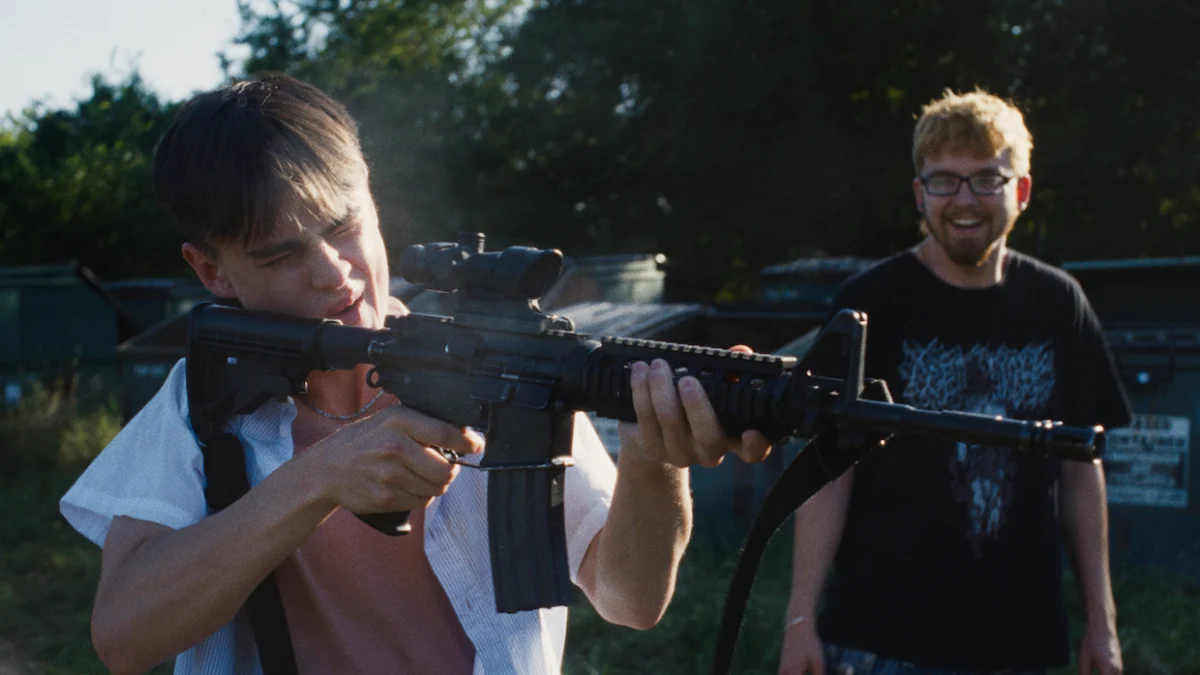
At its core, Our Hero, Balthazar introduces audiences to Balthazar Malone, portrayed by Jaeden Martell, a scion of Manhattan privilege inhabiting a high-rise world. Balthazar’s existence is deeply intertwined with online performance, where he meticulously curates an image of sensitivity, often through "teary grief narratives," effectively commodifying emotion for social capital. His journey into self-proclaimed heroism is not born of genuine moral conviction but rather a calculated effort to impress a politically engaged school crush. This ambition leads him down a perilous path: tracking down a lonely, potentially violent individual known online as @deathdealer_16 in Texas. Balthazar employs a blend of sophisticated online sleuthing and ethically dubious catfishing, fabricating a persona as a seductive, AI-generated woman to engage with his target.
The film’s aesthetic, characterized by a handheld freneticism and James William Blades’s distinctive synth-heavy score, has drawn comparisons to works like Taxi Driver and Uncut Gems. While Oscar Boyson’s prior role as a producer for the Safdie brothers might invite such parallels, both Boyson and Camilleri emphasize that Our Hero, Balthazar carves its own distinct identity. It navigates complex themes with a stranger, messier sensibility, yet avoids the pitfalls of empty shock value. Camilleri explicitly countered the notion that the film "revels in bad taste," stating, "It’s not a midnight movie. There’s a little more heart." This sentiment underscores the filmmakers’ ambition to delve beneath surface-level provocation, aiming instead for a deeper, more empathetic, albeit dark, commentary on modern life.
The Digital Echo Chamber: Identity and Isolation
A central thesis of Our Hero, Balthazar is its incisive critique of how identity is constructed and performed in the digital sphere. The film exposes the precarious, often artificial, logic governing online interactions, where self-image is meticulously curated, branded, and frequently detached from authentic reality. Director Oscar Boyson articulated the genesis of this theme, reflecting on the psychological toll of the post-pandemic era on young people. "During that post-pandemic period, I felt really bad for these kids spending their 12th and 13th birthdays alone," Boyson observed. He lamented the pressure on adolescents to "perform an identity on social media, feeling like they have to be a brand by the time they’re 10."
This perspective is rooted in the filmmakers’ own experiences with an earlier, less commercialized internet. Both Boyson and Camilleri, now in their forties, reminisce about a digital landscape that felt "healthier." They met as teenagers at a Boston University summer film program, a self-described "film nerd camp," forging a bond over their shared passion for cinema. Boyson recalled, "We were 17, sitting around talking about movies, making little productions." He drew a parallel to their generation’s experience with the early internet, particularly Facebook, which initially "felt like it was just for us." This earlier iteration of the internet, he noted, served as a vital conduit for exploring independent films, emerging music, and subcultures—a space crucial for teenage self-discovery that he believes has now become diluted and overwhelmingly performative.
Data increasingly supports the filmmakers’ observations. Studies by organizations like the Pew Research Center consistently highlight the pervasive nature of social media among adolescents, with significant percentages reporting nearly constant online engagement. Concurrently, reports from the American Psychological Association and other mental health bodies frequently link excessive social media use to rising rates of anxiety, depression, and feelings of isolation among youth. The pressure to maintain a curated online persona, the constant comparison with others, and the pursuit of "likes" and "followers" can foster a fragile sense of self-worth, making Balthazar’s performative grief and ego-driven quest for heroism particularly resonant. The film taps into this zeitgeist, portraying a generation grappling with the dissonance between their online selves and their internal realities.
Real-World Echoes: Inspiration from Tragedy
The narrative thrust of Our Hero, Balthazar is tragically grounded in real-world events, particularly the epidemic of gun violence and school shootings in the United States. A significant impetus for the film came from the devastating 2022 Uvalde shooting at Robb Elementary School in Texas, where 19 children and two teachers were murdered. Subsequent reports, which revealed that the perpetrator had messaged a woman in Germany online about his intentions, only for her to dismiss them, deeply affected the filmmakers. Boyson noted, "It’s not that different from what a lot of people do. When we get an extreme message, we just tune it out or respond ironically. Or, like in her case, make an ironic response." The woman’s simple reply, "cool," encapsulates the chilling distance and potential desensitization that can occur in online interactions, even in the face of grave threats.
More recently, the film’s themes found an unsettling echo in a school shooting in Vancouver, Washington, where an 18-year-old perpetrator reportedly used ChatGPT to plan the attack. Boyson highlighted this incident, observing, "ChatGPT saw these messages and questions from the shooter, and none of them did anything about it. It’s very different from what happened in Uvalde, but it also speaks to the same distance from these shooters that we have." These incidents underscore a critical societal failure: the inability or unwillingness to recognize and intervene in escalating threats, particularly when communicated through digital platforms.
Camilleri further explained how these real-world tragedies shaped the film’s core concept: "Balthazar came out of this idea of who would have the means to act and do something, and who wouldn’t be paying enough attention so he could go off and stop him." From this premise, the creative team meticulously crafted a world of "warped characters" surrounding Balthazar, each contributing to his distorted perception of reality and heroism. These include his sweet but ultimately neglectful mother, played by Jennifer Ehle, and his self-absorbed life coach, portrayed by Noah Centineo, whose superficial guidance is meant to help Balthazar "break out of his shell" but only reinforces his self-absorption. The film posits that in an age of pervasive digital interaction, genuine connection and intervention are often overshadowed by performativity, irony, and a dangerous sense of detachment.

A Collision of Worlds: Balthazar and Solomon
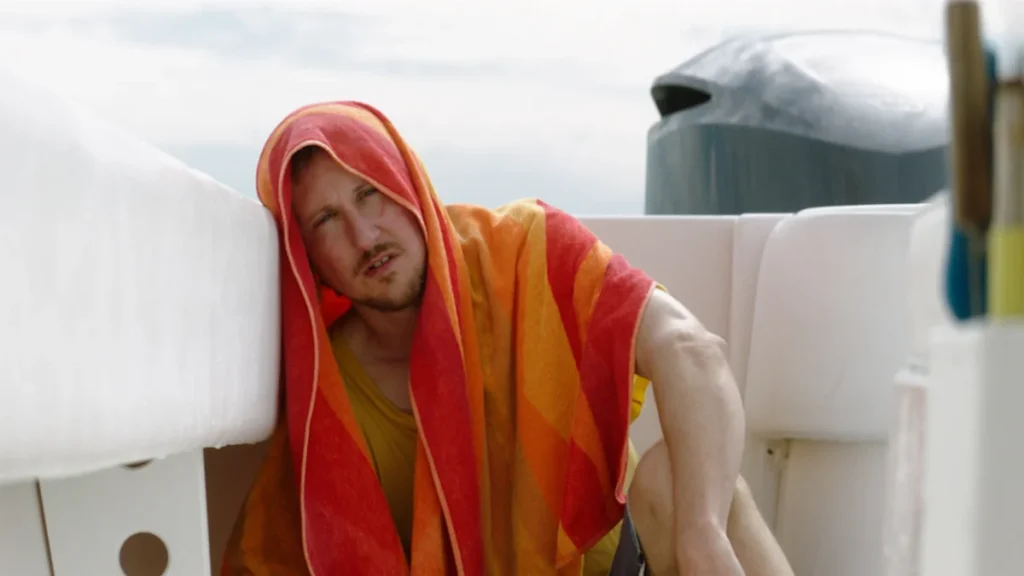
The dramatic and emotional core of Our Hero, Balthazar resides in the uneasy collision between Balthazar Malone and Solomon, played by a nearly unrecognizable Asa Butterfield. Solomon’s life stands in stark contrast to Balthazar’s privileged existence. Living in a trailer with his grandmother, he grapples with the immediate precarity of losing his gas station job and the looming threat of eviction. His vulnerability is further exploited by his father, a "toxic masculinity figure" embodied by Chris Bauer, who peddles testosterone and self-help mantras as part of a pyramid scheme, reminiscent of a grizzled T.J. Mackey from Magnolia. Butterfield’s transformative performance captures a character who is both volatile and profoundly adrift, desperately seeking purpose and belonging in a world that seems to have forgotten him.
The film meticulously charts the parallel journeys of these two neglected boys. Despite their vastly different socioeconomic backgrounds, both Balthazar and Solomon are performing versions of themselves online, each searching for connection, validation, and a sense of identity in often misguided ways. Balthazar, despite his immense privilege, emerges as the more deluded of the two, his heroic quest driven by superficial motives and a profound disconnect from the harsh realities of Solomon’s world. Boyson elaborated, "He’s even more flawed than the guy who’s helplessly looking for attention on the internet." Camilleri added, "Flawed is an understatement for the kind of characters we like. It’s not necessarily that we like characters who back themselves into mistakes so a plot can unfold. It’s that there’s an inherent conflict for someone who doesn’t have the capacity to make the right decision." This nuanced portrayal avoids simplistic hero-villain archetypes, instead presenting two complex individuals shaped by their environments and the pervasive influence of online culture.
Crafting Authenticity: Beyond "Poverty Porn"
A critical aspect of the filmmaking philosophy behind Our Hero, Balthazar was a steadfast commitment to authenticity, particularly in its portrayal of Solomon’s environment. Shot on location in a Texas trailer park, involving local residents, the production deliberately steered clear of what Boyson termed "poverty porn." He articulated his aversion to cinematic portrayals that exploit hardship for dramatic effect: "I’ve seen so many movies where, to be blunt, it feels like rich kids from New York going to some small town and saying, ‘Oh my God, did you see what that guy just did in his trailer?’" Boyson drew on his own upbringing in an economically diverse area, stating, "I’m not from where Solomon’s from, but I grew up in a place with a real mix of economic backgrounds. That kind of perspective doesn’t sit well with me."
Camilleri echoed this sentiment, expressing disdain for simplistic portrayals of working-class characters: "I really don’t like it when a blue-collar character shows up and suddenly has all the answers to the lead’s problems in some forced monologue about grief or tragedy." The casting of Asa Butterfield as Solomon, an actor known for diverse roles rather than a "cool New York indie actor," was also a conscious decision to ground the performance and avoid familiar tropes. This commitment extended to the film’s title; while "Balthazar" was a happy coincidence not intentionally linked to Robert Bresson’s famous donkey, it underscores a deeper connection to cinematic tradition while forging a unique path.
Boyson, with extensive experience working with non-actors, emphasized the profound responsibility inherent in depicting real people and their environments. "If you’re going to go into that world and talk about these people," he asserted, "there’s an immense responsibility. Otherwise, you shouldn’t be doing it." This ethical framework informs the film’s approach to its characters and its humor. For instance, a scene featuring Solomon’s grandmother, played by Becky Ann Baker, delivering a joke that some viewers might misinterpret as crude or inappropriate, is in fact, according to Camilleri, "her version of a lighthearted joke. Her way of giving him confidence." He explained, "I grew up in a world like this. This crass and vulgar humor is how a lot of people live and get by. This is me leaning into what I know and what feels real, and not being afraid of making something vulgar just because someone who’s never been in that world doesn’t totally get it." This meticulous attention to cultural specificity and authentic representation ensures that the film’s humor, like its dramatic elements, resonates with a lived reality rather than reinforcing stereotypes.
Innovative Production and Enduring Vision
The production of Our Hero, Balthazar also broke from conventional filmmaking practices to ensure its narrative integrity and contemporary relevance. The filmmakers consciously avoided using trendy slang, which Camilleri noted would quickly become "totally uncool and immediately outdated." Instead, they opted for a more authentic portrayal of online life by filming real social media apps on actual phones, eschewing green screens, a choice that adds a layer of verisimilitude to the digital interactions depicted.
Director Boyson placed an uncompromising emphasis on performance, a decision evident in the two weeks of dedicated rehearsal allotted to the cast—a luxury often unheard of in independent, low-budget productions. "It doesn’t cost that much to put them in a position to do their best work and take risks," Boyson stated, highlighting a belief that investing in actors’ preparation yields invaluable results. This focus informed the film’s shooting style, designed to "hold onto that electricity of performance that isn’t getting cut after each syllable or sentence." Camilleri summarized their logistical challenge: "How can we shoot as much as possible and give the actors the most freedom?" This meant Boyson had to shed "this-is-a-beautiful shot-on-a-dolly ego," reminding himself that "nobody gives a shit about that unless they’re connected to the performances and the energy of the movie." This pragmatic yet artistically driven approach allowed the film to maximize its limited resources while preserving the raw, dynamic energy of its performances.
Ultimately, Boyson and Camilleri sought to recapture a specific feeling from their own adolescence: the "jolt of discovery" experienced through films like Lars von Trier’s The Idiots, Paul Thomas Anderson’s Boogie Nights, or Nicolas Winding Refn’s Pusher series. "We wanted something that makes a kid sit up in their seat," Camilleri articulated, "Something that feels alive." Whether Our Hero, Balthazar achieves this universally for its audience is subjective, but its ambition to take a "real swing" at complex, often uncomfortable, contemporary issues is undeniable.
For Oscar Boyson, the collaborative spirit and the dedication of his team were paramount. "I’m very sensitive to people taking the risk and gamble of working on an independent film," he reflected. "It means everything to me that they come out the other side a believer, rather than thinking it’s a waste of time." This sentiment underscores the profound commitment required to bring a film of such thematic depth and authentic vision to fruition, particularly within the constraints of independent cinema. Our Hero, Balthazar stands as a poignant and darkly humorous examination of modern youth, the internet’s dual nature, and the desperate search for connection in a world increasingly defined by digital facades and disquieting realities. It challenges viewers to look beyond superficial judgments and engage with the messy, flawed humanity at its core.