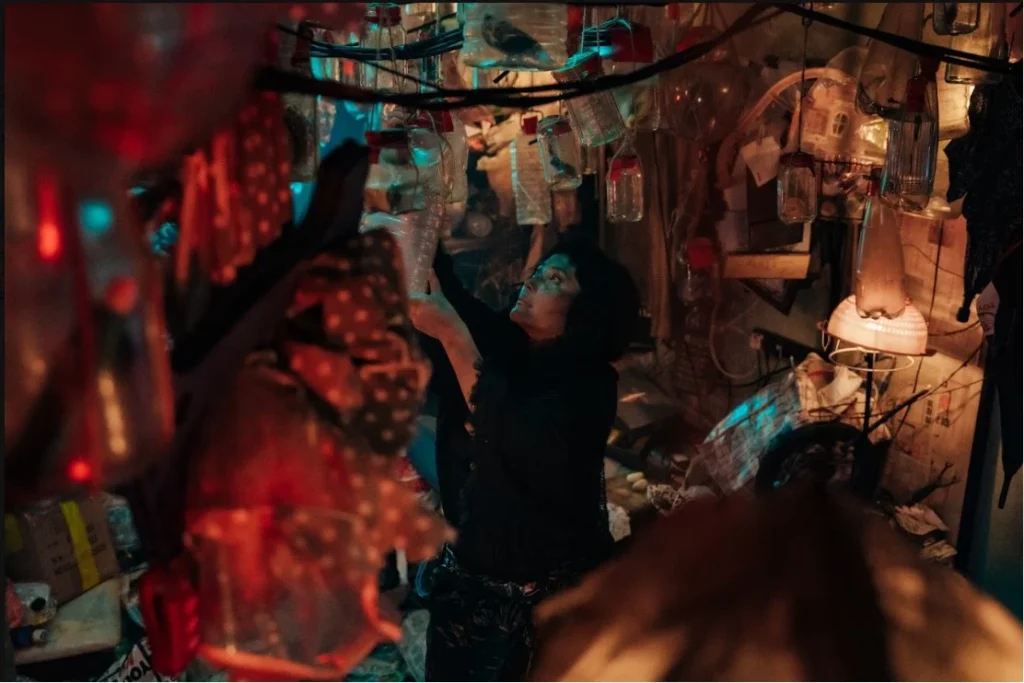
Filmmaking duo Marina and Randal Kamradt have returned to the festival circuit with "No Room For Love," a compelling narrative that delves into the intricacies of the Filipino American experience within the demanding landscape of Los Angeles. Following their earlier success with the superhero spoof "The Monsters Without," which enjoyed a relatively positive festival run, the Kamradts presented their latest work as a feature world premiere last month at the prestigious Cinequest Film & Creativity Festival in Mountain View, California. Originally conceived as a four-episode television series in 2024, the project was subsequently compiled into a 90-minute feature film, offering a condensed yet expansive look at a community striving for recognition and belonging in the entertainment capital. While its episodic origins sometimes lend to a rapid-fire progression of its diverse cast, the film largely maintains an enjoyable and resonant quality.
From Episodic Series to Feature Film Premiere
The journey of "No Room For Love" from a multi-episode television format to a feature-length cinematic experience is a testament to the evolving strategies within independent filmmaking. In an era where streaming platforms often blur the lines between television and film, the Kamradts’ decision to adapt their 2024 television series into a theatrical presentation for Cinequest highlights a pragmatic approach to content distribution and audience engagement. The original series, designed to allow for deeper character exploration and narrative arcs over several installments, provided a rich foundation. Compressing this into a 90-minute feature for a festival audience presented both creative challenges and opportunities, requiring a meticulous editing process to ensure narrative cohesion while retaining the essence of its ensemble cast. The Cinequest Film & Creativity Festival, known for its focus on innovation and supporting independent voices, served as an ideal platform for this unconventional premiere, offering "No Room For Love" a significant launchpad into the broader cinematic conversation. This strategic move allowed the film to capitalize on the festival’s visibility and critical attention, potentially paving the way for wider distribution and recognition.
The Narrative Core: A Tapestry of Aspirations in Tinseltown
"No Room For Love" commences with Rina Santiago (Rey Aclao) making the pivotal move from the Philippines to Los Angeles, a city synonymous with dreams and ambition. Her arrival is swiftly followed by her showbiz-aspiring cousins, transforming their shared household into a bustling hub of creative energy and collective struggle. The film meticulously charts their individual and intertwined journeys as they navigate the often-unforgiving currents of Hollywood’s entertainment industry and the complexities of their personal lives. As their careers begin to diverge and their romantic entanglements deepen, the once-tight-knit fabric of their struggling artist household gradually begins to unravel, exposing the pressures of aspiration and the realities of immigrant life.
The ensemble cast represents a microcosm of diverse ambitions and paths:
- Musician Matt (Garth Garcia) and Natalie (Georgina Tolentino): Their storyline introduces themes of class disparity and the challenges of balancing artistic pursuits with domestic life. Natalie, from a wealthier background, becomes pregnant, prompting their move to the suburbs—a departure from the collective struggle, signaling an early fragmentation of the family unit.
- Marco (Rommel Rojas): His entry into an independent film project crafted by friends underscores the grassroots nature of aspiring filmmakers in Los Angeles, highlighting the importance of community networks in a highly competitive industry.
- Fred (Bong Cabrera): His experience as an extra on a "Back To The Future" set offers a glimpse into the hierarchical structure of large-scale productions and the often-unseen labor that supports Hollywood’s magic.
- Leah (Iya Baclagan): Her unexpected promotion from junior to senior writers assistant after a serendipitous encounter with an executive illustrates the unpredictable nature of career advancement in Hollywood, often a blend of talent, persistence, and sheer luck.
- Rina Santiago (Rey Aclao): The initial catalyst for the family’s migration, Rina’s decision to return to the Philippines signifies a disillusionment with the relentless pursuit of the American dream, offering a poignant counter-narrative to the prevailing optimism.
- Sandra (Cynthia San Luis): As the starry-eyed dreamer and amateur actress, Sandra embodies the quintessential hopeful artist. Her impending eviction serves as a critical turning point, forcing her to confront the precariousness of her existence in Los Angeles and the necessity of communal support to sustain her aspirations in "Tinseltown."
This intricate web of characters, each grappling with their unique set of challenges and triumphs, collectively paints a nuanced portrait of the immigrant experience—a blend of ambition, resilience, and the enduring power of familial bonds.
Thematic Undercurrents: Hollywood’s Gaze and Immigrant Realities
"No Room For Love" transcends the typical industry spoof by engaging in a deliberate deconstruction of Hollywood’s revered mystique. The film’s early, somewhat vague references to mid-century Hollywood classics such as "Citizen Kane" and "Blue Velvet," alongside nods to Disney-esque narration, are not mere homages but rather set the stage for a critical commentary. These serious allusions are juxtaposed with what the article describes as "shoddy production" and a seemingly "technical mediocrity," which includes a black-and-white filter applied in post-production, deliberately shaky camerawork, and anachronistic contemporary music. This stylistic choice, far from being an oversight, appears to be a pointed artistic decision—a meta-commentary that pokes fun at the "greats" and the perceived grandeur of classical Hollywood. The film subtly suggests that the legacy of this golden age is being interrupted, if not challenged, by the arrival and persistence of new voices and perspectives, particularly those from immigrant communities like the Santiagos.
This artistic tension underscores the film’s deeper exploration of cultural identity. The Kamradts utilize overt contemporary qualities to emphasize the film’s digital nature, with smartphone texts appearing on-screen and over-the-top transitions underscoring its modern sensibilities. Crucially, moments of flashback or intense hallucination are punctuated by sudden bursts of color, a stark contrast to the dominant black-and-white aesthetic. These "breaks" from the performance of Hollywood nostalgia are significant, as they often feature "the nostalgic warmth of the Philippines." This visual motif powerfully conveys the enduring presence of their homeland in the characters’ consciousness, highlighting their struggle to carve out a distinct space for themselves—both physically and culturally—in a foreign land that often feels distant from their roots. The film suggests that while they are physically in Los Angeles, a piece of the Philippines, with its unique cultural warmth and community, lingers within them, shaping their experiences and their perceptions of the American dream.
Aesthetic Choices and Production Nuances: A Deliberate Imperfection
The production quality of "No Room for Love," initially perceived by some as amateurish, emerges as a deliberate artistic statement by the Kamradts. The use of a black-and-white filter, often associated with classic cinema, is subverted by its application in a distinctly contemporary context, suggesting a playful critique rather than a respectful homage. The shaky camerawork, rather than denoting a lack of professional polish, could be interpreted as an intentional choice to create an intimate, raw, and vérité-style experience, mirroring the often-unstable lives of its aspiring characters. This aesthetic decision aligns with a broader trend in independent cinema where technical imperfections are sometimes embraced to foster authenticity and challenge conventional cinematic norms.
The integration of contemporary music and digital elements, such as on-screen smartphone texts, further grounds the film in the present, creating a jarring but effective contrast with its mid-century Hollywood references. This stylistic juxtaposition serves to highlight the generational and cultural clash central to the film’s narrative. The flashes of color during flashbacks or hallucinations are particularly significant, acting as visual portals to the characters’ inner worlds and their enduring connection to their Filipino heritage. These vibrant moments symbolize memory, longing, and the cultural richness that persists despite the pressures of assimilation in a foreign land. By intentionally embracing these stylistic choices, the Kamradts craft a film that is self-aware and self-deprecating, using its perceived "mediocrity" as a tool for satire and cultural commentary, ultimately enriching its narrative about identity and aspiration.
Community and Cultural Resonance: A Love Letter to Filipino American Filmmaking
"No Room for Love" undeniably functions as a "love letter to the Filipino American filmmaking circles in Los Angeles today," as articulated in the initial review. This designation stems from the film’s deep immersion in the specific cultural nuances, shared experiences, and inside jokes that resonate powerfully within the SoCal Filipino American community. For those familiar with this vibrant cultural landscape, the film is replete with layers of recognition and humor that transcend its general narrative.

One of the most prominent examples of this cultural immersion is the consistent presence of Jollibee, the globally recognized Filipino fast-food chain. More than just a casual reference, Jollibee often appears as a backdrop, a meeting point, or even a subtle symbol of comfort and familiarity amidst the foreign glitz of Los Angeles. This inclusion is not merely product placement (though potential sponsorship is noted) but a powerful cultural touchstone that immediately connects with Filipino American audiences, evoking a sense of shared heritage and nostalgia. Jollibee, for many, represents a taste of home, a tangible link to the Philippines that provides solace and community in the diaspora.
Beyond specific brand references, the film is rich with "self-reflexive industry gags." These are jokes and scenarios that directly speak to the unique challenges, stereotypes, and triumphs faced by Filipino Americans attempting to break into Hollywood. These might include humorous takes on auditions, the struggle for authentic representation, the often-overlooked contributions of Asian American talent, or the subtle biases encountered in casting and production. Such specific humor creates an immediate bond with the target audience, transforming the viewing experience into an intimate, shared cultural moment.
The film’s classification as a "PG-13 ‘Lalaland’ parody" further underscores its clever engagement with mainstream Hollywood narratives while injecting a distinctly Filipino American perspective. "La La Land" itself is a love letter to Los Angeles and the dream factory, and "No Room for Love" playfully mirrors this concept but reorients it to reflect the aspirations and realities of a specific immigrant community. It acknowledges the universal allure of Hollywood while simultaneously asserting the unique identity and struggles of Filipino Americans striving for their own version of the dream. This dual approach allows the film to be both broadly accessible in its themes of aspiration and deeply personal in its cultural specificity, solidifying its place as a significant contribution to the growing body of Filipino American cinematic work.
The Kamradt’s Filmmaking Journey and the Broader Landscape of Filipino American Cinema
Marina and Randal Kamradt have steadily carved a niche for themselves in independent cinema, particularly with their focus on narratives that resonate with the Filipino American experience. Their previous work, "The Monsters Without," a superhero spoof, demonstrated their ability to infuse genre filmmaking with cultural commentary and a distinctive comedic voice. That film’s positive reception on the festival circuit established them as filmmakers capable of blending entertainment with meaningful storytelling. "No Room For Love" represents a natural progression, shifting from genre parody to a more character-driven, culturally specific drama-comedy, yet retaining their signature blend of humor and heartfelt observation. This evolution highlights a commitment to exploring diverse facets of their community’s identity and struggles through varied cinematic lenses.
The emergence of filmmakers like the Kamradts is crucial within the broader landscape of Filipino American cinema. For decades, Filipino Americans, despite being the second-largest Asian American group in the United States (according to the Pew Research Center, comprising over 4 million individuals as of recent estimates, with a significant concentration in California), have been underrepresented in mainstream Hollywood. However, recent years have witnessed a surge in independent productions that specifically address their unique narratives, cultural heritage, and contemporary experiences. Films like "No Room For Love" contribute significantly to this growing body of work, providing much-needed visibility and authentic representation. They challenge monolithic portrayals of Asian Americans by showcasing the rich diversity within the community, including its specific immigration histories, cultural practices, and socio-economic realities. This movement is not just about seeing Filipino faces on screen; it’s about seeing complex, nuanced stories that reflect the community’s multifaceted identity, aspirations, and challenges in America.
Implications for Independent Filmmaking and Audience Engagement
The strategic decision by the Kamradts to transform a four-episode television series into a feature film for its world premiere at Cinequest carries significant implications for independent filmmaking models. This approach demonstrates a flexible and adaptable content creation strategy, allowing filmmakers to explore narratives in depth through episodic formats while also reaching broader festival and theatrical audiences with a condensed feature. In an industry increasingly dominated by streaming platforms, this hybrid model could offer independent creators a viable pathway to maximize content exposure and attract diverse funding opportunities. It allows for a dual life for the content: an extended narrative for dedicated viewers in a series format, and a powerful, impactful story for a wider cinematic release.
For audiences, particularly the Filipino American community, "No Room For Love" serves as more than just entertainment; it’s a mirror reflecting shared experiences and a window into the lives of others striving for similar dreams. The film’s specific cultural references and "inside jokes" foster a sense of belonging and validation, reinforcing the importance of community and cultural identity. Its heartwarming message, despite initial stylistic quirks, speaks to the universal themes of resilience, mutual support, and the pursuit of happiness against odds. This targeted appeal, combined with its broader themes of aspiration and belonging, positions the film to resonate with a wide spectrum of viewers, proving that culturally specific narratives can achieve universal emotional impact.
Critical Reception and Audience Engagement
While specific critical reviews beyond the initial assessment are still emerging from its Cinequest premiere, the film’s initial reception suggests a project that, despite its unconventional production choices, manages to forge a genuine connection with its audience. The "amateur production quality" noted by some viewers is often overshadowed by the film’s sincerity and the compelling nature of its ensemble narrative. This speaks to a growing appreciation in independent cinema for films that prioritize authentic storytelling and cultural resonance over polished technical perfection.
The film’s ability to transcend its initial perceived shortcomings through the "sappy power of community" is a key aspect of its appeal. This suggests that "No Room for Love" succeeds not through cinematic grandeur but through its emotional core and its celebration of collective human spirit. It serves as a testament to the idea that films rooted in genuine experience and cultural specificity can often achieve a deeper, more lasting impact than those adhering strictly to conventional filmmaking standards. For audiences seeking a film that offers both cultural insight and a feel-good narrative, "No Room for Love" provides a welcome and much-needed addition to the independent film landscape.
Conclusion: A Heartfelt Message of Community and Resilience
"No Room For Love" by Marina and Randal Kamradt stands as a significant contribution to contemporary independent cinema, particularly within the burgeoning landscape of Filipino American storytelling. While its origins as a television series and its condensed feature format presented unique narrative challenges, the film successfully navigates these, delivering a heartfelt and culturally rich experience. Its deliberate aesthetic choices, which might initially be perceived as amateurish, ultimately serve as a powerful meta-commentary on Hollywood’s grandiosity and an assertion of a distinct cultural voice.
The film’s core message—that slight complications stemming from class disparity and immigrant distrust can be resolved through the resounding power of community—is particularly poignant. It underscores the vital importance of mutual support and collective strength in a hyper-competitive environment like Los Angeles. The Kamradt couple’s latest offering, while perhaps not groundbreaking in its cinematic form, is deeply compelling in its sincerity and its profound cultural resonance. For those involved in the SoCal Filipino American community, it is a validating mirror reflecting their shared experiences and aspirations. For a broader audience, it provides an easy, heartwarming, and insightful way to conclude an evening, offering a powerful reminder of the enduring strength found in human connection and the pursuit of dreams, regardless of the challenges faced. "No Room For Love" does not just tell a story; it celebrates a community, its struggles, and its unwavering spirit.