German filmmaker Christian Petzold, a titan of contemporary European cinema, continues to captivate audiences and critics alike with his latest feature, Miroirs No. 3. The film, which recently began its theatrical run courtesy of 1-2 Special, delves into themes of grief, identity, and the subtly shifting lines between reality and fable, solidifying Petzold’s reputation for crafting intellectually stimulating and emotionally resonant narratives. Following a sold-out retrospective of his work at Film at Lincoln Center, Petzold’s insights into his creative process, cinematic influences, and philosophical underpinnings offer a profound glimpse into the mind of a master storyteller.
The Narrative Core of Miroirs No. 3
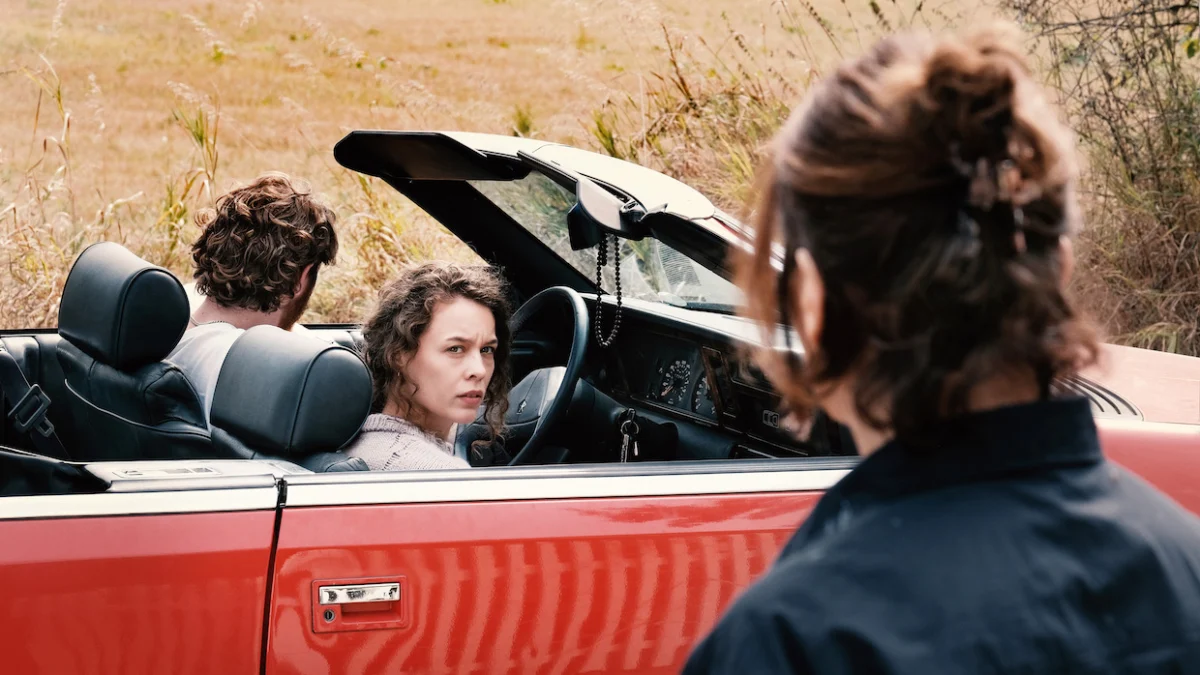
Miroirs No. 3 opens with a jarring countryside car crash that leaves Laura (Paula Beer), a visiting pianist from Berlin, injured and her boyfriend deceased. She is subsequently taken in and nursed back to health by Betty (Barbara Auer), a reclusive woman living near the accident site. Petzold, known for his masterful command of subtle exposition, gradually unveils the intricate psychological landscape shared by the two women. Betty’s seemingly isolated existence is slowly revealed to be anything but, as her profound need for Laura to integrate into her daily life becomes unsettlingly clear. The film’s tension and allure stem from Petzold’s adeptness at playing with and subverting audience and character expectations. Both women, for distinct reasons, are navigating complex currents of grief, their paths intertwining in mysterious yet heartbreaking ways.
The film’s title itself, Miroirs No. 3, hints at its thematic preoccupation with reflections, distortions, and alternate realities, drawing viewers into a world where appearances can be deceiving and the subconscious plays a powerful role. This narrative approach is characteristic of Petzold, whose filmography often explores individuals grappling with trauma and the search for identity within liminal spaces, both physical and psychological.
Petzold’s Signature Style: Fairy Tales and Reality
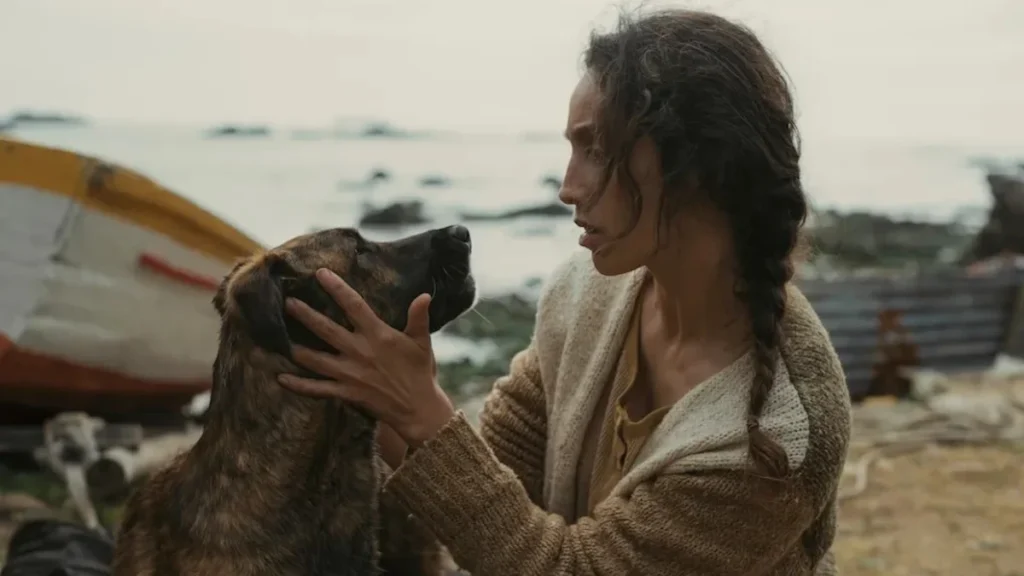
Petzold frequently discusses the fairy tale aspects inherent in his films, describing Miroirs No. 3 as his own interpretation of Alice in Wonderland. The film is replete with symbolic mirrors, inviting the audience to step "through the looking glass" into its enigmatic world. This fantastical lens is not new to Petzold’s oeuvre; his 2020 film Undine, for instance, famously reimagined the ancient myth of a water spirit in modern-day Berlin.
In a recent interview, Petzold elaborated on his affinity for these fantastical narratives, tracing it back to his childhood experiences in Germany. He recounted growing up in "ugly surroundings" and finding solace and adventure in a small, mystical forest near a highway. This personal history informs his cinematic philosophy: "I always wanted to try to recreate that world with the making of a movie." He posits that when characters fall in love, are on the run, or are being chased, their world undergoes a profound transformation, allowing the structures and logic of fairy tales to permeate their reality.
He cites specific examples from Miroirs No. 3, such as a lost shoe from the car accident, evoking the story of Cinderella, and the red convertible, which subtly references iconic vehicles from French Nouvelle Vague films by Jean-Luc Godard and François Truffaut, or Dustin Hoffman’s car in The Graduate. These are not mere quotations, but rather deliberate signals that the characters have entered a heightened, altered reality. Petzold views the audience as "intruders into this world," akin to surveillance cameras, observing events unfold in this unique cinematic space. This approach allows him to explore deep psychological states and societal anxieties through allegorical means, making his films resonate on multiple levels.
Crafting the Visuals: Collaboration with Hans Fromm
A significant element of Petzold’s filmmaking process is his deep collaboration with longtime cinematographer Hans Fromm. Their discussions, Petzold reveals, transcend technical specifications, delving instead into the philosophical implications of camera placement. Petzold champions the idea, attributed to Éric Rohmer and Jacques Rivette, that "the camera position is a position of morality." He expresses a strong dislike for handheld or shoulder-mounted cameras, viewing them as lacking a defined moral viewpoint, merely "following something" without intentionality—a critique he extends to the "Direct Cinema shit from the 1960s."
Petzold’s shooting days begin unconventionally, with extensive rehearsals involving only himself, the actors, and their costumes. These sessions can last for hours, often before any camera is even brought onto the set. Producers, he jokingly notes, are often driven to despair by these protracted rehearsals. It is only after these immersive acting explorations that Fromm joins to observe the final rehearsal. Following this, while the actors are in makeup, Petzold and Fromm meticulously plan the storyboards and camera positions, discussing the essence of the scene and their moral stance as observers.
He illustrates this with an example from his 2012 film Barbara, where the team realized on the first day of rehearsal that it was a film about surveillance. This understanding then informed their decision on the viewer’s position within that scenario. For Miroirs No. 3, similar discussions about camera positioning and the opening car crash were pivotal in defining the film’s core themes and visual language. This meticulous, philosophical approach to cinematography ensures that every shot serves a deliberate purpose, enhancing the narrative and emotional impact.
Architectural Storytelling: Betty’s House
The distinctive setting of Betty’s home in Miroirs No. 3 is not a found location but a meticulously constructed set. Petzold recently discussed this with director Alexandre Koberidze, noting cinema’s fascination with "abandoned places" as symbols of "projects that have failed." This concept extends to Betty’s house, which was entirely built from scratch, including the porch and piano room.
Petzold envisioned Betty’s house as a former "project" for a family, designed to be an open, transparent space filled with windows and doors, allowing wind and light to pass through freely. This stands in stark contrast to what he describes as typical German family homes, which are often built like "caves," with porches hidden and doors closed to the outside world. The ruined, abandoned state of Betty’s house, with its broken dishwasher, fence, and bicycle, symbolizes not just physical decay but also "broken minds and broken souls." It reflects the defeat of a desire for an "open," "fantastic life" that the original inhabitants had.
The camera positions were carefully chosen by Petzold and Fromm to highlight these open windows and doors, emphasizing the tragic irony of a space designed for connection now standing as a testament to failure and loss. This architectural storytelling adds another layer of depth to the film, portraying the physical environment as a reflection of the characters’ internal states and their yearning for a different life.
Musical Echoes: Frankie Valli and Cinematic Homage

Music plays a crucial role in Petzold’s films, and Miroirs No. 3 features the Frankie Valli and The Four Seasons song "The Night" quite prominently. This choice, Petzold reveals, has roots in his appreciation for Michael Cimino’s 1978 epic The Deer Hunter, which famously includes another Frankie Valli song, "Can’t Take My Eyes Off You."
Petzold views The Deer Hunter as a powerful depiction of the American working class, particularly in the context of economic crisis and war. He connects the film’s portrayal of a working class losing their jobs and being sent to Vietnam to die with contemporary societal issues. He also highlights a specific scene in The Deer Hunter where a barkeeper plays a nocturne by Frédéric Chopin, a piece Nina Hoss’s character plays in Petzold’s Barbara. For Petzold, these musical moments, despite a world "full of shit," offer "moments of relief and comfort."
The energetic wedding scene in The Deer Hunter, set to "Can’t Take My Eyes Off You," symbolizes the vibrant energy of the working class, an energy later tragically channeled into the Vietnam War. Petzold directly references The Deer Hunter in the final scene of Miroirs No. 3, where characters are seen on the porch, eating eggs and drinking coffee—a direct echo of the post-trauma gathering in Cimino’s film. Both scenes depict traumatized groups choosing to live on, finding solace in shared experience.
Petzold’s introduction to "The Night" came via Miguel Gomes’s 2021 film The Tsuga Diaries, which depicted artists in exile during the pandemic, dancing to the song at a party. Petzold was astonished that "The Night" and "Can’t Take My Eyes Off You" were by the same artist, a testament to Valli’s versatile appeal. This anecdote underscores Petzold’s deep engagement with cinema history and his ability to draw inspiration from diverse sources, integrating them into his unique cinematic language.
The Evolving Narrative: A Director’s Humility and Collaboration
One of the most revealing aspects of Miroirs No. 3‘s production was the decision to reshoot the film’s ending, a testament to Petzold’s artistic humility and his profound respect for his collaborators. Half a year before shooting, Paula Beer and Enno Trebs (who plays Max) expressed concerns that the script’s original ending, where Laura returns to the family to live with them "for her whole life," felt wrong and unbelievable. Petzold, initially proud of his "best sentence," dismissed their critique.
However, during post-production, his editor Bettina Böhler echoed the actors’ sentiments, plunging Petzold into a four-week depression as he grappled with the realization that the film was moving in the wrong direction. Fortunately, his producer reassured him that a single day of reshooting, costing approximately 20,000 Euros, was feasible. The reshoot, undertaken with Paula Beer eight months pregnant, resulted in a "fantastic final picture" where Laura’s character "has left the family and has a life of her own." This revised ending, depicting Laura as an "adult person" rather than a perpetual daughter, profoundly altered the film’s thematic resonance, offering a more nuanced and empowering conclusion. This incident highlights Petzold’s commitment to the integrity of his narrative and his openness to collaborative input, even when it challenges his initial vision.
A Familiar Ensemble: Petzold’s Repetitive Collaborations
Petzold is renowned for his recurring collaborations with a core group of actors, including Paula Beer, Nina Hoss, and Barbara Auer. While Beer and Hoss have been frequent collaborators in recent years, Miroirs No. 3 marks Barbara Auer’s return to Petzold’s set after 25 years, having previously worked with him on The State I Am In (2000).
Petzold believes that each character an actor plays becomes part of their biography, stemming from their own identity. Auer herself noted a "muscle memory" from her role as a mother in The State I Am In. That film also explored themes of motherhood, death, and unfulfilled desires, centering on a mother (Auer) living underground with her daughter, unable to provide a normal social life. In Miroirs No. 3, Auer plays a character with a dead daughter who yearns for a new one. Petzold sees this as a complex continuation, "as if she’s playing the same character, and yet it’s totally different." This layered approach to character development, built on decades-long relationships, enriches his films with a sense of continuity and profound emotional depth. The consistency of his ensemble allows for a unique shorthand and understanding, enabling the actors to embody his complex characters with remarkable authenticity.
The Wellspring of Inspiration: Art, History, and Memory
Petzold’s interviews are often described as "crowd-pleasing, fatigue-less lectures" filled with "wisdom, wit, and enthusiasm for countless cultural and historical citations." He readily admits that his influences are both conscious during the writing process and emerge organically during production and subsequent discussions.
He cites the legendary John Cassavetes, who, when making Husbands, found himself with abundant footage but no clear story in the editing room. Cassavetes then retreated to write a novel-like narrative from the raw material, allowing his editors to finally understand and shape the film. Petzold identifies with this process of discovery, often seeing new things at the editing table with Bettina Böhler.
He also draws specific lessons from cinematic history, referencing Alfred Hitchcock’s Rebecca (1940) and F. W. Murnau’s Nosferatu (1922). He notes how the fear evoked by characters like Mrs. Danvers or Nosferatu stems from their uncanny ability to appear suddenly, without the audience ever seeing them walk closer. This "non-human" quality, he explains, triggers primal fears, reminiscent of childhood memories of parents suddenly appearing. Petzold consciously applies this technique, as seen in Miroirs No. 3 when Barbara Auer’s character appears abruptly while Paula Beer is at the piano, heightening the sense of unease. By sharing these insights and examples with his actors, Petzold cultivates a profound understanding of cinematic language and its psychological impact.
Future Horizons: Petzold’s Upcoming Projects
Despite his advanced stage in a prolific career, Petzold shows no signs of slowing down. He confirmed plans to shoot another film with Barbara Auer this summer and anticipates collaborating with Paula Beer and Nina Hoss on a future project in two to three years. With three scripts already completed and a fourth in progress, Petzold, now 65, humorously notes, "When you pass 60 years of age, it’s like you’re writing many, many things to at least have something for your last years."
The fourth script, slated to potentially feature Hoss and Beer as enemies, is described as a "very Chekhovian conflict." It centers on a German theater group facing closure due to the encroaching "capitalistic world," which sees their venue bought out by a musical company. In their moment of impending loss, the ensemble, initially characterized by jealousy, finds newfound bravery, culminating in their final performance: Anton Chekhov’s The Cherry Orchard. This upcoming project promises to blend Petzold’s signature blend of social commentary, psychological drama, and literary influence, further enriching his already distinguished filmography.
Christian Petzold’s Miroirs No. 3 stands as a testament to his enduring vision and his nuanced exploration of the human condition. Through his unique blend of fairy tale elements, meticulous cinematic craftsmanship, and profound collaboration with his actors, he continues to cement his place as one of the most significant and insightful filmmakers working today. His commitment to authenticity, intellectual rigor, and emotional depth ensures that each of his films offers a challenging yet deeply rewarding experience for audiences worldwide.