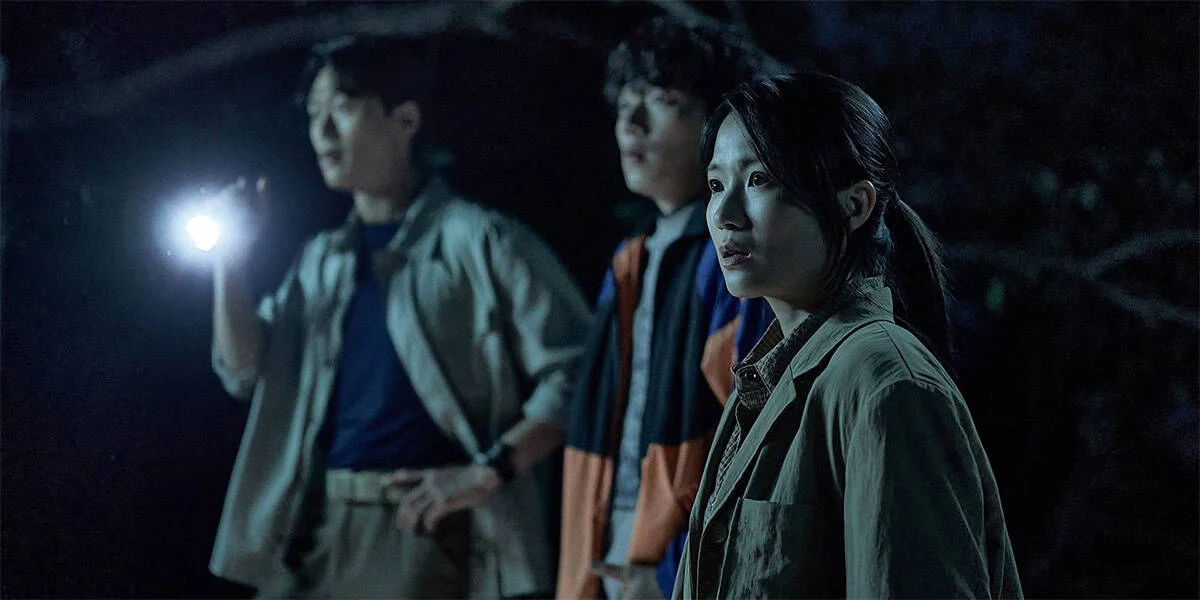
The highly anticipated South Korean horror film, Salmokji: Whispering Water, makes its North American debut, brought to audiences by JBG Pictures USA. This feature film debut from director Lee Sang-min has already captivated audiences in its home country, emerging as a significant box office success and drawing critical acclaim for its atmospheric dread and innovative approach to supernatural horror. Set against the backdrop of the infamous Salmokji Reservoir in Yesan County, a location steeped in local urban legends and ghostly tales, the film promises to deliver a chilling cinematic experience that delves deep into the psychological and supernatural fears associated with forgotten places.
The Haunting Waters of Salmokji: A Reservoir of Legends
At the heart of Salmokji: Whispering Water lies its titular setting: the Salmokji Reservoir. Located in Yesan County, a region known for its tranquil landscapes and agricultural richness, Salmokji is outwardly a popular spot for fishing and local recreation. However, beneath its placid surface and within the local communities, the reservoir is a nexus of chilling urban legends and eerie folklore. For generations, whispers have circulated about mysterious disappearances, spectral sightings along its banks, and unsettling sounds emanating from its depths, particularly after dusk. These tales often speak of mul gwishin, or water ghosts—spirits of those who met tragic ends in the water, said to linger and pull the living into their watery graves. Some local legends even suggest that the reservoir, formed decades ago, may have submerged ancient villages or sacred sites, leaving restless spirits to guard their watery domains.
Director Lee Sang-min masterfully leverages this existing cultural tapestry of fear, transforming the real-world location into a character as potent and menacing as any antagonist. By grounding his narrative in genuine local lore, Lee not only enhances the film’s authenticity but also taps into a primal, universal fear of the unknown lurking beneath the surface, a fear amplified by the specific cultural anxieties prevalent in South Korean ghost stories. The reservoir is not merely a backdrop; it is an active participant in the unfolding horror, its dark waters holding secrets and exerting a malevolent influence over those who dare to disturb its peace. This deep contextualization elevates the film beyond conventional jump-scare horror, imbuing it with a sense of historical dread and an inescapable, almost sentient, evil.
A Digital Anomaly Ignites Ancient Horrors
The narrative of Salmokji: Whispering Water kicks off with a modern twist on an ancient fear. The catalyst for the horror is an inexplicable anomaly—a spectral, ghost-like head—that appears on the street-view mapping of the notorious Salmokji Reservoir. This digital aberration immediately sparks concern, leading to pressure from the local council on the company responsible for the street-view photography to rectify the digital blight immediately.
In response, PD Han Su-in, a determined production director, volunteers to lead a team of four others to the remote location for fresh photography. Her decision is driven not just by professional duty, but also by a personal stake: her superior, Woo Gyo-sik, had visited Salmokji a few days prior on the same mission and has not been seen or heard from since. The disappearance casts a heavy pall over their assignment, adding a layer of suspense and urgency to an already unnerving task. As Su-in and her team arrive, an undeniable sense of eerie dread permeates the air, a feeling intensified by the reservoir’s desolate beauty and its reputation. Despite their growing unease, the team decides to proceed swiftly with their work, hoping to complete the photography and depart the foreboding location as quickly as possible.
However, their mission takes an unexpected and terrifying turn when they encounter their missing senior. What follows is a series of escalating events that forces the team to stay the night, trapped by circumstances both human and supernatural. As darkness descends, the true nature of Salmokji begins to reveal itself. The water, a silent observer for centuries, starts to "call," drawing the team deeper into its mysteries and unveiling its ancient, terrifying secrets, proving that some horrors cannot be simply deleted from a digital map.
Director Lee Sang-min’s Command of the Genre
For Lee Sang-min, Salmokji: Whispering Water marks a significant milestone as his feature film debut, yet his adept handling of the horror genre betrays no inexperience. Lee is no stranger to crafting terror, having previously directed a segment for the critically acclaimed horror anthology App the Horror just last year. This prior experience clearly honed his skills, allowing him to approach his first full-length feature with a confident and mature vision.
Lee’s direction is characterized by a remarkable control over genre conventions. He swiftly establishes the film’s world and its unsettling premise, expertly turning up the dial on dread rather than relying on cheap scares. He succeeds in making both his characters and the audience feel profoundly unsettled long before any overt frights occur. This measured approach is a key reason why the film’s jump scares, though present in a reasonable amount, feel earned and impactful, never devolving into gratuitous or predictable tactics. They serve to punctuate the pervasive atmosphere of terror, rather than being its sole source.
A significant strength of Lee’s direction is his ability to personify the setting. The dark waters of Salmokji at night have always been a source of primal fear, and Lee exploits this magnificently. The reservoir transcends its role as a mere backdrop, emerging as a living, breathing entity—a malevolent character unto itself that watches, waits, and eventually consumes. This anthropomorphism of the environment significantly elevates the film, creating a pervasive sense of dread that is deeply rooted in the location’s eerie presence. Lee’s nuanced understanding of horror, particularly his emphasis on psychological tension and environmental storytelling, positions him as a promising new voice in contemporary South Korean cinema.
Technical Mastery: Sound, Cinematography, and Their Interplay
The immersive and terrifying experience of Salmokji: Whispering Water is significantly bolstered by its exceptional technical achievements, particularly in sound design and cinematography.
Sound plays an integral part in the film’s gradually increasing dread. The designing of the soundscape is of a remarkably high standard, elevating several sequences. In a theatrical setting, the meticulously crafted audio elements prove even more effective, drawing the audience deeper into the film’s unsettling world. A standout example is the stone skipping scene, where the sound of the stone first gradually receding across the water, then subtly increasing in intensity, works with chilling precision, hinting at an unseen presence or a distortion of reality. This masterful use of sound creates a palpable sense of unease, transforming ambient noise into an active component of the horror. Whispers, creaks, distant calls, and the very lapping of the water are all orchestrated to contribute to a pervasive sense of impending doom, proving that what is heard can be as terrifying as what is seen.
Cinematographically, the film is largely pleasing, showcasing a strong visual aesthetic. The narrative’s innovative use of high-tech equipment—such as fish-eye cameras, night vision devices, and ghost boxes—is impressively integrated and utilized by the cinematography. These tools are not mere plot devices but become extensions of the audience’s gaze, providing unique, often distorted, perspectives that enhance the horror. The fish-eye lens might warp reality, night vision might reveal hidden figures in the dark, and the ghost box might capture spectral voices, all contributing to an unsettling sense of surveillance and the unseen. This blend of modern technology with ancient horror creates a distinctive visual language that is both contemporary and deeply primal.
However, the film does encounter a notable technical issue: the use of excessive darkness in certain scenes. While darkness is often employed to heighten suspense and obscure horrors, in Salmokji: Whispering Water, ineffective lighting in specific places occasionally means the audience cannot fully perceive the horror as intended. This can be frustrating, as moments where the shadow of darkness should be intensifying immersion instead result in a lack of visibility that momentarily pulls the viewer out of the moment. This drawback is particularly disappointing given the otherwise strong cinematography, which expertly leverages its technological tools to create impactful visuals. Despite this, the film largely succeeds in building atmosphere and placing the audience squarely within the characters’ terrifying night at the reservoir.
Performances That Anchor the Fear
While Salmokji: Whispering Water opts for a concise narrative focused primarily on the events at a single, terrifying location, the performances of its lead actors effectively anchor the escalating dread. Character development is admittedly kept lean, aligning with Lee Sang-min’s intention to maintain a tight, event-driven plot. As such, the script doesn’t demand extensive emotional arcs from its cast beyond the genre-standard requirements of conveying fear, confusion, and mounting terror.
However, within these parameters, Kim Hye-yoon delivers a compelling performance as the lead, PD Han Su-in. Her presence is palpable, conveying a blend of professional resolve and growing vulnerability as she confronts the supernatural forces at play. She successfully portrays the gradual erosion of Su-in’s composure, making her a relatable and empathetic guide through the film’s horrors. Similarly, Lee Jong-won, as her colleague Ki-tae, establishes a strong presence, particularly after the halfway mark, becoming a pivotal figure in the unfolding nightmare. His performance adds a crucial dynamic to the team, contributing to the sense of camaraderie and conflict under duress.
The dynamic within the group, especially the other members’ relationships with Su-in, is also an interesting element that, despite some supporting characters being written in a genre-generic manner, adds layers to the tension. The interactions, mistrust, and fleeting moments of solidarity among the team members under extreme pressure provide vital human elements that heighten the stakes and make the characters’ plight feel more immediate. These performances, though perhaps not deeply exploring individual psyches, are crucial in selling the fear and maintaining audience engagement throughout the harrowing ordeal.
Box Office Triumph and North American Horizons
Salmokji: Whispering Water has proven to be a resounding success in its native South Korea. Since its release, audiences have thronged to theaters, making it a certified box office hit. This commercial triumph is particularly significant in the context of the South Korean film industry, where successful horror features, while globally recognized, have been somewhat "few and far between" in recent years, especially compared to the golden age of Korean horror. The film’s ability to capture the public imagination suggests a revitalized interest in homegrown supernatural thrillers that tap into local folklore and atmospheric dread.
The film’s domestic success is a strong indicator of its potential in the North American market. JBG Pictures USA’s decision to distribute Salmokji: Whispering Water underscores a growing trend of bringing well-received international horror to a wider audience. This move is not merely a commercial venture but also a cultural bridge, introducing American audiences to unique narrative styles and thematic elements prevalent in Korean horror. Industry analysts anticipate that the film’s strong critical reception and proven box office appeal in South Korea will translate into a positive reception among genre enthusiasts in North America. Its blend of traditional ghostly folklore with modern technological elements offers a fresh perspective that could resonate with viewers seeking more than conventional jump scares.
Implications for the Horror Genre: A Revival on the Horizon
The success of Salmokji: Whispering Water signals a potential "rejuvenation the genre needs," not just for South Korean cinema but for the global horror landscape. In an era often dominated by reboots, sequels, and established franchises, Lee Sang-min’s debut offers a refreshing take, checking all the boxes of the genre convincingly while introducing unique elements.
The film’s effective use of a real-world location steeped in folklore, combined with a contemporary premise involving digital anomalies and high-tech equipment, demonstrates a sophisticated approach to horror storytelling. This combination appeals to both traditional horror fans who appreciate atmospheric dread and modern audiences who are drawn to innovative narrative structures. Its success suggests a renewed appetite for original, character-driven horror that prioritizes psychological tension and environmental terror over overt gore or excessive special effects.
For Lee Sang-min, this debut marks him as a formidable new talent with a distinct voice. His ability to craft compelling horror narratives, even with minor technical challenges, bodes well for his future contributions to the industry. Furthermore, Salmokji: Whispering Water‘s triumph could inspire a new wave of South Korean filmmakers to explore their rich cultural heritage of ghost stories and local legends, potentially leading to a resurgence of diverse and compelling horror content from the region. The film serves as a powerful reminder that compelling storytelling, a strong sense of place, and a deep understanding of fear are timeless ingredients for cinematic success, regardless of geographic origin. As it makes its way into North American theaters, Salmokji: Whispering Water is poised not just to entertain, but to leave a lasting impression on the evolving genre of horror.