
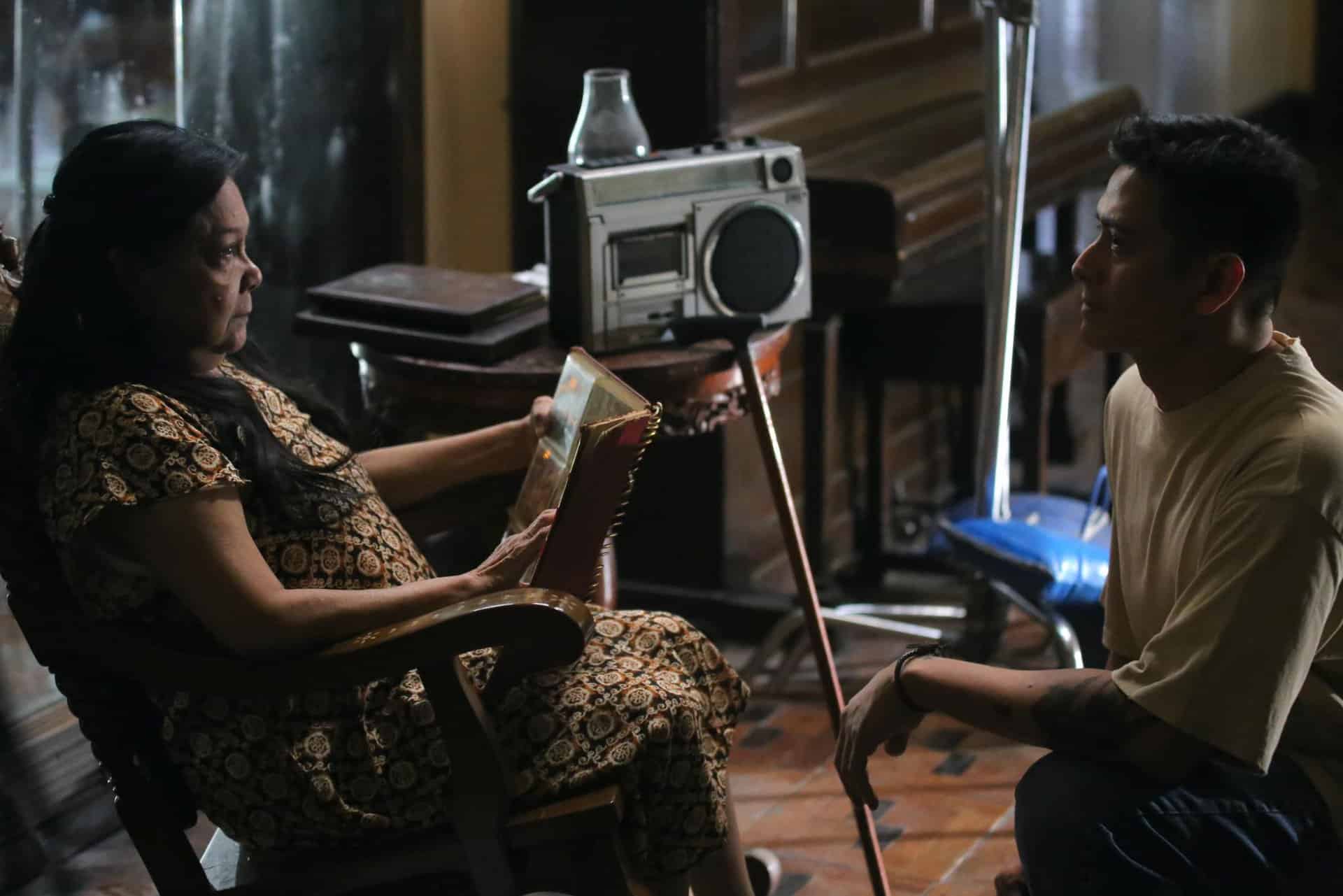
The narrative of Pieta delves into the intricate web of family secrets, past transgressions, and the arduous quest for truth. At its core is Isaac, portrayed by Alfred Vargas, a man recently released from prison through a presidential pardon. His conviction for his father’s death has left him with unresolved questions, compelling him to return to his childhood home in search of answers. However, his homecoming is met with a profound challenge: his mother, Rebecca, played by Nora Aunor, is afflicted with both half-blindness and severe dementia, rendering her unable to recognize him or provide the clarity he desperately seeks. This tragic circumstance immediately establishes a formidable barrier to Isaac’s mission, deepening the emotional stakes of the unfolding drama.
Amidst this personal crisis, Beth, a steadfast friend of Rebecca, portrayed by Gina Alajar, emerges as a pivotal figure. Beth has diligently cared for Rebecca in Isaac’s absence, also managing the family’s significant landholdings amassed over the years. Isaac finds an unexpected ally in Beth, whose unwavering presence and practical support become crucial as he navigates the complexities of his past and present. He also encounters a fellow convict, released concurrently, who offers another layer of companionship and shared experience. Yet, as Isaac grapples with the elusive truth and the emotional toll of his mother’s condition, his frustration mounts, gradually pushing him towards a resurgence of the very violence he sought to escape.
A Director’s Vision: Star Power and Thematic Depth
Adolfo Alix Jr., known for his nuanced character studies and often gritty portrayals of Filipino life, consciously invests heavily in the star quality of his protagonists in Pieta. This approach is a hallmark of much of Philippine cinema, where the drawing power of established actors can often be a primary driver for audience engagement. Alix Jr. masterfully crafts the interaction between Nora Aunor’s Rebecca and Gina Alajar’s Beth, creating a dynamic that critics have lauded as the film’s strongest element. Their relationship, characterized by a potent blend of history, loyalty, and unspoken tensions, reaches its zenith in an unexpected and impactful finale. The deliberate antithesis between Rebecca, who despite her mental frailties exudes a sinister and dangerous aura, and Beth, who appears innocent and perpetually helpful, is a compelling cinematic choice. This dichotomy not only adds layers of intrigue but also serves as a powerful commentary on perception versus reality, and the complex nature of human relationships.
The title "Pieta" itself carries profound religious and emotional connotations, evoking images of suffering, lamentation, and maternal grief. In the context of the film, this title suggests a narrative steeped in sorrow, where a mother’s pain, both physical and psychological, becomes central to the unfolding tragedy. Rebecca’s dementia and blindness can be interpreted as a metaphor for a past that refuses to be seen or remembered clearly, yet continues to cast long shadows. Isaac’s quest for truth, therefore, takes on an almost spiritual dimension, a search for atonement or understanding in a landscape of blurred memories and hidden sins.
Critical Reception and Narrative Challenges
Despite the undeniable strengths in its lead performances and thematic undertones, Pieta has faced criticism regarding certain aspects of its execution. Reviewers have noted that the film’s narrative coherence falters when the focus shifts away from the compelling dynamic between Aunor and Alajar. Pacing issues become apparent early on, particularly in Isaac’s character arc. Alfred Vargas’s portrayal of Isaac has been described by some as subpar, potentially exacerbated by a character that, according to critics, is not as robustly written as his counterparts. This creates a disconnect, as the protagonist’s journey, which should anchor the story, struggles to maintain consistent engagement.
Alix Jr.’s directorial intention to build towards a climactic revelation of truth is evident, yet both the build-up to the finale and the conclusion itself have been deemed problematic. The ending, in particular, has been critiqued as being "far-fetched," unfortunately drawing comparisons to the dramatic excesses often found in television soap operas. This assessment suggests a deviation from the grounded realism that often characterizes Alix Jr.’s work, potentially undermining the film’s artistic aspirations.
Furthermore, a significant point of contention revolves around the integration of the wider ensemble cast. It has been observed that Alix Jr. may have fallen into the trap of constructing the film around his star cast rather than ensuring each actor served as an integral part of a compact and cohesive story. Veteran actors such as Bembol Roco, Jaclyn Jose, and Angeli Bayani, despite their individual talents, appear at times to be somewhat forcibly inserted into the narrative, rather than organically woven into its fabric. This issue becomes particularly pronounced towards the film’s conclusion, diluting the overall impact. However, even with these structural critiques, the film still manages to eloquently convey a potent message about the enduring influence of the past on the present, and how the "sins of the parents torment their children," a universal theme deeply resonant within many cultural contexts.
Technical Acumen and Artistic Contributions
In terms of technical craftsmanship, Pieta showcases several commendable elements. Nelson Macababat Jr.’s cinematography stands out for its ability to capture the rural setting—from the ancestral manor to the expansive fields—with both stark realism and artistic flair. The deliberate use of shadows and coloring imbues the film with a distinct noir essence, significantly contributing to its atmospheric depth and enhancing the dramatic tension. This visual style elevates the viewing experience, adding a layer of sophisticated intrigue that aligns with the film’s crime drama elements.
Xila Ofloda’s editing also receives positive mention for implementing a fitting, relatively fast pace. This rhythmic flow generally maintains audience engagement, but it cannot entirely compensate for the underlying issues with the narrative’s pacing and character development. The interplay between the fast-paced editing and the episodic nature of Isaac’s journey occasionally creates a disjointed feel, highlighting the challenges inherent in balancing narrative ambition with structural integrity.
Background and Context: The Significance of the Cast
The casting of Nora Aunor in Pieta is a monumental event in Philippine cinema. Aunor, often referred to as "The Superstar," holds an unparalleled place in the industry, with a career spanning over five decades. Her ability to deliver powerful, nuanced performances across various genres has cemented her legacy as one of the greatest Filipino actors of all time. Her involvement in Pieta immediately elevates the film’s profile, drawing immense attention from critics and audiences alike. For Aunor to take on a role as challenging as Rebecca, a character grappling with dementia and moral ambiguity, speaks to her enduring commitment to her craft and her willingness to explore complex human conditions.
Gina Alajar, another highly respected veteran actress and director, brings her formidable talent to the role of Beth. Alajar’s career is marked by a consistent string of critically acclaimed performances, often portraying strong, resilient women. Her pairing with Aunor in Pieta is a masterstroke, as their combined experience and dramatic prowess create a magnetic on-screen chemistry that anchors the film’s emotional core. Their scenes together are where the film truly shines, demonstrating the profound impact of veteran actors in bringing depth and authenticity to a story.
Alfred Vargas, known for his work in both film and public service (having served as a congressman), takes on the demanding role of Isaac. His dual career path often places him under scrutiny, and his performance in Pieta, while critiqued, nonetheless marks a significant attempt to tackle a challenging character. The film’s ability to attract such a diverse and experienced cast underscores the project’s artistic ambition and the respect commanded by Adolfo Alix Jr. within the industry.
Timeline and Industry Implications
Pieta’s journey began with its world premiere at the Moscow International Film Festival, a prestigious platform that offers international visibility and critical validation. For a Filipino film to be selected for such an event is a significant achievement, signaling its artistic merit and potential appeal beyond local markets. This international debut precedes its current limited theatrical release in Manila, a strategy often employed by independent or art-house films to generate buzz, gauge audience reaction, and secure wider distribution deals. The planned broader cinema release next year indicates confidence from distributors in the film’s long-term commercial viability, bolstered by its festival run and the star power of its cast.
The film’s reception, with its mix of praise and critique, sparks important discussions within the Philippine film industry. It highlights the perennial challenge of balancing artistic integrity and narrative cohesion, especially when working with an ensemble of high-caliber actors. While the presence of stars can guarantee initial interest, the film’s ultimate success, both critically and commercially, depends on the strength of its script and overall execution. The "missed opportunity" assessment for Pieta serves as a reminder that even with exceptional talent, a flawed script can hinder a film from reaching its full potential.
Broader Impact and Future Outlook
Pieta contributes to the ongoing evolution of Philippine cinema by tackling complex themes of crime, family dysfunction, memory, and justice through a distinctly Filipino lens. It continues the tradition of character-driven dramas that delve into the psychological landscapes of its protagonists, a genre in which Filipino filmmakers have historically excelled. The film’s ability to generate both fervent praise for its performances and thoughtful critique for its narrative structure provides valuable lessons for aspiring filmmakers and industry veterans alike.
The debate surrounding Pieta’s narrative choices, particularly the perceived shortcomings in Isaac’s arc and the "soap opera" ending, underscores a broader conversation about storytelling conventions in contemporary cinema. While some elements might be considered commercial concessions, others point to ambitious artistic risks. Ultimately, Pieta, with its merits and flaws, stands as a significant entry in Adolfo Alix Jr.’s filmography and a notable addition to the Philippine cinematic landscape. Its compelling performances, particularly from Nora Aunor and Gina Alajar, ensure that it will be remembered, even as it prompts reflection on the intricate art of filmmaking and the delicate balance between star power, thematic depth, and narrative excellence. As the film prepares for its wider release, it will be interesting to observe how general audiences respond to its unique blend of intense family drama and crime thriller, and whether its powerful performances can overcome its noted structural challenges to leave a lasting impression.