Apple TV+’s critically acclaimed dystopian drama, Silo, is poised to expand its narrative horizons with the upcoming third season, promising not only to continue the gripping saga of its present-day survivors but also to unveil a long-awaited origin story set centuries in the past. This dual narrative approach, confirmed by Apple TV, aims to deepen the mystery surrounding the subterranean civilization and the cataclysmic event that forced humanity underground. The series, based on Hugh Howey’s best-selling novel series of the same name, has captivated audiences with its intricate world-building and compelling characters, led by Rebecca Ferguson as engineer Juliette Nichols.
The announcement of a dual timeline for the third season signals a significant escalation in the storytelling for Silo. While the immediate future of the 10,000 individuals residing within the colossal underground structure remains precarious, the exploration of its genesis is set to provide crucial context for the present-day struggles. This ambitious narrative strategy suggests a deliberate effort to address the foundational questions that have fueled the series’ intrigue since its debut.
The Present-Day Struggle for Survival
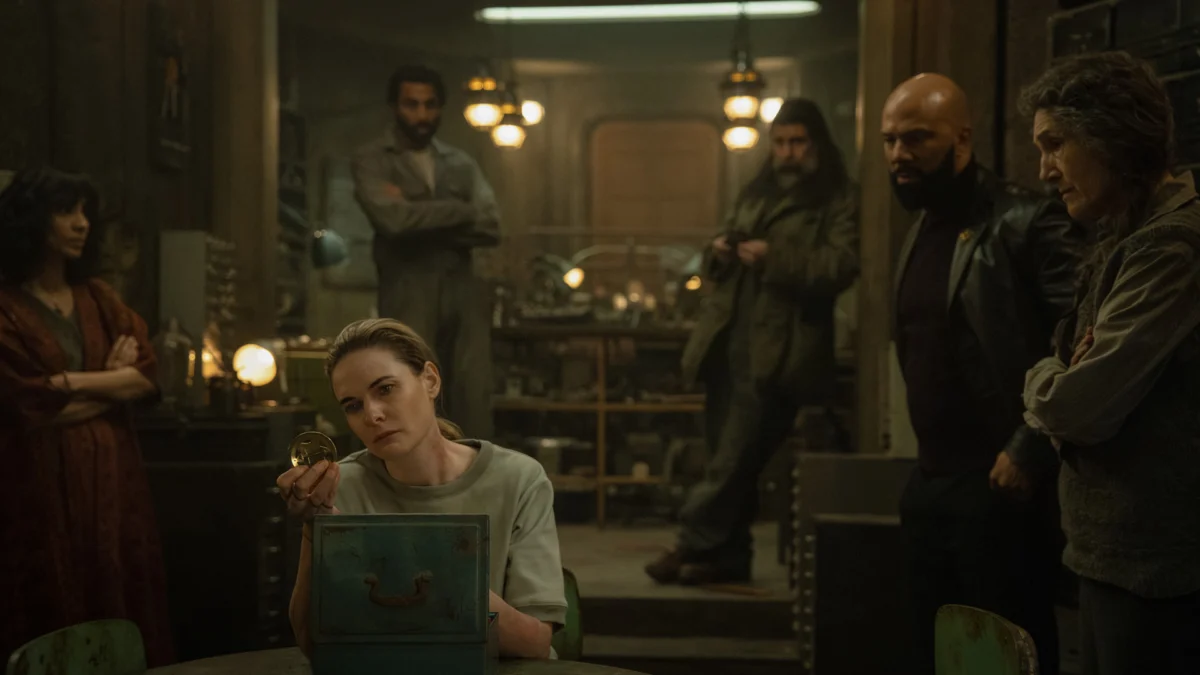
In the current timeline, Juliette Nichols, a resourceful engineer who defied the odds by surviving her own "cleaning"—a near-certain death sentence for being banished to the toxic surface—finds herself grappling with memory loss. Her return to the silo, after discovering the existence of another, more primitive silo populated by survivors, marks a pivotal moment. The silo community is still reeling from a recent rebellion, the consequences of which are still unfolding, and now faces a "dangerous new threat," as stated in the official synopsis. This precarious state of affairs suggests that the internal power dynamics and external dangers have intensified, pushing the inhabitants to their limits.
The previous season saw the downfall of Mayor Bernard Holland, portrayed by Tim Robbins, whose morally ambiguous leadership and control over information were central to the silo’s oppressive regime. His removal was a direct result of Juliette’s actions and the growing unrest among the populace. However, the synopsis indicates that the vacuum left by Holland’s demise may not bring immediate peace. The phrase "rebellion arises under the rule of extremely morally dubious Mayor Bernard Holland" in the original text, while referring to his tenure, also foreshadows that new figures, potentially equally or more problematic, will emerge to fill the power void. The mention of a "dangerous new threat" further implies that the challenges facing the silo extend beyond internal politics and may involve external forces or unforeseen consequences of past actions.
Unearthing the Past: The "Before Times"
Parallel to Juliette’s present-day struggles, the third season will introduce a historical narrative, dubbed the "Before Times." This segment of the story will follow journalist Helen Drew, played by Jessica Henwick, and Congressman Daniel Keene, portrayed by Ashley Zukerman, as they uncover a far-reaching conspiracy. Their investigation is described as pulling them into a "chain of events with catastrophic, irreversible consequences," directly linking their discoveries to the very circumstances that led to the creation of the silos.
The decision to frame this historical period with such dramatic phrasing underscores its importance to the overarching mythology of Silo. The very concept of the "Before Times" existing in quotation marks and capitalized, as humorously noted in the source material, highlights its significance as a distinct and pivotal era, a stark contrast to the established "now" of the silo. This narrative choice suggests that the historical revelations will not merely be supplementary but will fundamentally alter the audience’s understanding of the silo’s purpose, its creators, and the true nature of the disaster.
A Rich Ensemble Cast and Expanding Universe
The success of Silo has been bolstered by its stellar ensemble cast, and the third season promises to feature both returning favorites and compelling new additions. Rebecca Ferguson continues to anchor the series as Juliette, whose resilience and determination have become a beacon of hope for the silo’s inhabitants. Tim Robbins, as the former mayor Bernard Holland, left a significant impact, and the potential for his past actions to echo into the present or for new figures to emerge from his shadow remains a key area of interest.
Among the returning cast members are Common, Harriet Walter, Steve Zahn, Chinaza Uche, Avi Nash, Alexandria Riley, Shane McRae, Remmie Milner, Rick Gomez, Billy Postlethwaite, and Clare Perkins. Their continued presence suggests that their characters’ storylines will be integral to the unfolding narrative, both in the present and potentially through their characters’ historical counterparts or the impact of their lineage on the "Before Times."
The introduction of Jessica Henwick as Helen Drew and Ashley Zukerman as Daniel Keene in the historical timeline brings fresh talent and new narrative threads. Henwick, known for her roles in Iron Fist and other genre projects, and Zukerman, who gained recognition for his part in Succession, are expected to bring depth and intrigue to the conspiracy they uncover. Additionally, the series welcomes Laura Innes, Jessica Brown Findlay, Morven Christie, Reed Birney, Matt Craven, and Colin Hanks, suggesting a significant expansion of the Silo universe and its character roster.
The Unfolding Narrative Arc: From Mystery to Revelation
Silo‘s narrative has consistently revolved around the unknown. The inhabitants of the silo live under a strict set of rules and beliefs, heavily curated by the governing powers, regarding the outside world and their history. The initial premise of the series is rooted in the question of why these individuals are confined to a subterranean existence, with the official explanation being that the surface of the planet is toxic and uninhabitable. However, Juliette’s journey has begun to chip away at this carefully constructed reality, revealing inconsistencies and potential deception.
The dual timeline approach for Season 3 is a direct response to the questions the series has raised. By presenting the "Before Times," the show aims to provide the audience with a clearer picture of the events that necessitated the creation of the silos. This could involve detailing the nature of the disaster, the motivations of the architects of the silo project, and the political or social climate that preceded the cataclysm. The conspiracy uncovered by Drew and Keene is likely the linchpin connecting the past to the present, suggesting that the current challenges faced by Juliette and her fellow silo dwellers are direct consequences of decisions made centuries ago.
Supporting Data and Contextual Background
The concept of self-sustaining underground habitats for survival is not new to speculative fiction. Post-apocalyptic narratives often explore such scenarios as a means of preserving humanity in the face of environmental collapse, nuclear war, or other existential threats. The technological feasibility and societal implications of such enclosed communities are complex. For instance, maintaining a population of 10,000 individuals underground would require sophisticated life support systems, including air and water purification, waste management, and sustainable food production. The psychological impact of prolonged confinement and the absence of natural light and open spaces are also significant factors that would shape the inhabitants’ behavior and societal structures.
Hugh Howey’s novel series, which serves as the basis for the show, delves deeply into these logistical and psychological challenges. The author has explored themes of truth, censorship, and the control of information within closed societies. The "cleaning" ritual, a central element of the series, highlights the society’s method of dealing with dissent and the potential threat of exposing the truth. The discovery of other silos, as seen in the second season, suggests that the initial premise of a single, isolated refuge might be incomplete, hinting at a larger, more complex network of these underground structures.
The timeline of events leading to the silo’s construction would likely span decades, if not centuries, involving the initial cataclysm, the decision-making processes of surviving leadership, the engineering and construction of the silos, and the subsequent establishment of the societal order and historical narratives. The "Before Times" storyline is expected to illuminate this crucial period.
Official Statements and Audience Expectations
While specific details regarding the plot of Silo Season 3 remain under wraps, Apple TV’s announcement regarding the dual timeline has generated significant anticipation among fans. The confirmation that the series will delve into its origin story provides a clear indication of the direction the narrative will take. The inherent mystery of the Silo universe has been a primary driver of its popularity, and the promise of answers, while maintaining suspense, is a delicate balance that the showrunners are clearly aiming to strike.
The renewal for a fourth and final season ensures that the story will reach a definitive conclusion, offering the promise of resolution to the many questions that have accumulated over the first two seasons. This forward-looking confirmation alleviates concerns about the narrative being left incomplete and allows for a more focused and satisfying storytelling arc in the remaining seasons. The ultimate success of the third season will likely hinge on its ability to effectively weave together the past and present narratives, providing compelling revelations without sacrificing the suspense and character-driven drama that has defined Silo.
Broader Impact and Implications
The exploration of the "Before Times" in Silo Season 3 carries significant implications for the series’ thematic resonance. By examining the origins of this dystopian society, the show can offer a commentary on human resilience, the nature of truth and deception, and the consequences of societal control. The narrative could potentially explore the ethical dilemmas faced by those who built the silos, the compromises they made, and the unintended consequences of their actions.
Furthermore, the introduction of new characters and storylines in both timelines suggests a broadening of the Silo universe. The conspiracy uncovered in the past could have ripple effects that extend beyond the silo itself, hinting at a larger narrative landscape that may involve other surviving communities or remnants of pre-apocalypse society. The success of Silo in creating a rich and believable dystopian world, coupled with its compelling mystery, positions it as a significant entry in the genre, and the upcoming season promises to further solidify its place by unraveling its core mysteries. The premiere of Silo‘s third season is slated for July 3 on Apple TV+, with the first two seasons available for streaming.