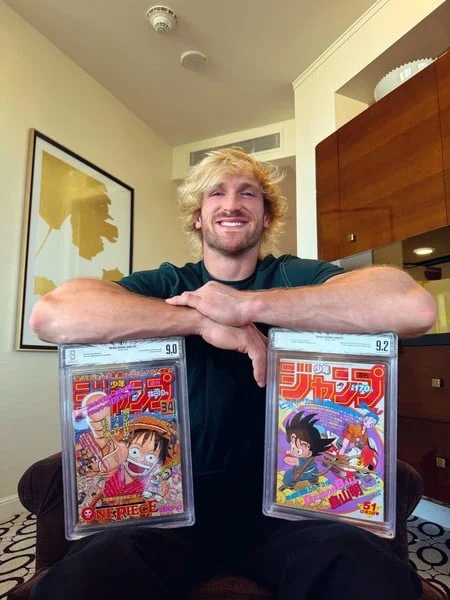
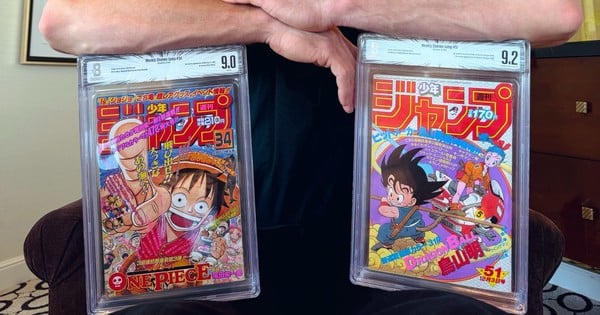
Internet personality and WWE wrestler Logan Paul has reportedly acquired two highly sought-after graded issues of Weekly Shonen Jump magazine, featuring the inaugural chapters of Akira Toriyama’s iconic Dragon Ball manga and Eiichiro Oda’s record-breaking One Piece manga. The purchase of the Dragon Ball issue, graded at a near-perfect 9.2, has been confirmed by Paul himself at a staggering US$550,000. The accompanying One Piece issue, graded at 9.0, also represents a significant investment, though the exact price remains undisclosed. This acquisition places Paul at the forefront of a burgeoning market for rare manga collectibles, further solidifying his reputation as a prominent figure in high-value item acquisition.
A Landmark Acquisition in Manga Collectibles
The news, first reported by Paul via his official X (formerly Twitter) account, has sent ripples through both the manga collecting community and the broader pop culture landscape. The Dragon Ball issue in question is the Weekly Shonen Jump 1984 issue #43, which contains the very first serialized appearance of Goku and his adventures. Similarly, the One Piece issue is Weekly Shonen Jump 1997 issue #34, marking the debut of Monkey D. Luffy and the Straw Hat Pirates.
Paul’s announcement included a direct quote detailing the significance of his acquisitions: "Proud owner of the greatest Mangas in the world (imo). One Piece Chapter One 9.0 (second highest grade in existence, pop 3). First canon appearance of Monkey D. Luffy. One Piece is the #1 selling Manga in the world at 600M+ copies sold. Dragon Ball Chapter One 9.2 (highest grade…)." The mention of "pop 3" for the One Piece issue indicates that only two other copies of this specific edition, graded at 9.0 or higher, are known to exist within the grading registry. For Dragon Ball, a 9.2 grade signifies an exceptionally preserved copy, with Paul’s claim of it being the "highest grade" suggesting a rare level of preservation for such an old publication.
The rarity and historical importance of these issues cannot be overstated. Dragon Ball, which concluded its original manga run in 1995, has sold over 260 million copies worldwide, making it one of the best-selling manga series of all time and a cornerstone of global popular culture. One Piece, still ongoing and having surpassed 600 million copies sold globally, holds the record for the best-selling manga series in history. The first appearances of these universally recognized franchises represent not just comic book history, but significant cultural touchstones.
The High-Stakes World of Graded Collectibles
The valuation of such rare comic and manga publications has seen a dramatic surge in recent years, driven by a confluence of factors including increased collector interest, the accessibility of online auction platforms, and the professionalization of grading services. Companies like Professional Sports Authenticator (PSA) play a crucial role in this market by authenticating and encapsulating collectibles in protective cases, assigning a numerical grade from 1 to 10 (with 10 being the highest) to indicate the item’s condition. This grading process provides a standardized measure of quality, significantly influencing an item’s market value.
The US$550,000 price tag for the Dragon Ball issue places it among the most expensive manga acquisitions ever recorded. This figure is comparable to, and in some cases exceeds, the prices fetched for some of the rarest comic books in history. For instance, a copy of Action Comics #1, featuring the first appearance of Superman, has sold for millions of dollars. The Dragon Ball acquisition underscores the growing perception of manga as a legitimate and valuable form of collectible art and historical artifact.
Logan Paul’s History with High-Value Collectibles
This significant purchase is not an isolated incident for Logan Paul. The internet personality and professional wrestler has a well-documented and often controversial history with the high-end collectibles market. Most notably, in February 2026, Paul auctioned his rare Pikachu Illustrator card for a record-breaking US$16.492 million through the American auction house Goldin. The buyer was identified as A.J. Scaramucci, a venture capitalist and son of former White House Communications Director Anthony Scaramucci.
However, the Pikachu Illustrator card auction was not without its controversies. Shortly after the sale, social media buzzed with speculation and accusations regarding the card’s grade and provenance. Reports suggested that Paul had acquired a PSA 9 graded Pikachu Illustrator card in 2021 and subsequently had it regraded to a PSA 10. Further complexities arose from Paul’s acquisition history, which involved initially purchasing a PSA 9 version from collector Matt Allen and later acquiring a PSA 10 version from a collector in Dubai.
Paul also ventured into fractional ownership of collectibles through his now-defunct Ontario-based business, Liquid Marketplace. This platform aimed to allow collectors to buy and sell shares of high-value items, including his PSA 10 Pikachu Illustrator card. He reportedly sold 51% of the card’s ownership in July 2022, only to reacquire full ownership in May 2024.
The business operations of Liquid Marketplace have also come under scrutiny. The platform is currently facing legal action from the Ontario Securities Commission, which alleges that the company distributed "unregistered securities" by selling investment-like tokens without proper registration or exemption under securities law. While Logan Paul is not currently named as a respondent in these proceedings, the legal entanglements highlight the regulatory complexities inherent in the rapidly evolving collectibles market, particularly when it intersects with financial instruments.
Broader Implications for the Manga Market
Logan Paul’s substantial investment in these seminal manga issues carries significant implications for the broader market. Firstly, it serves as a powerful endorsement of manga as a serious collectible asset class. The sheer volume of media attention generated by his purchase is likely to attract new investors and collectors to the space, potentially driving up demand and prices for other rare manga and comic-related items.
Secondly, the focus on graded issues reinforces the importance of professional authentication and grading services. As the market matures, collectors and investors will increasingly rely on services like PSA to provide assurance of authenticity and condition, making graded items the benchmark for high-value transactions.
Thirdly, the acquisition by a globally recognized public figure like Logan Paul can significantly boost the cultural visibility of manga. For many of his followers who may not be deeply immersed in manga fandom, this purchase introduces them to the historical and cultural significance of these works, potentially expanding the audience for manga and related media.
The trend of escalating prices for rare collectibles is not unique to manga. Similar patterns have been observed in the trading card game market, vintage sports memorabilia, and classic comic books. This sustained interest suggests a robust and growing market for items that hold both nostalgic and intrinsic cultural value.
Contextualizing the Acquisitions
The acquisition of these specific Weekly Shonen Jump issues is particularly noteworthy given the cultural impact of both Dragon Ball and One Piece. Dragon Ball, created by Akira Toriyama, debuted at a time when manga was beginning to gain wider international recognition. Its innovative storytelling, dynamic action sequences, and memorable characters laid the groundwork for countless subsequent manga and anime series. The series’ influence on martial arts-themed fiction and shonen storytelling is immeasurable.
One Piece, by Eiichiro Oda, has achieved unparalleled success, not only in terms of sales but also in its longevity and global reach. The series’ intricate world-building, diverse cast of characters, and themes of adventure, friendship, and freedom have resonated with generations of readers. Its status as the best-selling manga of all time solidifies its position as a cultural phenomenon.
For Paul to secure the first appearances of both these titans of manga, in such high grades, represents a significant achievement in his collecting endeavors. It demonstrates a strategic focus on acquiring items of profound historical and cultural significance, rather than merely on speculative value. The fact that he chose to publicly announce these acquisitions, complete with specific grading details and price points, further highlights his engagement with the serious collector community and his willingness to participate in the discourse surrounding such high-value assets.
The undisclosed price for the One Piece issue also adds an element of intrigue. Given its rarity and significance, it is reasonable to assume that this acquisition also represented a substantial financial outlay, potentially rivaling or exceeding the cost of the Dragon Ball issue. This suggests a deliberate strategy to secure foundational pieces from two of the most important manga series ever created.
As the collectibles market continues to evolve, the investments made by figures like Logan Paul will undoubtedly shape its trajectory. The US$550,000 spent on the Dragon Ball debut issue is not just a personal acquisition; it is a data point that signifies the increasing valuation and cultural recognition of manga as a premier collectible. The long-term implications for the market, including its accessibility to a wider audience and its potential for continued growth, remain to be seen, but this latest acquisition undoubtedly marks a significant chapter in the history of manga collecting.