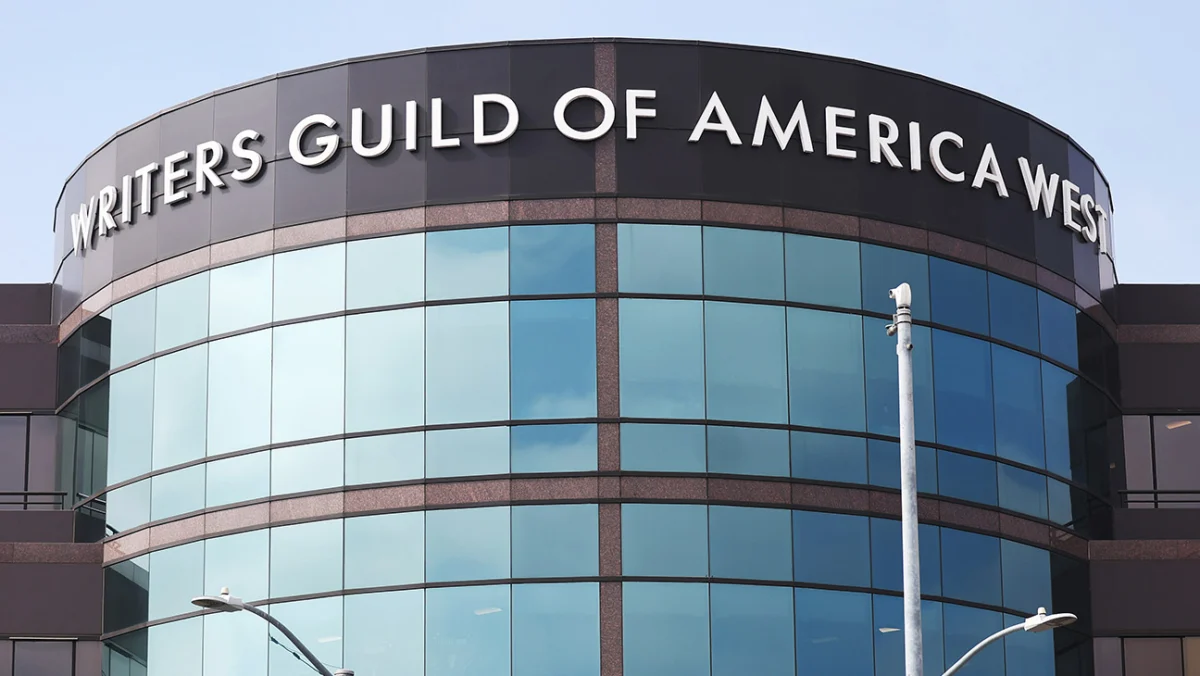
Members of the Writers Guild of America (WGA) have officially ratified a new four-year collective bargaining agreement with the Alliance of Motion Picture and Television Producers (AMPTP), marking a significant shift in the labor landscape of Hollywood. The deal, which was approved by slightly more than 90 percent of the voting membership, provides a massive $321 million infusion into the union’s struggling health plan. While the overwhelming majority of the 9.6 percent who voted against the pact expressed concerns over increased premiums and eligibility requirements, the leadership of the WGA West and WGA East framed the agreement as a necessary compromise to ensure the long-term survival of member benefits in a volatile economic climate.
The ratification concludes a period of intense negotiation that followed the historic 148-day strike of 2023. Unlike the traditional three-year terms that have defined Hollywood labor contracts for decades, this pact extends to four years. Union negotiators argued that this atypically long duration was the primary lever used to secure the largest single injection of funding for the health plan in the guild’s history. This infusion is intended to stabilize a fund that has been besieged by the dual pressures of runaway healthcare inflation and a significant contraction in industry production, which has reduced the employer contributions that typically sustain the plan.
The Financial Mechanics of the $321 Million Health Fund Infusion
The centerpiece of the new contract is the $321 million boost to the WGA Health Fund. For years, the fund has faced a structural deficit, exacerbated by the rising costs of medical services and a decline in the number of hours worked by writers as studios scale back their content output. Michele Mulroney, President of WGA West, emphasized that the contract returns the fund to a "sustainable path," building upon the foundational gains achieved during the 2023 strike.
However, the sustainability of the fund comes at a direct cost to the membership. For the first time, many writers will be required to pay monthly premiums for coverage that was previously premium-free. Starting in 2027, individual participants in the PPO plan will face a $75 monthly premium. To mitigate the impact on lower-earning writers, the contract introduces a new alternative plan with a $25 monthly premium, though this plan offers different coverage tiers.
Furthermore, the earnings thresholds required to qualify for guild health insurance will increase. In an industry where employment is often sporadic and "middle-class" writers frequently struggle to meet annual minimums, these heightened requirements represent a significant hurdle. Deductibles and out-of-pocket maximums are also set to rise, reflecting a broader trend in the American healthcare system where costs are increasingly shifted toward the consumer.
Internal Dissent and the Impact on Marginalized Writers
Despite the 90 percent approval rating, the deal faced organized opposition from within the guild. The Committee of Black Writers (CBW) emerged as a vocal critic of the healthcare changes. In an internal communication circulated prior to the vote, the leadership of the CBW informed members that they would be voting "no" on ratification. The committee argued that the increased earnings thresholds and new premiums would disproportionately affect writers from underrepresented backgrounds and those early in their careers.
The CBW leadership stated that the deal would "hurt more writers than it will help," pointing to the fact that marginalized writers often face greater barriers to consistent employment. By raising the bar for health coverage, the committee argued, the guild might inadvertently push vulnerable members out of the industry entirely. This internal friction highlights the tension between securing the institutional health of the union’s benefits and protecting the individual financial stability of its most precarious members.
A Chronology of the 2024 Negotiations
The path to this four-year deal began shortly after the resolution of the 2023 strike. While the 2023 contract addressed fundamental issues like artificial intelligence and streaming residuals, it left the long-term solvency of the health fund as a pressing concern for the next cycle of talks.
- Late 2023 – Early 2024: WGA leadership conducts internal audits of the health fund, identifying a looming shortfall that could necessitate massive benefit cuts if not addressed in the next contract.
- Spring 2024: Preliminary discussions begin with the AMPTP. The studios, led by new AMPTP President Greg Hessinger, signal a desire for labor peace after the disruptive "Summer of Strikes" in 2023.
- April 2024: Negotiators for the WGA, led by Ellen Stutzman, propose a four-year term—a departure from the standard three-year cycle—in exchange for a massive, front-loaded infusion of cash into the health fund.
- May 2024: A tentative agreement is reached. The WGA leadership embarks on a campaign to educate members on the "worthy bargain" of the longer deal.
- Late May 2024: Ratification voting opens. Despite pushback from the Committee of Black Writers, high-profile showrunners and guild veterans throw their support behind the deal.
- Friday Ratification: The vote results are announced, confirming the deal’s passage with 90.4 percent support.
Economic Gains: Minimums, Residuals, and the Streaming Success Bonus
Beyond the health plan, the four-year contract includes several key economic wins for writers. Most minimum payment rates will see a compounded increase of 10.5 percent over the life of the agreement. This is designed to keep pace with inflation, which has eroded the purchasing power of screenwriters and television writers over the last decade.
The contract also addresses the "streaming era" economics that were a focal point of the 2023 strike. The residual base for both domestic and foreign high-budget streaming projects (SVOD) will see an increase, ensuring that writers continue to benefit as platforms expand their global reach. Additionally, the "streaming success bonus"—a metric-based payment for the most-watched shows on platforms like Netflix, Disney+, and Max—has been expanded. This ensures that writers are more equitably rewarded when their work becomes a significant hit for a streamer.
Protections Against Artificial Intelligence and "Free Work"
The WGA has also made incremental progress in the ongoing battle against the encroachment of generative artificial intelligence. The AI language established in 2023 remains the bedrock of the union’s protections, stipulating that AI cannot write or rewrite literary material and that AI-generated content cannot be considered source material.
In the 2026-2028 window covered by this new deal, the studios have agreed to a new transparency requirement. If a studio intends to license a writer’s work to train a commercial generative AI system, they must notify the union and provide an opportunity for bargaining. This gives the WGA a "seat at the table" as studios look to monetize their archives through machine learning, a move that many writers fear could eventually lead to their displacement.
Furthermore, the guild secured language aimed at curbing the practice of "free work." This often occurs when writers are asked to perform uncompensated rewrites or "polishes" under the guise of casual feedback. The new contract expands "second-step" payments for screenplays and mandates that any requests for delivery or rewrites must be limited to the specific person named on the writer’s contract. This is intended to stop studios from cycling through multiple writers for a single "step" of payment.
Industry Context: The Great Contraction
The ratification of this contract occurs against the backdrop of what industry analysts are calling "The Great Contraction." After the "Peak TV" era, which saw scripted series numbers soar to over 600 per year, major media conglomerates have pivoted from a strategy of subscriber growth at any cost to a focus on profitability and debt reduction.
This shift has resulted in fewer "greenlights," shorter episode orders, and a more cautious approach to development. For writers, this means fewer jobs are available, making the protections and minimums secured in this contract even more vital. The AMPTP’s statement following the ratification noted that the deal reflects a "collaborative approach" intended to support "long-term stability." For the studios, a four-year deal provides a longer window of labor certainty, allowing them to focus on restructuring their business models without the immediate threat of another work stoppage.
Broader Implications and Analysis
The WGA’s decision to accept a four-year deal is a calculated risk. By extending the contract, the union gains immediate financial security for its health fund but cedes the ability to renegotiate other terms—such as AI protections or base pay—for an additional year. In a rapidly evolving technological landscape, a year can be an eternity.
However, the overwhelming support for the deal suggests that the membership prioritizes the "safety net" of healthcare above almost all else. The 2023 strike took a massive financial toll on individual writers, many of whom depleted their savings to stay afloat. The prospect of losing health coverage due to a bankrupt fund was a risk many were unwilling to take.
The success of this negotiation also solidifies the standing of Ellen Stutzman and the current WGA leadership. By navigating a path that avoided a second strike while securing record-breaking funding, they have demonstrated a pragmatic approach to labor relations that balances militant advocacy with fiscal reality.
As the industry moves forward, the focus will likely shift to how other guilds, such as IATSE and the Teamsters, react to this precedent. The WGA has set a high bar for health fund infusions, but the trade-offs—increased premiums and longer contract terms—may become the new standard for Hollywood labor agreements in the post-Peak TV era. For now, the writers of Hollywood have secured their immediate future, even as the industry they serve continues to undergo a fundamental and often painful transformation.