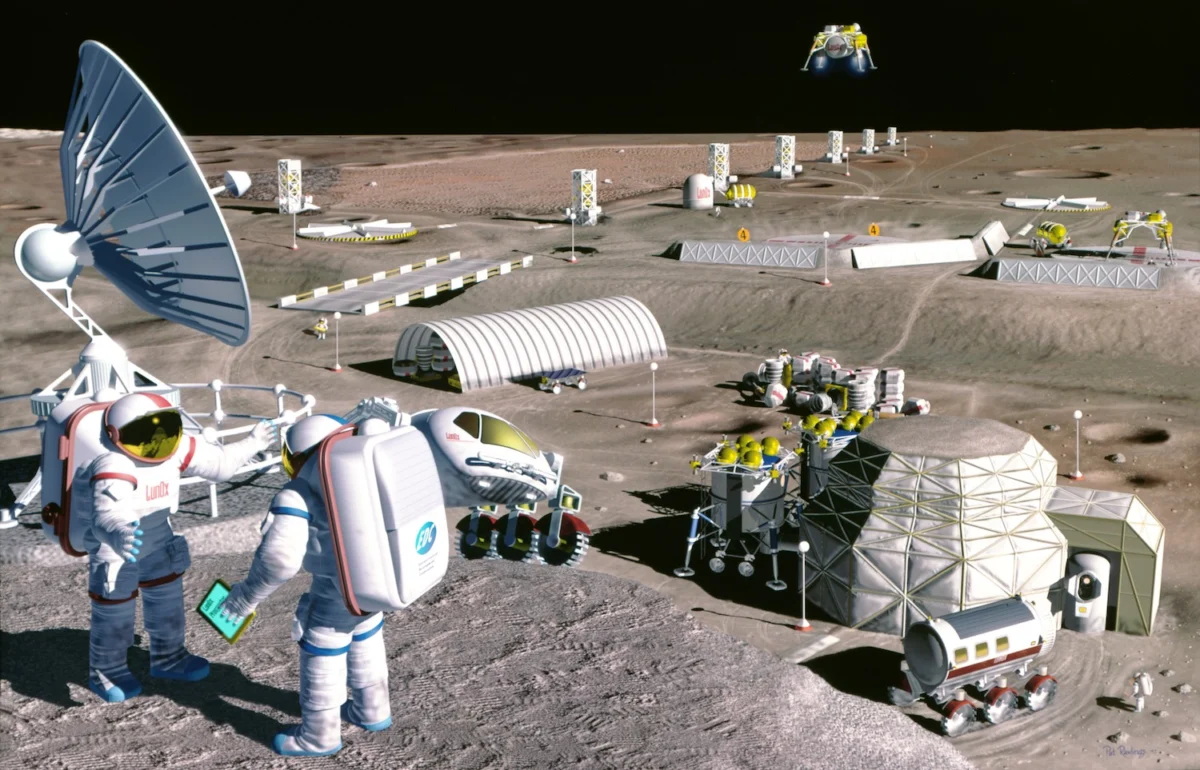
The allure of settling new worlds has long captivated the human imagination, a narrative woven through scientific ambition, exploration, and the persistent hope for a fresh start. However, a closer examination of science fiction, particularly within the context of tabletop roleplaying games like 2300 AD, reveals a recurring and cautionary theme: the profound difficulty and frequent failure of extraterrestrial colonization. A passage from the game’s lore, describing "Jumpers"—dissident groups fleeing Earth and attempting to establish new lives on distant, often hostile planets—highlights the inherent dangers. These groups, driven by desperation or the desire for autonomy, often found their endeavors thwarted by the sheer alienness of their new homes, with limited resources and support leading to disappearances or forced retreats. This narrative echoes a consistent thread in science fiction, where the concept of "premature settlement" serves as a fertile ground for exploring humanity’s vulnerabilities when confronted with the unknown.

The Harsh Realities of Alien Environments
The fundamental premise underlying these narratives is the stark reality that alien worlds are, by definition, alien. They are environments shaped by evolutionary pressures entirely different from Earth’s, presenting challenges that can range from subtle atmospheric incompatibilities to outright lethal ecosystems. Even on Earth, our home planet, historical attempts at settlement have faced catastrophic failures due to environmental factors, resource scarcity, or societal collapse. The extrapolation of these terrestrial vulnerabilities to an interstellar scale, where the margin for error is exponentially smaller and the consequences of failure more absolute, paints a sobering picture. The 2300 AD game’s focus on survival technologies and their societal impact is a direct response to this inherent difficulty, acknowledging that establishing a sustainable presence beyond Earth requires not only technological prowess but also a deep understanding of alien ecologies and the resilience of the human spirit.
A Literary Legacy of Failed Expeditions
This theme of colonization fraught with peril is not new to science fiction; it has been a subject of exploration for decades, providing authors with a rich tapestry of scenarios to examine humanity’s place in the cosmos.
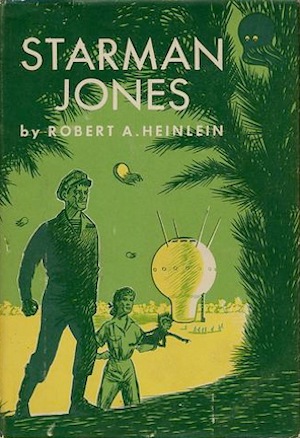
Starman Jones by Robert Heinlein (1953)
Robert Heinlein’s Starman Jones, published in 1953, offers an early glimpse into the challenges of interstellar travel and the potential pitfalls of encountering alien civilizations. The story follows Max Jones, a resourceful young man whose ambition to join the starfarers’ guild is initially thwarted by a lack of credentials. His journey aboard the starship Asgard takes an unexpected turn when a navigational error strands the ship in an uncharted system. The crew’s survival hinges on Max’s latent navigational talents, which prove crucial for finding their way home. However, the immediate threat is not just the challenge of navigation but also the potential hostility of the alien world they are forced to consider as a refuge. While Heinlein often championed human ingenuity, Starman Jones also cautions against underestimating alien capabilities, suggesting that encounters with extraterrestrial life can be far from benign. The narrative implies that even a seemingly habitable world could harbor unknown dangers or inhabitants disinclined to share their territory.
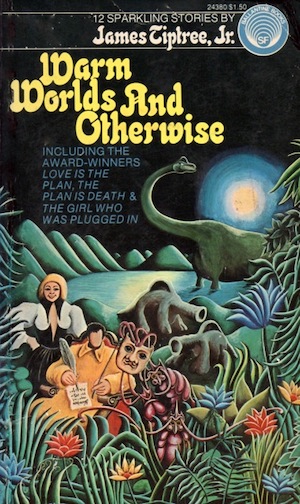
"On the Last Afternoon" by James Tiptree, Jr. (1972)
James Tiptree Jr.’s poignant short story, "On the Last Afternoon," collected in Warm Worlds and Otherwise, presents a starkly different and more tragic portrayal of premature settlement. The human castaways, their ship crippled, find themselves on a world that initially appears hostile. A seemingly miraculous clearing allows them to land and begin building a new community. However, this reprieve is tragically temporary. The clearing, they discover, is not a natural phenomenon but a prelude to an encounter with the very force that created it. The story underscores the theme of insufficient understanding and preparedness, where the colonists’ assumptions about their environment lead them into mortal danger. The grim conclusion, reminiscent of Joanna Russ’s We Who Are About To…, highlights the devastating consequences when human survival hinges on the whims of incomprehensible alien forces or environments, leaving little room for optimistic outcomes.
The Keeper of the Isis Light by Monica Hughes (1980)
Monica Hughes’s The Keeper of the Isis Light, published in 1980, explores the complexities of colonization on a planet designated as "marginally habitable." Isis is home to only two inhabitants: a robot guardian and a young orphan, Olwen Pendennis. Olwen’s solitary existence is disrupted by the arrival of a large contingent of colonists. As the newcomers quickly discover, Isis is largely uninhabitable without advanced technologies that are not immediately available. Olwen, despite her isolation, possesses a unique understanding of the planet and attempts to guide the colonists. However, their survival is jeopardized when they uncover the true nature of her survival on this harsh world. While the colony does not entirely fail, it remains confined to a specific, limited region, rendering the settlers essentially endangered due to their constrained numbers and restricted location. The novel also touches upon the settlers’ lack of adaptability, a critical flaw when facing unfamiliar challenges. This scenario illustrates how even a seemingly manageable environment can present insurmountable obstacles without the right knowledge, resources, and willingness to change.
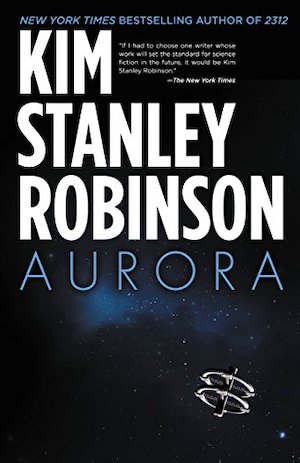
Aurora by Kim Stanley Robinson (2015)
Kim Stanley Robinson’s Aurora, published in 2015, offers a contemporary and sobering critique of long-duration interstellar colonization. Seven generations after their departure, the crew of a generation ship arrives at Tau Ceti, a star system believed to harbor a potentially habitable world. The descendants of the original crew, however, are far less enthusiastic about the prospect of settling an alien planet, having been born into a mission they did not choose. While Tau Ceti does possess a world that is "potentially habitable," the story emphasizes the vast chasm between potential and actual habitability. The novel meticulously details the immense technological, psychological, and biological challenges that make bridging this gap extraordinarily difficult. Robinson highlights two key factors dooming this particular effort: the insufficient number of colonists (two thousand) to withstand inevitable setbacks and the crew’s general lack of curiosity and adaptability, leading to a foregone conclusion of failure. The narrative serves as a powerful cautionary tale, exploring the complex ethical and practical considerations of sending humanity to the stars, particularly in the context of escaping terrestrial problems like climate change.

The Scourge Between Stars by Ness Brown (2023)
Ness Brown’s The Scourge Between Stars, a recent addition to the genre published in 2023, revisits the theme of abandoned Earth and the perilous search for a new home. The starship Calypso, part of the Goddess Flotilla, sets out for Proxima Centauri after deeming Earth irredeemably damaged. However, Proxima b proves beyond their colonization capabilities. The disheartened crew embarks on a slow return journey to Earth, only to face the aging of their vessel and the uncertainty of their original home’s fate. Their problems are compounded by an alien stowaway and the inherent fragility of their life support systems. The novel underscores basic rules for aspiring colonists: avoid untested colonization methods on generation ships with limited crews, and crucially, try not to be written by authors known for bleak narratives or whose stories devolve into horror. The Calypso‘s crew makes the critical error of becoming characters in a horror novel, demonstrating how unforeseen dangers, both biological and existential, can derail even the most desperate attempts at survival.
Thematic Resonance and Broader Implications
These narratives, while fictional, tap into deep-seated anxieties and aspirations surrounding human expansion. The recurring motif of failed colonization serves several purposes within science fiction:
- A Reflection of Terrestrial Challenges: The struggles of interstellar colonists often mirror historical accounts of terrestrial exploration and settlement, where disease, environmental incompatibility, and societal conflicts led to numerous failures. This resonance grounds the fantastical elements in relatable human experiences.
- A Cautionary Tale for Technological Hubris: Many stories critique the idea that advanced technology alone can guarantee success in alien environments. They emphasize the importance of humility, adaptability, and a profound respect for the unknown.
- Exploration of Human Resilience and Fragility: The narratives explore the limits of human endurance, ingenuity, and social cohesion when faced with extreme adversity. They question whether humanity’s inherent flaws will always accompany it to new frontiers.
- Commentary on Earth’s Future: The impulse to flee Earth, as seen in the 2300 AD lore and The Scourge Between Stars, often stems from ecological collapse or societal breakdown on the home planet. The failures of extraterrestrial colonization can therefore serve as a stark warning against abandoning Earth without viable solutions or a clear understanding of the challenges ahead.
The subgenre of failed extraterrestrial settlement, though perhaps not as vast as other corners of science fiction, offers critical insights into humanity’s relationship with exploration and survival. It reminds us that the cosmos is not a welcoming void waiting to be conquered, but a complex and often indifferent reality that demands immense preparation, resilience, and a healthy dose of caution. Whether it’s the desperate "Jumpers" of 2300 AD or the technologically advanced but socially flawed crews of generation ships, the lessons remain consistent: the frontier is perilous, and the dream of a new home is often a distant, and sometimes unattainable, star.