
In an era increasingly dominated by intricate cinematic universes and sprawling television sagas, screenwriter Jeremy Robbins has successfully carved a niche with Apex, a refreshingly "lean, old-school popcorn movie" poised to capt captivate Netflix audiences. The film, starring Charlize Theron as Sasha and Taron Egerton as Ben, plunges viewers into a high-stakes survival narrative set against the unforgiving backdrop of the Australian wilderness, charting a relentless cat-and-mouse game between a determined protagonist and her relentless hunter. Robbins, whose previous credits include the The Purge television series, embarked on Apex as a passion project, a return to the visceral, action-driven entertainment he cherished as a youth. This personal endeavor culminated in a rare triumph in Hollywood: a spec script sale to Netflix, defying industry trends and securing a high-profile production.
The Genesis of Apex: A Writer’s Personal Project and a Return to Core Thrills
The conception of Apex emerged during a period of global uncertainty, as the world grappled with the early years of the COVID-19 pandemic. With many television development projects stalled, Robbins found himself reflecting on the essence of storytelling that truly resonated with him. "I was left feeling like, what do I really want to write? Well, I want to write something that I love, that I really want to see as an audience member," Robbins recounted. This introspection led him back to the survival thriller genre, a form he found surprisingly hopeful amidst the pervasive anxiety of the time. He saw in survival stories a profound message of resilience and the extraordinary capabilities unleashed when individuals are pushed to their absolute limits.
Robbins’ objective was clear: to craft a pure, action-driven spectacle, devoid of extraneous dialogue or convoluted subplots. He aimed for a narrative told primarily through action and behavior, challenging his main character, Sasha, with a relentless series of physical and psychological obstacles. This foundational approach laid the groundwork for a film characterized by its intense pacing and unwavering focus on the immediate struggle for survival. The script was an exercise in stripping down storytelling to its "most basic, most essential elements," focusing on the dynamic interplay of "man versus woman versus nature."
Homage to ’90s Thrillers: Crafting a "Muscular" Narrative
Apex intentionally evokes the spirit of ’90s action thrillers, a golden age for "mano-a-mano" survival stories that emphasized practical effects, authentic stunt work, and taut, relentless tension. Robbins openly acknowledges his deep admiration for films like A River Wild, The Edge, and even earlier classics such as Deliverance. Beyond pure survival tales, his influences extend to iconic action blockbusters like Under Siege, Die Hard, Executive Decision, and Air Force One. These films, which he fondly remembers recreating with his brothers as a child, instilled in him a love for high-stakes, physically demanding narratives.
This appreciation translated directly into his writing philosophy for Apex. Robbins sought to imbue the film with a "lean and mean" sensibility, a "muscular" quality that prioritizes visual storytelling over expository dialogue. "I was really excited about telling a story largely through action and behavior. What does the character do? What are they faced with physically, and how can I design a variety of set pieces that are going to push this main character to her breaking point?" he explained. This commitment to action as a primary narrative driver is a hallmark of the ’90s genre, where character development was often revealed through reaction and resilience in the face of overwhelming odds, rather than through lengthy monologues.

Screenwriting Philosophy: Breaking the Mold and Orchestrating Escalation
Robbins’ screenwriting process for Apex was unorthodox, deliberately breaking away from conventional film school dictums. While the oft-repeated mantra is "show, don’t tell," many modern films still lean heavily on exposition. Robbins, however, committed to a more visual, almost directorial approach on the page. He describes "storyboarding it in my mind," choreographing, cutting, and editing the film as he wrote, considering the scope and scale from wide shots to intimate close-ups. He experimented with formatting – single words, varied fonts, italics, bold text, dashes – to convey pacing and rhythm, treating the script reader as the "very first audience member." This immersive style aimed to translate the cinematic experience directly onto the page, making the action palpable and the tension immediate.
A critical element of Apex‘s design is its masterful escalation of tension. Robbins meticulously charted the intensity curve, ensuring a constant build-up without peaking too early. His personal logline, "man versus woman versus nature," served as a guiding principle. He envisioned each sequence as a unique combination of these elements: sometimes "man and nature versus woman," other times "woman and nature versus man," eventually converging into "man and woman versus nature" in the latter half of the film. This dynamic interplay prevented the story from feeling static and ensured a continuous sense of surprise and forward momentum. Extensive "mapping out on that whiteboard" was crucial for orchestrating these shifts and modulating the action, ensuring a coherent and compelling narrative arc.
The Alchemy of Casting: Theron and Egerton’s Transformative Impact
The arrival of Charlize Theron as Sasha and Taron Egerton as Ben profoundly shaped the final iteration of Apex. While Robbins had a clear vision for the characters, the actors brought an additional layer of depth and dynamic interplay that was not fully realized in the initial drafts. Theron’s interest extended beyond the physical challenges of Sasha’s journey; she sought to uncover the "cracks and the holds and the fissures in Ben’s armor," viewing him as a metaphorical "mountain" to overcome psychologically.
Egerton, in turn, infused Ben with a "manic, childlike, boy-like teenage, high-wire act – a feral, wild animal" energy. This portrayal diverged from Robbins’ original conception, which possessed a different, less volatile energy. The juxtaposition of Egerton’s unhinged, primal intensity against Theron’s "stoic and reserved and inward energy" created a potent "alchemy" that defined the cat-and-mouse dynamic. Their collaborative input transformed the psychological games between the hunter and the hunted, elevating the narrative beyond a mere physical struggle to an intricate battle of wits and wills. This collaborative refinement process underscores the iterative nature of filmmaking, where actors’ interpretations can significantly enrich a script’s emotional and psychological landscape.
Authenticity in Action: On-Location Filming and Stunt Work
The commitment to delivering a truly authentic and "gritty naturalism" extended to the production itself. Under the direction of Baltasar Kormákur, known for his visceral filmmaking (e.g., Everest, Adrift), and with the dedication of the cast and crew, Apex eschewed greenscreens and artificial sets wherever possible. Filming in the rugged, often inaccessible Australian wilderness presented immense logistical challenges. Crew members resorted to "helicoptering gear" and "hik[ing] miles down the gorge to film," enduring conditions that would daunt even experienced hikers, let alone a large movie production.
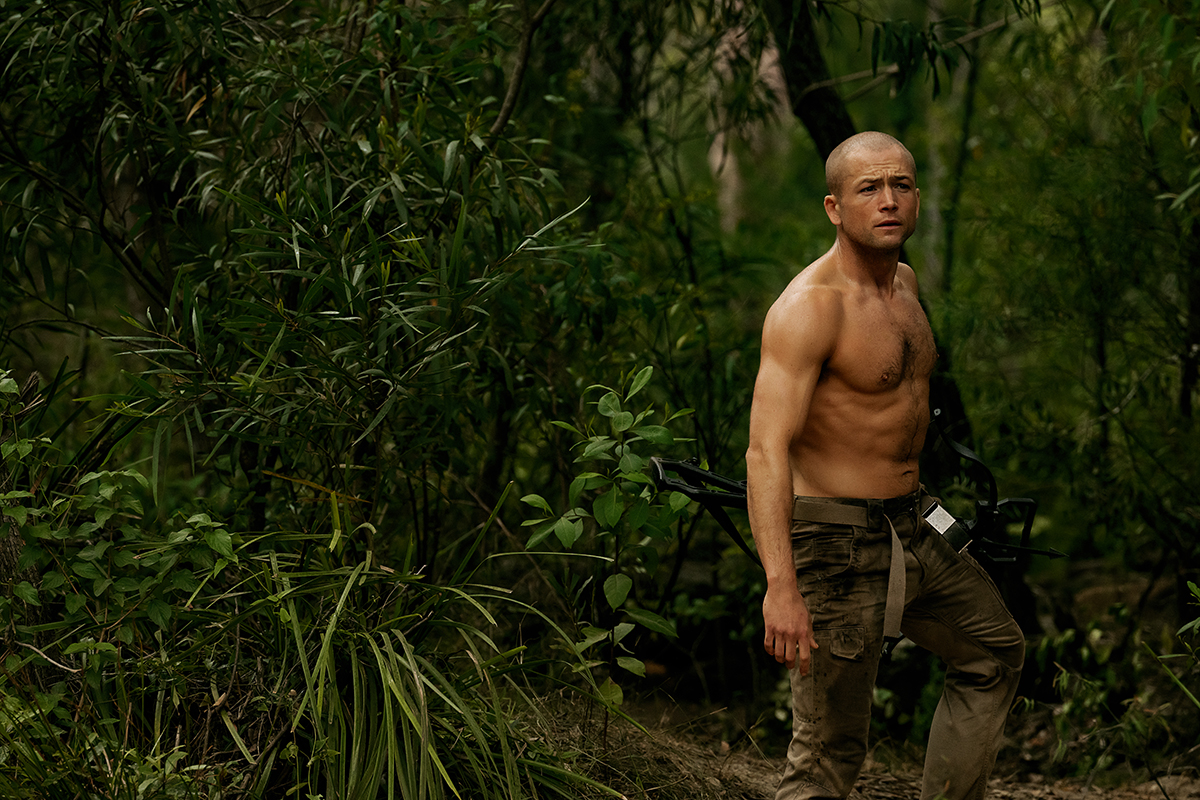
Charlize Theron and Taron Egerton were notably committed to performing many of their own stunts, pushing themselves "to such crazy places." This dedication to practical effects and on-location shooting mirrors the very ’90s action films Robbins admired, where "when things exploded, they were really exploding. When people were jumping off of cars, they were jumping off of cars." This philosophy ensures that the danger and physical toll experienced by the characters are genuinely conveyed, providing an immersive experience for the audience that cannot be replicated by digital effects. This strenuous production process not only lends credibility to the film but also serves as a testament to the entire team’s pursuit of cinematic authenticity.
The Unlikely Journey: From Spec Script to Netflix Blockbuster
Perhaps the most remarkable aspect of Apex‘s journey is its path to becoming a Netflix production, particularly as a spec script. In contemporary Hollywood, where studios increasingly rely on established intellectual property or scripts developed in-house, an original spec script sale, especially one garnering such high-profile talent and a major streamer, is considered a significant rarity.
Robbins completed the script during the pandemic, fueled by a desire to write something he genuinely loved. The script quickly gained traction, landing on The Black List in 2021, an annual survey of the most-liked unproduced screenplays. Despite this early recognition, the project faced the typical challenges of development hell. "We continued to try to put versions together. Oh, there’s a director over here. Oh, there’s an actor who might be interested. Oh, there’s a company that might want to maybe put a version together," Robbins recalled, describing a frustrating period where various iterations failed to materialize. He had, in his own words, "made peace with nothing happening," valuing the script primarily as a new sample for his portfolio, having focused more on television writing in recent years.
The turning point arrived unexpectedly. A new manager, just before the Writers’ Strike, decided to "do a couple submissions" for Apex. This seemingly small act led the script into the hands of Chernin Entertainment, a prominent production company known for films like Ford v Ferrari and Hidden Figures. Chernin Entertainment, recognizing its potential, then brought Apex to Netflix.
What followed was a swift and decisive greenlight from the streaming giant. Netflix provided "amazing" new notes, injecting fresh momentum into the project. Robbins, who hadn’t touched the script in a year, returned to it with renewed perspective. Following a rewrite, the script was sent to Charlize Theron, who quickly committed. Her involvement, in turn, attracted director Baltasar Kormákur, who also signed on swiftly. The project then accelerated into a "rocket ship," with production slated for Australia in January, transforming a once-dormant spec script into a high-priority, fast-tracked feature film. This meteoric rise underscores the unpredictable nature of Hollywood and the enduring power of a compelling, well-crafted story.
Netflix’s Strategy: Investing in High-Concept Thrillers
The acquisition and fast-tracking of Apex by Netflix is indicative of the streamer’s continued investment in high-concept, star-driven genre films, particularly action and thrillers. In a competitive streaming landscape, original content that can attract major talent and deliver broad appeal is paramount. While Netflix has experimented with various genres, action-thrillers consistently perform well globally, catering to an audience hungry for escapism and high-octane entertainment.

Apex fits perfectly into this strategy. With Charlize Theron, an established action star known for her roles in Mad Max: Fury Road and Atomic Blonde, and Taron Egerton, a rising talent from Kingsman and Rocketman, the film boasts significant star power. The premise—a raw survival thriller—offers universal appeal, transcending cultural barriers. Furthermore, the commitment to practical effects and authentic locations aligns with a growing audience demand for cinematic quality that rivals traditional theatrical releases, even when delivered directly to homes. By backing a project like Apex, Netflix not only secures exclusive content but also signals its commitment to nurturing original storytelling, even if it begins as a humble spec script.
Implications for Writers and the Industry
The success story of Apex offers a glimmer of hope for screenwriters navigating a challenging industry landscape. The spec market, once a vibrant avenue for breaking into Hollywood, has seen a significant decline over the past two decades. In an environment where intellectual property (IP) often takes precedence, an original script finding its way to a major platform with A-list talent is a testament to its inherent quality and the enduring appeal of well-executed genre narratives.
For Jeremy Robbins, it represents a culmination of perseverance and a validation of his instinct to write what he genuinely loved. His experience highlights the importance of creating strong portfolio pieces, even if their immediate future is uncertain. The journey of Apex also reinforces the critical role of managers and producers in championing unique voices and connecting them with the right industry players. While luck undeniably played a part, as Robbins humbly acknowledges, it was ultimately built upon the foundation of a compelling script that resonated deeply with those who read it.
As Apex prepares for its release, it stands as a testament to the enduring power of classic storytelling tropes, reimagined through a modern lens and brought to life by a passionate creative team. For Robbins, the journey has been transformative, shifting his perspective from creator to eager audience member. "It just was so wonderful that it went from this story that I loved to suddenly this movie that now I’m just an audience member. I can’t wait to watch it," he concluded, encapsulating the dream of every screenwriter: to see their vision fully realized on screen.