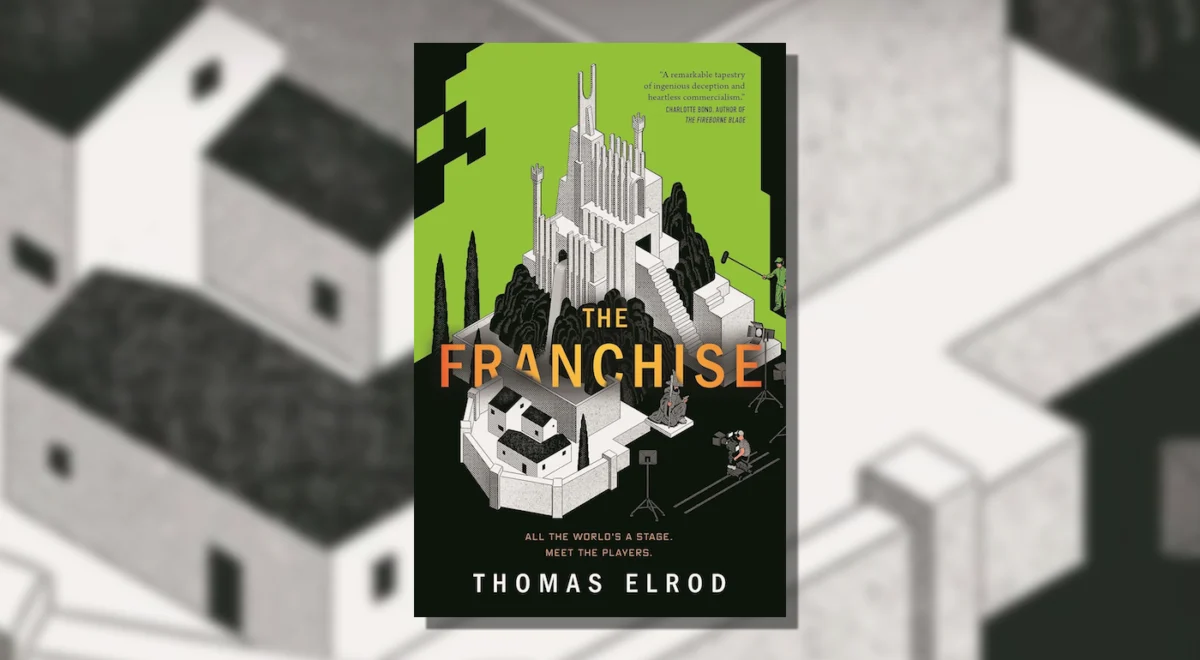
The literary world is abuzz with the upcoming release of Thomas Elrod’s science fiction novel, The Franchise, set to hit bookshelves on May 12th from Tor Books. Ahead of its official publication, an evocative excerpt offers a tantalizing glimpse into a narrative that masterfully blends the escapism of fantasy with the chilling realities of a world teetering on the brink of existential crisis. The novel promises a meta-fictional exploration of belief, reality, and the power of narrative, all set against the backdrop of a deeply unsettling historical moment.
A World of Illusion and Imminent Peril
The Franchise introduces readers to the Malicarn, a realm seemingly plucked from classic fantasy lore, teeming with magic, dragons, wizards, and valiant warriors. This vibrant world, meticulously crafted and seemingly immutable, is home to thousands who live and work within its borders, bound by loyalty to their king and fear of external threats. However, the Malicarn is not merely a fictional construct within the novel; it is the setting for a series of wildly successful blockbuster films, a cinematic empire whose characters are, in a profound and unsettling twist, entirely convinced of the authenticity of their fabricated lives.
The narrative centers on a beloved actor within this cinematic franchise who begins to question the very fabric of his reality and the studio’s elaborate creation. Yet, the momentum of The Franchise is depicted as almost insurmountable. The challenge of awakening a population that believes itself to be free, and whose reality is built upon a foundation of carefully constructed fantasy, proves to be a far more complex endeavor than the actor initially anticipates. This core conflict hints at a deeper exploration of mass delusion, the nature of truth, and the ethical quandaries of controlling perception.
October 23, 1962: A City Under a Shadow
The provided excerpt plunges the reader into New York City on October 23, 1962, a date etched into historical infamy as the height of the Cuban Missile Crisis. The stark contrast between the lingering beauty of a perfect autumn day and the palpable dread of impending nuclear annihilation sets a somber and urgent tone. The article paints a vivid picture of Manhattanites going about their daily routines, marveling at the city’s architectural prowess and the promise of future progress, blissfully unaware of the clandestine machinations unfolding in the shadows. Men in dark suits, engaged in hushed telephone conversations and smoking cigarettes, are revealed to be orchestrating plans that could lead to global catastrophe. The pleasant weather, once a source of simple joy, becomes a poignant symbol of a world that was soon to be irrevocably altered, its potential future extinguished.
The Editor’s Dilemma: Navigating Reality and Fiction Amidst Crisis
The narrative then shifts to the offices of World Science Fiction and Fantasy Magazine, situated above a bustling park. Wendell Highsman, the editor, observes children playing in the park, their carefree innocence a stark counterpoint to the grave pronouncements made by President Kennedy the previous evening. The knowledge that Soviet nuclear warheads are stationed in Cuba, and that a U.S. naval blockade is in effect, weighs heavily on Highsman. He contemplates the difficult decision of parents choosing to shield their children from the terrifying truth, opting to preserve their final moments with a semblance of normalcy.
Highsman’s own sense of security is precarious. His stone office building offers a modicum of protection against a potential nuclear blast, a slim hope of survival against the inevitable radiation. The open spaces of the park, however, represent a far more vulnerable existence. His thoughts are interrupted by Mrs. Olson, his secretary, diligently preparing rejection notices for aspiring writers. Her stoic focus on her work, despite the unspoken fear for her son serving in the navy, highlights the pervasive undercurrent of anxiety. Highsman allows her this distraction, recognizing the futility of sending these letters, as the postal service is unlikely to function in the coming days. He reflects on the authors whose dreams of publishing glory will likely be extinguished before they can be realized, their stories of astronauts and dragonslayers fading into oblivion.
An Unexpected Visitor and a Desperate Plea
The arrival of an unexpected visitor, Jean-Danton Souard, further disrupts the tense atmosphere. Souard, a man of French origin with a thick mustache, presents himself at Highsman’s office with a manuscript, an act that breaches the magazine’s submission protocols. Souard, having traveled from Boston that morning, reveals his background and his unusual determination to have his work read personally, citing its immense importance and his inability to risk it being lost in the mail.
Highsman, initially annoyed by the intrusion, finds himself drawn into a conversation that transcends the immediate crisis. Souard’s assertion that his novel is about "the end of the world" resonates deeply with Highsman’s own anxieties. Despite his initial reluctance and the overwhelming nature of the global situation, Highsman is intrigued by Souard’s persistence. The Frenchman’s poignant comparison of their current predicament to his experiences as a prisoner of war, where facing certain death did not negate the need to live, strikes a chord.

A Glimpse of Hope in the Face of Oblivion
Souard’s description of his novel—a medieval, magical kingdom where magic has been outlawed and an internal rebellion seeks its return—initially seems out of step with the prevailing scientific and technological anxieties of the era, epitomized by the Sputnik launch and the public’s fascination with space exploration. However, Souard reframes his narrative as a metaphorical exploration of the end of a world, the societal upheaval caused by the return of magic, and the unforeseen consequences that reshape a realm and its inhabitants.
The sheer length of the manuscript—over two thousand pages—stuns Highsman, drawing a comparison to Leo Tolstoy’s epic novels. Yet, Souard’s earnest assurance of its meticulous construction and his own articulate English, a testament to his pre-war upbringing and intellectual background, begin to chip away at Highsman’s skepticism.
As sirens wail in the distance, a stark reminder of the day’s grim reality, Highsman makes a momentous decision. While acknowledging the unlikelihood of serializing such a lengthy work or acquiring it outright, he offers to read the manuscript. Driven by a profound sense of shared existential dread and a newfound empathy, Highsman extends a generous offer: fifty dollars for a new story, or as a commission.
A Bold Investment in the Unforeseen Future
In a remarkable turn, Highsman’s contemplation of the uncertain future and the potential for his magazine’s legacy prompts an even bolder gesture. He imagines a future where Souard’s novel becomes a runaway success, a literary phenomenon that revitalizes World Science Fiction and Fantasy Magazine, leading to a hardcover publication, a bestselling paperback, and even film adaptations. This optimistic vision, born from the ashes of impending destruction, fuels his decision.
He impulsively increases his offer to two thousand dollars, declaring his intention to buy the novel immediately. He calls Mrs. Olson to his office, ready to finalize the transaction. Highsman seeks a name for Souard’s mythical realm, and upon learning it is The Malicarn, he recognizes the potent resonance of the title. He even suggests an Americanized abbreviation for Souard’s name, "J. D. Souard," further cementing the potential for a new, celebrated literary figure.
The Franchise: A Metaphor for Hope and Resilience
The excerpt from The Franchise transcends a mere literary preview; it is a profound meditation on the human condition, particularly in the face of overwhelming adversity. The juxtaposition of the fictional Malicarn with the real-world anxieties of the Cuban Missile Crisis serves as a powerful commentary on our capacity for both self-deception and extraordinary resilience. The novel, as suggested by this compelling excerpt, seems poised to explore how narratives, whether fictional or fabricated, shape our understanding of reality and our ability to confront the unknown.
Thomas Elrod’s The Franchise promises to be a thought-provoking examination of the power of stories, the nature of belief, and the enduring human spirit, even when confronted with the ultimate uncertainty. The tale of the Malicarn, and the man who dares to question its reality, becomes a potent metaphor for our own collective journey through times of crisis, suggesting that even in the face of annihilation, imagination and narrative can offer a path forward, a flicker of hope in the encroaching darkness. The book’s release is eagerly anticipated by those seeking a story that is not only entertaining but also deeply resonant with the human experience.