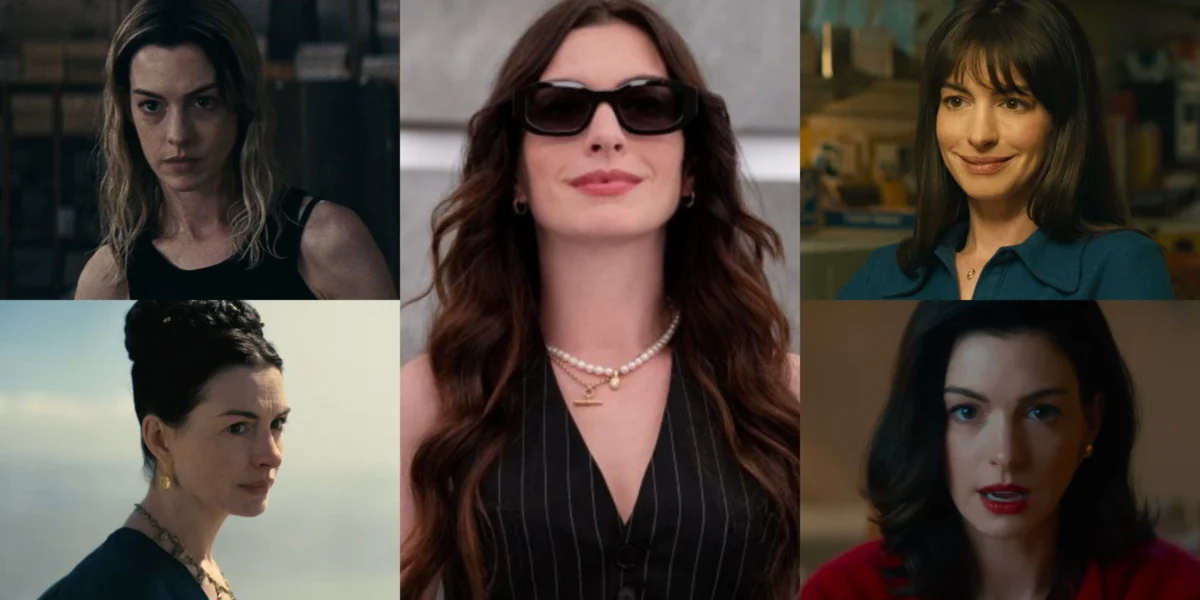
Anne Hathaway’s professional trajectory in 2026 has emerged as a significant case study in career longevity, public perception, and strategic film selection within the modern Hollywood ecosystem. Fourteen years after her 2012 campaign for Les Misérables, which culminated in an Academy Award for Best Supporting Actress but also a highly publicized wave of social media vitriol known as "Hatha-hate," the actress finds herself at the center of a prolific five-film release schedule. This intensive output, featuring a diverse range of genres and directorial styles, has notably avoided the "overexposure" criticisms of the past, suggesting a fundamental shift in how both the industry and the public consume and value Hathaway’s contributions to cinema. The 2026 slate—comprising Mother Mary, The Devil Wears Prada 2, The Odyssey, The End of Oak Street, and Verity—positions Hathaway not only as a box-office draw but as a central figure in the upcoming awards conversation.
The Evolution of Public Perception: From Hatha-hate to Industry Icon
To understand the significance of Hathaway’s 2026 momentum, it is necessary to examine the cultural climate of 2012. During that period, Hathaway starred in two of the year’s most significant cultural touchstones: Christopher Nolan’s The Dark Knight Rises, where she played Selina Kyle (Catwoman), and Tom Hooper’s musical epic Les Misérables. While both films were commercial successes and Hathaway received universal acclaim for her performance as Fantine, her omnipresence during the awards circuit triggered a backlash. Media analysts at the time attributed this to a perceived "theatricality" or "earnestness" that clashed with the cynical tone of early 2010s social media.
By 2026, however, the landscape of celebrity culture has shifted. The rise of "stan culture" and a retrospective appreciation for Hathaway’s consistent work ethic have replaced the previous era’s hostility. Recent projects such as Ocean’s Eight (2018), The Idea of You (2024), and her work as a producer have rebranded her as a resilient veteran of the industry. The lack of backlash toward her five-film 2026 slate indicates that Hathaway has successfully transitioned from a polarizing ingenue to a respected "prestige" star whose presence is viewed as a marker of quality rather than a source of irritation.
A Comparative Analysis of 2012 and 2026 Film Slates
The structural similarities between Hathaway’s 2012 and 2026 output are striking, yet the industry context for these films has evolved. In 2012, Hathaway’s two major hits were essentially "pre-sold" to the Academy and the public. The Dark Knight Rises followed a record-breaking predecessor, and Les Misérables was a beloved Broadway adaptation.
In contrast, the 2026 slate is more varied in its commercial and critical goals:
- Mother Mary (A24): A musical melodrama directed by David Lowery, featuring Hathaway alongside Michaela Coel. Early screenings have yielded high praise for the lead performances, though the film’s niche aesthetic suggests a more curated critical success rather than a broad box-office sweep.
- The Devil Wears Prada 2 (Disney/20th Century): A high-profile sequel to the 2006 classic. While the original earned Meryl Streep an Oscar nomination and became a cultural phenomenon, sequels to prestige comedies rarely find the same level of awards traction, serving instead as major commercial drivers.
- The Odyssey (Warner Bros.): Christopher Nolan’s epic adaptation of the Homeric myth. Starring Matt Damon as Odysseus and Hathaway as Penelope, this film carries the most significant "Oscar-level" hype due to Nolan’s recent sweep with Oppenheimer.
- The End of Oak Street (Warner Bros.): A sci-fi suburban fantasy from David Robert Mitchell. Following the success of the studio’s genre-bending hits like Weapons, this project aims for "sleeper hit" status.
- Verity (Amazon MGM): An adaptation of Colleen Hoover’s best-selling thriller. This project targets the "BookTok" demographic, which has become a formidable force in driving theatrical attendance.
The Nolan Factor and the Supporting Actress Narrative
The most direct path to a 2026 Academy Award nomination for Hathaway appears to be her role in The Odyssey. Historically, Christopher Nolan’s films have been technical juggernauts, often dominating categories such as Cinematography, Film Editing, and Sound. However, Oppenheimer (2023) broke a trend by securing major acting wins and nominations, including a Best Supporting Actress nod for Emily Blunt.
Blunt’s nomination for her role as Kitty Oppenheimer provides a potential blueprint for Hathaway’s Penelope. Both roles involve playing the "left-behind wife" of a historical or mythological figure. While Penelope’s role in the original text is defined by her absence and waiting, modern cinematic adaptations often expand these roles to provide "prestige" actresses with significant emotional beats. If Nolan grants Hathaway a pivotal scene comparable to Blunt’s deposition scene in Oppenheimer, she could easily secure a spot in the Best Supporting Actress field.
Furthermore, Hathaway’s history with Nolan—having appeared in The Dark Knight Rises and Interstellar—suggests a level of shorthand and trust between the director and actress. However, Hathaway faces the challenge of being a previous winner. Unlike Blunt, who was widely considered "overdue" at the time of her nomination, Hathaway must rely on a "comeback" narrative, highlighting her return to the Oscar stage after a 14-year hiatus.
Market Dynamics: Leveraging BookTok and Genre Hybridity
Beyond the prestige of Nolan, Hathaway’s 2026 slate demonstrates a keen understanding of modern market trends. The inclusion of Verity is particularly strategic. The "BookTok" phenomenon—where titles recommended on TikTok see massive surges in sales—has translated into box-office success for films like It Ends with Us. By starring in a Colleen Hoover adaptation, Hathaway taps into a younger, highly engaged audience that may not have been active during her 2012 peak.
Similarly, The End of Oak Street represents the industry’s renewed interest in "auteur-driven genre films." Following the template set by directors like Jordan Peele or Zach Cregger, David Robert Mitchell’s work often attracts a cult following that can propel a film into the cultural zeitgeist. If The End of Oak Street performs as a late-summer sleeper hit, it reinforces Hathaway’s status as an actress who can navigate both the blockbuster and indie-auteur worlds.
The Academy Award Narrative: Evaluating the Path to a Third Nomination
The 2026 awards season is shaping up to be highly competitive. Early projections suggest that Hathaway will be vying for space alongside other heavy hitters. Industry analysts have drawn comparisons to Sandra Hüller’s 2024/2025 run, where the actress appeared in multiple high-profile projects (Project Hail Mary, Digger, Rose) in a single calendar year.
The Academy often rewards "collective success," where an actor is nominated for one specific role as a way of acknowledging their overall contribution to the year’s cinema. If Hathaway’s commercial films (The Devil Wears Prada 2, Verity) are successful and her prestige films (Mother Mary, The Odyssey) are critically acclaimed, the "cumulative effect" may make her nomination feel inevitable.
Statistical data from previous Oscar seasons supports the viability of a 14-year gap between nominations. In the 2025 season, veterans like Amy Madigan and Kate Hudson received nominations after decades of absence from the Academy’s shortlists. Hathaway’s return would fit within this trend of "welcoming back" established stars who have undergone a period of professional reinvention.
Broader Impact and Industry Implications
Anne Hathaway’s 2026 performance has broader implications for the film industry’s reliance on "star power" in an era dominated by intellectual property. While The Odyssey and The Devil Wears Prada 2 are based on existing properties, Hathaway’s involvement is a primary selling point. Her ability to lead five disparate projects in a single year suggests that the "movie star" model is not dead, but has evolved into a more diversified, multi-platform strategy.
Moreover, the successful management of her public image—moving from a subject of internet mockery to a celebrated veteran—serves as a template for other actors facing public backlash. It demonstrates that consistent quality in work, combined with a strategic selection of collaborators (Nolan, Lowery, Showalter), can effectively neutralize negative narratives over time.
As the 2026 theatrical calendar unfolds, the focus will remain on whether these films can meet their high expectations. While Mother Mary has already established Hathaway’s critical credentials for the year, the commercial performance of The Devil Wears Prada 2 and the technical reception of The Odyssey will ultimately determine if 2026 surpasses 2012 as the defining year of her career. If the current trajectory holds, Hathaway is poised to enter the 2027 awards season not just as a participant, but as a frontrunner, completing a professional circle that began amidst the turbulence of 14 years ago.