The Premise of Reality and Romance: Graham Parkes’ Feature Debut
In an era where romantic comedies often lean into familiar tropes and dramatic narratives frequently ground themselves in stark realism, Wishful Thinking emerges as a refreshing and thought-provoking hybrid. Director Graham Parkes, making a significant splash with his first feature-length project, deftly blends elements of a heartfelt relationship drama with a unique lo-fi science fiction conceit. The film posits that love, one of humanity’s most powerful and perplexing forces, can extend beyond personal experience to directly alter the physical world. This literalization of emotional impact elevates the stakes of Charlie and Julie’s relationship far beyond typical domestic squabbles, transforming their personal anxieties and desires into potential catalysts for widespread change or destruction.
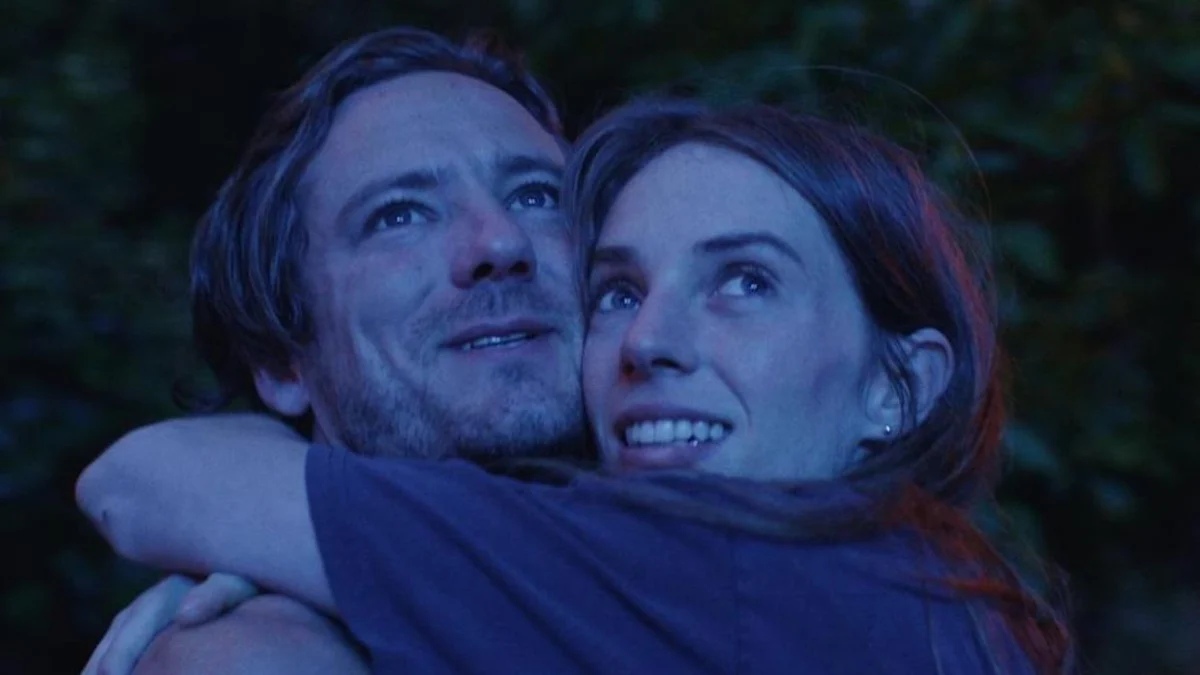
The narrative centers on Charlie (Lewis Pullman) and Julie (Maya Hawke), a couple navigating the complexities of their bond in the vibrant, often rainy, urban landscape of Portland. Their lives take an unforeseen turn after attending a peculiar couples therapy summit, which inadvertently unlocks a latent power within them. This newfound ability allows their collective emotional state to manifest tangible results: moments of relational harmony bring about overwhelmingly positive occurrences, while periods of discord or doubt unleash chaotic and destructive forces upon their surroundings. This high-concept premise serves as both a compelling plot device and a powerful metaphor for the profound, often unacknowledged, impact of intimate relationships on individuals and their broader communities. The film’s early success at SXSW highlights its innovative approach to storytelling and its potential to resonate deeply with audiences seeking both intellectual stimulation and emotional engagement.
A Deeper Look into the Narrative Fabric: Love as a Catalyst for Cosmic Change
Wishful Thinking operates on a dual narrative track, simultaneously charting the internal landscapes of Charlie and Julie’s individual aspirations and anxieties, and the external consequences of their shared emotional fluctuations. Each character possesses agency over their own destiny, yet both are susceptible to suffocating anxieties, deep-seated desires, and often conflicting temperaments. The film masterfully portrays this delicate balance, suggesting that even in the most interdependent relationships, individual identities and struggles remain potent forces.
The "lo-fi" aspect of its science fiction element means the film prioritizes character development and emotional authenticity over extravagant special effects. Instead of relying on grand cinematic spectacle, Parkes employs subtle yet impactful visual techniques, such as exciting split-screen sequences, to reflect the characters’ diverging perspectives and inner turmoil. These visual choices are not mere stylistic flourishes but integral components of the storytelling, cutting deeper into the hearts of this troubled duo as they strive to make their relationship work—not just for their own sakes, but for the stability of the world itself. The pressure of this cosmic responsibility amplifies their personal struggles, making every argument, every moment of doubt, and every flicker of hope resonate with an extraordinary weight. The picturesque yet often melancholic setting of Portland serves as an ideal backdrop for this narrative, mirroring the often-moody and unpredictable nature of the couple’s powers.
From Self-Help to Sci-Fi: The Genesis of a Unique Concept
Director Graham Parkes revealed that the initial spark for Wishful Thinking‘s supernatural conceit emerged from an unexpected source: a late-night internet deep dive into self-help phenomena. Specifically, he encountered The Secret, Rhonda Byrne’s hugely popular 2006 self-help book and documentary film that popularized the "law of attraction." This concept posits that individuals can manifest their desires into reality through positive thoughts and intentions. While not personally subscribing to the philosophy, Parkes found the underlying premise intriguing, particularly its more extreme interpretations.
"It was sort of the original progenitor of the whole manifesting idea," Parkes noted in an interview with Filmmaker magazine. He recounted how The Secret often claimed that a bad mood could lead to negative outcomes like struggling to find parking, while a good mood could result in career promotions and better weather. This literal interpretation, he realized, had a terrifying, almost comedic horror potential, especially for someone prone to anxiety. The idea that one’s fleeting negative emotions could cause catastrophic events, like a plane crash, struck him as profoundly unsettling. This subversion of an ostensibly empowering self-help philosophy—transforming it into a source of dread—formed the initial comedic impulse for the film.
The concept evolved further when Parkes began reflecting on past relationships and the inherent push-and-pull dynamics. The pivotal shift occurred when he considered, "Well, what if it’s a couple?" This simple change transformed the individual burden of manifestation into a shared, interdependent responsibility, amplifying both the comedic and dramatic potential. The interplay of two individuals’ moods, anxieties, and desires becoming a collective force shaping reality provided the narrative framework. What began as a dark joke gradually unearthed deeper dramatic and romantic layers, aligning with Parkes’ creative process where ideas often start as humor but endure only if they reveal profound truths. This evolution from a satirical concept to a nuanced exploration of relational dynamics underscores the film’s intellectual depth and its ability to transcend its genre trappings.
Crafting the Visual Language: Split-Screens and Shared Perspectives
One of Wishful Thinking‘s most striking artistic elements is its innovative and beautiful use of split-screen sequences. This technique, though not new to cinema, is deployed by Parkes and his Director of Photography, Christopher Ripley, with a deliberate narrative purpose that enhances the film’s thematic exploration of dual perspectives and interconnected destinies. The decision to incorporate split-screen early in the film’s development stemmed from Parkes’ desire to ensure Wishful Thinking was a true "two-hander," equally balancing the experiences of Charlie and Julie.
"It was important that it didn’t feel like it was from one person’s perspective," Parkes explained. "We are locked in these two people’s perspectives, we never have a scene outside of them. I wanted the movie to not be more Charlie’s or more Julie’s, but half and half, so split-screen was natural. It’s about the sharing of perspective, so we even have a POV shot from one and the other next to each other." This thoughtful application moves beyond mere stylistic choice, becoming a visual metaphor for the couple’s intertwined yet distinct internal worlds.
Ripley further refined this concept, introducing double exposure images within the split-screen at key moments, where one image moves in an opposing direction to the other. This visual fluidity serves as an elegant entry point into the split-screen motif, subtly signaling the complex interplay of their individual trajectories within the shared frame of their relationship. The filmmakers also experimented with split compositions of skies, sometimes fortuitously aligning clouds to create visually harmonious, almost fated, landscapes. While many of these intricate sky compositions were achieved through visual effects, the team meticulously crafted them to appear as natural, "found" moments, emphasizing the film’s commitment to blending the fantastical with a grounded aesthetic. This collaborative approach to visual storytelling highlights the synergy between Parkes and Ripley, transforming technical choices into profound narrative devices that deepen the audience’s understanding of Charlie and Julie’s unique predicament.

Assembling the Ensemble: Chemistry and Collaboration
The success of Wishful Thinking hinges significantly on the compelling chemistry between its two lead actors, Lewis Pullman and Maya Hawke. Parkes had a pre-existing professional relationship with Lewis Pullman, having collaborated with him on previous short films, which made Pullman an early and natural choice for the role of Charlie. The casting of Maya Hawke as Julie, however, involved a stroke of serendipitous luck.
While Parkes was aware of Hawke’s burgeoning career, it was his producers, Matt Smith and Dan Gedman, who initially suggested her for the role. Upon deeper research, Parkes quickly realized Hawke embodied everything he envisioned for Julie. The "wishful thinking" aspect of securing such a sought-after actress for an independent debut became reality through an extraordinary coincidence: three years prior, Parkes had struck up a conversation with a fellow passenger on a flight from Los Angeles to New York, who turned out to be Maya Hawke’s manager. This pre-existing, positive connection significantly "expedited things" once the offer was extended, making the casting feel, as Parkes described, "fated."
Despite limited rehearsal time—Hawke was on set for barely a day before principal photography began due to her demanding schedule—the chemistry between her and Pullman was immediate and intuitive. Both actors brought a natural understanding to their characters and a palpable enjoyment of working together. Parkes’ directorial approach, which he playfully dubs "Supermarket Sweep," further facilitated this dynamic. He favors a rapid, fluid shooting style, prioritizing quantity and variety of takes over rigid perfection, always "directing for the edit." This method encourages actors to explore the "margins" of their performances, often improvising their way into and out of scenes. This improvisational freedom, while occasionally teased by Hawke, allowed for spontaneous and authentic moments to emerge, contributing to the film’s raw emotional honesty and the believable, lived-in quality of Charlie and Julie’s relationship.
SXSW Acclaim and the Indie Film Landscape
The triumph of Wishful Thinking at the SXSW Film Festival, securing the Narrative Feature Prize, is a significant milestone for Graham Parkes and signals the film’s potential impact on the independent cinema landscape. SXSW, renowned for its eclectic programming and its role as a launchpad for groundbreaking independent talent, has a storied history of identifying films that go on to critical acclaim and commercial success. Previous Narrative Feature winners and premieres, such as Short Term 12, Thunder Road, and Everything Everywhere All at Once, have often represented a fresh wave of filmmaking, pushing boundaries in storytelling, style, and thematic depth.
Winning this prestigious award at SXSW not only garners immediate critical buzz but also significantly enhances the film’s visibility among distributors, paving the way for wider theatrical releases, streaming acquisitions, and international sales. For a debut feature, this recognition is invaluable, often serving as a catalyst for the director’s future projects and establishing the lead actors’ versatility and drawing power. The festival’s audience, known for its appreciation of unconventional narratives and character-driven stories, undoubtedly responded enthusiastically to Wishful Thinking‘s unique premise and the compelling performances by Pullman and Hawke. This early success positions the film as a standout entry in the year’s independent film circuit, inviting broader discussions about its innovative blend of genre and its resonant commentary on contemporary relationships.
Exploring Modern Love and Existential Anxieties
At its core, Wishful Thinking is a profound meditation on modern love and the pervasive anxieties that often accompany it. Parkes openly acknowledges the film’s deeply personal roots, noting that while not autobiographical, it draws heavily from his own "personal vulnerability" and experiences in past relationships. He consciously dispersed aspects of himself across both Charlie and Julie, creating characters whose struggles feel universally relatable. This approach, of writing about "things that you haven’t made your mind up on yet," allows the film to explore complex emotional terrain without prescriptive answers, inviting audiences to engage with its themes on a personal level.
The catharsis in making the film, Parkes reflected, came not from finding definitive answers, but from realizing the universal resonance of his personal experiences. Conversations with the cast and crew about their own relationships reinforced that the film’s exploration of anxiety, desire, and the inherent challenges of commitment tapped into a shared human experience.
The film’s structural and visual language also mirrors its thematic journey. Parkes describes the first half as an "escalating panic attack," characterized by longer lenses and a more chaotic visual style, reflecting the couple’s increasing distress and the uncontrolled manifestation of their powers. This culminates in a pivotal moment where the narrative "slows down," compelling the characters—and the audience—to breathe and reflect. This shift underscores the film’s central message about pragmatism and self-acceptance in relationships. It suggests that while individuals can work on their temperaments and ambitions, there is an inherent nature to who they are that cannot be entirely changed. Relationships, therefore, often require "adjusting the sails to the winds," rather than trying to alter the winds themselves. The film ultimately argues that even if a truth that emerges is "sad" or difficult, it doesn’t necessarily signify the end of love, but rather a deeper, more mature understanding of its enduring, complex forms.
The Broader Impact: A New Voice in Independent Cinema
Graham Parkes’ Wishful Thinking stands as a significant entry point for a new voice in independent cinema, demonstrating a capacity for genre-bending storytelling that is both intellectually stimulating and emotionally resonant. The film’s critical reception at SXSW, particularly its Narrative Feature Prize, solidifies Parkes’ position as a filmmaker to watch, suggesting a promising career trajectory that could see him continue to explore complex human emotions through inventive narrative structures.
The film’s contribution extends beyond the emergence of a new director. It offers a fresh perspective on the romantic drama, a genre that often struggles to find new avenues for exploration. By integrating a supernatural, sci-fi element in a grounded, character-driven way, Wishful Thinking proves that genre conventions can be stretched and reinterpreted to deliver profound social and psychological commentary. It taps into contemporary anxieties surrounding mental health, the pressures of perfect relationships, and the pervasive self-help culture, offering a nuanced critique wrapped in an engaging narrative.
For audiences, the film provides a mirror to their own relationship struggles, anxieties, and the often-unspoken power dynamics that exist within partnerships. Its exploration of self-acceptance, the inevitability of change, and the enduring nature of love, even in its evolving forms, offers a cathartic and reflective experience. As Wishful Thinking moves beyond its festival debut, its unique blend of poignant drama, dark comedy, and subtle sci-fi elements is poised to spark conversations, inspire fellow filmmakers, and carve out a distinctive space within the ever-evolving landscape of independent cinema. Its success underscores the enduring appeal of stories that dare to imagine the extraordinary consequences of ordinary human emotions.