Monica Barbaro, fresh from an Oscar-nominated portrayal of folk icon Joan Baez in "A Complete Unknown," is embarking on a new artistic frontier with her stage debut at the National Theatre in London. Starring as the devout Madame de Tourvel in a revival of Christopher Hampton’s acclaimed adaptation of Les Liaisons Dangereuses, Barbaro navigates the intricate web of seduction and manipulation with a palpable mix of trepidation and determination. The role, previously inhabited by luminaries such as Juliet Stevenson and Michelle Pfeiffer, presents a formidable challenge, demanding a nuanced exploration of vulnerability within a world of ruthless social maneuvering.
"I feel like I’m imitating an American accent, but it really is mine," Barbaro jokes, referencing the linguistic shift required for her stage persona, a stark contrast to the American cadence she typically employs in interviews. Her current focus, however, is firmly on embodying the English accent for the production, a commitment that underscores her dedication to her craft. "I feel it’s best to use my own voice" when engaging with the public, she explains, a principle that seems to extend to her artistic choices, pushing her to inhabit characters that demand a departure from her natural self.
Barbaro’s immersion into the world of Joan Baez for James Mangold’s Bob Dylan biopic, "A Complete Unknown," was an intensive undertaking. The 35-year-old actor spent months meticulously studying Baez’s vocal stylings and musical repertoire, mastering the guitar, and even employing prosthetic teeth to capture the singer’s distinctive appearance. "We filmed it only a year and a half ago, and it was put out within months," she recalls. "It was really intense. It took a long time for me to land afterwards and feel more like myself again." This period of deep character work provided Barbaro with a profound understanding of Baez’s legacy as a pioneering folk artist and a fervent civil rights advocate, a role that has clearly left an indelible mark on her.
The film, "A Complete Unknown," delves into the complex relationship between Bob Dylan and Joan Baez, a partnership that has captivated public imagination for decades. At the time of their meeting, Baez was already a celebrated figure in the folk music scene and a prominent voice in the civil rights movement, while Dylan was an emerging artist. Their relationship was characterized by a potent creative synergy and intense personal dynamics, making his eventual distancing from her all the more poignant. The film reconstructs pivotal moments, including performances in Greenwich Village and at the Newport Folk Festival. Director James Mangold, in a creative liberty, utilized their breakup duet, "It Ain’t Me Babe," as a backdrop to a fictionalized love triangle, highlighting the influence of women like Baez and Suze Rotolo on Dylan’s political consciousness. "Joan and Suze [Rotolo] were empowered women," Barbaro emphasizes. "They were a huge part of Dylan voicing his opinions about political matters. They told him what was important to talk about; they were a huge influence on him. And the film honored that in a way."
As Barbaro delved deeper into Baez’s life, her admiration grew. "I’m just like: ‘Then she marched with Martin Luther King, are we clear on that? Do people know that?’" she exclaims, highlighting the often-overlooked historical significance of Baez’s activism. The resonance of Baez’s experiences with navigating a dual identity, a theme explored in her memoir, struck a personal chord with Barbaro, who is of mixed heritage. "Barbaro is a quarter Mexican, and Baez is half Mexican," a shared background that provided an additional layer of connection. Barbaro has candidly discussed the challenges of navigating an industry that often seeks to categorize individuals, and Baez’s exploration of not belonging felt "so personal."
The personal connection culminated when Barbaro finally met Baez in person during a performance in San Francisco. "It was so trippy. It was so strange to hear in person the voice I’d been obsessing over for so long," Barbaro reflects. "There’s a worship quality to it; I felt in complete awe of her. It was kind of a whirlwind moment." The two have maintained contact, and Barbaro expresses a desire for a more in-depth conversation, free from the pressures of performance.
The Oscar nomination for "A Complete Unknown" was, for Barbaro, a "totally surreal" experience, one she had mentally prepared for. "It seemed embarrassing to want it, or celebrate it, and I needed to confront that it was something I’d love to have," she admits. The nomination served as validation for an actress who entered the film "fangirling over the rest of the cast and the director," and who had to constantly "encourage myself to believe I could take up space."
A New Chapter: Stepping onto the National Theatre Stage
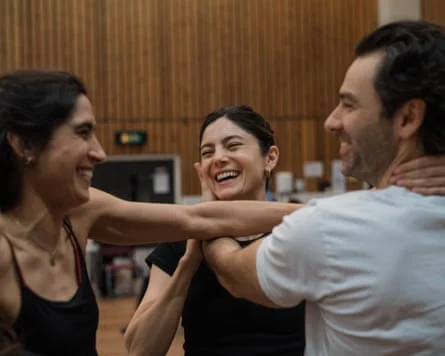
The current setting for Barbaro’s artistic exploration is the labyrinthine National Theatre in London, a far cry from the glitz of red carpets and magazine shoots. Dressed in casual attire, her focus is on the rigorous process of theatrical rehearsal. Her decision to take on Madame de Tourvel in Les Liaisons Dangereuses was significantly influenced by the opportunity to collaborate with director Marianne Elliott, known for her work on "War Horse" and "The Curious Incident of the Dog in the Night-Time." Elliott, in conjunction with playwright Christopher Hampton, has re-examined his seminal 1985 adaptation, placing a greater emphasis on the female characters at the heart of the drama.
The Enduring Power of Les Liaisons Dangereuses
Pierre Choderlos de Laclos’s 1782 novel, Les Liaisons Dangereuses, has maintained its scandalous and compelling grip on audiences for centuries. Initially denounced as "diabolical," it rapidly became one of Europe’s most controversial books. The narrative, set against the backdrop of the decadent pre-revolutionary French aristocracy, chronicles the manipulative machinations of the Marquise de Merteuil and the Vicomte de Valmont. Their deadly game of seduction and intrigue, initiated by a wager, involves ensnaring the innocent Cécile Volanges and, more formidably, the virtuous Madame de Tourvel.
For Barbaro, the play’s enduring appeal lies not in its salaciousness but in its profound darkness. "I find it to be quite depressing," she states, with a laugh. "You can see the characters having fun with the games they’re playing with people. You can see why that world would be enticing. And then at the end you realize: that’s a horrific thing to do to somebody. It’s a proper epic, like a Greek tragedy." She dissects the core themes: "The seduction is really just the means of manipulation. What it’s about is power: systemic abuse, corruption and cruelty. Ultimately, you see patterns of abuse repeat themselves." The cyclical nature of power and abuse, with Cécile seemingly inheriting Merteuil’s mantle, is a chilling observation that Barbaro finds "sadly very true."
The depiction of elite corruption and impunity resonates strongly with contemporary audiences. Barbaro draws a parallel to current events, noting, "It was about the corruption of a certain class who could operate with impunity, and fuck over anyone they wanted." The recent release of the Epstein files, she observes, "felt palpable," particularly in relation to Ghislaine Maxwell’s role, underscoring the timeless relevance of the play’s exploration of unchecked power and exploitation.
Hampton’s revised script further illuminates the limited avenues of resistance available to women in pre-revolutionary France. The character of Merteuil, often portrayed as a villain, is here presented with greater complexity, her cruelty intertwined with the societal pressures of aging in an era that prized youth.

Vulnerability and Shame: The Heart of Tourvel’s Tragedy
Barbaro identifies the play’s emotional brutality as its most potent force. "As a modern woman with autonomy and independence, the thing I fear most in the world is dying of heartbreak," she confesses. This fear underscores the tragic trajectory of Madame de Tourvel, a character whose "life is essentially ruined" by her inability to escape her circumstances. "She is controlled by her own shame, and that theme of shame is still relevant today," Barbaro asserts.
Making these historical characters relatable to a modern audience presents a significant challenge. "It’s painful to watch Tourvel fall into Valmont’s hands because we know he’s manipulating her," Barbaro explains. "But to get through the play, you have to recognize some part of yourself in someone who would still say yes. You can see someone at their game and still fall in love with them." This psychological complexity, the capacity for individuals to be drawn in by charm even when aware of manipulation, is a testament to the play’s enduring power.
A Childhood of Art and Ambition
Barbaro’s upbringing in Mill Valley, California, offered a different kind of privilege than the aristocratic world of Les Liaisons Dangereuses. Raised by an Italian-American doctor father and a mother of Mexican, German, and Nicaraguan descent, she was immersed in the arts from a young age, with ballet classes a staple of her childhood. Her formal training at New York University’s Tisch School of the Arts honed her discipline, though her true passion lay elsewhere. "I didn’t identify as a dancer; I knew I wanted to act," she states, recalling an early theatrical experience as Hermia in "A Midsummer Night’s Dream" at age 12.
After graduating, Barbaro returned to California, steadily building her career through commercials and television roles. Her breakout performance as the naval aviator Phoenix in the 2022 blockbuster Top Gun: Maverick significantly elevated her profile. She has since been involved in Luca Guadagnino’s drama Artificial, exploring themes of power dynamics in the tech industry, a subject that mirrors the inherent tensions within Les Liaisons Dangereuses.
The National Theatre: A Full-Circle Moment
Barbaro’s admiration for Joan Baez’s ability to "give her whole self" for a performance, despite her stage fright, has informed Barbaro’s approach to her own stage debut. This embrace of imperfection, of "not self-correcting as you go," is a crucial lesson for theatrical performance. Her frequent childhood visits to London with her anglophile mother, experiencing the Royal Ballet and art galleries, have imbued the National Theatre with a profound sense of coming home.
"It feels like going back to school," Barbaro says. "There’s a part of me that wants to prove my worthiness, and prove to myself that I can do it in all forms. And the National is the ultimate space to break into the more traditional, classic side of this art form. I get to carve out a part of the practice that I haven’t gotten to do yet."
When asked about her personal mechanisms for self-protection, akin to Tourvel’s use of religion, Barbaro cites her "workaholism" and "commitment to my own independence." Acting itself has become a form of therapy, a space where she can confront the fear of embarrassment ingrained from her upbringing. "I was, in a lot of ways, raised with the ideology to never embarrass yourself. But in the theatre, that’s the number one thing you have to be comfortable doing."
The inherent vulnerability of the play, where honesty is weaponized, presents a "scary" challenge. "They say: ‘Never show pity, especially to the vulnerable.’ If you’re subjected to horrifically toxic people, it’s very hard to be shameless about who you are," Barbaro observes, noting the societal struggle to move away from such dynamics.
Navigating Fame and the Future
While her relationship with actor Andrew Garfield has brought increased public attention, Barbaro remains grounded in her internal metrics of success. She emphasizes that despite the Oscar nomination and critical acclaim for "A Complete Unknown," she "still auditioned" for Les Liaisons Dangereuses. "We ran scenes one through five yesterday, twice, and—I probably shouldn’t say this—but I went home thinking: ‘I’m a terrible actor and they’re finding out.’" She expresses gratitude for experiencing this level of success later in her career, rather than in her early twenties, allowing her to approach it with a sense of grounded perspective. The long-standing "terror" of scarcity in the industry has eased, replaced by a sense of "gift" and relief from desperation.
As Barbaro looks towards the future, she expresses a sense of open-ended excitement. "I honestly don’t know right now, which is kind of a weird, exciting thing," she admits. "It’s nice to feel that and not feel like: ‘Oh no, I’ll never work again.’ At least I know something will be there." With a warm embrace and a thank you, she returns to the demanding, yet rewarding, world of rehearsal, ready to embody another complex character on the grand stage of the National Theatre.
Les Liaisons Dangereuses is playing at the National Theatre: Lyttelton, London, until June 6.