The 1999 release of Wild Wild West stands as one of the most significant case studies in Hollywood’s late-twentieth-century blockbuster era, representing a convergence of massive star power, experimental genre-blending, and runaway production budgets. Directed by Barry Sonnenfeld and starring Will Smith, the film was intended to replicate the lightning-in-a-bottle success of their previous collaboration, Men in Black (1997). However, despite its high-profile cast and substantial marketing campaign, the film ultimately became a cautionary tale regarding the limitations of the "event movie" formula. Based on the 1960s CBS television series created by Michael Garrison, the cinematic adaptation attempted to fuse the traditional Western with a steampunk aesthetic and high-concept action-comedy, a move that resulted in a polarizing theatrical run and a lasting reputation as a high-profile box office disappointment.
The Genesis of a Steampunk Western
The path to bringing Wild Wild West to the big screen began in the early 1990s when Warner Bros. acquired the rights to the original television property. The original series, which aired from 1965 to 1969, was often described as "James Bond on horseback," featuring Secret Service agents James West and Artemus Gordon as they protected President Ulysses S. Grant from bizarre, technologically advanced threats in the Reconstruction-era United States.
By the mid-1990s, the project gained momentum as Barry Sonnenfeld, coming off the critical and commercial triumphs of Get Shorty and Men in Black, signed on to direct. The script underwent several iterations, involving writers such as S.S. Wilson, Brent Maddock, Jeffrey Price, and Peter S. Seaman. The objective was to modernize the concept by leaning heavily into the "weird western" subgenre, incorporating anachronistic technology—referred to as steampunk—to create a visual spectacle that could compete with the rising tide of CGI-heavy blockbusters.
Casting and Character Dynamics
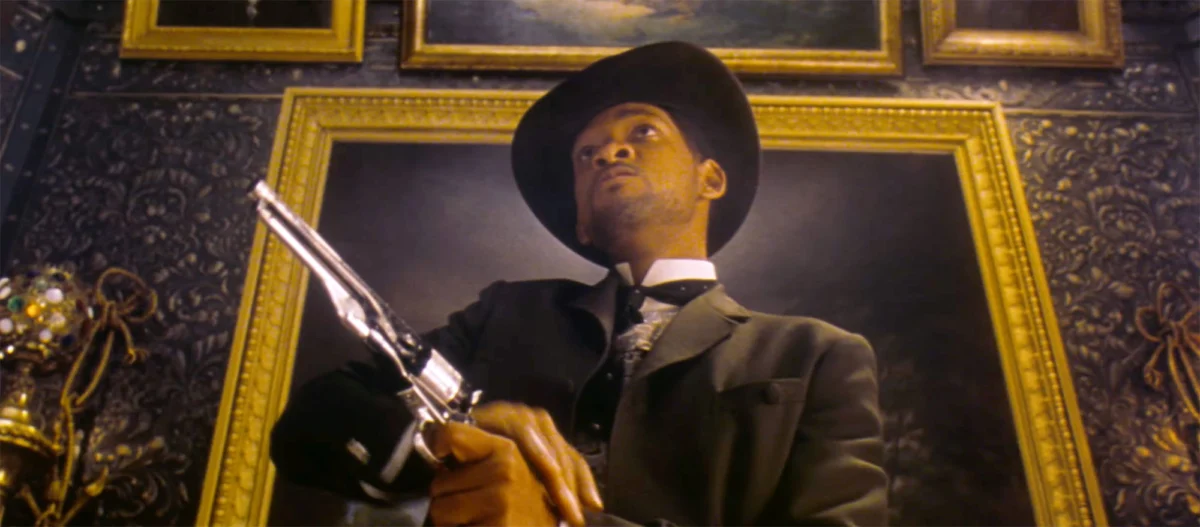
The production secured a formidable ensemble cast. Will Smith, then at the height of his "King of the Fourth of July" era, was cast as Captain James West. Smith’s involvement was seen as a guarantee of success, though it notably required him to turn down the role of Neo in The Matrix, a decision that would later become a frequent point of discussion in film history.
Kevin Kline was cast as the brilliant inventor Artemus Gordon, as well as President Ulysses S. Grant in a dual role. Kline brought a theatrical sensibility to the part, contrasting with Smith’s charismatic, quip-heavy performance. The antagonist, Dr. Arliss Loveless, was portrayed by Kenneth Branagh. Branagh, known largely for his Shakespearean adaptations, delivered a heightened, flamboyant performance as the legless Confederate scientist seeking to dismantle the United States using advanced steam-powered machinery. The cast was rounded out by Salma Hayek as Rita Escobar, Ted Levine as General "Bloodbath" McGrath, and veteran character actor M. Emmet Walsh as Coleman.

Production Challenges and the Mechanical Spider
The production of Wild Wild West was famously troubled by creative interference and ballooning costs. One of the most enduring anecdotes from the film’s development involves producer Jon Peters. According to filmmaker Kevin Smith, who had been hired by Peters to write a Superman script earlier in the decade, Peters had an inexplicable obsession with including a giant mechanical spider in a feature film. After Kevin Smith refused to include the creature in his Superman draft, the concept was eventually integrated into the climax of Wild Wild West.
The resulting "Tarantula"—an eight-story, steam-powered walking fortress—became the film’s visual centerpiece. While the technical achievement of the sequence, handled by Industrial Light & Magic (ILM), was significant for the time, critics often pointed to the giant spider as symptomatic of the film’s tonal inconsistency and over-reliance on spectacle over narrative coherence.
Financial Performance and Statistical Analysis
Wild Wild West was released on June 30, 1999, positioned as the premier blockbuster of the Independence Day weekend. At the time, its production budget was estimated at approximately $170 million, with some reports suggesting that marketing and distribution costs pushed the total investment toward $241 million. Adjusted for inflation, this remains one of the most expensive films ever produced.
The film opened at number one at the North American box office, earning $27.7 million over its initial three-day weekend and $52.1 million over the five-day holiday frame. However, the film suffered from poor word-of-mouth and a steep second-week decline. By the end of its theatrical run, it had grossed $113.8 million domestically and $108.3 million internationally, for a global total of $222.1 million. While these figures would be respectable for a mid-budget film, they were insufficient to recoup the massive investment made by Warner Bros., leading the industry to categorize it as a significant commercial failure.
Critical Reception and Awards
Critical response to the film was predominantly negative. On review aggregator platforms, the film maintains a low approval rating, with critics frequently citing a lack of chemistry between the leads, an over-complicated plot, and jokes that failed to land. The film’s attempt to balance the heavy themes of post-Civil War racial tension with slapstick comedy was seen as particularly unsuccessful.
The industry’s dissatisfaction with the project was reflected in the 20th Golden Raspberry Awards (Razzies), where Wild Wild West "won" five categories, including Worst Picture, Worst Director for Barry Sonnenfeld, and Worst Screenplay. Additionally, the film’s theme song, performed by Will Smith and featuring samples from Stevie Wonder’s "I Wish," won Worst Original Song, despite the track actually being a commercial success on the music charts.

Statements and Later Reflections
In the years following the film’s release, several key figures have addressed its legacy. Will Smith has been candid about the project’s shortcomings, admitting in various interviews that he was more focused on "winning" the box office than on the quality of the story. Smith noted that the success of Independence Day and Men in Black had perhaps led to a degree of overconfidence in his ability to draw audiences regardless of the material.
Director Barry Sonnenfeld has also discussed the film’s difficulties, noting that the tone was difficult to pin down. In his memoirs and interviews, Sonnenfeld suggested that the studio’s desire for a massive summer hit led to the inclusion of too many disparate elements, which ultimately diluted the film’s identity.
Technical Preservation and Archival Interest
Despite its reputation, Wild Wild West remains a point of interest for film historians and enthusiasts of 1990s cinema. Recently, archival interest in the film has seen a resurgence through the digitization of original promotional materials. Scans of original 35mm theatrical trailers have been uploaded to platforms like YouTube, allowing modern audiences to view the marketing campaign as it appeared in 1999. These high-quality scans highlight the film’s ambitious visual effects and the specific "blockbuster aesthetic" that defined the era before the total dominance of the Marvel Cinematic Universe and other modern franchises.
Historical Context and Industry Implications
The failure of Wild Wild West had lasting implications for the film industry. It signaled a shift in how studios approached "star vehicles." While the 1990s were defined by the idea that a single star like Will Smith could guarantee a hit, the early 2000s began to see a shift toward intellectual property (IP) as the primary draw.
Furthermore, the film’s reception influenced the trajectory of steampunk in mainstream media. While the aesthetic has a dedicated following in literature and subcultures, its failure to resonate in Wild Wild West made major studios hesitant to invest in the genre for many years. It also served as a pivot point for Will Smith’s career; after the film’s lackluster performance, he began to alternate between high-concept action films and more serious, dramatic roles, such as Ali (2001), for which he received his first Academy Award nomination.
Conclusion on Cultural Legacy
Wild Wild West remains an indelible part of 1999’s cinematic landscape—a year otherwise celebrated for masterpieces like The Matrix, Fight Club, and Magnolia. It serves as a monumental example of "maximalist" filmmaking, where the scale of production outpaced the clarity of the vision. While it has never seen a theatrical re-release and is rarely cited as a favorite by critics, it continues to be discussed for its eccentricities, its role in the career of one of Hollywood’s biggest stars, and its status as a symbol of an era when studios were willing to take massive, often bizarre risks on the summer blockbuster stage. Whether viewed as a fascinating disaster or a misunderstood piece of camp, the film’s 8-story mechanical spider and its fusion of cowboys and computers ensure that it will not be forgotten by the annals of film history.