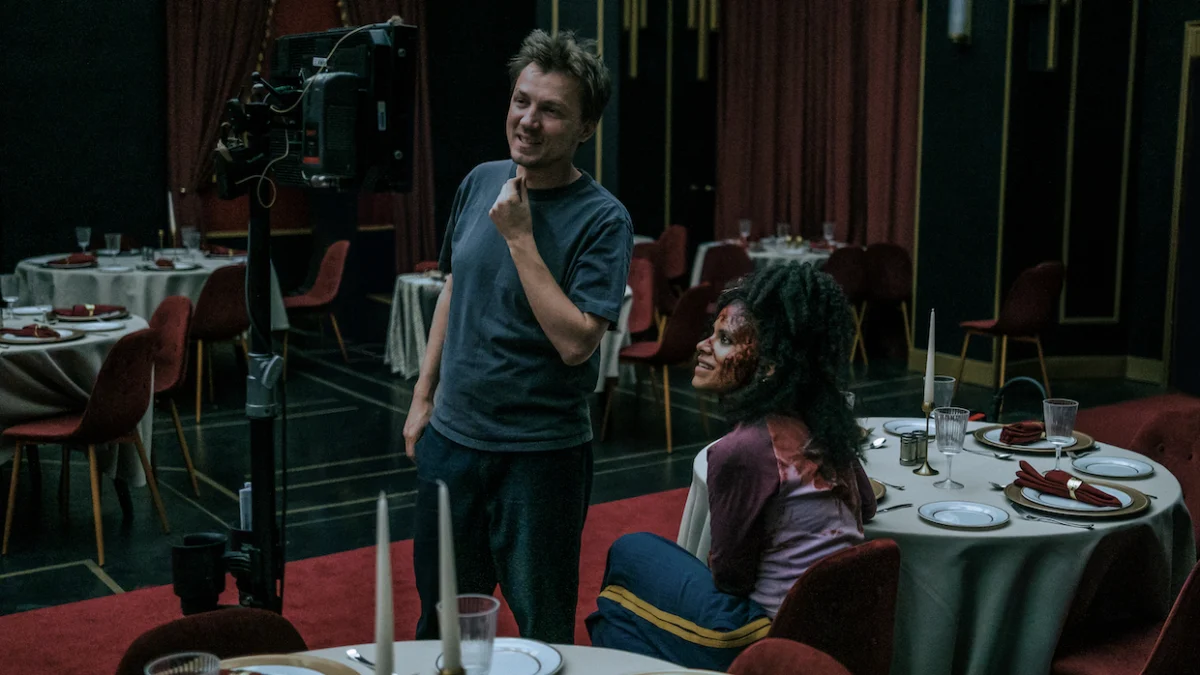
The closing night of the 2026 SXSW Film Festival at Austin’s historic Paramount Theatre was marked by an unexpectedly profound moment as Kirill Sokolov, director of the highly anticipated action-horror film They Will Kill You, took to the stage. Unlike the typical brief remarks and quick exits often seen at such prestigious events, Sokolov, with multiple pages in hand, embarked on a lengthy, heartfelt tribute to every single collaborator who brought his vision to life. This extended expression of gratitude, delivered before the film even began, served not only as a testament to his passion but also as a poignant reflection of a long, arduous journey marked by artistic ambition, political defiance, and a challenging transition from Russian independent cinema to the American studio system.
A Gratitude Born of Adversity: Sokolov’s SXSW Address
The SXSW Film Festival, an integral part of the larger South by Southwest event, is renowned globally as a launchpad for independent cinema and a hub for innovative storytelling. A closing night slot at the Paramount Theatre, a grand venue with a rich history, is a coveted honor, typically reserved for films expected to make a significant cultural impact. It’s a moment for filmmakers to bask in the glow of their achievement, often with a quick thank you to key cast and crew. However, Sokolov’s approach diverged sharply from this norm. His methodical recitation of names, from lead actors and producers to the unsung heroes of the below-the-line crew, lasted several minutes, captivating an audience accustomed to brevity.
For Sokolov, who previously directed the acclaimed Russian films Why Don’t You Just Die! (2018) and No Looking Back (2020), this moment represented the culmination of years of relentless effort and personal sacrifice. His films are known for their dark humor, kinetic energy, and often brutal violence, traits that positioned him as a unique voice in contemporary genre cinema. However, his journey to Austin was far more complex than a simple career progression. It was deeply intertwined with geopolitical events and his unwavering moral stance.
From Moscow to Hollywood: A Director’s Defiance and New Beginnings
Sokolov’s transition to filmmaking in America was precipitated by a courageous act of dissent. In 2022, he publicly spoke out against Russia’s war in Ukraine, signing two online petitions opposing the conflict. This was not a minor gesture in Russia; such acts carry severe risks, including political retaliation, imprisonment, and professional blacklisting, as thousands of citizens protesting the war have experienced. Choosing conscience over comfort, Sokolov left Russia, embarking on a new chapter that presented both immense challenges and unprecedented opportunities.
The move meant navigating an entirely different industry landscape. As an immigrant director, without prior experience within the American studio system, securing funding and support for a major project was an uphill battle. Industry analysts often highlight the significant hurdles faced by international filmmakers seeking to break into Hollywood, from cultural differences to establishing new professional networks and proving their commercial viability to risk-averse studios. Sokolov’s experience underscores the persistent struggle to translate foreign success into domestic recognition, despite a demonstrable track record of artistic merit.
"When people watch a movie, it’s ninety minutes, and they leave the movie. In the best-case scenario, they will have a nice ninety minutes, maybe not that nice, then they leave and forget about it," Sokolov mused, reflecting on the disparity between audience consumption and creative endeavor. "But as people who are making the movie, you are spending two years, at least, to make it." This sentiment clearly fueled his exhaustive thank-you speech, a public acknowledgment of the immense collective effort behind the ninety-minute spectacle. The commitment of two years is standard for a feature film, encompassing everything from script development, pre-production, principal photography, post-production, to distribution planning, making it a marathon of creative and logistical challenges.
The Vision and the Team: Crafting They Will Kill You
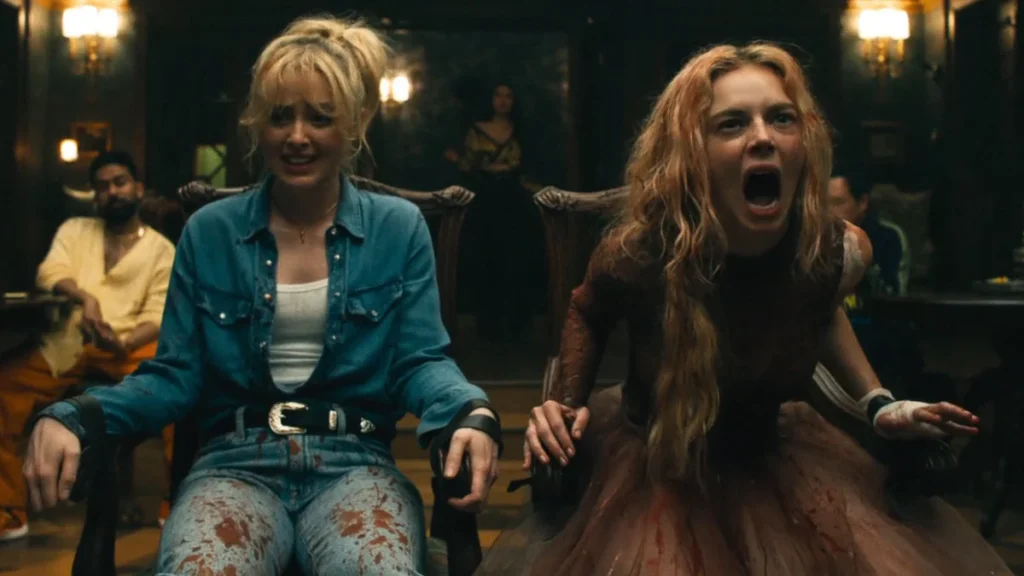
They Will Kill You is described as a bloody action-horror mashup, a genre blend that aligns with Sokolov’s previous work while promising a larger canvas. The film centers on Asia, portrayed by Zazie Beetz, who must fight her way out of a labyrinthine New York apartment building housing a cult of the ultra-wealthy, all while searching for her sister, Maria. The premise alone suggests a potent mix of high-octane action and biting social commentary, hallmarks of a director who isn’t afraid to push boundaries.
The cast, a pivotal element in any film’s success, was clearly drawn in by Sokolov’s infectious enthusiasm. Zazie Beetz, known for her breakout role in the critically acclaimed FX series Atlanta and her impactful performances in films like Joker and Deadpool 2, takes on the role of the film’s "stellar action lead." Her involvement immediately elevated the project’s profile. Beetz recounted her initial impressions of Sokolov: "I wasn’t surprised. I think he is a very sincere, very genuine person. He’s so passionate about filmmaking, so passionate about this film, and the way he talked about it was just so excited, so engaged, which was really nice for me as an actor to see and feel. His vision, everything around it, he was so clear about what he wanted to do, and he is just very profuse in his emotions, to be honest." This clear communication and palpable passion are invaluable assets for a director, fostering trust and commitment from the talent.
Echoing Beetz’s sentiments was Myha’la, the breakout star of HBO’s Industry, who plays Asia’s sister, Maria. Myha’la, who uses a mononym, expressed her profound pride in Sokolov’s moment on stage. "I was honestly just so proud of Kirill and so happy for him. I was supporting him taking every single moment on that stage. This is his first major big-budget American film as an immigrant, and he’s so passionate about this particular moment and about us," she stated, adding playfully, "I was like, ‘Take all the time you need, king!’" The film’s reported budget of $20 million, as noted by Deadline, represents a significant leap from Sokolov’s previous independent Russian productions, underscoring the trust placed in his vision and the scale of this new endeavor. This substantial financial backing allowed for a more ambitious production, including complex action sequences and elaborate set pieces.
The screenplay itself was a collaborative effort with co-writer and friend Alex Litvak, developed as a spec script. This indicates a project born purely of creative drive, developed independently before attracting studio interest, further emphasizing the long journey from conception to realization.
Mentorship and Production: The Muschietti Connection
Sokolov’s journey was significantly bolstered by the support of producers and siblings Andy and Barbara Muschietti. The Argentine-born duo, acclaimed filmmakers themselves, were instrumental in getting They Will Kill You off the ground. Andy Muschietti is widely recognized for directing the highly successful IT films, which collectively grossed over $1.1 billion worldwide, and the recent DC Extended Universe film The Flash. Barbara Muschietti has produced all of her brother’s feature films, establishing herself as a formidable force in genre filmmaking.

Their involvement was rooted in a profound principle of mentorship, paying forward the support they once received from legendary filmmaker Guillermo del Toro. Del Toro, an Academy Award-winning director known for Pan’s Labyrinth and The Shape of Water, had backed Andy Muschietti’s feature directorial debut, the horror film Mama (2013). Barbara recounted del Toro’s impactful advice: "When we finished Mama and that came out, [del Toro] said, ‘Now you have to do this for someone else.’" Andy added, "It took us 10 years, but we did it." This anecdote highlights a valuable, if sometimes rare, tradition in Hollywood: established artists using their influence to uplift emerging talent, fostering a supportive ecosystem for new voices. Their decision to back Sokolov, an immigrant director facing unique challenges, speaks volumes about their belief in his talent and their commitment to nurturing diverse cinematic perspectives.
Practical Effects and Visceral Storytelling: The Fire Scene
Myha’la’s admiration for Sokolov extended beyond his SXSW speech to his energy and conviction on set. She recalled instances during lengthy night shoots where his excitement would erupt after a particularly challenging scene was nailed, indicating his deep engagement and passion for the craft. A standout example cited was an elaborate "fire scene," a pivotal action sequence where Zazie Beetz’s character, Asia, wields an axe engulfed in flames to confront a room full of shadowy antagonists.
"The fire scene was a big one. Zazie is running and jumping and smashing in take after take. There’s actual people being extinguished because there’s actual people on fire. When they got that one right, he was pretty excited," Myha’la recounted. This commitment to practical effects, even in high-stakes scenarios involving real fire and human performers, underscored Sokolov’s vision. "All of the producers were shitting and sweating because they were so afraid of everyone’s safety and well-being. Obviously, there was every precaution taken, but Kirill insisted on real fire, and it really paid off."
Zazie Beetz herself provided further insight into the intensity of filming this sequence. To ensure safety, the scene was meticulously choreographed and rehearsed, or "ran it to death," as she put it. Actors, including Beetz, were treated with flame retardant, yet the visceral reality of the fire remained. "I’ve never worked with fire in that way before; it was really exciting. I just think the real fire helps with performance and with this feeling of danger, which is something I miss in films. I think that the overuse of CGI has eliminated a very visceral feel that we can get," Beetz explained.
Her comments touch upon a recurring debate in contemporary filmmaking regarding the balance between practical effects and computer-generated imagery (CGI). While CGI offers limitless possibilities, many filmmakers and audiences argue that practical effects deliver a tangible sense of realism and danger that digital effects often struggle to replicate. Beetz referenced Akira Kurosawa’s epic Ran, a masterpiece known for its breathtaking use of practical effects, particularly its devastating fire sequences, as an inspiration for the kind of profound, visceral impact she seeks. "The way I react to the fire and the way I engage with it, the energy and respect of it, is different than if it were just a little lamp at the end of the stick," she articulated, highlighting the direct impact on her performance and the authenticity of the audience’s experience.
Thematic Depth: Beyond the Blood and Gore
Beneath the film’s kinetic action and visceral horror elements, They Will Kill You carries a potent thematic core that resonated deeply with its cast. Myha’la, while praising the film as one that "rips," found particular resonance in its socio-political commentary. Drawing a stark contrast to her character Harper in Industry, who navigates and ultimately aligns with the predatory elite of the financial world, Myha’la’s character Maria, alongside Asia, actively fights against them.
"Spiritually and politically, I align a bit more with Maria and Asia in fighting the rich than I do with Harper being a part of the elite class," she confessed. "The film is about exposing what greed does to this one percent and what they do to the rest of us, the rest of the world." This statement positions They Will Kill You not merely as a genre exercise, but as a film with a sharp critique of economic inequality and the corrupting influence of unchecked power, a theme that holds significant relevance in the current global climate.
Sokolov confirmed this intentional grounding of the film in real-world conflicts, albeit filtered through a genre lens. He spoke with the same vibrant enthusiasm he exhibited on stage, rattling off a diverse array of influences that shaped the film’s aesthetic and narrative. These influences ranged from the Japanese anime series Afro Samurai, for which he fought to secure the rights to the song Bloody Samurai, to iconic genre classics such as Park Chan-wook’s Lady Vengeance and Quentin Tarantino’s Kill Bill, as well as the works of Sam Raimi and Sergio Leone. This eclectic mix suggests a film that is both highly stylized and deeply rooted in a rich cinematic tradition, aiming for an enjoyable ride that wears its heart on its sleeve and delivers a relatable, critical bite.
"People with power and money abuse people who can’t fight back. That’s how a cult in real life works, and, basically, it’s a very common situation all around the world. We all face it and that doesn’t need any extra explanation," Sokolov asserted. He elaborated on the core human dilemma at the heart of the narrative: "What was more exciting for me and important for me to think about was how people react in those situations when they face them. In the center of the story, we have two sisters, two different personalities, who made very different choices when they faced this kind of system. One of them tried to find a deal to try to find a way to collaborate to save herself. One chose to go against it and fight and maybe destroy it. In real life, you have the same choices." This philosophical underpinning elevates the film beyond mere entertainment, inviting audiences to reflect on their own responses to systemic injustice.
When asked if his own experiences of speaking out against powerful forces informed these themes, Sokolov acknowledged the connection. "It’s the thing that you think about. You question yourself, ‘Was it the right choice?’ Of course, I was thinking about it, I’m still thinking about it. When we wrote the script, we talked about it a lot. It’s there, but at the same time, the general intention was to make a fun movie. But also, I don’t think that the movie should be teaching you something. If you think about it after, awesome. If you don’t, it’s also okay." This balanced perspective showcases a filmmaker who values both entertainment and implicit intellectual engagement, allowing the audience to derive meaning at their own pace.
Looking Ahead: The Future of Kirill Sokolov
The successful premiere of They Will Kill You at SXSW 2026 marks a significant milestone in Kirill Sokolov’s career, cementing his position as a formidable new voice in American genre cinema. The journey from political exile to a major studio debut is a testament to his resilience, talent, and the unwavering support of collaborators like Zazie Beetz, Myha’la, and the Muschietti siblings.
The Muschiettis, clearly impressed by their experience, have already indicated their desire to continue their partnership with Sokolov. Barbara Muschietti enthusiastically revealed, "We’re already working on another script that he’s written. It’s a new original written by Kirill. We just got it in the inbox and we’re figuring out a path." This swift continuation of their collaboration suggests a strong creative synergy and a belief in Sokolov’s long-term potential within the American film industry. For Sokolov, it represents not just a new project, but a validation of his journey and a hopeful outlook for a career free from political constraints, where his unique vision can continue to flourish on an international stage. His story stands as a powerful example of how art can transcend borders and political divides, driven by passion, conviction, and a shared commitment to storytelling.