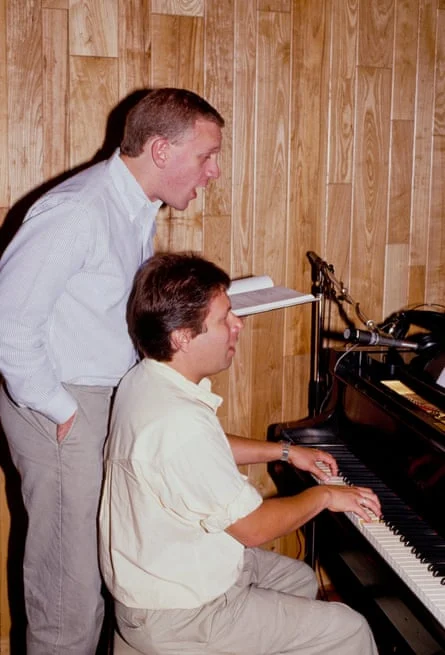
In the hushed, sterile environment of St. Vincent’s Hospital in New York City, early 1991 marked a period of profound artistic creation intertwined with personal heartbreak. Composer Alan Menken, a titan of modern musical theatre and film, brought a keyboard to his dear friend and frequent collaborator, lyricist Howard Ashman. Ashman, then in the advanced stages of an AIDS-related illness, was driven by an unwavering determination to complete his contributions to Disney’s upcoming animated feature, Aladdin. Together, amidst the quiet hum of medical equipment and the palpable sense of urgency, they crafted "Prince Ali," one of the film’s most effervescent and memorable numbers. The scene, as recounted by Menken, paints a vivid picture of artistic resilience in the face of mortality, with Ashman lying in his hospital bed, his spirit undimmed as he poured his creative energy into their shared vision.
This poignant collaboration was not an isolated event. Menken and Ashman had already cemented their legendary partnership with the resounding success of Disney’s The Little Mermaid in 1989. As 1991 unfolded, they were simultaneously immersed in the final stages of Aladdin and Beauty and the Beast. "He was fighting for his life," Menken recalled in a recent interview from his home studio in upstate New York, reflecting on the immense pressure and emotional weight of those concurrent projects. Initially, Menken was unaware of the severity of Ashman’s condition, let alone his HIV diagnosis. Ashman had only disclosed his battle with the virus after their triumph at the 1990 Academy Awards, where "Under the Sea" from The Little Mermaid secured the Oscar for Best Original Song.
"For a while he was absolutely convinced that if it got beyond a very small circle of people, his career would be over," Menken revealed, highlighting the pervasive stigma surrounding HIV/AIDS at the time, which deeply impacted Ashman’s professional life and personal anxieties. This fear, coupled with his declining health, underscored the extraordinary dedication Ashman brought to their work, a testament to his passion for storytelling through song.
Tragically, Howard Ashman passed away before Aladdin‘s release. He never witnessed the film’s phenomenal box office success, which saw it top the US charts in 1992, nor was he present to accept the Oscar for Best Original Song for Beauty and the Beast at the Academy Awards that year. He also missed seeing Menken receive his own Oscar for Best Original Score for the same film. The absence of his creative partner at these career-defining moments undoubtedly cast a long shadow, a bittersweet reminder of the cost of their shared artistic journey.
A Life in Song: The Menken Retrospective
Menken is now bringing his remarkable life and career to audiences in his autobiographical solo show, A Whole New World of Alan Menken. Following successful runs in the United States, the United Kingdom, and Japan, the show made its Australian debut in May. The performance artfully blends Menken’s evocative storytelling with intimate musical interludes, as he takes center stage at the piano, accompanied by archival photographs and behind-the-scenes footage. The show offers an unparalleled glimpse into the intricate process of songwriting, drawing from his extensive catalogue of Disney classics such as Tangled, Hercules, and Pocahontas, alongside his celebrated Broadway productions like Little Shop of Horrors and Sister Act.

Menken’s illustrious career is marked by an astonishing array of accolades. He holds the distinction of being one of the most awarded living individuals at the Academy Awards, boasting eight Oscars. His Grammy count stands at an impressive eleven, and he is a proud EGOT winner – a rare achievement signifying an Emmy, Grammy, Oscar, and Tony Award. With characteristic humility and a touch of self-deprecating humor, Menken playfully redefines his EGOT status as a "Regot." "The R is the Razzie for worst song of the year for a song from the Newsies movie, which was a huge flop," he admitted. Yet, demonstrating the enduring power of artistic reevaluation, Menken later won a Tony Award two decades later for the stage adaptation of Newsies. "It’s an example of how material just evolves on its own, over time," he mused, highlighting the dynamic nature of creative works.
Unlikely Beginnings and Musical Roots
The trajectory of Alan Menken’s career might appear improbable given his family’s traditional path. "All the men in my family were dentists," he stated. However, his upbringing was far from conventional. His father, a dentist by profession, was also a passionate piano player with a fondness for Fats Waller, while his mother was a talented actor, dancer, and playwright before dedicating herself to her family. Their shared love for musical theatre permeated their New York home, exposing young Alan to a rich tapestry of musical expression.
From a young age, Menken embraced formal piano training, mastering the classical repertoire. Yet, his innate inclination was towards composition; he found himself drawn to crafting his own melodies. As a teenager, his musical explorations expanded with the acquisition of a guitar, igniting an obsession with the raw energy of The Rolling Stones and the lyrical depth of Bob Dylan. "Music was everything to me," he affirmed, underscoring the central role music played in his formative years.
A Tapestry of Influences and Personal Echoes
Menken’s eclectic musical palate is a defining characteristic of his work, weaving a rich tapestry of influences throughout his compositions. The folk-pop sensibilities of Joni Mitchell can be heard in the score for Tangled, while Sister Act pays homage to the vibrant rhythms of 70s disco. Beyond musical inspirations, his personal life has also found its way into his art. The cult classic Little Shop of Horrors, a 1982 collaboration with Ashman, features a darkly comedic villain, a sadistic dentist whose demise is brought about by laughing himself to death on nitrous oxide – a substance championed by Menken’s own father, who, fortunately, appreciated the humorous nod.
The groundbreaking success of Little Shop of Horrors proved to be a pivotal moment, paving the way for Ashman and Menken’s entry into the hallowed halls of Disney. At the time, the studio was undergoing a significant transformation under new leadership, with a clear mandate to revitalize its animation division. "Everyone who came in had some relationship to theatre or musicals – including [CEO Michael] Eisner, who was a theatre major in college – and it was this amazing new beginning," Menken explained.
This era, often referred to as the "Disney Renaissance," saw Menken and Ashman inject a fresh, Broadway-infused sensibility into Disney’s animated features. They enlisted seasoned Broadway performers for key vocal roles and infused their soundtracks with elements drawn from the rich tradition of musical theatre. This included nods to the avant-garde cabaret of Kurt Weill and the charming French music hall stylings of Maurice Chevalier. Crucially, they championed an integrated approach to musical storytelling, a hallmark of Broadway, ensuring that every song served to advance the plot or illuminate character. This philosophy was instrumental in shaping the artistic direction of the "Disney Renaissance," leaving an indelible mark on the landscape of stage and screen musicals. Since Ashman’s passing, Menken has continued to compose for numerous Disney films, including Pocahontas, The Hunchback of Notre Dame, Hercules, Enchanted, and Tangled, among others.
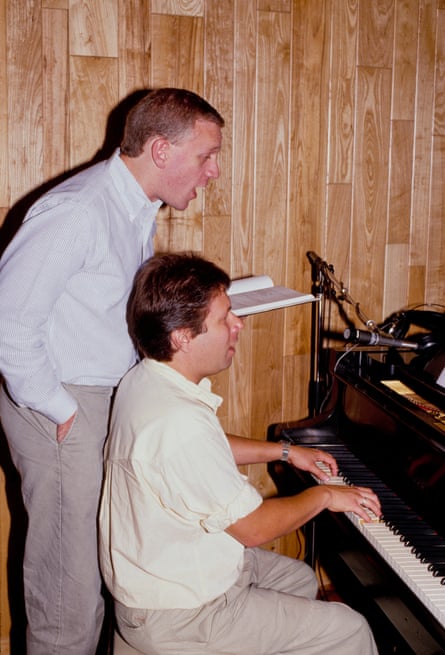
The Craft of Songwriting: A Process of Discovery
Menken’s approach to composing remains consistent with his early practices. "We’re not going to start writing until we figure out what’s the story, and will it make a good musical. How do we structure it? Where would the songs go? What would the musical world of this story be? You can talk for weeks about the entire picture – you want to feel it in detail before you allow the muse to emerge," he elaborated. This meticulous groundwork, focusing on narrative and thematic coherence, is fundamental to his creative process.
Evolution and Adaptation: Bringing Classics to New Stages
In recent years, Menken has been instrumental in adapting his beloved Disney scores for both stage and live-action cinematic productions. This includes the West End production of Hercules and the 2023 live-action remake of The Little Mermaid, for which he collaborated with Lin-Manuel Miranda on new musical numbers.
"On the one hand, you’re the keeper of the flame, but you’re also a member of a new team that’s going to reinterpret the material," Menken explained, reflecting on the delicate balance between honoring the original work and embracing new creative interpretations. "You’ve to be flexible; be patient. Patience is not one of my strong suits. I’m an ADHD kind of person and I just want to go. I write fast." This candid admission highlights the dynamic and sometimes challenging nature of adapting established works for contemporary audiences.
Unfinished Symphonies and Enduring Optimism
Among Menken’s current projects are adaptations of Night at the Museum and Nancy Drew. He is also revisiting a lesser-known rock musical he began developing in the early 1980s, titled Atina: Evil Queen of the Galaxy. Originally conceived as a vehicle for the iconic drag queen Divine, the musical is described by Menken as "filthy," a testament to its audacious and provocative themes. The project, which was intended to be a bold exploration of a "sadomasochistic bitch queen from hell," represents a facet of Menken’s creative range that ventures beyond mainstream family entertainment.
Menken acknowledges the escalating challenges of producing new musicals today. "The talent is there, but musicals, especially in New York, have gotten incredibly expensive," he stated. Nevertheless, drawing on the remarkable journey of Newsies, which transitioned from a theatrical flop to a beloved Broadway hit, Menken maintains a sense of enduring optimism. "I do feel like, over time, if it’s good enough, it’ll find its life," he concluded, a sentiment that encapsulates his unwavering belief in the power and resilience of compelling art.