Ian Tuason, the writer-director behind A24’s latest horror sensation, undertone, has emerged as a significant voice in contemporary genre filmmaking, blending innovative auditory techniques with profound personal narrative. The film, described by Tuason himself as a “demonic found audio” experience, has defied expectations, rapidly ascending to a theatrical smash after its acclaimed premieres at the Fantasia International Film Festival and Sundance. Its impressive box office performance and unique creative genesis underscore Tuason’s evolution from a pioneer in immersive virtual reality (VR) horror to a director capable of captivating mainstream audiences with a distinctive vision.
Tuason’s journey into the chilling world of undertone began with an unexpected delve into the supernatural. "I was never really into the occult before making this movie," Tuason admits, reflecting on the extensive research that informed the film’s eerie narrative. "After doing research, I started getting into it more. That manifested weird things into existence." This initial skepticism, gradually replaced by an unsettling familiarity with the arcane, set the stage for a film that feels deeply informed by its subject matter, pushing beyond conventional horror tropes.
A Foundation in Immersive Horror: From VR to the Big Screen
Long before undertone captivated multiplexes, Ian Tuason was already a trailblazer in the nascent field of immersive storytelling. His early forays into 360-degree VR horror shorts, such as Continuity Problems (2009) and Close Up (2011), garnered substantial attention, finding significant success on YouTube. These early works were recognized for their innovative use of the emerging VR medium to create truly enveloping frights, eventually earning screenings at the prestigious Marché du Film’s NEXT Pavilion in Cannes. This international exposure highlighted Tuason’s foresight in recognizing the potential of VR as a horror vehicle, long before it became a more widely explored medium.
His subsequent VR project, the 360-degree live-action breakthrough 3:00am, further solidified his reputation, accumulating an astounding 9 million viewers on YouTube. This remarkable viewership demonstrated Tuason’s innate ability to connect with a horror fanbase eager for new, visceral experiences. While he may not have considered himself "into" the occult at the time, his work undeniably catered to audiences fascinated by the supernatural and the psychological terror it can evoke. This extensive background in crafting deeply immersive, sound-driven experiences laid a crucial foundation for the distinct sonic landscape of undertone.
Box Office Triumph and Festival Acclaim
undertone has proven to be a resounding commercial success for A24, a studio renowned for its distinctive and often unsettling horror offerings. Made on a modest budget of $500,000, the film quickly doubled its production cost from Thursday box office previews alone, signaling strong audience interest from the outset. It has since grossed an impressive $9 million, firmly establishing itself as a theatrical smash. This robust performance is particularly noteworthy in the independent horror landscape, where even critically acclaimed films can struggle to find a wide audience.
The film’s journey to box office success was paved by a strong showing on the festival circuit. undertone premiered to significant buzz at Montreal’s Fantasia International Film Festival in July, a renowned showcase for genre cinema that often identifies future cult classics and critical darlings. This initial reception was further amplified by its presence at Sundance earlier in the year, where it amassed additional critical attention and industry buzz. The combination of festival prestige and A24’s strategic distribution helped position undertone as a must-see horror event, tapping into the studio’s reputation for championing unique and artistically daring genre films. A24’s track record with successful indie horror, from Hereditary to The Witch, often means their backing signals a film of particular quality and artistic merit, a perception that undoubtedly contributed to undertone‘s strong opening.
Crafting a 3D Soundscape: The Power of Auditory Terror
Tuason’s deep understanding of immersive audio, honed through his VR work, is the bedrock of undertone‘s singular terror. "I always felt like surround sound in the theater would be a great opportunity to take what I learned and play around with it—to create a 3D soundscape and guide the viewer’s attention to different spaces around them," Tuason explains. This philosophy translates into a film where sound is not merely a supplementary element but the primary driver of dread. He achieved this by "combin[ing] a bunch of things that I loved, like scripted podcasts and found footage," creating a hybrid genre that maximizes auditory suspense.
The narrative of undertone revolves around Evy (Nina Kiri), who co-hosts The Undertone podcast. As the skeptical counterpart to her best friend Justin’s (Adam DiMarco) credulous, "Agent Mulder"-esque sensibility, Evy provides a grounded perspective. Their podcast recordings are complicated by a significant time difference, forcing Evy—who has recently returned home to care for her comatose mother—to record during the eerie "witching hour." The podcast initially offers Evy a much-needed escape from the grim realities of administering palliative care, a theme that resonates deeply with Tuason’s personal life.
The plot thickens when a fan-sent email arrives, containing an unsettling audio recording. These files chronicle a couple, Jessa and Mike, and their terrifying paranormal encounter with Abyzou, a female demon from ancient folklore rumored to target mothers and their children. Justin is understandably hesitant to play these files, fearing what they might unleash. Evy, however, insists on recording their real-time reactions to what she assumes is merely a clever hoax. This decision inadvertently pulls her into a spiraling nightmare.
The Descent into an Audio Nightmare: Plot and Thematic Resonance
Soon after engaging with the malevolent audio, Evy begins to experience a series of bizarre and increasingly disturbing phenomena within her home. Her unconscious mother’s body inexplicably shifts from her bed; lights flicker erratically; and a statue of the Virgin Mary, repeatedly stowed away, mysteriously reappears on the bedside table. "She’s slowly entering this audio nightmare until she’s entirely in it," Tuason describes Evy’s harrowing arc, highlighting the insidious nature of the horror that gradually consumes her reality.

The film masterfully employs sound as a source of terror, particularly through its unsettling preoccupation with nursery rhymes revealing sinister messages when played backward. Tuason cites an example: the seemingly innocuous "Baa Baa Black Sheep" appears to contain the chilling lyric "lick the blood off" when reversed. This auditory manipulation transforms innocent childhood sounds into instruments of dread, mirroring the film’s broader theme of hidden malevolence lurking beneath the surface of the mundane.
A Profoundly Personal Horror: Filming in the House of Grief
The true depth of undertone‘s haunted feeling, however, stems from a deeply personal and poignant connection to its director’s life. Much like Evy, Ian Tuason intimately experienced the role of a caregiver, having looked after both of his parents as they succumbed to cancer. This raw, lived experience imbued the film with an authenticity of grief and helplessness that transcends typical genre scares.
The most striking revelation regarding the film’s production is Tuason’s decision to film undertone in the very house where his parents had passed away. "We filmed in the house my parents died in," he reveals, a statement that often elicits a profound reaction. "You tell people that and they go, oh. Then there’s a moment of consoling, and then there’s a moment of, ‘Wait a minute, we’re filming in the same bedroom, right?’" This choice transforms the film’s single location into a potent crucible of personal history and cinematic terror.
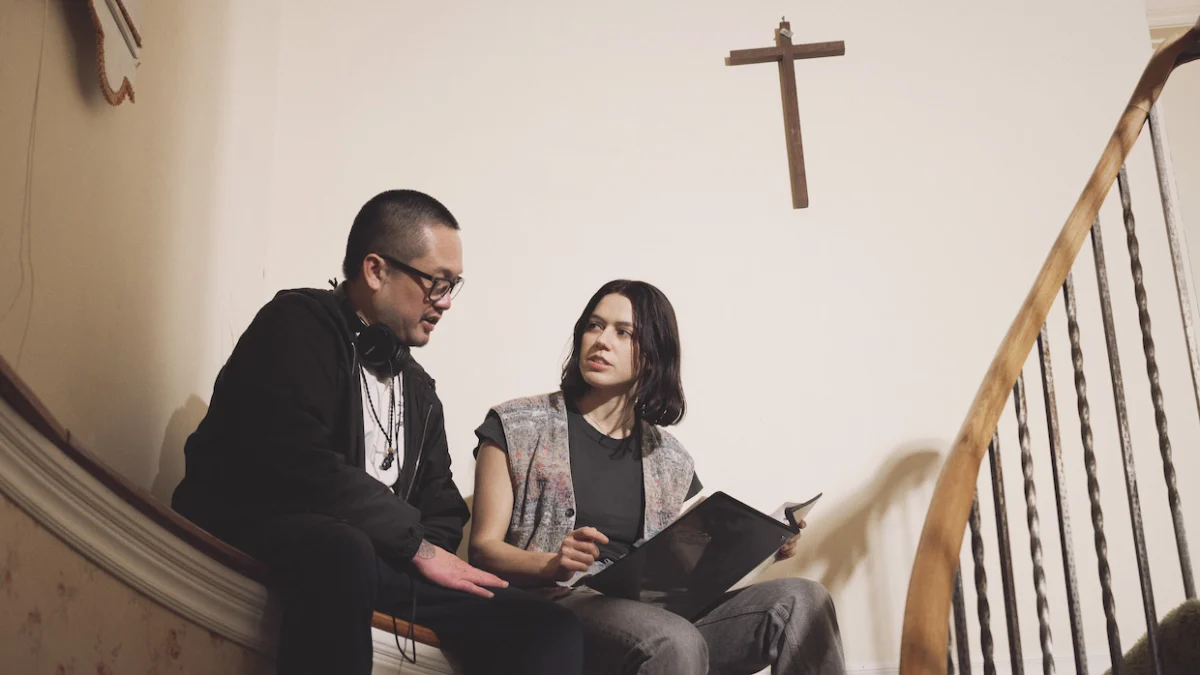
Production designer Mercedes Coyle meticulously refitted the family home with overt Catholic flourishes, including a proliferation of crucifixes, to enhance the film’s oppressive atmosphere. During this transformation, Tuason moved back into the house to prepare for production—marking the first time he had lived there since his parents’ deaths. This immersion in the very space of his profound loss undoubtedly amplified the emotional resonance of the filmmaking process.
Supernatural Occurrences and Desensitization
The unique filming environment also reportedly led to supernatural occurrences on set. "I could say that the set was haunted," Tuason recounts with a nervous laugh, citing instances of lights flickering, mirroring the very phenomena depicted in the film. While remaining tight-lipped about the full extent of these incidents, dismissing them as "too long of a story," Tuason appears remarkably unfazed by the reported supernatural activity.
This apparent equanimity, he suggests, is a consequence of his past experiences. "I kind of got desensitized after the whole caregiving experience—how dark it was," he reflects. "I used to be really scared of ghosts. If I saw a ghost now, I would just go back to sleep." This profound shift in perspective, born from confronting the ultimate human experience of loss and decay, renders him uniquely equipped to navigate the eerie occurrences both on and off screen. The fact that he has since taken up permanent residence in his parents’ house post-shoot, with Coyle’s Catholic touches still intact, suggests his words are indeed spoken from ongoing experience.
Filmmaking as Therapy: Confronting Anguish Through Art
The creation of undertone served as a powerful, albeit delayed, cathartic experience for Tuason. There is a universal truth in the deliverance that can come from confronting one’s anguish through artistic expression. "When I was writing it, I didn’t really feel the catharsis of everything," he admits. "Not until I saw it on screen. Filmmaking is therapeutic." This sentiment highlights the profound, often unexpected, healing power of art, transforming personal trauma into a shared experience for audiences. The film becomes not just a horror story, but a deeply personal meditation on grief, caregiving, and the unseen forces that can inhabit both our homes and our psyches.
During a concluding segment of an interview, Tuason paused to ask if his interviewer could hear something, creating a momentary, unsettling silence that amplified the mundane sounds of the room. "There’s a school next door and they’re having recess," he clarified, concerned the children’s playful shrieks might impact the audio quality. The sudden, albeit mistaken, perception of a "demonic tenor" underscored Tuason’s central thesis about horror.
The Primacy of Sound in Horror and Future Ambitions
"I think audio is the most important element of a horror film—more important than picture," Tuason asserts with conviction. "Whatever you can imagine is always going to be scarier than what I can show you." This principle, masterfully demonstrated in undertone, positions the audience’s imagination as the ultimate canvas for terror. When asked for a film that perfectly exemplifies this idea, Tuason replies without hesitation: Paranormal Activity.
His profound admiration for the Paranormal Activity franchise takes on new significance with the recent announcement in December that he has been tapped to direct Paranormal Activity 8. This appointment is a testament to his expertise in crafting atmospheric, sound-driven horror and signals a major career trajectory within the genre. However, Tuason’s creative ambition extends beyond the confines of horror.
"I’m gonna come out with a couple more horror films," he teases, acknowledging his current strength in the genre. "After that, I’ll transition into sci-fi-horror. Then after that, sci-fi." This carefully articulated roadmap reveals a filmmaker driven by a desire to explore diverse narrative landscapes, gradually moving into broader speculative fiction. If Ian Tuason is undeniably possessed by one thing, it is an insatiable creative ambition to push boundaries and explore the depths of human experience through compelling, genre-bending cinema. His work on undertone stands as a powerful testament to this vision, solidifying his status as a director to watch in the evolving landscape of modern filmmaking.