Adolfo Borinaga Alix Jr.’s 2012 cinematic offering, "Wildlife" (also known by its Filipino title, "Kalayaan"), stands as a critically acclaimed and stylistically distinctive work within the director’s prolific filmography. Premiering at the prestigious Cinemalaya Philippine Independent Film Festival in 2012, the film quickly garnered international recognition, notably securing the NETPAC Award at the Warsaw Film Festival. This psychological drama is lauded for its compelling exploration of human isolation, the fragility of sanity, and the subtle intertwining of personal trauma with broader geopolitical anxieties. Its narrative, characterized by a dreamlike quality and a deliberate, unsettling pace, invites audiences into a deeply immersive and often disorienting experience, marking it as one of Alix Jr.’s most decorated and intriguing productions.
The Premise: Isolation on a Contested Shore
The core narrative of "Wildlife" centers on Julian, a Filipino soldier deployed to Kota Island, a remote outpost within the disputed Kalayaan Island Group in the West Philippine Sea. Having completed his initial three-month tour of duty, Julian is poised for repatriation to the mainland. However, his departure is abruptly halted by an unexpected order: a pending coup d’état in Manila necessitates his indefinite stay on the island. This unforeseen extension traps Julian in a profound state of enforced solitude, pushing him to the brink of his psychological endurance. His days become a monotonous cycle of routine activities – solitary walks along the desolate beachfront, meticulous cleaning of his service rifle, consuming pornography, and finding fleeting solace in the static-laced melodies of an old radio. These actions serve as meager defenses against the encroaching boredom and pervasive loneliness that threaten to consume him. Yet, beneath this surface of mundane existence, a more sinister undercurrent emerges: Julian becomes increasingly convinced that he is being watched, haunted by an unseen presence that transforms his isolation into a struggle for survival against an unknown entity.
A Director’s Vision: Adolfo Alix Jr. and the Indie Wave
The Prolific Filmmaker
Adolfo Borinaga Alix Jr. is a cornerstone of contemporary Philippine independent cinema, known for his relentless productivity and a filmography that spans a wide array of genres and thematic concerns. Born in 1978, Alix Jr. emerged as a significant voice in the early 2000s, quickly establishing a reputation for crafting raw, socially conscious narratives that often delve into the darker facets of the human condition and societal struggles. His films frequently explore themes of poverty, crime, sexuality, and the psychological impact of adverse circumstances on marginalized individuals. "Wildlife" is emblematic of his willingness to push narrative boundaries, eschewing conventional storytelling for a more experiential and atmospheric approach. His works, often characterized by their naturalistic performances and stark visual style, have frequently been recognized in both local and international film festivals, solidifying his status as a major figure in the global independent film circuit. His ability to elicit powerful performances from his actors, coupled with a keen eye for visual composition, allows him to create worlds that are both deeply specific to the Philippines and universally resonant.
Cinemalaya and the Independent Movement
The premiere of "Wildlife" at Cinemalaya 2012 places it firmly within the vibrant independent film movement that revolutionized Philippine cinema in the 21st century. Established in 2005, the Cinemalaya Philippine Independent Film Festival serves as a crucial platform for emerging and established Filipino filmmakers, providing funding, exhibition opportunities, and critical exposure. The festival has been instrumental in fostering a new generation of cinematic voices, encouraging experimental storytelling and thematic depth that often deviates from mainstream commercial productions. "Wildlife’s" selection for Cinemalaya underscored its artistic ambition and its alignment with the festival’s mission to champion films that challenge conventions and provoke thought. The success of films like "Wildlife" on the festival circuit, both locally and internationally, demonstrated the growing maturity and global appeal of Filipino independent cinema, showcasing its unique perspective and artistic integrity to a wider audience.
Geopolitical Backdrop: The Spratlys and EDSA II
Kota Island and the Kalayaan Island Group
The setting of "Wildlife" on Kota Island is not merely a backdrop for Julian’s personal drama; it is a deliberate choice that imbues the film with significant geopolitical weight. Kota Island, locally known as Panata Island, is one of the features in the Kalayaan Island Group (KIG), which forms part of the larger Spratly Islands archipelago in the South China Sea. This region is one of the most hotly contested maritime territories in the world, with overlapping claims from the Philippines, China, Vietnam, Malaysia, Brunei, and Taiwan. The presence of Filipino soldiers on these remote outposts underscores the nation’s assertion of sovereignty in the face of aggressive claims from other nations, particularly China. For Julian, being stationed on Kota Island means living at the sharp end of an ongoing international dispute, a constant reminder of external threats and national vulnerability. His isolation is thus compounded by the geopolitical tension inherent in his location, transforming his personal struggle into a microcosm of a larger national predicament. The barren landscape and the omnipresent ocean surrounding him serve as stark visual metaphors for both his personal entrapment and the precariousness of the Philippine claim.
EDSA II: A Nation in Turmoil
The "pending coup d’état in Manila" that prolongs Julian’s stay on Kota Island is a direct, albeit fictionalized, reference to a tumultuous period in recent Philippine history. The original article’s mention of "EDSA II" anchors the film in the political realities of the early 2000s. EDSA II, or the Second People Power Revolution, occurred in January 2001 and led to the ouster of then-President Joseph Estrada amid accusations of corruption and cronyism. This event was a significant moment in Philippine political history, demonstrating the power of popular mobilization but also highlighting deep divisions within the military and political establishment. The instability created by such events often leads to heightened security alerts, military lockdowns, and the recall or redeployment of personnel, precisely the scenario Julian faces. By situating Julian’s personal crisis against this backdrop of national political upheaval, Alix Jr. subtly suggests a connection between the chaos of the external world and the internal disarray of his protagonist. The film implicitly asks whether the instability of the nation mirrors, or even contributes to, the unraveling of individual sanity. This historical context provides a tangible "real-world" threat that resonates with the more abstract and psychological dangers Julian perceives.
Narrative Unfolding: The Descent into the Oneiric
The Silent Watch
The initial segments of "Wildlife" are characterized by an almost minimalist narrative approach, focusing intensely on Julian’s solitary existence and his increasingly fragile mental state. Aside from a fleeting, ambiguous opening scene that hints at a prior unsettling event, the film deliberately slows its pace, allowing the audience to sink into Julian’s routine. This deliberate quietude is not an absence of activity but a calculated build-up of tension. Julian’s growing conviction that he is being watched, even in the apparent emptiness of the island, creates a pervasive sense of dread. The mangroves, depicted with a foreboding beauty, become an active participant in this psychological landscape, evoking a distinctly nightmarish atmosphere that underscores the encroaching sense of danger. This early period establishes the film’s core theme: the mind’s capacity to create its own terrors when deprived of external stimuli and human connection. The audience is positioned to experience Julian’s subjective reality, blurring the lines between genuine threat and internal manifestation.
The Arrival of Company
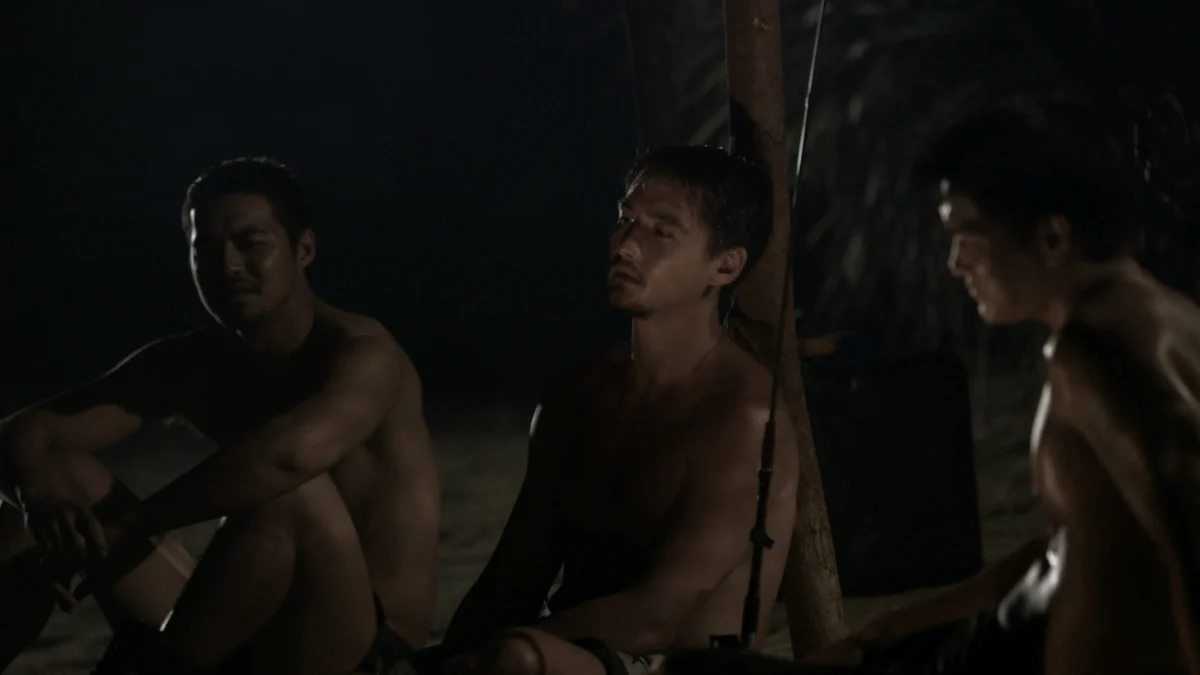
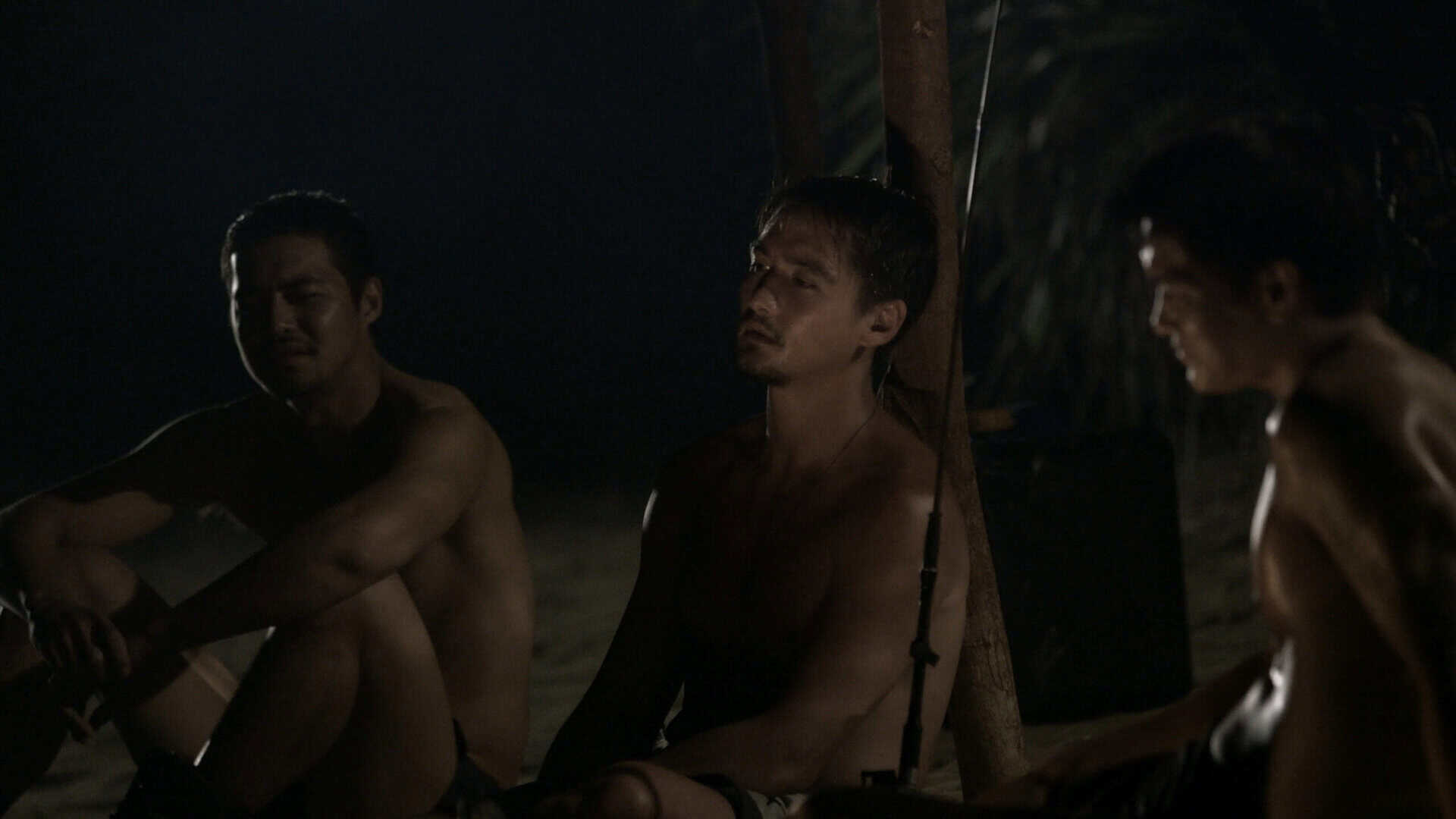
The narrative takes a distinct turn with the unexpected arrival of two new soldiers from the main island: the boisterous and street-smart Lucio, and the naive, inexperienced Eric. Their presence shatters Julian’s solitary routine, introducing a new dynamic that is both a potential reprieve and a further catalyst for his psychological unraveling. Their shared moments – casual conversations, drinking sessions, impromptu basketball games, and the exchange of local folklore, including chilling tales of a "ghost soldier" – serve to gradually erode Julian’s carefully constructed defenses. The camaraderie, however superficial, forces Julian to confront aspects of himself he has long suppressed. As the past begins to surface, his sense of isolation deepens, even in the presence of others, revealing a traumatic history he has resolutely refused to discuss. The dynamic between the three men becomes a crucible, bringing to the forefront buried memories and unresolved conflicts that escalate Julian’s internal struggle.
Blurring Lines: Reality and the Subconscious
"Wildlife" employs a narrative structure that consciously mirrors the logic of a dream, where disparate elements—eroticism, nightmare, hidden truths, and the supernatural—seamlessly intertwine. Julian often functions as a passive observer, caught in events he cannot fully comprehend or control, much like in a dream state. The ambiguity surrounding the arrival and even the ultimate fate of Lucio and Eric reinforces this oneiric quality, leaving the audience to question the objective reality of their presence. The film’s increasing use of nudity and subtle sexual undertones, particularly with the introduction of a latent homosexual element, further enhances this dreamlike atmosphere, suggesting suppressed desires and anxieties. The dialogue, at times detached and elliptical, combined with the soldiers’ frank sexual references, culminates in a finale that solidifies this surreal direction, leaving interpretations open-ended and profoundly captivating. The film does not offer easy answers, instead immersing the viewer in a subjective, disorienting experience that mirrors Julian’s deteriorating grasp on reality.
Crafting the Experience: Cinematography, Editing, and Sound
Visual Storytelling
Albert Banzon’s cinematography is a crucial element in "Wildlife’s" immersive quality, effectively capturing both the austere beauty of the island setting and the escalating psychological tension. Banzon masterfully utilizes the natural light and stark landscapes of Kota Island to create a sense of vastness and isolation. The night sequences, in particular, are rendered with a haunting beauty, their deep shadows and muted tones amplifying the feeling of unseen threats and psychological dread. Scenes of intimacy are handled with a raw, unvarnished honesty, contributing to the film’s overall sense of vulnerability and rawness. The depiction of the mangroves, twisting and gnarled, becomes a character in itself, embodying the nightmarish atmosphere that permeates Julian’s world. Furthermore, the frequent use of voyeuristic shots, especially when Julian watches pornography, serves to underscore his profound loneliness and the intrusive nature of his perceived surveillance, effectively blurring the line between his private desires and his growing paranoia.
The Rhythm of Isolation
Aleks Castañeda’s editing contributes significantly to the film’s slow, deliberate, and oneiric pace. The extended stretches of inactivity, particularly in the film’s first half, are not mere filler but a conscious artistic choice designed to immerse the viewer in Julian’s monotonous and isolated existence. While some critics acknowledged these moments could occasionally lean towards tediousness, they are essential in building the palpable sense of boredom and the psychological pressure cooker Julian inhabits. The pacing allows the subtle shifts in Julian’s mental state to register, making the eventual descent into ambiguity more impactful. At 115 minutes, the film’s duration, while perhaps feeling slightly excessive to some, is integral to its immersive design, demanding patience from the audience but rewarding it with a deep, unsettling experience that resonates long after the credits roll. The editing decisions reinforce the dreamlike structure, allowing the audience to slowly become attuned to the film’s unique rhythm.
Performances of Depth: Bringing Julian to Life
Ananda Everingham’s Nuanced Portrayal
At the heart of "Wildlife’s" emotional and psychological landscape is Ananda Everingham’s compelling performance as Julian. Everingham, a Thai actor of Australian descent, delivers a masterclass in nuanced acting, effectively portraying Julian’s complex oscillation between stoic detachment and profound internal turmoil. His portrayal is often characterized by long stretches of silence, where his expressions and body language communicate volumes, conveying the depths of Julian’s loneliness, paranoia, and the gradual erosion of his sanity. Everingham captures the subtle shifts in Julian’s demeanor, from his initial resignation to his growing agitation and eventual descent into a blurred reality. His ability to convey such intense internal conflict with minimal dialogue is a testament to his skill, making Julian’s journey both believable and deeply unsettling for the audience.
Supporting Dynamics
Zanjoe Marudo and Luis Alandy, as the two additional soldiers, Lucio and Eric, provide crucial counterpoints to Everingham’s solitary performance. Marudo’s portrayal of the loud-mouthed Lucio injects a much-needed, albeit occasionally abrasive, energy into the narrative, disrupting Julian’s quiet solitude. His character brings a sense of grounded, albeit rough, masculinity that contrasts sharply with Julian’s internal struggle. Alandy, as the inexperienced Eric, offers a more vulnerable and impressionable presence, highlighting the innocence that Julian has perhaps lost. Their contrasting personalities occasionally introduce subtle touches of humor, providing brief respites from the film’s pervasive tension. More importantly, their interactions with Julian serve as catalysts, forcing him to engage with the external world and, in doing so, confronting his own suppressed memories and traumas. Their performances are vital in showcasing the different facets of masculinity under duress and how these dynamics can both support and challenge an individual’s psychological stability.
Critical Reception and Awards: Acknowledging Artistic Boldness
The NETPAC Accolade
"Wildlife" garnered significant international acclaim, most notably receiving the NETPAC Award at the 2012 Warsaw Film Festival. The Network for the Promotion of Asian Cinema (NETPAC) award is given to the best Asian film at various international film festivals, recognizing works that demonstrate artistic excellence and cultural significance. This award was a strong endorsement of "Wildlife’s" unique vision and its profound impact. The jury likely recognized the film’s audacious narrative structure, its unflinching exploration of psychological themes, and its masterful execution of atmosphere and character study. Such an award not only elevates the film’s international profile but also brings wider attention to Philippine cinema, showcasing its capacity for sophisticated and challenging storytelling.
Broader Critical Acclaim
Beyond the NETPAC Award, "Wildlife" was met with widespread critical praise for its bold artistic choices. Critics lauded Adolfo Alix Jr. for his courage in tackling a difficult and ambiguous subject matter with such artistic precision. Reviewers often highlighted the film’s ability to maintain a persistent sense of danger despite its slow pace, crediting the immersive cinematography and the unsettling sound design. The film was praised for its deep dive into the human psyche, its exploration of isolation, and its ambiguous blending of reality and hallucination. While some noted the challenge of its non-linear and dreamlike structure, most agreed that "Wildlife" was a compelling and thought-provoking cinematic experience, solidifying its place as a significant work in both Alix Jr.’s career and contemporary Filipino cinema. The film’s capacity to spark diverse interpretations underscored its intellectual and artistic depth.
Thematic Richness: Beyond the Surface
The Psychology of Solitude
At its core, "Wildlife" is a profound meditation on the psychology of solitude and its corrosive effects on the human mind. Julian’s enforced isolation on Kota Island transforms his personal space into a psychological battleground, where the boundaries between external reality and internal perception begin to blur. The film meticulously charts his descent into paranoia and hallucination, illustrating how the absence of human connection can lead to a profound sense of existential dread. His belief that "someone" is watching him is not just a plot device but a manifestation of his mind grappling with an unbearable emptiness, projecting its fears onto an unseen presence. This exploration of the mind’s fragility under duress offers a poignant commentary on the essential human need for connection and the devastating consequences when it is denied.
Masculinity and Vulnerability
The film also subtly explores themes of masculinity, vulnerability, and suppressed desires within a traditionally rigid military context. The interactions between Julian, Lucio, and Eric, while seemingly mundane, reveal different facets of male bonding and the anxieties that can underlie them. The occasional use of nudity and the introduction of homosexual undertones, while never explicitly defined, suggest a deeper layer of suppressed sexuality and emotional vulnerability that challenges conventional notions of military machismo. Julian’s private acts of watching pornography and his increasingly blurred reality hint at a complex inner world that struggles with identity and desire in an environment designed for conformity and stoicism. The film dares to portray male characters not just as soldiers, but as complex individuals grappling with their own humanity and hidden yearnings.
Political Allegory or Psychological Manifestation?
The inclusion of the radio, with its repeated references to EDSA II and the "pending coup d’état," grounds the narrative in a specific socio-political reality, introducing a political dimension that is open to interpretation. While the connection between this external political turmoil and Julian’s internal psychological collapse remains somewhat elusive, it invites viewers to consider whether Alix Jr. intended to craft a broader allegory. Is Julian’s unraveling a metaphor for the instability of the nation itself? Does the dreamlike quality of his experience mirror the often surreal and unpredictable nature of political revolutions? While a definitive interpretation is deliberately withheld, the film’s ability to weave these elements together, however subtly, adds layers of complexity, suggesting that personal struggles are often inextricably linked to the larger societal and political forces at play.
Legacy and Impact: A Unique Contribution to Filipino Film
"Wildlife" ultimately emerges as a singularly engaging and profoundly unsettling work, operating within its own peculiar logic. Its distinction lies not just in its intriguing visual approach and deliberate editing, but in its unwavering commitment to exploring the depths of human isolation and psychological fragility. Adolfo Alix Jr.’s audacious vision, combined with the powerful performances and atmospheric cinematography, ensures that "Wildlife" is more than just a film about a soldier; it is an experience that challenges perceptions of reality, sanity, and the unseen forces that shape our existence. It stands as a testament to the power of independent cinema to tackle complex themes with artistic integrity and remains a significant and notable effort within Alix Jr.’s celebrated filmography, solidifying its place as a unique and enduring contribution to Filipino and world cinema. Its open-ended nature guarantees continued discussion and analysis, ensuring its relevance for years to come.