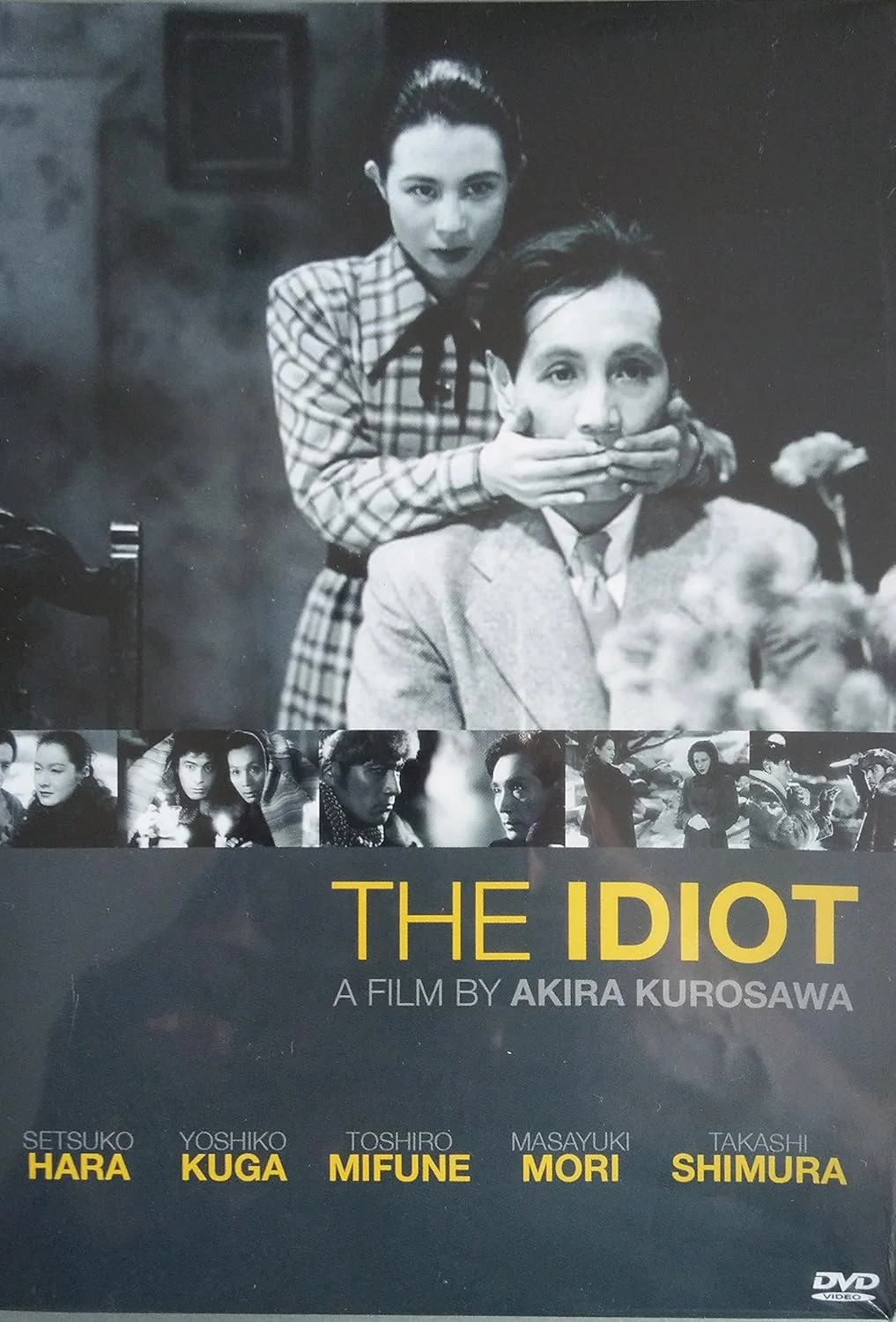
Akira Kurosawa’s 1951 cinematic adaptation of Fyodor Dostoevsky’s seminal novel, "The Idiot," stands as a monumental, albeit often debated, entry in the illustrious filmography of one of cinema’s most revered auteurs. Following his exploration of real-life events in "Scandal" (1950), Kurosawa embarked on a deeply personal project, attempting to translate the complex moral and psychological landscape of Dostoevsky onto the silver screen. This endeavor, produced by Shochiku Company, was a testament to his long-standing admiration for Russian literature, particularly the works of Dostoevsky, whom he consistently hailed as his favorite author for his profound honesty in depicting the human condition. Despite this deep reverence and the film’s ambitious scope, "The Idiot" remains Kurosawa’s sole adaptation of a Dostoevsky novel, a fact that underscores both the personal significance of the project and the formidable challenges it presented, including significant studio intervention that altered its original vision.
The Genesis of an Ambitious Adaptation: Kurosawa’s Lifelong Literary Affection
Kurosawa’s affinity for Russian literature was not a passing interest but a foundational influence that shaped his artistic sensibilities from a young age. His confession, made years later in an interview for the "Masters of Cinema" DVD series, revealed the depth of this connection: "I wanted to make ‘The Idiot’ long before ‘Rashomon’. Since I was little I’ve liked Russian literature, but I find that I like Dostoevsky the best and had long thought that this book would make a wonderful film. He is still my favourite author, and he is the one who writes most honestly about human existence." This statement provides crucial insight into the profound personal investment Kurosawa had in this particular project, envisioning its cinematic potential even before the international acclaim of "Rashomon" (also 1950) catapulted him to global recognition. The decision to adapt "The Idiot" was thus not merely a directorial assignment but the fulfillment of a long-cherished artistic ambition, a direct translation of his literary passion into a visual medium.
At the time of its production, Kurosawa was in a dynamic phase of his career. While "Rashomon" had just premiered to critical success at the Venice Film Festival, marking a turning point for Japanese cinema on the global stage, "The Idiot" was conceived and released in its immediate aftermath, representing a more internal, reflective project. Shochiku Company, one of Japan’s major film studios, provided the platform for this ambitious undertaking. The studio system in post-war Japan was robust, yet it also imposed certain commercial realities on filmmakers. Kurosawa’s desire to tackle Dostoevsky’s lengthy and philosophically dense novel, originally published in 1869, was a bold artistic statement, especially given the contemporary Japanese audience’s tastes and the burgeoning international interest in Japanese realism. The period saw Japan rebuilding not just its infrastructure but also its cultural identity, and films often reflected a society grappling with its past and future.
Relocating Dostoevsky: From Tsarist Russia to Post-War Hokkaido
One of the most significant creative decisions Kurosawa made was to transpose Dostoevsky’s narrative from 19th-century Tsarist Russia to contemporary post-World War II Japan. The story follows Kinji Kameda (portrayed by the superb Masayuki Mori), a war veteran who suffers a mental breakdown following a harrowing near-execution by a firing squad during the war. His subsequent journey takes him to the snowy, isolated island of Hokkaido, a setting that visually and thematically mirrors the bleak, often hostile, emotional landscapes of Dostoevsky’s original.
This relocation was not merely a cosmetic change but a deliberate attempt by Kurosawa to infuse the universal themes of Dostoevsky’s novel with a specific Japanese context. Post-war Japan was a society grappling with immense psychological trauma, economic hardship, and a profound re-evaluation of its moral and social fabric. The "pure-hearted" Prince Myshkin, reimagined as Kameda, thus becomes a poignant symbol of innocence and idealism confronted by a society struggling with its own cynicism, materialism, and moral ambiguities in the aftermath of devastating conflict. The cold, unforgiving winter landscape of Hokkaido serves as a powerful visual metaphor for the spiritual desolation and emotional chill pervading a society in flux. It provides a stark backdrop against which Kameda’s inherent goodness shines, yet also ultimately falters, highlighting the challenging environment for genuine virtue. The choice of Hokkaido, with its rugged, untamed beauty and harsh winters, mirrored the emotional desolation and spiritual struggle of the characters, connecting the external environment to their internal turmoil.
Thematic Core: Goodness, Idiocy, and Societal Collision
Despite the significant geographical and temporal shift, Kurosawa’s "The Idiot" masterfully retains the core thematic motive of Dostoevsky’s work: the placement of an individual with an unblemished, pure heart at the very center of a society driven by avarice, social climbing, and moral compromise. The film meticulously explores the profound consequences of this collision, demonstrating how Kameda’s inherent purity not only impacts his own fate but also irrevocably alters the lives of everyone he encounters.
Kurosawa, known for his clarity of vision, leaves little room for ambiguity in his central message. The film opens with an explanatory board, a deliberate narrative device that sets the stage for the audience’s understanding: "Dostoevsky wanted to portray a genuinely good man. It may seem ironic, choosing a young idiot as his hero, but in this world, goodness and idiocy are often equated." This explicit statement immediately frames the central philosophical inquiry of the film: what constitutes "goodness" in a fallen world, and why is such goodness so often misunderstood, even scorned, as "idiocy"? This direct approach, while perhaps lacking the subtle unfolding of Dostoevsky’s prose, was Kurosawa’s way of firmly grounding the film’s philosophical intent from the outset.
This idea is reiterated throughout the narrative, as Kameda’s actions, driven by compassion and honesty, are consistently misinterpreted by a cynical society that operates on self-interest and calculated deceit. While this persistent exploration of the theme is central to Dostoevsky’s novel, its direct and repetitive presentation in Kurosawa’s film has been a point of contention for some critics, leading to a perception of monotony in certain stretches. However, this relentless questioning – "who is the real idiot?" – is precisely Kurosawa’s intention, forcing the audience to confront their own definitions of virtue and folly within various social scenarios presented on screen. The film becomes a psychological and moral crucible, testing not just its protagonist but also the audience’s preconceived notions, particularly those arising from the pragmatic, often brutal, realities of post-war survival.
Visual Poetics: Cinematography as a Narrative Force
Beyond its profound thematic concerns, one of the undeniable strengths of "The Idiot" lies in its masterful visual layer. The cinematography, helmed by Toshio Ubukata, is a testament to thoughtful composition and expressive landscape utilization. Ubukata’s lens captures the bleak, snow-covered vistas of Hokkaido with a stark beauty that perfectly complements the film’s somber, Dostoevskyan atmosphere. The reality depicted is cold, unwelcoming, and desolate, both literally in its wintry setting and figuratively in its portrayal of human relationships. The black-and-white photography, a standard of the era but utilized here with exceptional artistry, enhances this sense of gloom, stripping away any superficial vibrancy to reveal the stark emotional truths at play.
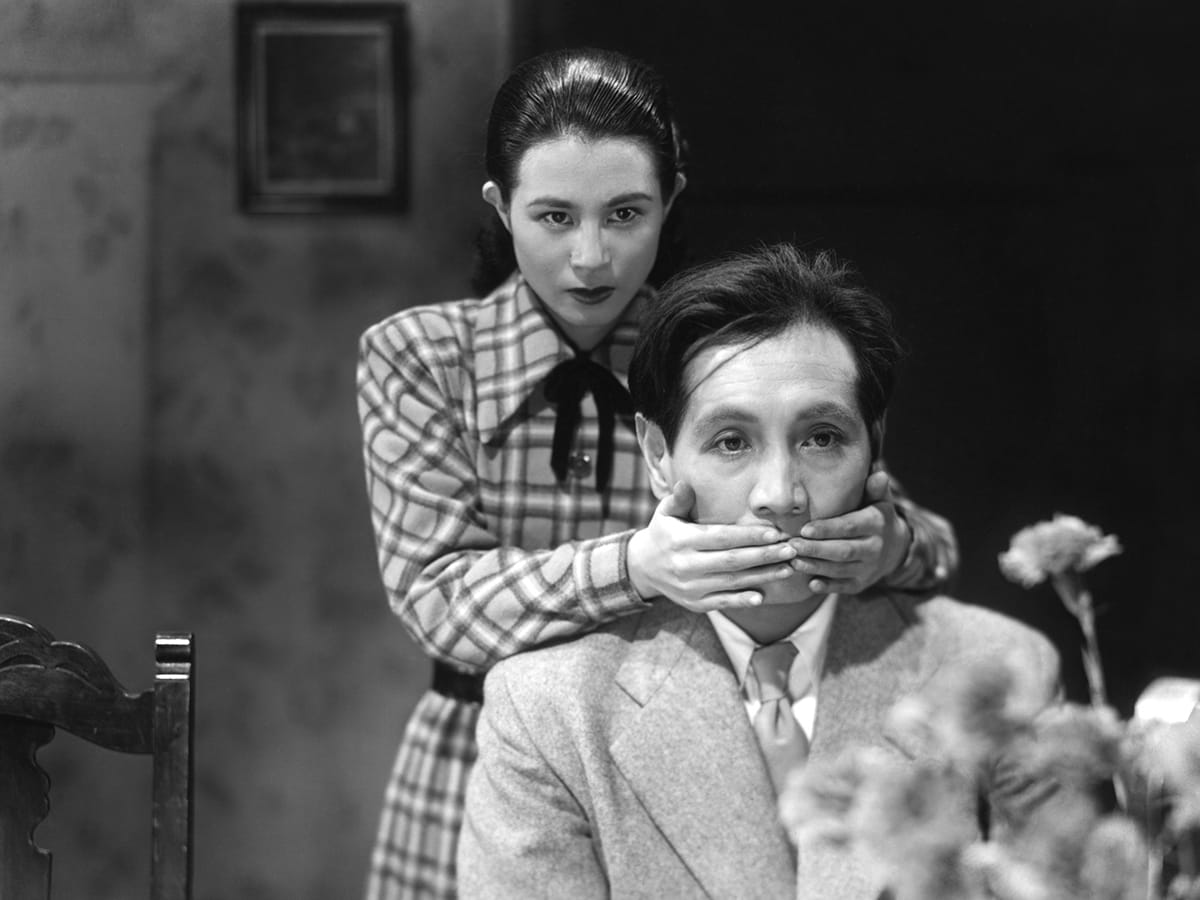
Every frame seems carefully constructed, emphasizing the isolation of characters against vast, unforgiving expanses or trapping them in claustrophobic interiors filled with tension. This visual language becomes a powerful narrative force, communicating the characters’ internal states and the external pressures they face. The film’s aesthetic choice to embrace a theatrical manner of performance further accentuates this, lending a heightened, almost operatic quality to the human drama unfolding on this gloomy, monochromatic stage. This stylistic approach, while distinct from the realism often associated with Kurosawa’s later works, serves to amplify the psychological intensity inherent in Dostoevsky’s writing, echoing the dramatic confrontations and soliloquies characteristic of the novel.
A Stellar Ensemble: Bringing Dostoevsky’s Characters to Life
Kurosawa assembled a formidable cast, bringing together some of the greatest Japanese actors of their generation to inhabit Dostoevsky’s complex characters. Masayuki Mori’s portrayal of Kinji Kameda is central to the film’s success. Mori, known for his subtle intensity and intellectual presence, aptly embodies the thoughtful, good-willed individual whose innocence is perceived as weakness. His Kameda is not genuinely an "idiot" in the derogatory sense, but rather a man whose profound empathy and adherence to a moral code are ill-suited for survival in the cutthroat, materialistically driven society of post-war Japan. Mori’s performance is nuanced, conveying both Kameda’s vulnerability and his unwavering moral compass, making his eventual decline all the more tragic and emphasizing the crushing weight of societal judgment.
In more memorable supporting roles, the film features two iconic figures of Japanese cinema: Toshiro Mifune and Setsuko Hara. Mifune, often associated with Kurosawa’s samurai epics and intense, volatile characters, takes on the role of Denkichi Akama (the Rogozhin figure). His performance is a tour de force of raw emotion, portraying a character consumed by passion, jealousy, and a destructive possessiveness that mirrors the darker impulses of the human soul. Hara, celebrated for her radiant yet complex portrayals of women in films by Yasujiro Ozu, embodies Taeko Nasu (Nastasya Filippovna), a woman of striking beauty tormented by her past and caught between two intensely different men. Both Akama and Nasu are depicted as highly emotional individuals, and the tumultuous, often volatile romantic triangle between Kameda, Akama, and Nasu adds significant dynamism, unpredictability, and tragic inevitability to the picture. Their performances elevate the film beyond a mere philosophical treatise, imbuing it with visceral human drama and showcasing the depth of talent available in post-war Japanese cinema.
The Director’s Vision Versus Studio Realities: The Uncut "Idiot"
Kurosawa visibly devoted himself to capturing the essence of his favorite author’s work, a dedication so profound that, as he himself admitted, he perhaps "lacked a sense of perspective during shooting." This intense personal commitment ultimately led to a film of epic proportions, both in its narrative breadth and its intended runtime. Kurosawa’s original cut of "The Idiot" was an ambitious 265 minutes (approximately 4 hours and 25 minutes), a length he felt was necessary to do justice to the sprawling narrative and psychological depth of Dostoevsky’s novel. He believed that the intricate web of relationships, the slow unraveling of characters’ motivations, and the philosophical discourse required this extended duration.
However, this artistic vision collided head-on with the commercial realities and practical constraints of the Shochiku Company. Studio executives, concerned about the film’s commercial viability and audience reception for such an extensive duration, intervened. The full 265-minute version was screened only once, reportedly to a select group of critics and industry insiders, before the studio demanded substantial cuts. The released version of "The Idiot" runs for 166 minutes, a reduction of almost two hours from Kurosawa’s original intention. This studio interference was a significant point of contention for Kurosawa, who famously stated that the trimmed version was "but a butchered remnant of my picture." This forced truncation not only compromised his artistic integrity but also, arguably, hampered the film’s ability to fully convey the novel’s intricate nuances and pacing.
The lost footage represents a major historical lacuna in Kurosawa’s oeuvre. While the existing version, though well-made, often feels overly drawn out and repetitive in its thematic reiterations, one can only speculate on how the full, intended cut might have flowed. It is plausible that the additional scenes and character developments would have provided greater narrative coherence, enriched the psychological portraits, and allowed for a more organic progression of the central themes, mitigating the perceived monotony. The studio’s decision, while commercially pragmatic given the exhibition standards of the time, was a painful artistic compromise for Kurosawa, highlighting the perennial tension between artistic integrity and commercial imperatives in filmmaking. The absence of the original cut continues to be a point of regret for film historians and Kurosawa enthusiasts, a testament to what might have been.
Critical Reception and Kurosawa’s Evolving Legacy
Upon its initial release in 1951, "The Idiot" received a mixed reception in Japan. While critics acknowledged Kurosawa’s ambition and the powerful performances, particularly from Mori, Mifune, and Hara, the film’s excessive length, even in its truncated form, and its perceived narrative repetitiveness were frequently cited as drawbacks. Commercially, it did not achieve the same level of success as "Rashomon," which had just garnered the Golden Lion at the Venice Film Festival, cementing Kurosawa’s international reputation. The Japanese audience, perhaps still reeling from the war and seeking more escapist or straightforward entertainment, found "The Idiot"’s bleak philosophical introspection a challenging watch, particularly as the nation was striving for economic recovery and a return to normalcy.
Internationally, the film’s reception was also varied. While Kurosawa’s name was rapidly gaining recognition, "The Idiot" struggled to find a wide audience outside Japan. Its considerable runtime and the inherent difficulty in translating Dostoevsky’s complex cultural nuances for a global viewership contributed to its more niche appeal compared to his action-oriented or more universally accessible narratives. Despite this, Kurosawa’s international profile was soaring, and "The Idiot" was viewed by some as an interesting, albeit difficult, follow-up to "Rashomon."
Retrospectively, "The Idiot" has undergone a critical re-evaluation. While still considered a flawed masterpiece by some, its significance within Kurosawa’s body of work is undeniable. Film scholars and enthusiasts recognize it as a bold artistic experiment, a testament to Kurosawa’s willingness to challenge himself and his audience. It serves as a crucial bridge between his earlier, more genre-focused films and the grander, more philosophical epics that would define his later career. The film’s exploration of good versus evil, individual integrity against societal corruption, and the tragic fate of innocence are themes Kurosawa would revisit throughout his career, albeit often with a more direct and less overtly literary approach. Its enduring power lies in its unflinching portrayal of human nature, a trait Kurosawa admired so much in Dostoevsky.
The enduring fascination with "The Idiot" also stems from the tantalizing possibility of the lost original cut. The hope for its rediscovery continues to fuel academic discussions and fan speculation, representing a significant missing piece in the puzzle of Kurosawa’s creative process. Such a restoration would not only be a monumental archival achievement but also offer a fresh perspective on a film that, even in its compromised state, showcases the profound artistic courage and intellectual depth of its creator.