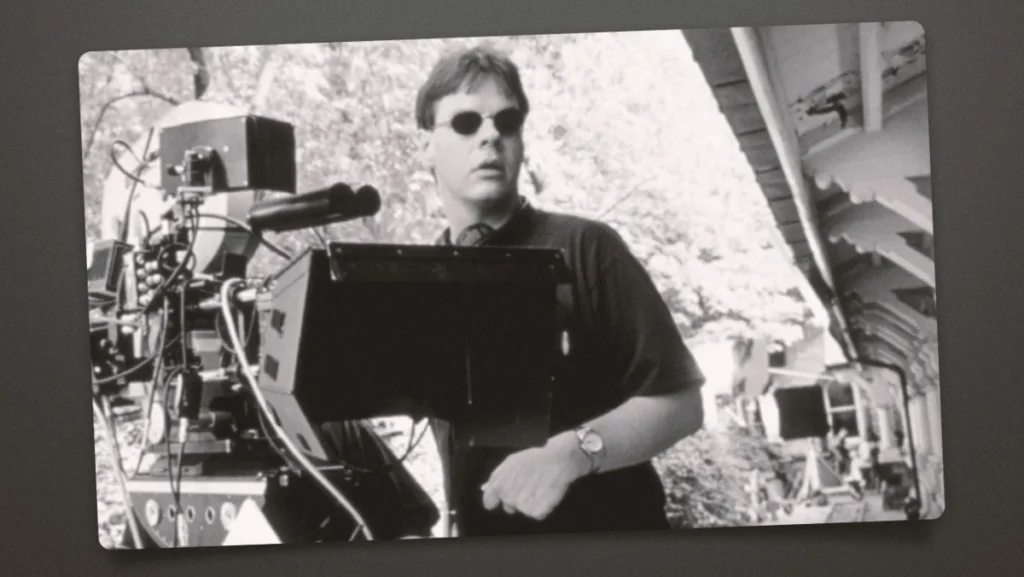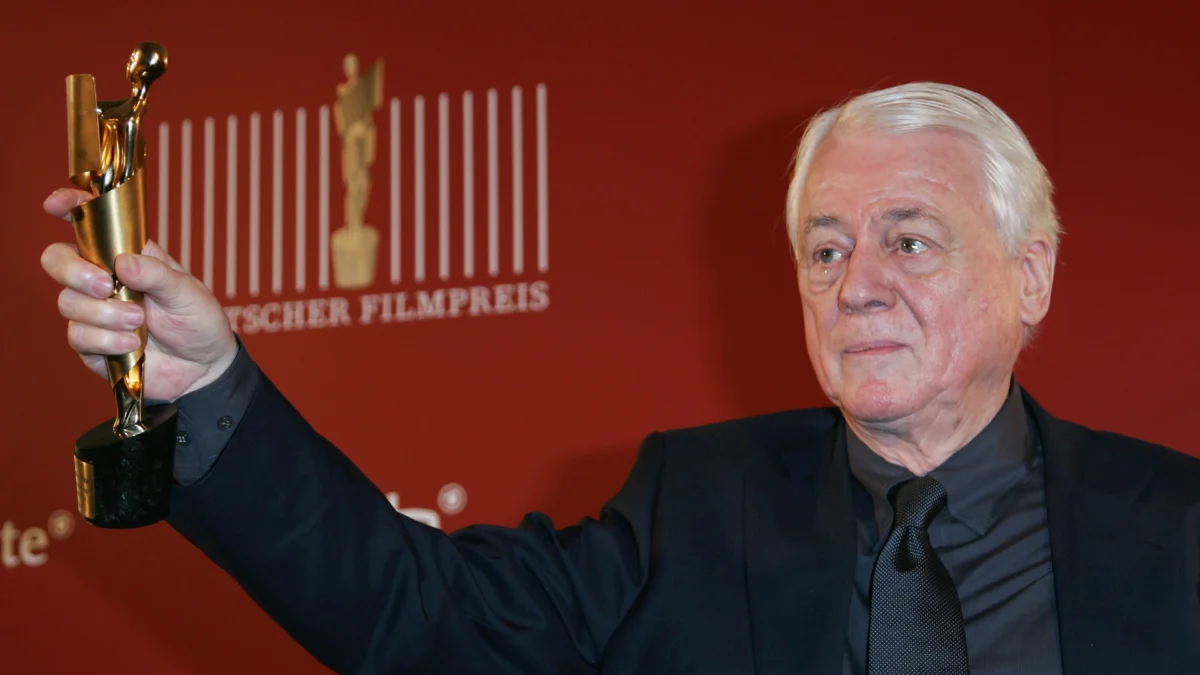
Alexander Kluge, the revered German filmmaker, writer, philosopher, and television producer whose career spanned an extraordinary six decades and profoundly shaped the New German Cinema movement, has passed away at the age of 94. His family confirmed his death to German media on Wednesday, though a cause of death was not immediately provided. Kluge leaves behind an unparalleled legacy as a critical intellectual voice, a pioneering cinematic artist, and a tireless interrogator of history, memory, and the complexities of modern society.
A Founding Voice of the New German Cinema
Kluge’s indelible mark on cinematic history began in earnest with his pivotal role in the genesis of the New German Cinema. He was one of the key signatories of the 1962 Oberhausen Manifesto, a revolutionary declaration that repudiated the stagnant, commercial "Papa’s Kino" of post-war West Germany. This bold pronouncement, signed by 26 young filmmakers, declared "The old cinema is dead. We believe in the new cinema." It called for a radical shift towards an auteur-driven, artistically independent, and socially conscious cinema that would confront Germany’s past and present with intellectual rigor and aesthetic innovation. The manifesto is widely credited with igniting a transformative movement that brought German cinema back to international prominence, producing a generation of directors including Rainer Werner Fassbinder, Werner Herzog, Wim Wenders, and Volker Schlöndorff, among others. Kluge, with his distinct blend of intellectual curiosity and artistic daring, quickly emerged as one of its most articulate and influential practitioners.
The Oberhausen Manifesto was more than just a call to arms; it was a symptom of a broader cultural and political awakening in West Germany. The generation coming of age in the 1960s was grappling with the legacy of Nazism, the division of Germany, and the pressures of rapid economic recovery and Cold War politics. They sought new forms of expression to articulate these anxieties and to challenge established narratives. Kluge, steeped in critical theory and philosophy, was uniquely positioned to translate these intellectual currents into cinematic language.
Early Life, Intellectual Formation, and Cinematic Apprenticeship
Born in Halberstadt, Germany, in 1932, Alexander Kluge’s intellectual journey began far from the film set. He initially pursued a rigorous academic path, earning a doctorate in jurisprudence. His early career saw him practicing as a lawyer, a profession that undoubtedly honed his analytical skills and critical perspective on societal structures and legal frameworks. However, it was his time at the Frankfurt Institute for Social Research that proved to be a watershed moment, profoundly shaping his intellectual trajectory. There, he came into close contact with the towering figure of Theodor W. Adorno, one of the leading thinkers of the Frankfurt School.
Adorno’s mentorship had a transformative effect on Kluge, instilling in him a deep commitment to critical theory, an interdisciplinary approach to understanding culture, and an unwavering skepticism towards dominant ideologies. Kluge absorbed Adorno’s insights into mass culture, the dialectics of enlightenment, and the critical potential of art. This intellectual foundation became the bedrock of Kluge’s multifaceted career, informing his approach to filmmaking, writing, and television production, always viewing art not as mere entertainment but as a powerful tool for social critique and intellectual inquiry. He would later be awarded the Theodor W. Adorno Prize in 2001, a testament to the enduring influence of his mentor and the intellectual lineage he proudly carried forward.
By 1958, Kluge began his pivot towards cinema, an art form he recognized as having immense potential for addressing the complex questions that occupied his mind. He worked as an assistant to the legendary German director Fritz Lang, a titan of Weimar cinema known for masterpieces like Metropolis and M. Lang, who had fled Nazi Germany for Hollywood, eventually returned to Europe. Working alongside a director of Lang’s stature, with his meticulous craftsmanship and profound understanding of cinematic narrative, provided Kluge with invaluable practical experience and a foundational understanding of film aesthetics, complementing his rigorous theoretical background. This unique blend of philosophical depth and practical filmmaking experience set Kluge apart from many of his contemporaries.
Cinematic Milestones: From Silver Lion to Golden Lion
Kluge’s cinematic debut, Abschied von gestern (released in the U.S. as Yesterday Girl), premiered in 1967 and immediately established him as a significant new voice. The film, which dramatically portrayed the struggles of Anita G., a young Jewish refugee from East Germany trying to navigate the alienating landscape of West German society, resonated deeply with audiences and critics alike. It captured the zeitgeist of a nation grappling with its post-war identity, the lingering trauma of the Holocaust, and the challenges of integration and alienation. Yesterday Girl earned Kluge the Silver Lion at the Venice Film Festival, a monumental achievement as it marked the first post-war Italian festival prize awarded to a German director, signaling the international re-emergence of German cinema. The film’s fragmented narrative, use of voice-over, and blend of documentary-style realism with fictional elements became hallmarks of Kluge’s emerging style.
Just two years later, in 1969, Kluge achieved even greater international acclaim with Die Artisten in der Zirkuskuppel: ratlos (Artists under the Big Top: Perplexed). This experimental collage film was a daring exploration of societal ideals, the failure of utopian visions, and the protest movements sweeping across Europe. Integrating newsreels, interviews, archival footage, and fictionalized sequences, the film challenged conventional narrative structures, reflecting Kluge’s belief that cinema could be a form of essayistic inquiry. It delved into themes of capitalism, art, and the potential for social transformation, earning him the Venice Film Festival’s top honor, the Golden Lion. These early successes cemented Kluge’s reputation as an intellectual filmmaker whose work was both formally innovative and politically engaged.
Kluge continued to produce challenging and critically acclaimed works throughout the 1970s. Starke Männer (Strongman Ferdinand) in 1976, a biting satire on the authoritarian tendencies within German society and bureaucracy, won the Fipresci international critics prize at the Cannes Film Festival. However, one of his most politically charged and collaborative works was Deutschland im Herbst (Germany in Autumn), an anthology film released in 1978. Made in collaboration with other leading New German Cinema directors, including Volker Schlöndorff and Rainer Werner Fassbinder, the film was a direct response to the turbulent period known as the "German Autumn" of 1977. This era was marked by a series of dramatic events, including the kidnapping and murder of industrialist Hanns Martin Schleyer by the Red Army Faction (RAF) terrorist group, and the subsequent intense crackdown by the German state. Kluge’s segment, like the others, offered a raw, urgent, and often critical look at the political climate, the state’s response, media manipulation, and the anxieties pervading German society at the time. The film stands as a vital historical document and a powerful testament to the New German Cinema’s commitment to confronting contemporary issues head-on.
As his career progressed, Kluge’s cinematic explorations became increasingly ambitious in scope and intellectual depth. One of his last major works, the monumental nine-hour News From Ideological Antiquity: Marx-Eisenstein-Capital (2008), exemplified his lifelong engagement with critical theory and historical inquiry. This daring reimagining of Sergei Eisenstein’s unfinished project to adapt Karl Marx’s Das Kapital into a film was a sprawling, intellectually dense cinematic essay. It fused archival materials, theoretical reflections, and fictionalized sequences to explore the origins of capitalism, the nature of media, and the very act of historical representation. The same year, in recognition of his profound and enduring contributions to German cinema, he received a lifetime achievement award from the German Film Academy, celebrating a career that had consistently pushed the boundaries of the medium.
Kluge’s distinctive cinematic language was characterized by an essayistic approach, blending fiction and documentary, often incorporating archival footage, intertitles, voiceovers, and fragmented narratives. He eschewed traditional plot structures in favor of intellectual inquiry, inviting viewers to actively engage with complex ideas rather than passively consume a story. His films were not merely narratives but philosophical meditations, always questioning, always challenging, and always searching for deeper truths beneath the surface of reality.
Beyond the Screen: A Prolific Writer and Media Innovator
Alexander Kluge’s influence extended far beyond the confines of cinema, truly embodying the definition of a polymath. He was a remarkably prolific writer, producing an extensive body of work that included short stories, essays, and philosophical texts. His literary output often mirrored the themes and experimental structures of his films, exploring history, memory, power, and the human condition with the same intellectual rigor and critical perspective. His writings earned him numerous prestigious literary accolades, underscoring his standing as a major figure in German letters. These included the Georg Büchner Prize, one of Germany’s most distinguished literary awards; the Theodor W. Adorno Prize, which recognized his contributions to philosophy and critical theory; the Heinrich-Heine-Preis, honoring his literary and intellectual achievements; and the Klopstock Prize, another significant recognition of his literary prowess. His literary works, like his films, often employed a mosaic-like structure, juxtaposing seemingly disparate elements to create new meanings and insights.
In 1987, Kluge ventured into a new frontier of media, founding the television production company dctp (Development Company for Television Programs). His aim was to create an alternative to mainstream television, offering intellectually stimulating news and debate programs that fostered critical thinking and informed public discourse. Under his guidance, dctp produced groundbreaking shows such as 10 vor 11 (10 to 11), News & Stories, and Mitternachtsmagazin (Midnight Magazine). These programs were characterized by their innovative formats, deep dives into complex subjects, and a commitment to providing diverse perspectives, often featuring extended interviews with intellectuals, artists, and experts. Kluge saw television not just as a vehicle for entertainment but as a powerful tool for enlightenment and democratic engagement, challenging the passive consumption of media with active, critical inquiry. His work in television cemented his role as a crucial figure in German media innovation, demonstrating his belief in the transformative power of various media forms.
Continued Engagement and Lasting Legacy
Kluge remained remarkably active and intellectually vibrant well into his 90s. His tireless curiosity led him to continue writing books, designing thought-provoking art exhibitions, and engaging with emerging technologies. His final work, the 2025 visual essay Primitive Diversity, explored the complex interplay between artificial intelligence and the future of moving images, a testament to his lifelong commitment to interrogating the evolving nature of media and human perception. This ambitious project premiered at the International Film Festival Rotterdam, showcasing his enduring relevance and forward-thinking vision even in his final years.
A true polymath, Kluge famously never separated art from politics or philosophy. For him, these domains were inextricably linked, each offering a lens through which to interrogate modern life, memory, and society. Whether through his pioneering films, his extensive literary output, or his innovative television productions, he consistently challenged conventional wisdom, exposed underlying power structures, and provoked critical thought. His work leaves an indelible mark on German culture, shaping not only its cinema but also its intellectual and media landscape.
The Berlin Film Festival, where Kluge was a cherished and frequent guest for decades, remembered him fondly. In a statement, the festival highlighted his profound impact, noting that his "passion for filmmaking, critical thinking, and storytelling shaped German cinema and inspired generations of filmmakers." This sentiment is echoed across the international film community and intellectual circles, recognizing Kluge as a singular figure whose interdisciplinary approach and unwavering intellectual integrity created a body of work that continues to resonate and provoke thought. Alexander Kluge’s passing marks the end of an era, but his legacy as a visionary artist and an uncompromising intellectual will undoubtedly continue to inspire and challenge future generations.