Alexander Kluge, a towering figure in post-war German cinema and a profound intellectual whose experimental filmmaking and incisive writings challenged conventional narratives, has died at the age of 94. His publisher announced his passing, marking the end of a career that spanned over six decades and left an indelible mark on both cinematic art and critical thought. Kluge was widely recognized for his pioneering work in cinematic collage, transforming the medium into a potent tool for intellectual exploration, a pursuit that earned him the prestigious Golden Lion at the Venice Film Festival in 1968 for his seminal film "Artists in the Big Top: Perplexed."
Born in Halberstadt, western Germany, in 1932, Kluge’s early life was profoundly shaped by the devastating realities of World War II. He narrowly survived the Allied bombing of his hometown on April 8, 1945, an experience that would later inform his critical perspective on war, capitulation, and the enduring impact of historical trauma. Following the war, Kluge pursued a multidisciplinary education at the University of Frankfurt, studying law, history, and church music. It was at this intellectual hub that he encountered and was mentored by Theodor Adorno, a leading figure of the Frankfurt School, whose critical theories on culture and society would resonate throughout Kluge’s own work.
A New Wave of German Cinema
Kluge’s artistic journey began to crystallize in the early 1960s. After commencing a career in law, he found himself increasingly drawn to the expressive power of literature and film. In 1962, he became a signatory to the Oberhausen Manifesto, a pivotal document that declared the nascent generation of German filmmakers’ intent to break free from the perceived artistic stagnation of the prevailing post-war cinematic landscape. The manifesto decried the "shallow tearjerkers and patriotic Heimatfilme" that had dominated German screens, calling instead for a cinema that was more authentic, challenging, and reflective of the nation’s complex post-war identity.
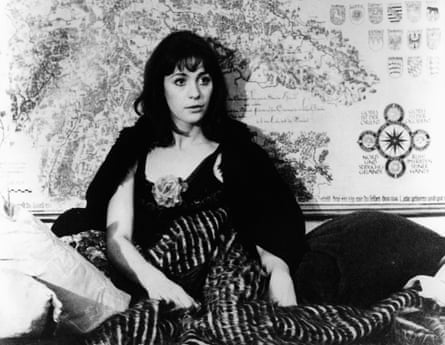
"Abschied von Gestern" (released internationally as "Yesterday Girl" in 1966), a film that emerged directly from the spirit of the Oberhausen Manifesto, stands as a testament to Kluge’s early commitment to this new cinematic vision. The film, which starred his sister Alexandra Kluge, offered a stark and unconventional portrayal of a Jewish woman struggling to find her footing in West Germany after fleeing from the East. Its narrative was deliberately fragmented and disjunctive, employing jarring sound design and a non-sequential storytelling approach to mirror the protagonist’s internal turmoil and the fractured reality of post-war reconstruction. This innovative style, while challenging to audiences accustomed to more traditional cinematic conventions, garnered significant critical acclaim.

The international recognition for "Abschied von Gestern" was swift and substantial. The film secured the Silver Lion at the Venice Film Festival, marking the first time a German director had received such an honor in the post-World War II era. This triumph served as a powerful statement about the resurgence of German artistic expression on the global stage. Kluge further cemented his reputation two years later by winning the Golden Lion at Venice for "Artists in the Big Top: Perplexed," a film that continued to explore themes of alienation and the human condition through his signature avant-garde lens.
The Intellectual Architect of New German Cinema
Beyond his individual filmmaking achievements, Alexander Kluge was instrumental in fostering the intellectual and organizational framework of the New German Cinema movement. He played a crucial role in galvanizing and uniting a generation of filmmakers who would go on to achieve international renown. Directors such as Rainer Werner Fassbinder, Werner Herzog, and Wim Wenders, all of whom were influenced by Kluge’s pioneering spirit and theoretical contributions, would later bring German cinema back to prominence on the world stage. Kluge’s influence extended to his work as a writer, where he produced a prolific body of short fiction characterized by its intellectual rigor and often oblique, yet deeply insightful, observations on human behavior and societal structures.
His association with the Frankfurt School, particularly with figures like Adorno and, later, Jürgen Habermas (who passed away earlier this month at 96), positioned Kluge as one of the last remaining torchbearers of this influential school of neo-Marxist cultural criticism. The Frankfurt School’s critical examination of mass culture, ideology, and the structures of power provided a vital intellectual bedrock for Kluge’s artistic and theoretical endeavors. He shared their commitment to analyzing the ways in which culture shapes consciousness and perpetuates societal norms, often through a lens of critical skepticism.
A Dual Legacy: Public Intellectual and Commercial Producer
One of Kluge’s most remarkable achievements was his ability to navigate the often-competing worlds of intellectual discourse and commercial filmmaking. He managed to sustain a career that was both deeply embedded in critical theory and accessible to a broader audience through television. In 1987, he founded the production company DCTP (Development Company for Television Production), a venture that allowed him to produce a consistent stream of engaging and intellectually stimulating programs for German television. These included arts documentaries, magazine shows, and interview programs, many of which featured Kluge himself as an interviewer and commentator. Through DCTP, he continued to bring experimental film and critical analysis to the small screen, demonstrating the enduring relevance of his artistic vision in newer media formats.
His work with DCTP also allowed him to continue his exploration of cinema as a tool for understanding complex social and historical issues. He consistently sought out and supported innovative filmmaking, often providing a platform for emerging talents and challenging established cinematic conventions. This dual legacy as a respected academic thinker and a practical producer underscores his unique position within the German cultural landscape.
Echoes of War and Philosophical Stances
Kluge’s experiences during World War II profoundly shaped his pacifist convictions. However, these deeply held beliefs led to a controversial moment in 2022 when, in a radio interview, he expressed a sentiment that jarred with many in the wake of Russia’s invasion of Ukraine. Kluge stated that he had been "happy to see US troops march into his home town in 1945" and that "there was therefore ‘nothing evil about capitulation if it ends the war.’" This statement was met with widespread disbelief and criticism, with many commentators pointing out the perceived conflation of the historical lessons for an aggressor nation with those of countries that had suffered under German occupation. The remarks highlighted the complex and often sensitive nature of historical memory and the difficulty of applying universal pacifist principles to specific geopolitical conflicts, particularly for those whose nation had been an aggressor.
Despite such controversies, Kluge remained a vital intellectual force throughout his life. In 2018, he engaged in a notable collaboration with American author Ben Lerner on a book titled "The Snows of Venice," described as a "poetic dialogue." In an interview with The Paris Review at the time, Kluge offered a poignant reflection on his artistic methodology, stating, "My language is not as beautiful as lyrics. This is something that you have to know how to do. Poets are diamond polishers. But there are also collectors of raw diamonds – I am a good archaeologist." This metaphor beautifully encapsulates his approach: a meticulous excavation of raw materials, ideas, and human experiences, which he then carefully assembled into new and often challenging forms.
Alexander Kluge’s passing represents the loss of a singular artistic and intellectual voice. His legacy is one of constant inquiry, a relentless pursuit of understanding the human condition through the art of film and the power of critical thought. He leaves behind a body of work that continues to provoke, enlighten, and inspire, a testament to a life dedicated to questioning the world and reshaping how we see it. His influence on German cinema and critical theory is immeasurable, securing his place as one of the most significant cultural figures of the 20th and early 21st centuries.