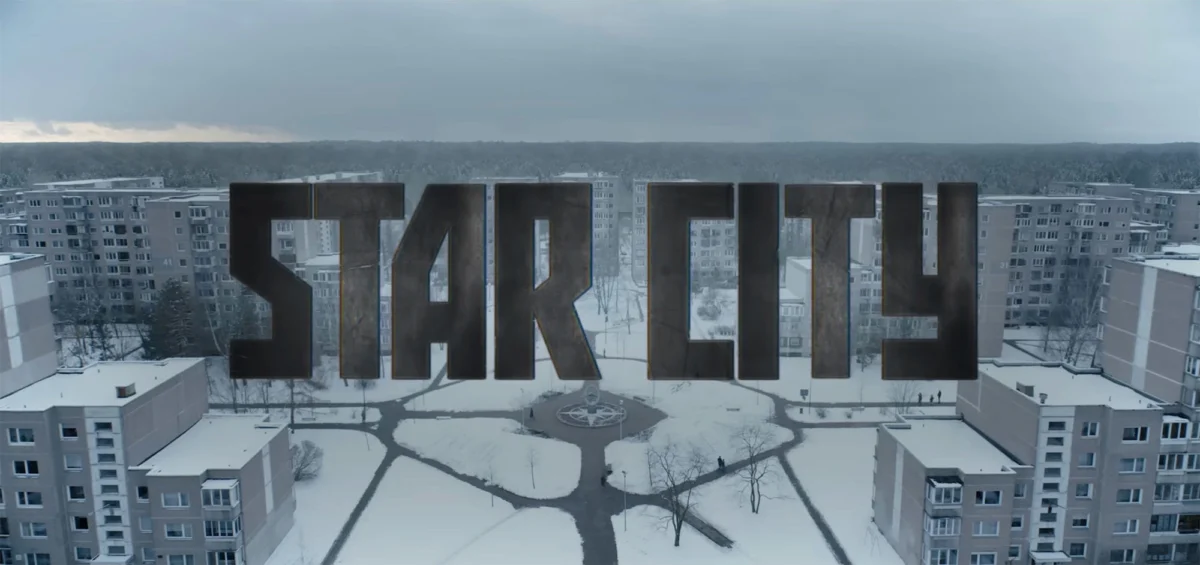
Apple TV+ has officially released the first teaser trailer for Star City, a high-stakes expansion of the critically acclaimed For All Mankind universe that shifts the narrative focus to the Soviet Union’s side of the space race. This new series, described as a "propulsive paranoid thriller," revisits the pivotal moment that defined the alternate history of the franchise: the achievement of the Soviet Union in becoming the first nation to land a human on the moon. While the original series followed the reaction of NASA and the American public to this seismic shift in global power, Star City delves behind the Iron Curtain to explore the internal pressures, sacrifices, and political machinations of the Soviet space program. The announcement comes alongside confirmation that For All Mankind has been renewed for a sixth and final season, establishing a dual-track conclusion and expansion strategy for the award-winning franchise.
Scheduled for a global premiere on May 29, 2026, Star City is spearheaded by the original series creators Ronald D. Moore, Matt Wolpert, and Ben Nedivi. The teaser, though brief at 30 seconds, establishes a starkly different tone from the often-aspirational early seasons of For All Mankind. By focusing on the cosmonauts, engineers, and intelligence officers operating within the secretive confines of the Soviet Union, the series aims to humanize the "other side" of the Cold War while maintaining the tension of a surveillance state where failure in the space race was often equated with treason.
The Premise of a Soviet Alternate History
The core conceit of Star City rests on the "butterfly effect" of a single historical divergence: in 1969, Soviet cosmonaut Alexei Leonov becomes the first man to walk on the lunar surface, beating Neil Armstrong and Buzz Aldrin. In the reality of For All Mankind, this event catalyzed a never-ending space race, leading to permanent lunar bases, Martian colonization, and advanced fusion technology. However, Star City retreats to the origins of this timeline, focusing not on the technological triumphs, but on the human cost of achieving them under the Soviet regime.
The series is set primarily within the eponymous "Star City" (Zvyozdny gorodok), the highly restricted military facility outside Moscow that served as the training hub for the Soviet space program. Unlike the relatively public-facing nature of NASA’s Johnson Space Center, the Soviet program was shrouded in state secrecy, with the identities of its "Chief Designers" and lead cosmonauts often kept from the public until after their missions were successful. Star City promises to explore the "risks they all took to propel humankind forward" in an environment where reaching for the stars meant risking everything on Earth.

A Highly Pedigreed Ensemble Cast
The production has assembled a diverse and prestigious cast to bring the Soviet perspective to life. Leading the ensemble is Rhys Ifans, known for his versatile roles in House of the Dragon and Notting Hill. He is joined by Anna Maxwell Martin (Line of Duty, Motherland), Agnes O’Casey (The Miracle Club), and Adam Nagaitis (Chernobyl, The Terror). The cast is rounded out by Alice Englert, Josef Davies, Solly McLeod, and Ruby Ashbourne Serkis.
The inclusion of actors like Nagaitis, who previously delivered a haunting performance in the Soviet-set Chernobyl, suggests a commitment to a gritty, grounded portrayal of the era. The characters are expected to represent a cross-section of Soviet society, from the elite cosmonaut corps to the clandestine KGB officers tasked with ensuring ideological purity and preventing technological espionage.
Creative Team and Production Scale
Star City continues the partnership between Apple TV+, Sony Pictures Television, and Tall Ship Productions. The series is executive produced by Ronald D. Moore, Maril Davis, Ben Nedivi, and Matt Wolpert. Nedivi and Wolpert serve as showrunners, ensuring that the spin-off maintains the meticulous attention to detail and internal logic that has made For All Mankind a staple of modern science fiction.
The writing staff includes a robust roster of veteran television writers such as Andrew Chambliss, George Mastras, Megan McDonnell, Gursimran Sandhu, K.C. Scott, and Liba Vaynberg. Directorial duties for the opening episodes have been assigned to Nick Murphy and Stefan Schwartz, both of whom have extensive experience in high-concept drama and period-piece thrillers. This creative assembly indicates that Apple is positioning Star City as a flagship "prestige" drama rather than a mere supplementary content piece.
Historical and Narrative Context: The Real Star City vs. Fiction
In real-world history, Zvyozdny gorodok was a secret town that did not appear on any maps during the height of the Cold War. It was the heart of the Soviet Union’s efforts to dominate the "High Frontier." By centering the series here, the creators are able to tap into the authentic paranoia of the era.

The original For All Mankind series utilized the Soviet Union as a shadowy antagonist for much of its first three seasons, only later developing characters like Grigory Kuznetsov to provide a more nuanced view of the USSR’s scientific community. Star City represents a total immersion into that world. It aims to answer questions that the parent series only touched upon: How did the N1 rocket—a real-world failure that doomed the Soviet moon landing—succeed in this timeline? What was the internal reaction to the defection of Soviet citizens to the West? And how did the Soviet Union manage the economic strain of a lunar program that never ended?
Chronology of the For All Mankind Universe
To understand the placement of Star City, one must look at the established timeline of the franchise:
- June 1969: Alexei Leonov lands on the Moon. The Soviet Union wins the initial race.
- 1970s: The Moon becomes a militarized zone. The "Jamestown" and "Zvezda" bases are established.
- 1980s: Technology accelerates; the world transitions to clean energy earlier due to lunar Helium-3 mining.
- 1990s-2000s: The race moves to Mars, involving private entities like Helios.
- 2010s-2020s (Season 4 & 5): The colonization of the Asteroid Belt and the establishment of "Happy Valley" on Mars.
Star City will primarily occupy the early stages of this timeline, specifically the late 1960s and early 1970s, providing a "ground-level" view of the events that viewers previously saw through the lens of Houston’s Mission Control.
Industry Impact and Streaming Strategy
The announcement of Star City and the final season of For All Mankind marks a significant moment for Apple TV+. Since its inception, the streaming service has leaned heavily into high-budget science fiction to define its brand identity. With series like Silo, Foundation, and Severance, Apple has cultivated an audience that prizes complex world-building and high production values.
For All Mankind has been a cornerstone of this strategy. By expanding the IP into a spin-off, Apple is following the "franchise model" successfully employed by Disney+ with Star Wars and Marvel, but applying it to a more mature, dramatic genre. Industry analysts suggest that Star City is an attempt to retain the For All Mankind subscriber base as the flagship show nears its conclusion. The "paranoid thriller" branding also suggests an attempt to cross-pollinate the sci-fi audience with fans of political dramas like The Americans or Slow Horses.

Anticipated Themes and Implications
The "paranoid thriller" aspect of Star City is likely to focus on the intersection of scientific ambition and state survival. In the Soviet Union of the 1960s, the space program was not just a scientific endeavor; it was a primary tool of propaganda and a proof of concept for the superiority of the socialist model.
The series is expected to explore:
- The Surveillance State: The role of the KGB in monitoring scientists and cosmonauts to prevent western influence.
- Resource Scarcity: How the Soviet Union prioritized the space race over domestic comforts, and the internal dissent that may have caused.
- Technological Espionage: The race to steal or protect secrets regarding Saturn V designs and lunar landing modules.
- The Human Cost: The literal lives lost in the pursuit of being "first," which in the Soviet program were often suppressed from official records.
Official Expectations and Conclusion
While Apple has not yet released full-length reviews or official statements from the cast, the teaser has already generated significant discourse among the series’ dedicated fanbase. The consensus among critics is that a Soviet-centric perspective is the most logical and exciting direction for the franchise to take, as it allows for a complete re-examination of the show’s foundational events.
By focusing on the "other side," Star City moves away from the "Great Man" theory of history often found in American space narratives and instead looks at the collective—and often coerced—effort of a nation determined not to be forgotten by history. As the release date of May 29, 2026, approaches, Star City stands as one of the most anticipated television events of the year, promising a dark, intricate, and revealing look at the cost of the stars.