Filipina maid-themed films have established a notable presence within East Asian cinema, particularly in vibrant cultural hubs like Singapore, Hong Kong, and increasingly, Taiwan. This cinematic tradition has seen both critical acclaim and commercial success, propelling the careers of filmmakers and actresses alike. From Kelvin Tong’s unsettling horror feature "The Maid" (2005), which reimagined the domestic worker as a spectral presence, to Anthony Chen’s poignant family drama "Ilo Ilo" (2013), which explored the complex bonds between a Singaporean family and their Filipina helper, these films often delve into the intricate social and emotional landscapes of cross-cultural domestic employment. The latest addition to this burgeoning subgenre is "April," a Taiwanese production penned and directed by Freddy Tang, renowned for his earlier work on "Port of Lies," and starring the highly acclaimed Filipino actress Angel Aquino. This film promises to enrich the discourse surrounding migrant labor by offering a multi-dimensional portrayal that challenges simplistic archetypes.
The Enduring Narrative: Filipina Migrant Workers in Cinema
The phenomenon of Overseas Filipino Workers (OFWs) is a deeply ingrained aspect of Philippine national identity and socio-economic reality. Often hailed as "modern-day heroes," these individuals, estimated to number over 2.2 million at any given time according to the Philippine Statistics Authority (PSA) in recent years, represent a critical pillar of the Philippine economy. Their remittances, which reached approximately $37.2 billion in 2023, account for a substantial portion of the country’s Gross Domestic Product, underpinning countless families and communities. The genesis of this labor export policy can be traced back to the 1970s, initiated by the Marcos regime as a temporary measure to address high unemployment and leverage the global oil boom. However, what began as a temporary solution evolved into a systemic reliance, perpetuating a cycle where a significant portion of the workforce seeks opportunities abroad due to a persistent lack of robust domestic industrialization and sustained economic growth at home.
Within this broader context, Filipina migrant workers, particularly those in domestic work and caregiving, form a significant demographic. Their stories are rich with themes of sacrifice, resilience, cultural adaptation, and often, profound loneliness and exploitation. Cinema, as a powerful medium, has naturally gravitated towards these compelling narratives.
"The Maid" (2005), directed by Singaporean Kelvin Tong, was an early entry that garnered significant attention. While primarily a horror film, it subtly touched upon the vulnerability and isolation of domestic helpers, using the supernatural as a metaphor for unspoken anxieties. Its commercial success underscored a public fascination, albeit through a genre lens, with the lives of these often-invisible individuals. "Ilo Ilo" (2013), directed by Anthony Chen, shifted the paradigm. Winning the prestigious Camera d’Or at the Cannes Film Festival, it offered an intimate, naturalistic portrait of the relationship between a Filipina domestic helper and the family she serves during the 1997 Asian financial crisis. It humanized the figure of the "maid," foregrounding her emotional journey and challenging preconceived notions.
Despite the critical and commercial success of such films, a recurring critique has emerged: the potential for such narratives, however well-intentioned, to inadvertently reinforce a perception of Filipinos as primarily a service-oriented populace, leading to racial implications and contributing to a "maid-as-archetype" problem. Filmmakers face the delicate challenge of portraying social realities without perpetuating stereotypes. They must navigate the complexities of representing a marginalized group in a way that resonates with audiences, fosters empathy, and critically examines the systemic issues at play, rather than reducing individuals to their occupational roles. It is against this backdrop that "April" makes its timely appearance, aiming to transcend these pitfalls.
"April": A Deeper Look into the Story and Production
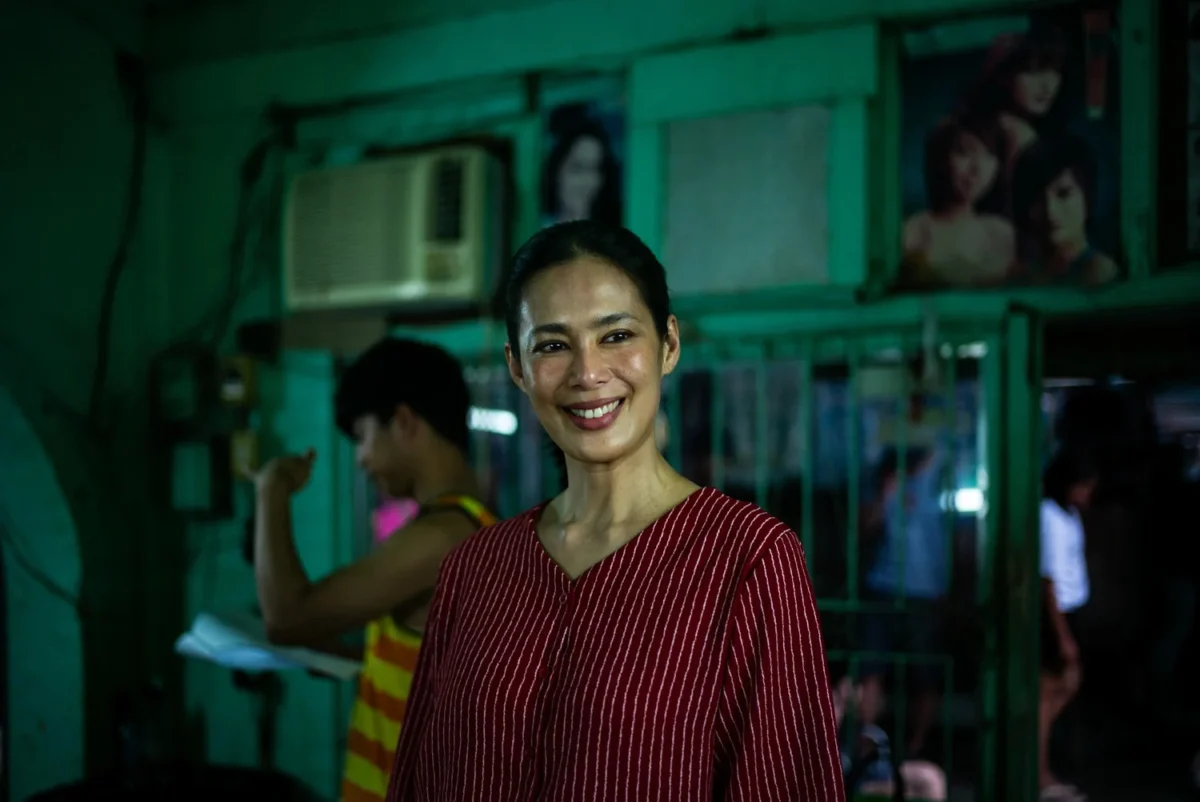
"April" centers on April (Angel Aquino), a dedicated Filipina caregiver working in Taiwan. Her life is a constant balancing act, as she serves as the primary breadwinner for her family back in the Philippines: her laid-back husband, Joseph (Paolo O’ Hara), and her two precocious children, Luisa (Gabby Padilla) and Diwa (Benedix Ramos). The family’s already precarious situation is exacerbated by the declining health of April’s mother, Maria (Madeleine Nicolas), who is nearing her final days. April feels an urgent pull to return to her coastal hometown to be by her mother’s side, a natural desire complicated by her professional obligations. She is entrusted with the care of Ah Gong (Xiao-Xiong Zhang), a wheelchair-bound patriarch suffering from dementia, whose needs are constant and demanding.
A compromise is brokered by Ah Gong’s children, Ah Cheng (Kaiser Chuang) and Yun (Tzu-Yu Yu): April can visit her ailing mother, but she must bring Ah Gong with her. This unexpected journey forms the central premise, forcing an unlikely bond between the caregiver and her charge, far from their usual environment. Simultaneously, a parallel narrative unfolds with Ah Gong’s estranged brother, Qi-Wen Lin (Kuwan-Ting Liu), who has just been released from jail. He returns to a changed world, grappling with newfound responsibilities and the legacy of his past transgressions, including interactions with various unsavory characters.
The director, Freddy Tang, brings a wealth of experience to this sensitive subject matter. His previous acclaimed 2023 TV series, "Port of Lies," was a critically lauded crime procedural and legal drama that deeply explored the plight of migrant workers in Taiwan. This prior engagement demonstrates Tang’s profound understanding of the intricate social, legal, and human dimensions of migrant labor. His work on "Port of Lies" signaled a commitment to moving beyond superficial portrayals, delving into the systemic injustices and personal struggles faced by these individuals. This background positions him uniquely to approach "April" with the necessary depth and nuance, ensuring that his migrant worker characters are not mere archetypes but fully realized human beings.
The film’s production highlights a collaborative spirit between Taiwanese and Filipino talent, a crucial element in authentically bridging cultural perspectives. The choice of locations, spanning both Taiwan and the Philippines, grounds the narrative in tangible realities, visually articulating the distances and connections that define migrant life.
Thematically, "April" delves into several profound areas. At its core, it is a story of family and sacrifice. April’s role as a breadwinner, the emotional toll of separation from her children and husband, and the moral dilemmas she faces underscore the immense personal cost of economic migration. The film subtly explores the complexities of intergenerational relationships, not only between April and her own family but also through her evolving bond with Ah Gong and the dynamics within his fractured family. The use of the Hakka dialect by Angel Aquino, a testament to her dedication, serves as a powerful symbol of cultural exchange and adaptation, highlighting the efforts migrant workers make to integrate, even partially, into their host communities.
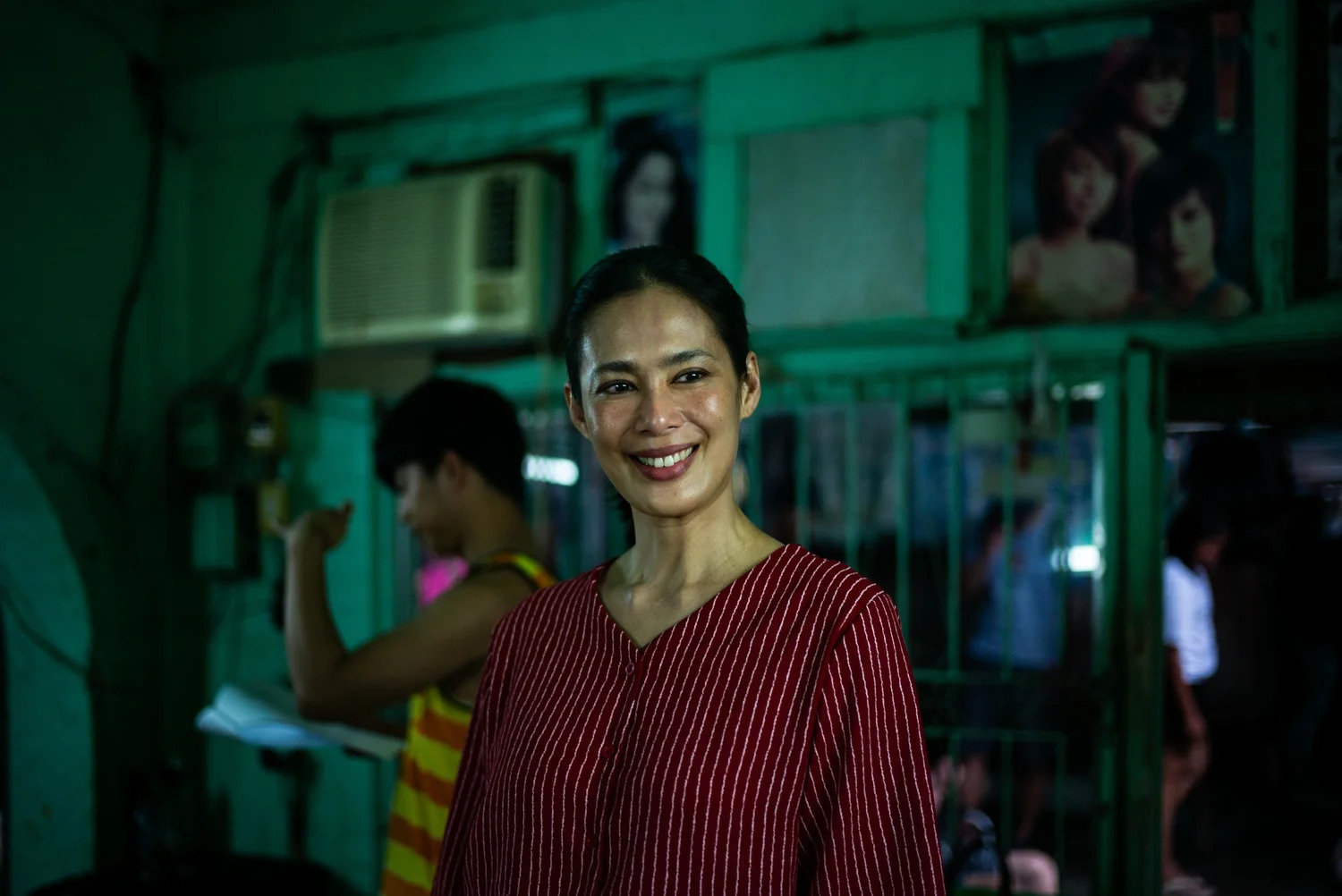
Crucially, "April" endeavors to present an "imperfect heroine." April is not idealized; she is doting but also impatient, authoritative yet caring, occasionally out of touch with her family’s immediate needs due to years of absence. This deliberate characterization challenges the often-saintly or solely victimized portrayals of migrant workers in media. By presenting April as a complex, flawed, yet undeniably strong and loving individual, the film actively subverts the "maid as archetype" issue, insisting on her full humanity. She is a bedrock for her family, not by virtue of perfection, but through her unwavering presence and commitment, even from afar.
Performances and Craftsmanship
The success of "April" hinges significantly on the extraordinary performance of Angel Aquino. As one of the Philippines’ most accomplished actresses, Aquino delivers a dense and layered portrayal of April, imbuing the character with gravitas and remarkable restraint. Her ability to convey deep emotion through subtle expressions and quiet determination is a masterclass in acting. The dedication she demonstrates by speaking Hakka, a Taiwanese dialect, not only lends authenticity to her role but also symbolizes April’s profound commitment to her work and, by extension, her family’s well-being. Aquino’s presence is so commanding that even in scenes where April is physically absent, her influence and the weight of her character resonate powerfully, a testament to her compelling performance.
Adding another compelling dimension to the narrative is Kuwan-Ting Liu’s portrayal of Qi-Wen Lin, Ah Gong’s prodigal son. Liu crafts a rich and solemn performance, humanizing a character who is introduced as a beaten-down scammer and a man-child, someone who has deeply disappointed his family and been failed by the system. His narrative arc, which runs almost parallel to April’s, broadens the film’s scope, exploring themes of familial dysfunction, redemption, and the struggle to reintegrate into society after incarceration. The budding romance with Xiu-Mei Zhang, played with a stellar turn by Esther Huang as a tough, independent provincial girl who even drives a truck, adds a layer of unexpected warmth and realism to Qi-Wen’s journey.
The film’s strength is further amplified by a fine stable of supporting actors from both the Philippine and Taiwanese sides. Their nuanced performances enrich the narrative with unique quirks and modulations, skillfully balancing moments of mirth with profound pathos, creating a believable and vibrant ensemble.
Freddy Tang’s directorial prowess is evident in his ability to gracefully juggle these various plotlines and multiple tonalities, sometimes within the same scene. The screenplay, in coordination with Hsiu-Hsiung Lai’s crisp and clear editing, seamlessly weaves together dramatic tension, comedic relief, and poignant emotional beats. A standout example cited in early reviews is a scene where a Mexican standoff unexpectedly pirouettes into a friendly chat about pork knuckle noodles, showcasing the film’s unique blend of genre and emotional complexity. This deft handling prevents the film from becoming pigeonholed into a single category, allowing for a more dynamic and engaging viewing experience.
Furthermore, "April" introduces a curious wrinkle through the character of a spiritist, played by veteran actress Lui Manansala. Her presence in a pivotal, heart-wrenching sequence involving Ah Gong, whose largely silent and receding background presence culminates in a powerful emotional breakthrough, adds a layer of cultural depth and perhaps a touch of magical realism. Xiao-Xiong Zhang delivers a quiet yet impactful performance in this moment, selling the raw emotion entirely with his face and tears, suggesting that Ah Gong’s journey, and perhaps April’s, carries more than just physical baggage.
Broader Implications and Cultural Impact
"April" arrives at a critical juncture, offering a compelling look at migrant workers and families that transcends simplistic portrayals. By depicting the Filipina caregiver not as a judgment of a people, but as an actual human being with a complex inner life, regardless of nationality or occupation, the film makes a significant contribution to the evolving discourse on migrant labor in cinema.
Its potential cultural impact is multifaceted. Firstly, it can foster greater understanding and empathy among audiences in host countries like Taiwan, encouraging a deeper appreciation for the lives and sacrifices of migrant workers. By offering an intimate glimpse into April’s struggles and triumphs, the film humanizes a demographic often seen through the narrow lens of their service role. Secondly, for Filipino audiences, it provides a mirror to their own experiences, validating the sacrifices made by their loved ones abroad and affirming their dignity.
The film’s socio-political commentary, while perhaps subtle, is nonetheless potent. It indirectly highlights the systemic issues in the Philippines that necessitate labor export, prompting reflection on governmental responsibilities and the societal cost of migration. Simultaneously, it raises questions about the responsibilities of host countries towards their migrant populations, particularly concerning their rights, welfare, and the cultural integration they navigate.
While specific official statements from related parties are not yet widely available, it is logical to infer certain reactions. Director Freddy Tang would likely articulate his intention to challenge simplistic narratives and present a multi-faceted view of migrant life, drawing from his extensive research and experience with "Port of Lies." Angel Aquino would undoubtedly emphasize the importance of portraying April’s complexity and representing Filipina migrants authentically, giving voice to their resilience and humanity. Migrant worker advocacy groups would likely welcome "April" for its nuanced portrayal, recognizing its potential to raise public awareness about the often-overlooked struggles and contributions of migrant workers, advocating for better policies and greater respect. Film critics, both local and international, are anticipated to praise the film for its compelling storytelling, strong performances, and thematic depth, cementing its place as an important work in the subgenre.
Looking ahead, "April" could serve as a benchmark for future films addressing migrant narratives. Its commitment to character complexity, its skillful blend of genres, and its empathetic yet unflinching portrayal of reality set a high standard. It encourages a shift from films that merely acknowledge the presence of migrant workers to those that deeply explore their interior worlds, their agency, and their profound impact on the global fabric of society. As such, "April" is not just a film about a Filipina caregiver; it is a universal story about family, sacrifice, identity, and the enduring human spirit in the face of immense challenges.