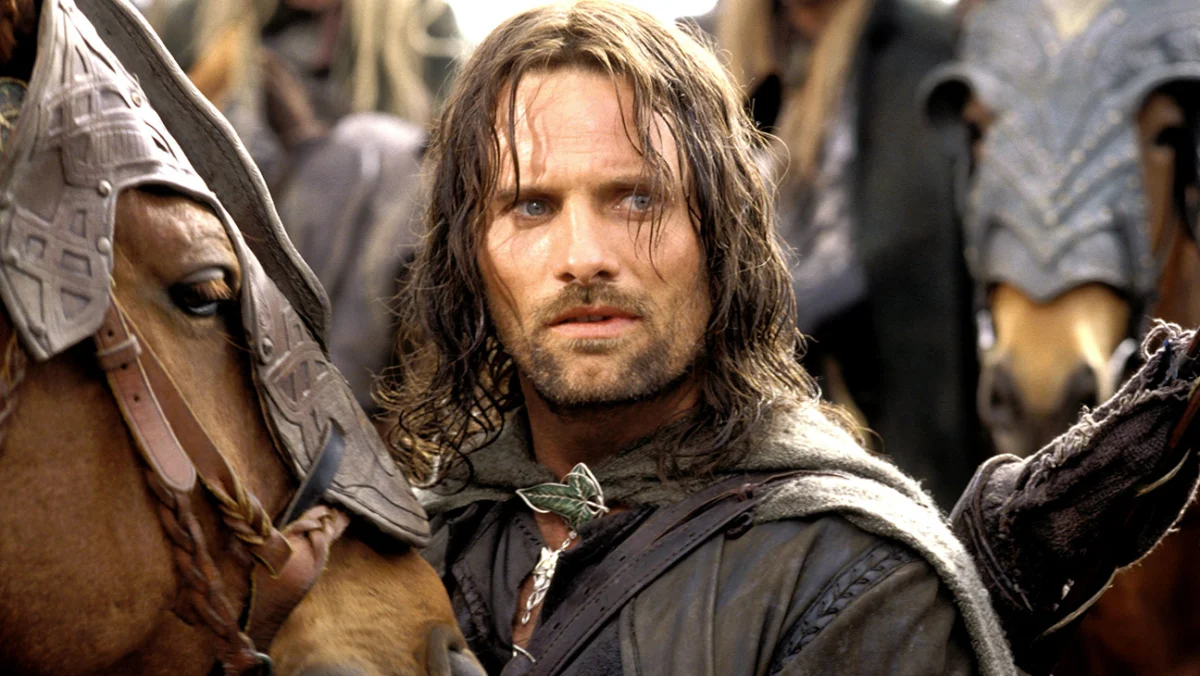
The highly anticipated Lord of the Rings prequel, The Hunt for Gollum, is set to introduce a new face to one of Middle-earth’s most iconic characters, Aragorn, with director Andy Serkis confirming that the role previously held by Viggo Mortensen will be recast. This development marks a significant decision for the burgeoning cinematic expansion of J.R.R. Tolkien’s beloved universe, signaling a new era for the heroic Ranger of the North as the franchise delves deeper into the timeline preceding Peter Jackson’s acclaimed original trilogy. Serkis, who will not only direct but also reprise his motion-capture performance as the titular Gollum, provided the definitive confirmation during an interview with Screen Rant, addressing widespread fan speculation. "I don’t know what’s out there at the moment, but I know there’s a lot of speculation," Serkis stated, "but let’s just say we are recasting the role and we are on the way to finding someone." This announcement sets the stage for a critical casting decision that will undoubtedly shape the perception and narrative direction of the forthcoming film, slated for a December 17, 2027 release.
The Hunt for Gollum: A Prequel’s Premise and Narrative Significance
The Hunt for Gollum is positioned to bridge the narrative gap between the events of The Hobbit and The Lord of the Rings trilogy, a period rich with untold stories and crucial character development for many of Tolkien’s figures. The film’s plot centers on the perilous quest undertaken by Aragorn, then known primarily as Strider, and the wizard Gandalf. Their mission is to locate Gollum, whose possession of the One Ring for centuries has imbued him with unique knowledge and a twisted connection to its dark power. This pursuit is not merely an adventure but a critical intelligence-gathering operation, as Gandalf seeks to understand the true nature of Bilbo Baggins’ "precious" ring, an artifact whose significance he has only begun to fully grasp. The journey aims to uncover information that will eventually lead to the understanding that the ring is, in fact, the One Ring of Sauron, thereby setting in motion the pivotal events of The Fellowship of the Ring.
The premise of The Hunt for Gollum offers a compelling narrative opportunity to explore aspects of Middle-earth that have largely remained off-screen. It delves into the clandestine efforts of the White Council and its allies to combat the resurgence of Sauron’s power, a period often referred to as "The Watchful Peace" that was anything but peaceful for those like Aragorn and Gandalf. For Aragorn, this period is particularly formative. Before he fully embraces his destiny as the rightful heir to the throne of Gondor, he spends decades ranging across Middle-earth, fighting the servants of the Enemy, earning his reputation as a formidable warrior and a wise leader. This film will likely depict a younger, perhaps more solitary and less overtly regal Aragorn, still grappling with his heritage and the weight of his future responsibilities, making the recasting decision not just practical but narratively justified.
The Recasting of an Icon: Aragorn’s New Chapter
The decision to recast Aragorn stems primarily from the character’s age within the film’s specific timeline. In The Hunt for Gollum, Aragorn is significantly younger than his appearance in The Fellowship of the Ring. While Tolkien’s lore grants Dúnedain, like Aragorn, extended lifespans, enabling them to appear youthful for many years, the difference between the 40-year-old Viggo Mortensen who first embodied the role and the nearly 70-year-old actor today is substantial. Mortensen was 40 when filming began for The Fellowship of the Ring, portraying a character who was approximately 87 years old by human reckoning but visually in his prime. In the timeframe of The Hunt for Gollum, which is set roughly 17 years before Bilbo’s Farewell Party (the beginning of The Lord of the Rings), Aragorn would be around 70 years old. While still chronologically old by human standards, his Dúnedain heritage means he would appear to be in his late 20s or early 30s.
Maintaining continuity in a multi-generational epic fantasy saga like The Lord of the Rings presents unique challenges. For a character whose physical age is critical to the narrative, a recasting becomes a pragmatic necessity. Filmmakers face a choice between extensive and potentially costly de-aging CGI, which can be inconsistent or distracting, or finding a new actor whose natural appearance aligns with the character’s intended age. Given the central role Aragorn is expected to play in The Hunt for Gollum—potentially even as the main protagonist alongside Gollum—his physical presence and believability are paramount. The recasting allows the production to select an actor who can authentically portray Aragorn during this earlier, more rugged phase of his life, a period defined by his tireless work as Strider, a Ranger protecting the Free Peoples from the growing shadow.
Viggo Mortensen’s Enduring Legacy and Previous Stance
Viggo Mortensen’s portrayal of Aragorn in Peter Jackson’s Lord of the Rings trilogy is widely regarded as one of the most iconic performances in cinematic history. His dedication to the role, from learning Elvish to performing many of his own stunts and even sleeping with his sword, imbued Aragorn with a gravitas, nobility, and raw strength that captivated audiences worldwide. Mortensen’s interpretation cemented Aragorn as the archetypal reluctant hero, a figure of profound moral compass and leadership. The immense fan attachment to his performance undoubtedly fueled much of the speculation regarding his potential return.
When The Hunt for Gollum was announced in 2024, Mortensen himself addressed the possibility of reprising the role in an interview with GQ. He expressed an openness to the idea, coupled with a keen awareness of the practicalities involved. "Sure," Mortensen stated, "I don’t know exactly what the story is, I haven’t heard. Maybe I’ll hear about it eventually. I like playing that character. I learned a lot playing the character. I enjoyed it a lot. I would only do it if I was right for it in terms of, you know, the age I am now and so forth. I would only do it if I was right for the character. It would be silly to do it otherwise." His comments revealed a thoughtful consideration for the character’s integrity and a realistic understanding of his own current age relative to the younger Aragorn required by the prequel’s timeline. While his enthusiasm for the role was evident, his pragmatic assessment likely aligned with the production team’s eventual decision to seek a new actor who could more naturally embody the younger Aragorn. This mutual understanding underscores the respect for the source material and the character’s journey.
Familiar Faces and Continuity Challenges
While Aragorn is set for a new performer, other beloved characters are confirmed or strongly hinted to return with their original actors, presenting an interesting contrast in continuity management. Ian McKellen, whose portrayal of Gandalf is as synonymous with Middle-earth as Mortensen’s Aragorn, confirmed his return to the wizard’s grey robes last year. McKellen’s situation is somewhat more adaptable due to the nature of his character. Wizards in Tolkien’s world are ancient beings, and Gandalf’s physical appearance in the original trilogy was already made to look significantly older than McKellen’s then-60 years, aided by extensive makeup, prosthetic noses, and the iconic long beard and wig. The character’s timeless nature allows McKellen to seamlessly reprise the role without significant age-related continuity issues, even with a gap of nearly two decades between productions.
Elijah Wood has also strongly hinted at reprising his role as Frodo Baggins. "I’m not able to officially say anything until it’s announced, but I will say I’m thrilled with the prospect of another film," Wood shared, adding, "There is a genuine feeling of getting the band back together… I certainly wouldn’t want anybody else to play Frodo either as long as I’m alive and able." If Frodo does appear in The Hunt for Gollum, his role is anticipated to be relatively minor, as he would be a much younger hobbit living a peaceful life in the Shire during this period. The still youthful-looking 45-year-old Wood could potentially be de-aged with CGI for a brief appearance, or the character’s limited screentime might make minor age differences less noticeable. The selective return of key actors underscores the production’s careful approach to balancing nostalgia with narrative necessity, choosing to recast only when the character’s age or prominence in the specific storyline absolutely demands it.
The Creative Team Behind the Vision
The return of Peter Jackson as a producer, alongside his long-standing creative partners Fran Walsh and Philippa Boyens, provides a significant vote of confidence for The Hunt for Gollum. This trio was instrumental in shaping the cinematic language of Middle-earth, from their Oscar-winning screenplays to their visionary direction and production design. Their involvement assures fans that the new film will be deeply rooted in the aesthetic and narrative integrity established by the original trilogy, rather than attempting a radical departure.
Andy Serkis, a veteran of the Lord of the Rings universe, steps into the director’s chair, a natural progression given his deep understanding of the source material and his pioneering work in performance capture. Serkis’s portrayal of Gollum was groundbreaking, setting new standards for character animation and digital performance. His intimate knowledge of Gollum’s psyche and the broader Middle-earth lore makes him a uniquely qualified choice to direct a film centered on this complex character. Serkis has already demonstrated his directorial capabilities with films like Mowgli: Legend of the Jungle and Venom: Let There Be Carnage, showcasing his ability to handle visual effects-heavy productions and character-driven narratives. His dual role as director and lead actor (as Gollum) further solidifies his integral position in this new cinematic endeavor, ensuring a consistent vision for one of Tolkien’s most memorable creations.
A Broader Middle-earth Strategy
The Hunt for Gollum is not an isolated project but part of Warner Bros.’s broader strategy to revitalize and expand the Lord of the Rings franchise. The original trilogy, released between 2001 and 2003, achieved unprecedented critical and commercial success, collectively grossing nearly $3 billion worldwide and garnering 17 Academy Awards, including Best Picture for The Return of the King. The Hobbit trilogy (2012-2014) added another $2.9 billion globally. These films cemented The Lord of the Rings as one of the most successful and beloved film series of all time.
In recent years, the franchise has seen further expansion with Amazon Prime Video’s The Lord of the Rings: The Rings of Power, a sprawling television series set in the Second Age of Middle-earth. While The Rings of Power has garnered mixed reactions, its existence underscores the immense appetite for new stories set in Tolkien’s world. Warner Bros. clearly recognizes the enduring value of this intellectual property and is actively pursuing new cinematic avenues. The decision to focus on The Hunt for Gollum under the guidance of Jackson and Serkis suggests a strategic move to leverage established talent and familiar characters, offering a narrative that directly connects to the beloved films while exploring a previously unseen chapter. This approach aims to appeal to the core fanbase while potentially attracting new audiences to the rich tapestry of Middle-earth. Further films within this expanded cinematic universe are likely to follow, with Warner Bros. and New Line Cinema keen to maximize the potential of this iconic fantasy world, drawing from the vast appendices and untold tales within Tolkien’s works.
Fan Expectations and the Weight of Legacy
The announcement of Aragorn’s recasting, while anticipated by many knowledgeable fans, carries the weight of significant legacy. Recasting an iconic character in a beloved franchise is always a delicate operation. Audiences develop deep attachments to the actors who embody these roles, and any change can be met with skepticism or even resistance. The success of the new Aragorn will heavily depend on the chosen actor’s ability to capture the essence of the character while bringing a fresh perspective suitable for his younger portrayal. The challenge lies in finding an actor who can both honor Mortensen’s foundational performance and establish his own distinct interpretation.
However, the context of a prequel offers a unique opportunity. A younger Aragorn, before he fully embraces his destiny, allows for a different dynamic and character arc. This film provides a chance to explore the rigorous training, the solitary journeys, and the burden of his lineage that shaped the Ranger into the King he would become. Fans eager for more Middle-earth content, especially those overseen by the original creative team, are likely to approach this news with a blend of apprehension and excitement. The return of Serkis, Jackson, Walsh, and Boyens, coupled with the potential returns of McKellen and Wood, instills confidence that the essence of Tolkien’s world will be preserved, even as new actors step into hallowed boots. The conversation around the casting will undoubtedly dominate fan discussions until an official announcement is made, highlighting the passionate engagement that defines the Lord of the Rings fandom.
The Road Ahead: Production Timeline and Release
With Andy Serkis’s confirmation, the search for the new Aragorn is actively underway. This critical casting decision will likely be followed by announcements regarding other new and returning cast members. The production process for a film of this scale, involving extensive visual effects and potentially on-location shooting, is considerable. While specific details about principal photography are yet to be revealed, the December 17, 2027 release date provides a clear timeline for the filmmakers to bring this ambitious prequel to fruition. The anticipation for The Lord of the Rings: The Hunt for Gollum will only grow as more details emerge, offering fans a deeper dive into the untold stories and formative years of Middle-earth’s most enduring heroes and villains. The journey to find Gollum promises to be as captivating for audiences as it was perilous for Aragorn and Gandalf, ushering in a new chapter for one of cinema’s most cherished fantasy sagas.