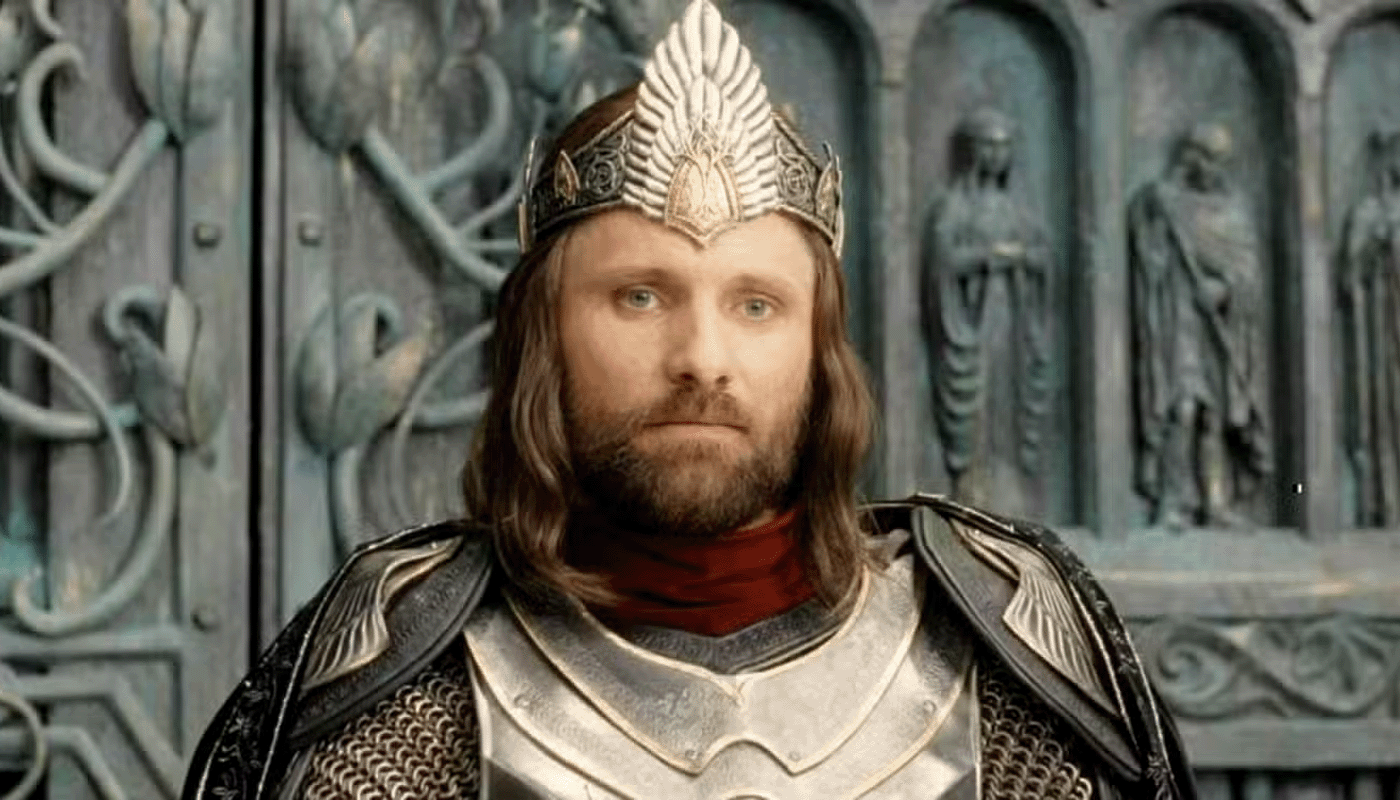
In a 2014 interview with Rolling Stone, George R.R. Martin, the acclaimed author behind A Song of Ice and Fire, sparked a debate concerning the portrayal of medieval power structures in fantasy literature. Martin’s critique, specifically directed at J.R.R. Tolkien’s The Lord of the Rings, hinged on a seemingly simple yet profoundly complex question: "What was Aragorn’s tax policy?" This query, posed by Martin, aimed to highlight what he perceived as an idealized, almost simplistic, view of kingship in Tolkien’s work, contrasting it with the harsh realities of medieval governance that he sought to explore in his own novels. The ensuing discussion delves into the structural constraints and limitations inherent in pre-modern states, offering a nuanced perspective on the practicalities of ruling and the nature of power in a historical context.
The Genesis of the Debate: Power, Governance, and Fantasy
The exchange originated from Martin’s observation that, in A Song of Ice and Fire and its television adaptation Game of Thrones, power is almost universally wielded poorly, with the notable exception of Daenerys Targaryen. He posited that ruling is inherently difficult, a sentiment he felt Tolkien’s work, while admirable, did not fully capture. Martin elaborated on this by contrasting Aragorn’s benevolent, hundred-year reign as depicted by Tolkien with the unaddressed complexities of medieval governance. He questioned the practicalities of Aragorn’s rule, asking, "What was Aragorn’s tax policy? Did he maintain a standing army? What did he do in times of flood and famine? And what about all these orcs?"
Martin’s questioning of Aragorn’s tax policy, in particular, has resonated as a touchstone for discussions about "realistic" fantasy. However, the question, on its surface, can appear facile. Medieval kings operated within severe structural constraints that precluded the development of a "tax policy" in the modern, bureaucratic sense. The very concept of a codified, nation-wide system of taxation with progressive or regressive rates, designed to influence behavior or redistribute wealth, was largely absent in the medieval period.
Deconstructing Medieval Governance: The Constraints of State Capacity
To understand Martin’s critique and the subsequent analysis, it is crucial to examine the fundamental limitations of medieval state capacity. Unlike modern states, which benefit from extensive bureaucracies, advanced communication, and sophisticated data collection, medieval kingdoms possessed significantly less knowledge and control over their territories and populations.
Knowledge and Control: The Pillars of State Power
The capacity of a medieval kingdom to generate revenue through taxation was primarily constrained by two interconnected factors:
- Knowledge of Productive Capacities and Trade: Kings and their courts had limited information about the economic output of their lands and the intricacies of trade within and beyond their borders. Gathering accurate data on agricultural yields, market prices, and trade volumes was a formidable challenge, often relying on informal networks and estimations rather than systematic record-keeping.
- Control over Income Extraction: Even with some knowledge, exerting fine-grained control to extract surplus income from the peasantry was exceedingly difficult. The vast majority of the population (often upwards of 90%) were agricultural laborers who naturally resisted excessive extraction of their surplus. This resistance could manifest as passive concealment of production, active evasion, or, in extreme cases, flight from the land or outright rebellion, as exemplified by historical events like the French Jacquerie of 1358.
Aragorn’s Reign Through a Medieval Lens: The Practicalities of Taxation
When considering Aragorn’s reign as King Elessar of Gondor, and by extension, Rohan, the author argues that their "tax policies" are implicitly defined by their structural existence as polities. Tolkien, a scholar deeply familiar with the early medieval world and its logistical challenges, would have understood these implicit realities. To inquire about Aragorn’s specific tax policy or his maintenance of a standing army overlooks the fundamental limitations of state power in early and high medieval polities.
Income Generation in Gondor and Rohan
The income of a medieval king, whether Aragorn or a historical counterpart, was primarily generated through a decentralized and often informal system. This system would likely have included:
- Tax Farming: A common practice where tax collection rights were leased to private individuals or groups, who would then be responsible for remitting a fixed sum to the crown, keeping any surplus they could extract. This method, while generating immediate revenue, often led to abuses and exploitation of the populace.
- Royal Holdings: Income derived from lands directly owned by the crown, either through rent from tenant farmers or direct cultivation managed by paid laborers.
- Tolls and Customs Duties: Levies on goods passing through specific territories, over bridges, or along rivers. The effectiveness of customs duties, however, was often undermined by widespread smuggling, necessitating constant efforts for suppression.
- Monopolies and Fines: Royal monopolies on certain goods or services could generate revenue, as could a portion of fines levied in legal proceedings. While the specifics of Gondorian law are not detailed, fines were a consistent form of punishment and revenue generation across medieval Europe.
- Corvée Labor: Obligations for certain populations to provide unpaid labor for public works, military campaigns, or the king’s personal benefit. This was often a substitute for, or supplement to, monetary payments.
The Question of a Standing Army and Royal Legitimacy
Martin’s query about a standing army also requires a historical perspective. Medieval kings primarily funded warfare through the logistical burden of equipping, feeding, and transporting armies, rather than directly paying a large, permanent military force. While a small household guard might be maintained, the bulk of military service was often rendered by feudal levies, where lords provided soldiers in exchange for land and privileges.
The concept of "professional soldiers who work for pay" existed, but this was distinct from the obligation of most males to perform a certain number of days of military service as a condition of their land tenure or residence. Maintaining a large standing army beyond the king’s immediate retinue would have been a significant drain on resources and could also incite fear and suspicion among powerful lords, who might perceive such a force as a threat to their own autonomy.
Furthermore, royal legitimacy was not solely derived from military strength but also from displays of largesse, significant building projects, patronage of arts and religion, and the maintenance of public works. These expenditures, alongside gifts to allies and vassals, were crucial for demonstrating a king’s power and generosity, reinforcing his claim to the throne.
The Realities of Post-War Governance
The specific context of Aragorn’s reign, following the War of the Ring, presents a unique set of challenges and opportunities that would shape his governance.
Rebuilding and Securing the Realm
- Population Displacement and Agricultural Recovery: Middle-earth, particularly regions like Gondor, would have suffered significant population losses and disruption to agriculture. The recovery of arable land and the re-establishment of farming communities would have been a slow, multi-generational process.
- Low-Intensity Warfare and Border Conflicts: The absence of a paramount warlord in Mordor would likely lead to continued raiding by orcs for subsistence. Aragorn would face the protracted task of clearing these remnants and securing his borders. This would inevitably involve ongoing, albeit low-intensity, warfare.
- Generational Grudges and Regional Stability: Historical precedent suggests that border regions often experience prolonged periods of conflict stemming from generational grievances. Aragorn would need to navigate these tensions to achieve lasting peace.
- The "Peace Dividend": Any benefits from the cessation of major hostilities would likely be gradual and concentrated in regions less affected by the war, such as those closer to Rohan, which would have experienced less direct devastation.
Tolkien’s Vision of the Ideal King
Tolkien’s depiction of Aragorn aligns with a medieval Christian ideal of kingship, emphasizing adherence to existing law and custom, the restraint of unjust lords, the provision of good justice, and waging war only when necessary for defense. This ideal king, often the subject of propaganda and self-representation, stands in contrast to the more pragmatic, and often less capable, rulers of actual medieval history.
However, Aragorn, as a victorious warrior, humble in disposition, and possessing decades of experience, is presented as potentially exceptional. He would be acutely aware of the fragility of kingship, especially given the long period during which the Stewards governed Gondor effectively. Facing no immediate major rivals or protracted conflicts, he might indeed achieve a level of competence and benevolence that aligns with the medieval rubric of a good king.
The Enduring Relevance of State Capacity Debates
The debate initiated by George R.R. Martin underscores the enduring relevance of understanding state capacity in analyzing fictional and historical governance. The insights drawn from scholars like James C. Scott, particularly in his works Seeing Like a State and The Art of Not Being Governed, provide a robust framework for understanding the limitations and complexities of state power in both pre-modern and modern contexts. Walter Scheidel’s work on pre-modern polities further illuminates the structural realities that shaped governance and economic development.
By posing the question of Aragorn’s "tax policy," Martin effectively challenged a potentially romanticized view of medieval kingship. He compelled audiences and scholars alike to consider the practical, often gritty, realities of ruling: the constant struggle for resources, the limitations of information and control, and the ever-present threat of internal dissent and external aggression. Tolkien’s creation of Aragorn, while embodying an ideal, is implicitly grounded in the historical context of his time, suggesting that even the most noble of rulers must contend with the fundamental constraints of the systems they govern. The discussion serves as a potent reminder that effective governance, whether in fantasy or reality, is a complex endeavor shaped by far more than just good intentions.