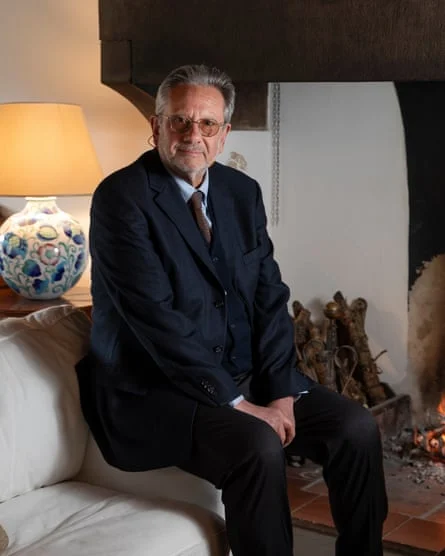
Sean Hepburn Ferrer, the elder son of screen icon Audrey Hepburn, offers a deeply personal and nuanced perspective on his mother’s life in his new book, "Intimate Audrey." Far from the gilded image of Hollywood royalty, Ferrer paints a portrait of a woman shaped by profound wartime experiences, a deep commitment to family, and an unwavering dedication to humanitarian causes. The book, co-written with former war correspondent Wendy Holden, aims to ground the enduring legend of Audrey Hepburn in the reality of her human journey, moving beyond the ubiquitous posters and merchandise that have cemented her image in global popular culture.
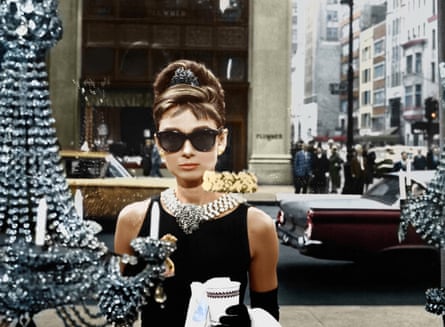
Ferrer, speaking from a Tuscan vineyard, describes his childhood as remarkably "normal," shielded from the dazzling, and at times isolating, world of Hollywood. He emphasizes his mother’s unwavering commitment to her role as a parent, stating, "She realised that life is short and fickle and delicate – and you can’t want a family and then when it comes not put your elbow into it." This grounded approach to motherhood was a stark contrast to the glamour associated with films like "Breakfast at Tiffany’s," a role that defined an era and became synonymous with Hepburn’s on-screen persona.

A Childhood Beyond the Silver Screen
Audrey Hepburn’s most iconic films, including the 1961 Blake Edwards masterpiece "Breakfast at Tiffany’s," were largely made before Sean was ten years old. Yet, it wasn’t until his teenage years, around the age of 14, that he fully grasped the magnitude of his mother’s global fame. He recounts a personal "Audrey Hepburn film festival" held in the attic of their home, projecting 16mm copies of her work with a simple projector and a sheet. These intimate viewings, often with his mother occasionally joining to discuss the films, provided him with a unique and personal understanding of her cinematic legacy. His mother’s characteristic modesty shone through, as she consistently attributed her on-screen successes to directors and co-stars.
The Unforeseen Spectacle of Fame
The sheer scale of Audrey Hepburn’s fame was starkly illustrated following her death in 1993. Her funeral, held near the family’s home outside Geneva, Switzerland, drew an astonishing crowd. "Our little village of 400 or 500 inhabitants swelled up to 25,000," Ferrer recalls, likening the event to a "rock concert" with cars stretching as far as the eye could see, a "Coachella in Switzerland." This overwhelming outpouring of grief and admiration underscored the profound impact Hepburn had on millions worldwide.
Shortly after her passing, Ferrer penned "Audrey Hepburn: An Elegant Spirit," initially conceived as a letter to his future children to convey his mother’s inner life, her emotional landscape, and her core philosophies. The book’s success and the persistent requests for a more comprehensive account led to "Intimate Audrey." The inclusion of Wendy Holden, a former war correspondent, as co-author was a deliberate choice, as Ferrer notes, "My mother’s life begins with war and ends with war."

Preserving a Legacy: The Art of Image Management
Since his mother’s death, Sean Hepburn Ferrer has dedicated himself to safeguarding and managing Audrey Hepburn’s legacy. This multifaceted role involves distributing funds to charitable causes, primarily through the Audrey Hepburn Children’s Fund, and meticulously overseeing the use of her image. He likens the process to a stringent vetting system: "Audrey Hepburn is like that Ferrari that requires you to take a weekend driving course before we let you have it. Because otherwise, you’re going to crash it, if you don’t understand how it works."
The iconic photographs that have defined Hepburn’s image were not casual snapshots. Ferrer highlights the significant effort and cost involved in their creation during an era of film development, contact sheets, and elaborate press kits. He estimates the cost of a single photograph from that period could rival that of a modern smartphone, underscoring the deliberate and artistic nature of her visual output. He also notes that many children of other stars seek his advice on legacy management but are often daunted by the sheer volume of work involved, a responsibility he has shouldered as a full-time endeavor, comparing it to curating a vast art exhibition.
The Enduring Appeal of Audrey Hepburn
Ferrer breaks down his mother’s lasting stardom into three key pillars:
Natural Performances and Early Promise
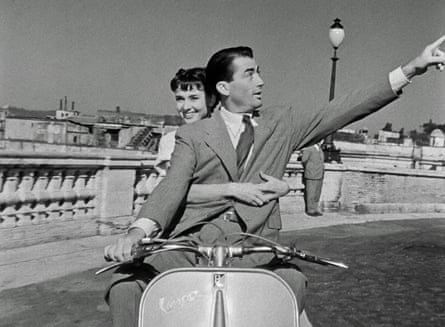
The authenticity and naturalism of Hepburn’s performances were pivotal. Her breakthrough role in "Roman Holiday" (1953), directed by William Wyler, where she played a runaway princess, showcased a fresh and relatable screen presence. Ferrer observes, "In a world of AI, she was the original analogue. There was nothing digital, prepared, studied." This inherent genuineness resonated deeply with audiences.
Timeless Style and Parisian Chic
Hepburn’s personal style, characterized by a youthful, mid-century modernity – from ballet flats and capri pants to her iconic cropped hair and oversized sunglasses – became instantly recognizable. Her long-standing collaboration with Hubert de Givenchy, whom she considered akin to a brother, resulted in some of cinema’s most enduring fashion moments, starting with the off-the-shoulder ballgown in "Sabrina" (1954). Their creative partnership was built on a shared aesthetic, with Hepburn often subtly refining Givenchy’s exquisite designs to perfectly suit her refined silhouette.
A Deep Commitment to Humanitarianism
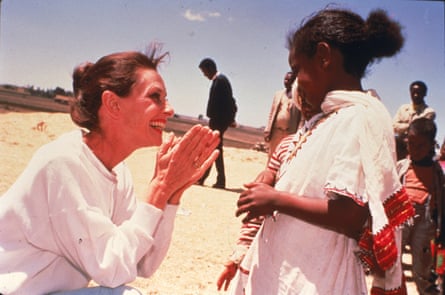
The final, and perhaps most profound, aspect of Hepburn’s legacy is her extensive humanitarian work as a UNICEF Goodwill Ambassador in the 1980s and 1990s. Her missions to Ethiopia, Venezuela, and Vietnam brought global attention to the plight of vulnerable children and demonstrated a deep-seated empathy. Ferrer states, "She gave her life for the dream of an inclusive society." This dedication to global causes transformed her into a powerful advocate, extending her influence far beyond the realm of entertainment.
A Life Forged in War and Resilience
"Intimate Audrey" opens with a stark portrayal of Hepburn’s final, harrowing UNICEF mission to Somalia in 1992, just four months before her death from cancer at the age of 63. Ferrer recounts witnessing his mother’s profound exhaustion and strain, later understanding that the disease had been developing for some time. The book then journeys back to her formative years, revealing a childhood deeply scarred by war.
Born in Belgium in 1929, Audrey Hepburn’s early life was marked by the absence of her father, Joseph Ruston, who abandoned the family when she was six. Sent to England for education, she was recalled to Arnhem, Netherlands, by her mother, Baroness Ella van Heemstra, at the outbreak of World War II. The Netherlands, however, became a brutal theater of conflict. Hepburn and her family endured relentless bombing raids and severe malnutrition, subsisting on meager rations and witnessing firsthand the horrors of the Nazi occupation. She actively participated in the Dutch resistance, performing dance recitals to raise funds for those in hiding and carrying vital messages. Her famously elegant posture, often attributed to her ballet training, was also a physical consequence of shrapnel that lodged in her neck during an air raid, permanently affecting her mobility.
A particularly poignant and troubling aspect of her family history was their past support for fascism, with her parents even photographed with Adolf Hitler. Sean admits his mother never fully reconciled this, stating, "I think she accepted who they were. She took what she could, did what was right." This complex past undoubtedly fueled her later commitment to humanitarianism, a profound act of counterbalancing.
The Rise of an Icon
Following the war, despite the dashed dreams of a ballet career, Hepburn pursued dance in London and began securing small roles in British films. Her ascent to stardom accelerated when, during a film shoot in Monte Carlo, she was discovered by author Colette, who cast her in the Broadway stage adaptation of "Gigi."
Her true Hollywood breakthrough arrived with "Roman Holiday," earning her an Academy Award for Best Actress. Within days, she also won a Tony Award for her performance in "Ondine," solidifying her status as a major talent at the young age of 24. Hepburn achieved the coveted EGOT status, winning an Emmy, a Grammy, an Oscar, and a Tony, a rare distinction that speaks to her multifaceted artistic achievements. Her humanitarian efforts were further recognized with the Presidential Medal of Freedom.
Her filmography boasts a range of memorable performances, including the fashion-forward "Funny Face" (1957) alongside Fred Astaire, and the iconic "Breakfast at Tiffany’s," where she imbued Holly Golightly with a delicate vulnerability. "My Fair Lady" (1964), though featuring Marni Nixon’s voice for the musical numbers, remains a testament to Hepburn’s charm and her captivating portrayal of Eliza Doolittle’s transformative journey. Ferrer sees this film as a reflection of his mother’s own life, a narrative of overcoming adversity from a position of privilege.
Beyond her more celebrated roles, Hepburn took on challenging and unconventional characters in films such as "The Nun’s Story" (1959), "The Children’s Hour" (1961), and the more daring "Two for the Road" (1967), showcasing her considerable acting range. Sean attributes her success in Hollywood to a distinct "European polish and sensibility" that she brought to her craft, noting that many of her closest collaborators were also European. This grounding in European culture, coupled with her conscious decision to live outside Hollywood, allowed her to maintain a connection to everyday life, a crucial element, he believes, for drawing authentic inspiration.
Navigating Personal Life and Enduring Love
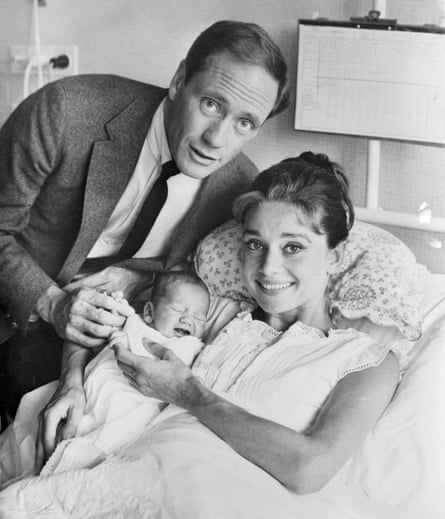
At the close of the 1960s, Hepburn largely retired from filmmaking to focus on her family. Her elder son, Sean, was born in 1960 during her marriage to Mel Ferrer. Her younger son, Luca, arrived in 1970 during her marriage to Italian psychiatrist Andrea Dotti. In "Intimate Audrey," Ferrer candidly addresses the complexities and challenges of the men in his mother’s life. He acknowledges the "most valuable, but also the most difficult" nature of his relationship with his father, Mel Ferrer. He describes Dotti as a "pleasant partner, though completely unreliable," and later partner Robert Wolders as "adorable but a doormat."
Ferrer grappled with the decision to include details of Dotti’s philandering, a difficult balance between respecting privacy and advocating for women. He recounts discovering his mother unconscious with an empty bottle of sleeping pills beside her, a stark indicator of the emotional toll of her second marriage’s collapse. "Let me tell you," he states, "if Audrey Hepburn can suffer infidelity, then anyone can."

Bringing the Legend Down to Earth
Sean Hepburn Ferrer’s ultimate goal with "Intimate Audrey" is to humanize his legendary mother, to move beyond the myth and reveal the real person. He acknowledges that the creative work, the elegance, and the humanitarian contributions are immutable aspects of her legacy. However, he seeks to imbue her memory with depth, demonstrating that immense success and genuine humanity are not mutually exclusive. "I’m trying to bring her down to earth," he explains. "I can never shatter the creative work, the elegance, the humanitarian work. That’s there to stay. I think it’s important to give depth to a memory, because it means that you can have a measured amount of success and still be a real person. She was a normal, real person. That’s really why I did this." Through his book, Ferrer offers a profound tribute, ensuring that Audrey Hepburn is remembered not just as an icon, but as a complex, resilient, and deeply human woman.