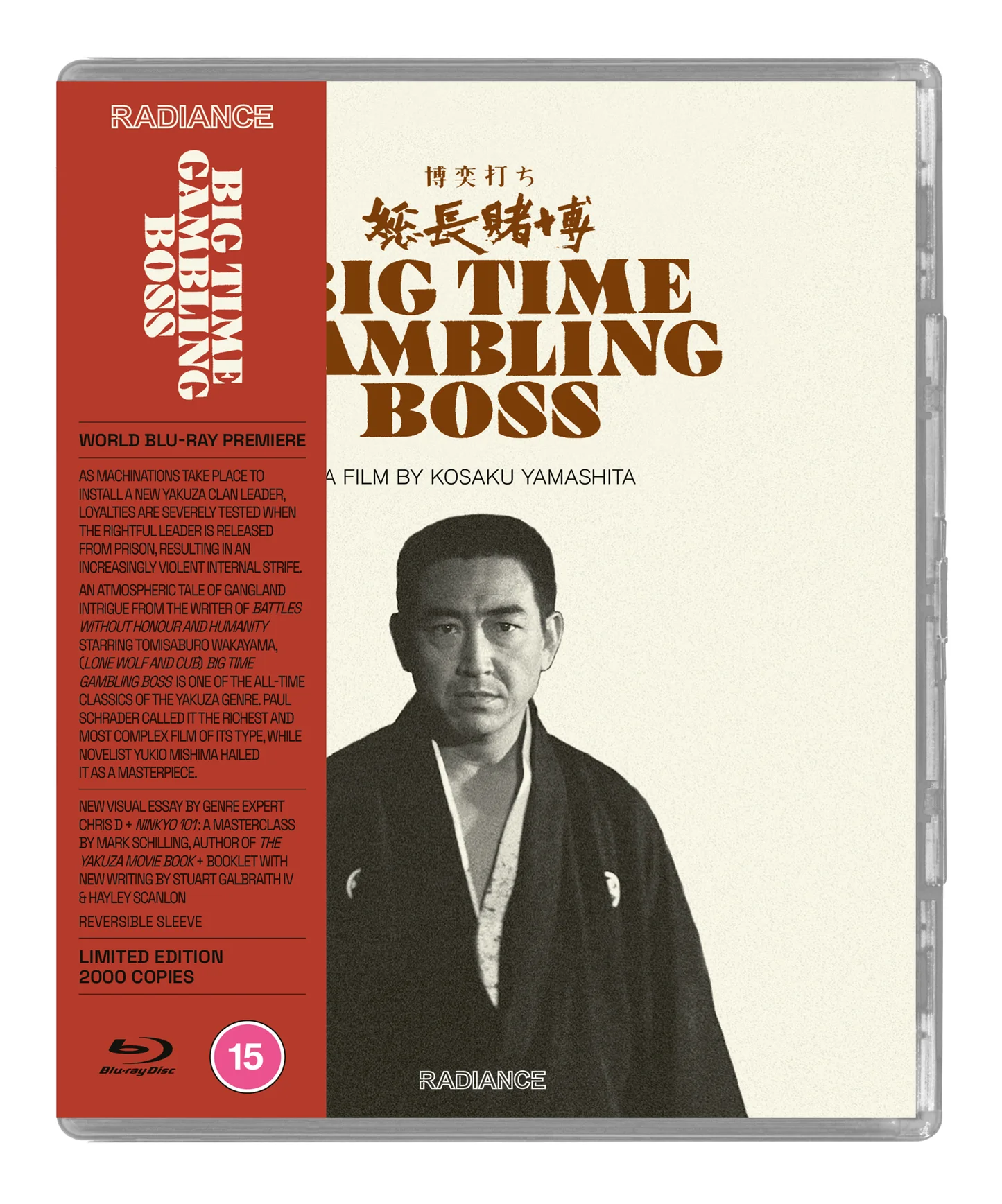
The end of World War II marked an indelible turning point in Japanese history, compelling a profound societal introspection regarding national identity, deeply ingrained values, and the very nature of authority. For filmmaker Kosaku Yamashita, this seismic shift catalyzed a critical re-evaluation of established power structures, most notably that of the Emperor, whom he famously equated to a "yakuza boss casually sending people to their deaths." This searing critique of national ideals and traditional hierarchies became a foundational element of Yamashita’s cinematic vision, profoundly shaping works such as "The Valiant Red Peony" and, arguably his most seminal achievement, "Big Time Gambling Boss." Widely acclaimed by critics as one of the finest examples of ninkyo eiga (chivalry gangster films), "Big Time Gambling Boss" transcends typical genre conventions to meticulously dissect how insatiable greed and the relentless hunger for power corrupt interpersonal bonds and loyalties. Yamashita achieves this through a deeply character-driven narrative, prioritizing the intricate psychological landscapes of individuals caught within the yakuza world over a mere depiction of its hierarchical mechanics.
The Genesis of Disillusionment: Post-War Japan and Yamashita’s Vision
The devastation wrought by World War II fundamentally reshaped the Japanese psyche. The unconditional surrender, the subsequent American occupation, and the Emperor’s renunciation of his divine status shattered decades, if not centuries, of deeply held beliefs. This period of profound disillusionment led many artists and intellectuals, including Yamashita, to question the very foundations of the society that had led to such catastrophe. The traditional code of Bushido, the unquestioning loyalty to the Emperor, and the rigid social hierarchies were exposed to intense scrutiny. It was against this backdrop of national soul-searching that Yamashita developed his unique directorial voice, one that consistently challenged superficial notions of honor and uncovered the often-brutal realities beneath polished facades.
Yamashita’s comparison of the Emperor to a yakuza boss was not merely provocative; it was a potent metaphor reflecting a widespread sentiment that national leadership had recklessly squandered human lives under the guise of noble ideals. This cynicism permeated his storytelling, particularly his approach to the ninkyo eiga genre, which traditionally glorified the stoicism, honor, and self-sacrifice of yakuza figures. While other directors might have reinforced these romanticized notions, Yamashita chose to peel back the layers, revealing the inherent contradictions and tragic consequences of such a system. His films often explored themes of betrayal, the corrosive nature of power, and the struggle of individuals to maintain their integrity within corrupt institutions. "Big Time Gambling Boss," released in 1968, stands as a mature crystallization of these thematic preoccupations, offering a nuanced and often bleak portrayal of the underworld.
The Rise of Ninkyo Eiga and Yamashita’s Distinctive Mark
The 1960s witnessed a boom in Japanese cinema, with the ninkyo eiga genre emerging as a powerful cultural phenomenon. These films, often produced by studios like Toei, focused on honorable yakuza figures who adhered to a strict moral code (jingi) amidst a changing world. Stars like Koji Tsuruta, Ken Takakura, and Junko Fuji became synonymous with these roles, embodying stoic masculinity and defiant loyalty. Audiences, still grappling with the socio-economic shifts of post-war reconstruction, found comfort and catharsis in these tales of steadfast individuals upholding a traditional sense of justice, even if it was within the criminal underworld.
However, even within this popular genre, Yamashita carved out a distinctive niche. Unlike some of his contemporaries who leaned into the melodrama or stylized violence, Yamashita consistently sought to imbue his narratives with deeper psychological complexity and a more critical perspective. While he employed many of the genre’s familiar tropes—the elaborate rituals, the emphasis on brotherhood, the inevitable clashes—he subtly subverted them. His yakuza were not merely symbols of idealized masculinity; they were flawed, vulnerable men caught in impossible moral dilemmas. This approach distinguished him from directors who might have been more interested in the spectacle of violence or the romanticization of the criminal lifestyle.
"Big Time Gambling Boss" is a prime example of Yamashita’s refined craft. The film opens with the Tenryu clan facing a leadership crisis as its ailing boss can no longer command. The natural successor appears to be Shinjiro Nakai (Koji Tsuruta), a long-serving, highly respected lieutenant. Yet, Nakai, perceiving himself as an outsider due to his humble origins, humbly declines the offer. Instead, he proposes his "brother" in the clan, Tetsuo Matsuda (Tomisaburo Wakayama), a man of fiery temperament and unwavering loyalty. This suggestion, too, is ultimately bypassed in favor of Kohei Ishido (Hiroshi Nawa), the former boss’s son-in-law, a choice rooted more in dynastic convenience than meritocratic succession. Nakai, embodying the jingi code, reluctantly accepts the decision of his peers, but Matsuda, feeling his brother’s rightful claim has been overlooked and perceiving a lack of honor in the clan’s choice, becomes a volatile dissenting voice. This initial conflict immediately establishes the central tension: the clash between pragmatic power plays and the ideals of loyalty and merit.
A Deep Dive into Character and Conflict
The narrative meticulously unfolds as the process of installing Ishido as the new boss begins. Matsuda, his sense of injustice burning, openly challenges the clan, accusing them of abandoning their principles. This act of defiance sets in motion a tragic chain of events. An assassination attempt on Matsuda escalates tensions into overt conflict between him and Ishido, with Nakai caught in the agonizing position of mediator. His struggle to preserve the peace and uphold the integrity of the clan, while simultaneously protecting his brother Matsuda, forms the emotional core of the film. Nakai suspects internal treachery, but his quest for truth may prove futile as further tragedies push the clan to the brink of an all-out war.
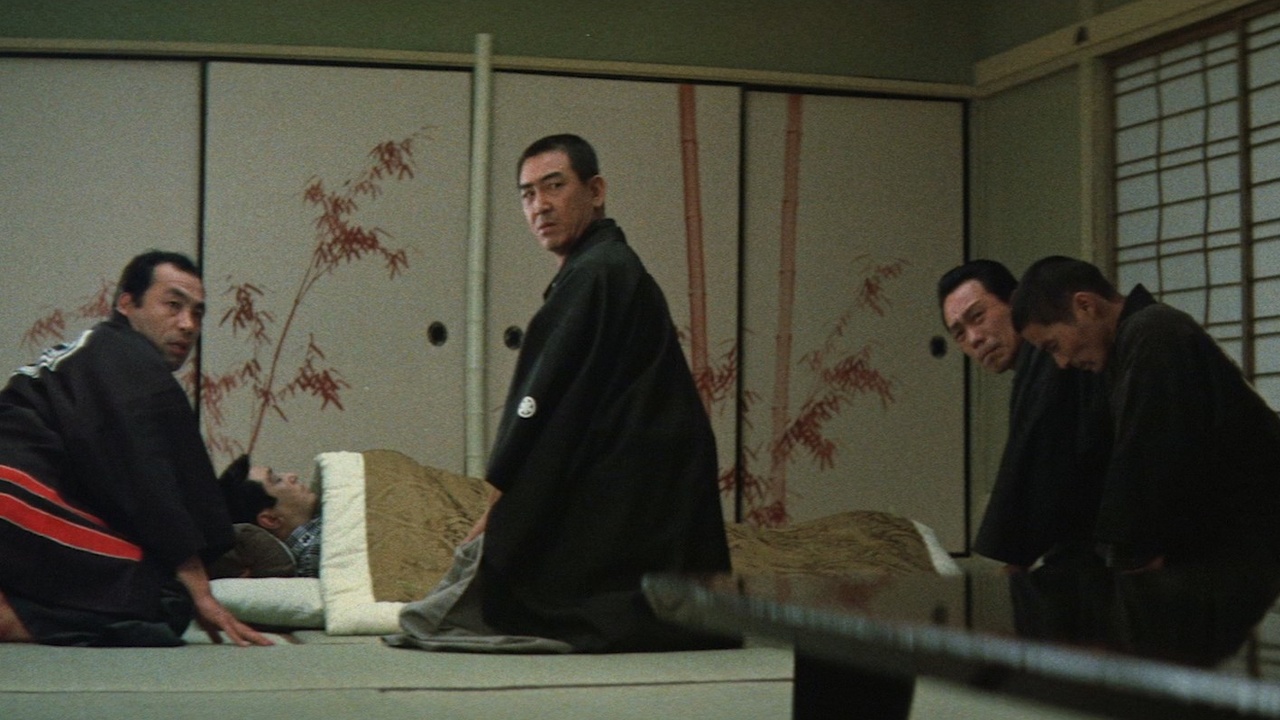
At first glance, "Big Time Gambling Boss" might appear to be a conventional yakuza drama of the 1960s. It touches upon familiar thematic territory: the intricate and often corrupt relationship between the underworld and legitimate power, leading to cycles of violence and moral decay, blurring the lines between gangster, politician, and corporate magnate. Aesthetically, it adheres to genre conventions, featuring tense, claustrophobic meetings among hardened gangsters and depicting the brutal consequences of their conflicts.
However, Yamashita elevates the material by placing a profound emphasis on character development and the complex web of relationships. This focus adds a layer of sophistication often absent in other genre entries, which tended to prioritize the socio-political commentary of the yakuza world over the internal struggles of individuals. In "Big Time Gambling Boss," characters are not merely cogs in a larger criminal machine; they are men and women grappling with profound moral dilemmas, torn between their sworn obligations to the clan and their personal ties to their families.
Nakai, Ishido, and Matsuda, despite their superficial roles as "thugs" or "gangsters," are imbued with remarkable depth and gravitas. Whereas in the more anarchic jitsuroku eiga (true-record gangster films) of Kinji Fukasaku, characters might be portrayed as cynical, opportunistic figures driven solely by self-interest, Yamashita presents them as multifaceted individuals. Here, they are not only gangsters but also friends, husbands, fathers, and mentors. While some scenes, such as their unwavering devotion to their gravely ill former boss, might strike a contemporary audience as somewhat theatrical, moments like Nakai and Matsuda’s desperate attempts to honor their oath of brotherhood amidst the clan’s tumultuous transition underscore the profound nature of their bond, transcending the rigid yakuza hierarchy.
The Human Cost: Family, Loyalty, and Betrayal
A particularly striking aspect of Yamashita’s approach is the portrayal of the characters’ personal lives. Their loving marriages are frequently depicted, adding crucial emotional weight to their struggles. Actresses Junko Fuji, as Hiroe (Matsuda’s wife), and Hiroko Sakuramachi, as Tsuyako (Nakai’s wife), deliver memorable performances that highlight their characters’ unwavering devotion and quiet dignity. These women are not mere accessories; they are anchors in a turbulent world, providing a poignant contrast to the brutality of the yakuza life. Through their suffering and resilience, the audience viscerally understands the stakes involved for these men. The choice between their two "families"—the criminal clan and their biological kin—becomes a searing moral dilemma that ultimately determines whether they can retain their humanity or descend fully into the ruthless, amoral world of the gangster.
This profound exploration of character and moral conflict aligns "Big Time Gambling Boss" more closely with the narrative conventions of a stage drama or classical tragedy. Cinematographer Nagaki Yamagishi masterfully employs visual language to underscore these themes. His camera emphasizes the intimate, tense, and often fragile harmony of the characters’ private family lives, contrasting it sharply with the dissonance and conflict within their other "family"—the clan to which they have sworn allegiance. The film’s opening sequence, depicting a seemingly civil business negotiation between the Tenryu clan and a rival yakuza family, immediately establishes the illusory nature of the gangster hierarchy. It reveals an institution built not on genuine honor but on blind loyalty and obedience, a system that, much like the authority Yamashita critiqued post-war, "casually sends people to their deaths."
Legacy and Enduring Relevance
"Big Time Gambling Boss" has garnered consistent critical acclaim since its release, often cited as a benchmark for the ninkyo eiga genre. Critics have lauded Yamashita’s ability to transcend genre expectations, transforming what could have been a standard gangster flick into a profound character study. Koji Tsuruta’s portrayal of Shinjiro Nakai, in particular, is frequently highlighted for its understated power and emotional depth, capturing the essence of a man torn between conflicting loyalties. Tomisaburo Wakayama’s fiery performance as Matsuda provides the necessary counterpoint, embodying the volatile passion that drives the tragedy.
The film’s influence can be seen in subsequent Japanese cinema, particularly in its nuanced approach to character within genre confines. While the ninkyo eiga genre eventually gave way to the more cynical and violent jitsuroku eiga of the 1970s, Yamashita’s work stands as a testament to the genre’s capacity for sophisticated storytelling. His exploration of the internal decay of honor and the corrosive effects of power remains as relevant today as it was in post-war Japan.
With "Big Time Gambling Boss," Kosaku Yamashita masterfully transforms familiar genre conventions into a quiet yet devastating tragedy. Beneath its surface of intricate rituals, tense negotiations, and shifting alliances lies a world where the very concept of "family"—both blood and sworn—becomes increasingly hollow. It is reduced to a mechanism of control, a tool for manipulating loyalty, rather than a genuine source of belonging and mutual support. By the time the film reaches its poignant and inevitable conclusion, what once appeared as an unbreakable code of honor reveals itself as little more than a carefully maintained illusion, one that ultimately consumes both the individual striving within it and the flawed system that perpetuates its existence. The film serves as a timeless critique, reflecting not just the specific anxieties of post-war Japan but the universal human struggle against corruption, betrayal, and the seductive, destructive allure of power.