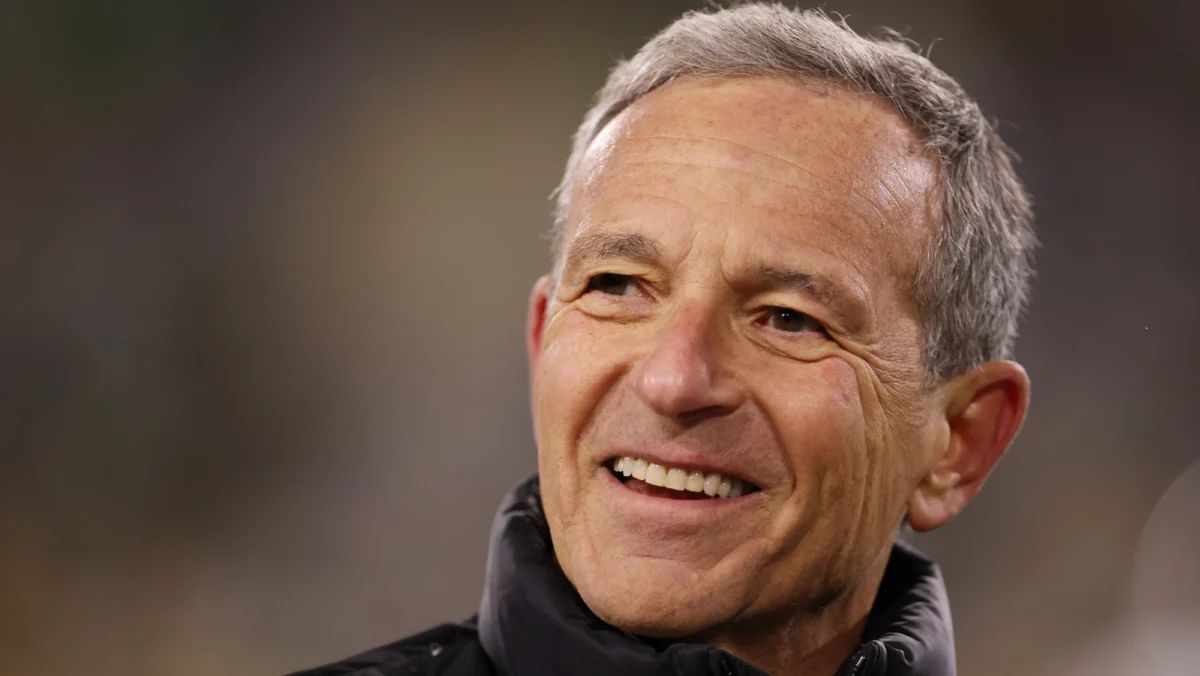
The Walt Disney Company reached a definitive turning point on Wednesday during its Annual Shareholder Meeting, as Bob Iger officially concluded his second stint as Chief Executive Officer, handing over the leadership of the global entertainment giant to Josh D’Amaro. The transition marks the end of an era for a leader whose career has been synonymous with the modern expansion of the Disney brand. Iger, who returned to the helm in November 2022 to stabilize the company following a period of internal and external volatility, addressed shareholders with a reflection on his 52-year career in the industry and a roadmap for the company’s future under new leadership.
The meeting began with a comprehensive video retrospective, tracing Iger’s journey from his early days at ABC in 1974 through his 15-year tenure as Disney CEO from 2005 to 2020, and finally his unexpected return to the role two years ago. The atmosphere was one of both transition and resolution, as Iger addressed the "lost confidence" that had permeated the company’s ranks prior to his return. With the appointment of D’Amaro, the former Chairman of Disney Parks, Experiences and Products, the company signals a shift toward a leader known for operational excellence and high employee morale.
The Return to Creative Roots and Structural Reform
A central theme of Iger’s farewell address was the restoration of Disney’s "creative engines." Upon his return in 2022, Iger moved quickly to dismantle the organizational structure implemented by his predecessor, Bob Chapek. Under Chapek’s leadership, the creation of the Disney Media and Entertainment Distribution (DMED) division had centralized budgetary and distribution decisions under a single executive, Kareem Daniel. This move was widely criticized by Hollywood creatives for stripping power from studio heads and prioritizing data-driven distribution over artistic vision.
Iger’s primary mission over the last two years was to return authority to the creative leaders of Disney’s various studios, including Marvel, Lucasfilm, Pixar, and Walt Disney Animation. "When I returned in 2022, people had lost confidence in the company they worked for," Iger told shareholders. "Today, everywhere I turn, I sense confidence and excitement about what lies ahead."
By empowering executives like Dana Walden and Alan Bergman, Iger sought to refocus the company on its core strength: storytelling. In his farewell remarks, he specifically highlighted the vital role Dana Walden will continue to play in overseeing the company’s television and streaming content, emphasizing that creativity remains the company’s "most critical endeavor."
The Rise of Josh D’Amaro
The selection of Josh D’Amaro as CEO represents a strategic choice by the Disney Board of Directors to prioritize a leader with deep roots in the company’s most profitable and culturally significant segment: the Parks and Experiences division. D’Amaro, who joined Disney in 1998, has held numerous leadership roles, including the presidency of the Disneyland Resort and Walt Disney World Resort.
D’Amaro is widely regarded as a "people-first" leader, a reputation that aligns with Iger’s goal of restoring internal morale. During his time as Chairman of Parks, D’Amaro oversaw significant expansions, including the opening of Star Wars: Galaxy’s Edge and Avengers Campus, while navigating the unprecedented challenges of the COVID-19 pandemic.
"Josh is a wonderful choice to lead the Walt Disney Company," Iger stated. "He has passion for our businesses and brands, respect for our people, and he appreciates what makes this company so unique." Industry analysts suggest that D’Amaro’s familiarity with Disney’s multi-faceted ecosystem—ranging from cruise lines to consumer products—makes him uniquely qualified to integrate the company’s diverse revenue streams in a post-streaming-war era.
A Chronology of the Iger Era: 2005–2024
To understand the weight of this transition, one must look at the timeline of Iger’s influence on the entertainment landscape. His tenure is defined by four massive acquisitions that transformed Disney from a traditional animation and theme park company into a global content powerhouse:
- 2005: Bob Iger succeeds Michael Eisner as CEO.
- 2006: Disney acquires Pixar Animation Studios for $7.4 billion, mending a fractured relationship with Steve Jobs.
- 2009: Disney acquires Marvel Entertainment for $4 billion, laying the groundwork for the Marvel Cinematic Universe (MCU).
- 2012: Disney acquires Lucasfilm for $4.05 billion, bringing the Star Wars franchise under the Disney umbrella.
- 2019: Disney completes the $71.3 billion acquisition of 21st Century Fox, significantly expanding its content library for the launch of Disney+.
- 2020: Iger steps down as CEO, handing the reins to Bob Chapek.
- 2022: In a shock move, the Board fires Chapek and reinstates Iger to lead a two-year turnaround.
- 2024: Iger officially steps down, naming Josh D’Amaro as his successor.
Financial Data and the Battle with Activist Investors
Iger’s final two years were not without significant friction. He returned to a company facing a "streaming hangover," where Disney+ was losing billions of dollars annually despite rapid subscriber growth. Furthermore, the company became the target of activist investors, most notably Nelson Peltz of Trian Fund Management, who launched a high-profile proxy battle.
Peltz argued that Disney had overspent on acquisitions, lacked a clear succession plan, and had allowed its margins to erode. In response, Iger implemented a rigorous $5.5 billion cost-cutting initiative, which included the elimination of approximately 7,000 jobs. These measures, combined with a renewed focus on streaming profitability, helped the company’s stock recover and eventually led to a decisive victory for Iger in the 2024 proxy vote.
By the time of the Wednesday meeting, Disney’s financial outlook had stabilized. The streaming division, which includes Disney+, Hulu, and ESPN+, was on a clear path toward profitability. For the first time in several years, the company also resumed dividend payments to shareholders, a move that signaled a return to fiscal health and a victory over the criticisms leveled by activist investors.
Industry Implications and the Road Ahead
The handover to Josh D’Amaro comes at a time when the media industry is grappling with the decline of linear television and the maturation of the streaming market. D’Amaro’s immediate challenges will involve the full integration of Hulu, the transition of ESPN to a direct-to-consumer model, and the continued revitalization of the theatrical film slate, which saw a mixed performance in 2023.
Market analysts believe D’Amaro will lean heavily on the "flywheel" effect—using the company’s film and television IP to drive attendance at theme parks and sales of consumer products. With a planned $60 billion investment in the Parks and Resorts division over the next decade, D’Amaro is expected to double down on the segment that currently provides the lion’s share of the company’s operating income.
"The challenges were particularly profound in the last three years," Iger admitted during his address. "It was daunting at times, but through it all, what sustained me was the passion I saw every day from great storytellers and innovators."
Official Responses and Legacy
While Iger is stepping down from the CEO role, his influence will remain present. He will continue to serve as a special adviser and a member of the Board of Directors through the end of 2026. This extended "off-ramp" is designed to ensure a smooth transition and to avoid the leadership vacuum that occurred during the Chapek era.
In a statement following the meeting, the Disney Board of Directors expressed their gratitude for Iger’s service: "Bob Iger’s legacy is etched into the very fabric of this company. He rescued Disney at a time of uncertainty and has positioned it for a new century of growth. In Josh D’Amaro, we have found a leader who embodies the spirit of Walt Disney while possessing the modern expertise to navigate a complex digital world."
As Iger concluded his speech, he noted that his 52-year journey, which began in 1974, spanned almost three-quarters of his life. "I never dreamed I would end up as CEO of The Walt Disney Company, and I certainly never expected to step into the role a second time," he said. "What I couldn’t have fully known then was just how meaningful this journey would become."
The transition from Iger to D’Amaro marks more than just a change in personnel; it is a strategic pivot toward operational stability and a renewed commitment to the creative-led philosophy that built the Disney empire. As Iger steps into his advisory role, the industry will be watching closely to see if D’Amaro can maintain the delicate balance between financial discipline and the "magic" that shareholders and fans alike have come to expect.