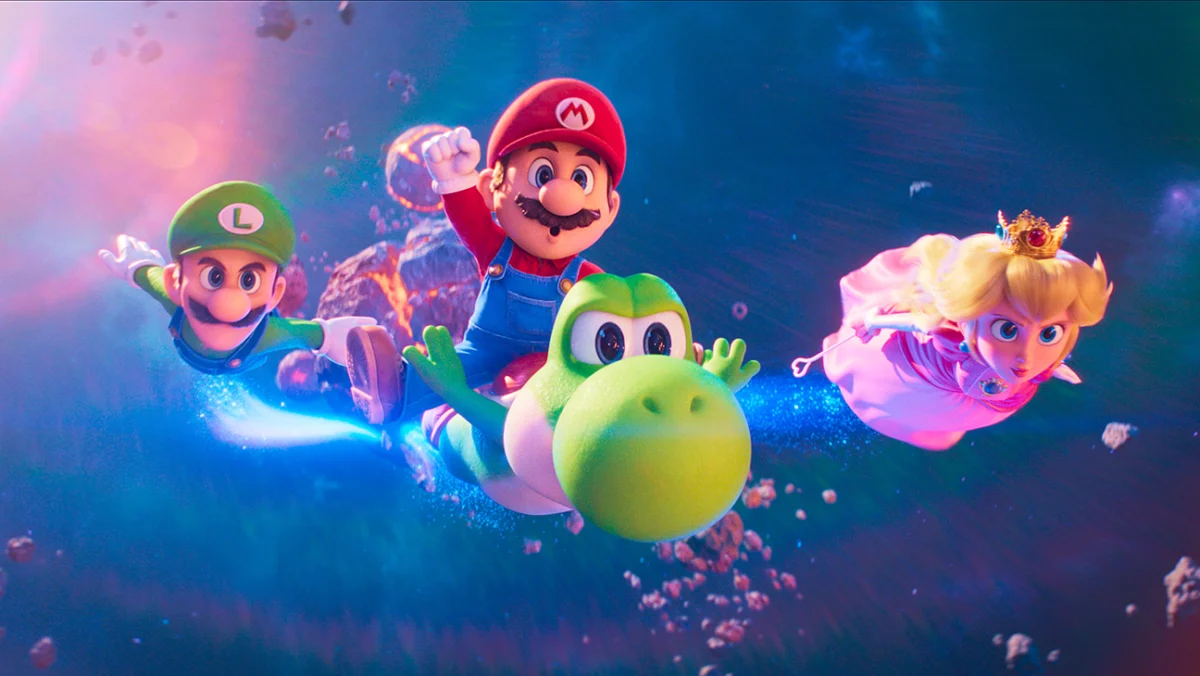
The cinematic landscape is currently dominated by Illumination and Universal’s The Super Mario Galaxy Movie, which continues its extraordinary box office run, soaring past the $300 million mark domestically and $600 million worldwide in its stellar second weekend. This monumental achievement positions the animated sequel as the first Hollywood production of the year to reach either of these significant financial milestones, signaling a robust return for family-friendly blockbusters and a powerful validation of the video game adaptation genre.
A Galactic Performance for Mario
Following an explosive debut, The Super Mario Galaxy Movie is projected to secure the top spot on the weekend chart with an estimated $70 million in domestic ticket sales. This impressive haul is set to push its North American cumulative gross to an estimated $308.1 million through Sunday. Internationally, the film’s appeal is equally potent, on track to add another $90 million from 81 markets, bringing its foreign tally to a staggering $327 million. The global total, expected to comfortably exceed $635 million by the end of the weekend, underscores the universal appeal of Nintendo’s iconic plumber and his latest big-screen adventure.
This success is particularly noteworthy in the context of the current theatrical market. While the post-pandemic box office has shown signs of recovery, few films have managed to capture such widespread audience engagement so quickly. The film’s rapid ascent to these financial heights highlights a confluence of factors: a beloved intellectual property with multi-generational appeal, cutting-edge animation from Illumination (known for the Despicable Me franchise), and a strategic release capitalizing on a relatively clear theatrical window. The film’s performance suggests that well-executed adaptations of popular video games, once a notoriously challenging genre for Hollywood, can now be incredibly lucrative, setting a new benchmark for future projects. Industry analysts are already pointing to The Super Mario Galaxy Movie as a potential harbinger for a stronger summer box office season, providing much-needed momentum for cinemas worldwide.
The original Super Mario Bros. game, created by Shigeru Miyamoto and released by Nintendo in 1985, revolutionized platform gaming and spawned a multimedia empire. Decades of games, merchandise, and even a less-than-successful live-action film in 1993, built a massive fanbase. This new animated iteration, leveraging modern storytelling and animation techniques, managed to tap into that deep well of nostalgia while simultaneously captivating a new generation of viewers. Its critical reception, while mixed by some critics, has been overwhelmingly positive from audiences, reflected in strong CinemaScore and Rotten Tomatoes audience ratings, which often correlate directly with extended theatrical runs and strong word-of-mouth. Universal and Illumination’s commitment to quality animation and fan service appears to have paid off handsomely, solidifying the studio’s position as a major player in the animation space.
Continued Strength from Established Hits
Amidst Mario’s dominance, other titles are also demonstrating remarkable staying power. Amazon MGM Studios’ Project Hail Mary, now in its fourth week of release, continues to be a formidable presence at the box office. The Ryan Gosling-led space adventure is anticipated to add another $28 million this weekend, pushing its domestic cumulative gross into the impressive $258 million range through Sunday.
Based on the best-selling novel by Andy Weir, Project Hail Mary has captivated audiences with its blend of scientific ingenuity, suspense, and humor. Ryan Gosling’s star power, coupled with the film’s compelling narrative, has ensured its longevity in a competitive market. Amazon MGM Studios, relatively new to large-scale theatrical distribution following its acquisition of MGM, is making a significant statement with Project Hail Mary‘s sustained success. This performance not only validates the studio’s strategy of investing in high-quality, thought-provoking science fiction but also reinforces Gosling’s reputation as a bankable leading man capable of anchoring diverse projects, from critically acclaimed dramas to commercial blockbusters. The film’s ability to maintain strong ticket sales deep into its theatrical run speaks to its broad appeal and positive audience reception, positioning it as one of the year’s standout original sci-fi offerings.
Further down the chart, A24’s provocative drama The Drama, starring Zendaya and Robert Pattinson, is demonstrating resilience, exceeding initial expectations. The film experienced a modest 21 percent drop this weekend, adding $9 million to its coffers and bringing its early domestic total for A24 to $31 million. This performance is particularly commendable for an independent film, especially one often categorized as "provocative," suggesting strong critical buzz and a dedicated audience eager for auteur-driven cinema.
A24 has built a formidable reputation for distributing critically acclaimed, artistically daring films that often defy mainstream conventions. The Drama continues this tradition, leveraging the immense star power of Zendaya, a cultural icon with a massive following, and Robert Pattinson, who has skillfully navigated a career from blockbuster franchises to independent darlings. The film’s relatively small drop-off indicates excellent word-of-mouth within its target demographic, showcasing A24’s ability to cultivate and serve a discerning audience that actively seeks out unique and challenging cinematic experiences. In an industry often dominated by tentpole releases, the consistent performance of films like The Drama highlights the enduring importance and commercial viability of independent cinema.
‘You, Me & Tuscany’ and the Resurgence of Black-Led Rom-Coms
Meanwhile, Universal’s new romantic comedy, You, Me & Tuscany, is making its mark with a solid fourth-place finish, eyeing an opening weekend in the $8 million range. Beyond its box office numbers, the film has quickly garnered significant attention on social media and within industry circles for a particularly poignant reason: it is the first romantic comedy featuring Black leads to receive a major theatrical release since 2012’s Think Like a Man. This eleven-year gap underscores a broader industry conversation about diversity, representation, and the evolving landscape of the romantic comedy genre.
The film, directed by Kat Coiro, stars Halle Bailey as a chef who secretly begins living in a vacant Italian villa, only to develop feelings for the owner’s charming cousin, played by Regé-Jean Page. The Hollywood Reporter‘s review praised the film as an "appealing" escapist fantasy, a description that resonates with the genre’s core appeal. Bolstered by a strong A- CinemaScore from opening-day audiences and an impressive 93 percent audience score on Rotten Tomatoes, the studio anticipates that You, Me & Tuscany will enjoy better-than-expected holdovers in the coming weeks, driven by positive word-of-mouth and its cultural significance.
A Decade-Long Hiatus and Industry Challenges
The stark reality of an eleven-year gap between theatrically released Black-led romantic comedies has prompted renewed discussion about Hollywood’s commitment to diverse storytelling. Will Packer, the prolific film producer behind You, Me & Tuscany, as well as previous hits like Think Like a Man, Girls Trip, and Ride Along, has been an outspoken advocate on this issue. In an interview with THR, Packer articulated the dual challenge facing such features. He pointed to the industry’s "very paltry record when it comes to films that highlight diverse leads," a systemic issue that has historically limited opportunities for Black actors and filmmakers in various genres.
Beyond the issue of diversity, Packer also highlighted a broader industry trend affecting the romantic comedy genre as a whole. For years, rom-coms have increasingly been relegated to streaming platforms or made-for-television films, particularly by networks like Lifetime. This shift has led to a significant decrease in theatrical releases for the genre, regardless of the cast’s racial or ethnic background. The perception has been that audiences prefer to consume romantic comedies from the comfort of their homes, leading major studios to deprioritize them for theatrical distribution in favor of larger-budget action films, superhero sagas, or animated blockbusters.
Packer’s insight reveals a complex interplay of factors: the historical underrepresentation of diverse leads, compounded by a genre-specific de-prioritization in the theatrical market. For Black-led rom-coms, this meant a double hurdle. The success of Think Like a Man in 2012, which grossed over $96 million domestically on a modest budget, demonstrated clear audience demand. Yet, the industry failed to build on that momentum, leading to the lengthy hiatus now broken by You, Me & Tuscany.
Cultural Impact and Future Implications
The arrival of You, Me & Tuscany is more than just a new film; it’s a cultural moment. Social media platforms have buzzed with excitement and relief, as audiences express their eagerness for romantic narratives that reflect a wider spectrum of experiences and identities. The casting of Halle Bailey, fresh off her role as Ariel in The Little Mermaid, and Regé-Jean Page, who rose to international fame with Bridgerton, brings significant star power and draws attention to the film’s message of inclusive romance. Both actors represent a new generation of talent who are challenging traditional Hollywood norms.
The strong audience scores and the A- CinemaScore are critical indicators that the film resonates deeply with its viewers, suggesting that the demand for these stories is robust and underserved. These metrics are often more influential for a film’s legs than initial critical reviews, particularly for films that rely heavily on audience connection and emotional resonance. The potential for You, Me & Tuscany to "hold better than expected," as Universal anticipates, could send a powerful message to Hollywood executives: there is a viable and enthusiastic theatrical audience for diverse romantic comedies.
This moment serves as a call to action for the industry to reconsider its approach to genre and representation. If You, Me & Tuscany performs strongly in the coming weeks, it could encourage studios to invest more in theatrically released romantic comedies with diverse casts, breaking the cycle of relegation to streaming. It challenges the conventional wisdom that rom-coms no longer belong in cinemas and, more importantly, highlights the imperative for Hollywood to consistently reflect the rich tapestry of its global audience on the big screen. The success of The Super Mario Galaxy Movie demonstrates the power of established franchises, while the conversation around You, Me & Tuscany underscores the equally vital importance of innovation and inclusivity in storytelling. The box office numbers will continue to be updated through Sunday morning, but the impact of these films on the industry and cultural dialogue is already profoundly clear.