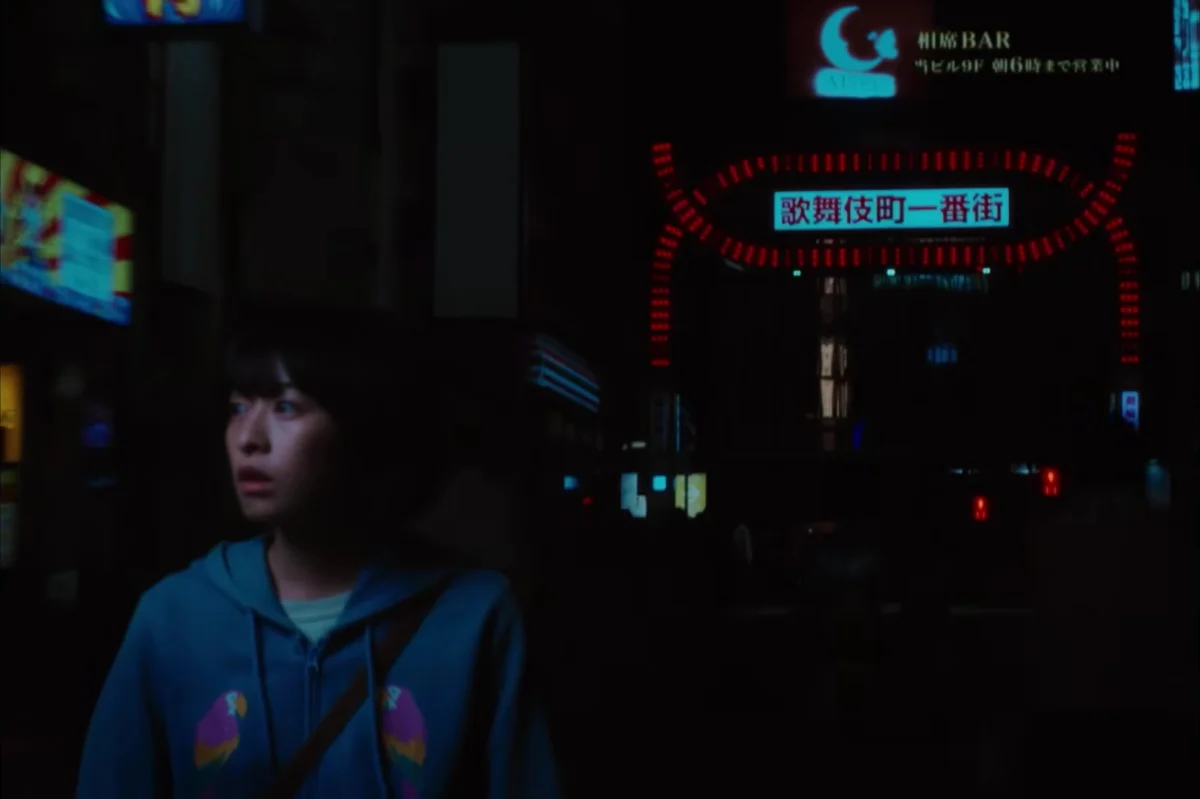
The cinematic landscape prepares for the premiere of "Burn," a poignant and visually striking film directed by Makoto Nagahisa, set to debut at the prestigious Toronto International Film Festival (TIFF) starting April 17th. This anticipated feature delves into the tumultuous journey of Ju-Ju, portrayed by the talented Nana Mori, known for her role in "Kokuho: The Man Who Became a God." The film offers a raw and compelling exploration of adolescent resilience and survival within the vibrant yet often perilous backdrop of Tokyo’s Kabukicho district, promising an experience that blends the complexities of youth with a highly stylized, surreal, and nightmarish visual aesthetic.
At its core, "Burn" chronicles Ju-Ju’s life as a runaway teen who seeks solace and belonging among a group of misfits in Kabukicho. This initial embrace offers her a semblance of family, a rare comfort in her otherwise chaotic existence. However, this newfound haven gradually transforms into a suffocating environment as loyalties within the group fray and desperation escalates. Ju-Ju is thus forced into a profound confrontation with her circumstances, prompting her to seek a path to reclaim control over her own life and destiny. The narrative, initially presented as a rebellious coming-of-age story, steadily descends into darker, more disorienting territory, mirroring Ju-Ju’s spiraling journey deeper into an abyss of uncertainty and struggle.
The Narrative Core: Ju-Ju’s Descent and Quest for Autonomy
"Burn" distinguishes itself by refusing a simplistic portrayal of youth. Instead, it meticulously crafts a narrative that navigates the intricate emotional landscape of adolescence, marked by both a desperate yearning for connection and an innate drive for self-preservation. Ju-Ju’s character embodies the archetypal runaway, a figure often overlooked or misunderstood in urban societies. Her initial relief upon finding acceptance within the Kabukicho group speaks to a universal human need for belonging, especially pronounced during the formative years of teenagehood when identity is still fluid and vulnerable. This initial period of perceived stability and familial warmth serves as a critical counterpoint to the subsequent unraveling of the group dynamic.
As the bonds within the makeshift family begin to erode, fueled by mounting desperation, the film explores the darker facets of human relationships under duress. The once-supportive environment morphs into a cage, highlighting the precariousness of external validation and the inherent risks of placing one’s emotional well-being entirely in the hands of others. Ju-Ju’s journey is not merely a physical one through the labyrinthine streets of Kabukicho but an internal odyssey, forcing her to confront the illusions of security and the harsh realities of self-reliance. This psychological depth is crucial to the film’s resonance, transforming a simple story of a runaway into a profound commentary on personal agency and the arduous process of self-discovery amidst adversity.
A Director’s Distinctive Vision: Surrealism Meets Social Commentary
Makoto Nagahisa’s directorial signature is palpable throughout "Burn," particularly in its ambitious blend of narrative realism with highly stylized and surreal imagery. Nagahisa, who garnered international attention with his award-winning short film "And So We Put Goldfish in the Pool." (2017), is known for his unconventional storytelling and a visual language that often blurs the lines between reality and dreamscape. This stylistic approach is not merely aesthetic; it serves as a powerful metaphor for Ju-Ju’s fractured psychological state and the disorienting nature of her experiences. The nightmarish sequences are anticipated to be a window into her internal turmoil, externalizing the anxieties, fears, and fragmented perceptions that define her reality.
Through a distinctly Japanese cultural lens, Nagahisa is expected to offer a nuanced portrayal of teenage life, avoiding sensationalism in favor of emotional authenticity, however distorted it may appear visually. His previous works have often explored themes of alienation, the search for meaning, and the pressures faced by young people in modern Japan, frequently employing a youthful, energetic, and sometimes melancholic gaze. "Burn" is anticipated to continue this trajectory, using its unique visual grammar to amplify the emotional stakes and provide a fresh perspective on familiar coming-of-age tropes. The film’s ability to transition from a seemingly rebellious narrative to a darker, more unsettling psychological drama is a testament to Nagahisa’s evolving craft and his commitment to pushing cinematic boundaries.
Kabukicho: A Haven’s Dual Nature in the Urban Labyrinth
The choice of Kabukicho as the primary setting for "Burn" is highly significant, lending the film an immediate layer of thematic complexity and authentic grit. Located in Shinjuku, Tokyo, Kabukicho is one of Japan’s most famous entertainment and red-light districts. It is a place of neon-lit vibrancy and ceaseless activity, attracting a diverse array of individuals from tourists and businessmen to hostesses, club workers, and, notably, a significant population of young people seeking work, excitement, or anonymity. For many, it represents a place of opportunity and freedom, a stark contrast to the often rigid social structures elsewhere in Japan. For others, particularly vulnerable youth, it can become a refuge, a place where traditional societal rules seem to bend or break, offering a sense of belonging to those on the fringes.
However, Kabukicho’s allure is often shadowed by its darker underbelly. The district is also associated with organized crime, exploitation, and the harsh realities faced by those struggling to survive in its competitive and often morally ambiguous economy. This dual nature—its promise of liberation alongside its potential for danger—perfectly mirrors the central conflict of "Burn." The "family" Ju-Ju finds among the misfits in Kabukicho is born out of this environment, offering protection and camaraderie, but also reflecting the inherent instability and desperation that permeate the district. The film is expected to leverage Kabukicho’s iconic visual landscape and its complex social dynamics to amplify Ju-Ju’s personal journey, making the setting an active participant in her struggle for self-reclamation rather than mere backdrop.
The Broader Landscape of Youth Alienation in Japan
"Burn" taps into a pervasive and often quietly discussed social issue in contemporary Japan: youth alienation and the challenges faced by runaway or marginalized adolescents. While Japan boasts a highly developed economy and strong social cohesion, underlying pressures can lead to significant stress for young people. Academic pressure, family issues, bullying, and a sense of not fitting into societal norms are frequently cited reasons for adolescents seeking to escape their home environments.
Sociological studies and government reports indicate a persistent number of runaway youth across Japan, many of whom find themselves vulnerable to exploitation, poverty, and psychological distress. These young individuals often gravitate towards urban centers like Tokyo, seeking anonymity and the possibility of a fresh start, only to encounter new forms of hardship. The film’s portrayal of Ju-Ju and her misfit group in Kabukicho is anticipated to offer a compelling, albeit dramatized, window into this reality. It is expected to highlight the often-unseen struggles of youth who operate outside conventional societal frameworks, underscoring their resilience in the face of immense adversity while also drawing attention to the systemic issues that contribute to their precarious situations. The film could spark broader conversations about social support systems, mental health resources for youth, and the societal pressures that can lead to such desperate circumstances.
Makoto Nagahisa: A Rising Voice in Contemporary Japanese Cinema
Makoto Nagahisa has rapidly established himself as a distinctive and provocative voice in contemporary Japanese cinema. His journey to feature film direction has been marked by critical acclaim for his innovative approach to storytelling and visual style. Prior to "Burn," Nagahisa first gained international recognition with his short film "And So We Put Goldfish in the Pool." (2017), which won the Grand Jury Prize at the Sundance Film Festival. This achievement immediately placed him on the global cinematic radar, highlighting his unique ability to capture the essence of youth culture with both sensitivity and a rebellious spirit.
His works frequently explore themes of adolescence, societal pressures, and the search for identity in modern Japan, often characterized by a blend of realism, surrealism, and a keen eye for the absurd. Nagahisa’s films are known for their vibrant aesthetics, unconventional narratives, and a willingness to confront uncomfortable truths about contemporary society. "Burn" represents a significant step in his career, transitioning from acclaimed short films to a full-length feature that promises to further solidify his reputation as a director unafraid to challenge conventions and provoke thought. Industry analysts are keenly watching "Burn" as a potential breakout moment for Nagahisa, affirming his position as a director capable of delivering both artistic vision and profound social commentary.
Nana Mori: Portraying Vulnerability and Resilience
The casting of Nana Mori as Ju-Ju is a pivotal element in "Burn"’s anticipated impact. Mori, a rapidly ascending talent in the Japanese entertainment industry, brings a compelling blend of vulnerability and nascent strength to her roles. Her prior work, notably her starring role in the popular 2020 NHK historical drama series "Kokuho: The Man Who Became a God" (『国宝』), has showcased her versatility and ability to embody complex characters. In "Kokuho," Mori demonstrated a remarkable capacity to convey deep emotional resonance, which is expected to be crucial for her portrayal of Ju-Ju’s challenging journey.
Mori’s filmography also includes voice acting roles in critically acclaimed animated films, such as Makoto Shinkai’s "Weathering With You" (2019), which further attests to her range and growing influence. Her selection for "Burn" suggests a deliberate choice by Nagahisa to cast an actress capable of navigating the film’s intense emotional landscape and delivering a nuanced performance that can carry the weight of the narrative. Observers anticipate that Mori’s portrayal of Ju-Ju will be a career-defining role, allowing her to delve into the raw complexities of a runaway teen grappling with betrayal, desperation, and the arduous path towards self-empowerment. Her ability to convey both the fragility and the burgeoning resilience of youth will be central to the audience’s connection with Ju-Ju’s story.
The Global Stage: "Burn"’s Premiere at TIFF
The selection of "Burn" for its world premiere at the Toronto International Film Festival on April 17th is a significant indicator of its potential international appeal and artistic merit. TIFF is one of the most prominent and respected film festivals globally, renowned for its diverse programming, its role as a launchpad for Oscar contenders, and its ability to attract a vast audience of industry professionals, critics, and cinephiles. Being featured at TIFF provides "Burn" with an invaluable platform, ensuring widespread media attention and facilitating potential international distribution deals.
The festival’s programmers are known for their meticulous selection process, often choosing films that are not only artistically innovative but also offer unique cultural perspectives and engage with pressing social issues. "Burn"’s blend of a compelling coming-of-age narrative, a distinctive visual style, and its exploration of youth vulnerability against the backdrop of Kabukicho aligns perfectly with TIFF’s reputation for showcasing challenging and thought-provoking cinema. The festival’s global audience is poised to engage with the film’s universal themes of belonging, betrayal, and self-discovery, presented through a uniquely Japanese lens.
TIFF’s Legacy of Showcasing International Talent
The Toronto International Film Festival has a long-standing tradition of championing international cinema, particularly films that offer fresh perspectives and introduce new voices to the global stage. Over the decades, TIFF has been instrumental in launching the careers of numerous international directors and actors, and in bringing a wide array of world cinema to North American audiences. Its non-competitive structure for most categories fosters an environment focused on discovery and appreciation, making it an ideal venue for films like "Burn" to find their footing without the immediate pressure of awards competition.
The festival’s programming reflects a commitment to diversity in storytelling, regularly featuring films from Asian cinema, which has consistently produced critically acclaimed and commercially successful works. Japanese cinema, in particular, has a strong presence at TIFF, with many of its celebrated directors and emerging talents having premiered their works there. For "Burn," this means being placed within a rich legacy of cinematic excellence, providing a robust platform for critical evaluation and audience engagement. Its premiere at TIFF from April 17th positions it for significant buzz, potentially paving the way for further festival appearances and broader theatrical releases.
From Concept to Screen: The Journey of "Burn"
While specific production timelines are not publicly detailed, the journey of a feature film from conception to its premiere at a major festival like TIFF is typically a multi-year endeavor. Following Makoto Nagahisa’s successes with short films, the development of "Burn" likely began with scriptwriting and securing funding, a process that can be particularly challenging for films with a distinctive artistic vision and potentially darker themes. Given Nagahisa’s previous works, it is reasonable to infer that the film’s production would have involved a rigorous pre-production phase focused on conceptualizing its unique visual style and narrative structure.
The casting of Nana Mori and the assembly of the wider production team would have followed, leading into principal photography, likely conducted across various locations in Tokyo, with a strong emphasis on capturing the authentic atmosphere of Kabukicho. Post-production, involving editing, sound design, and the creation of the film’s surreal visual effects, would have been crucial in shaping the final cinematic experience. The selection for TIFF signifies the culmination of this extensive process, indicating that the film has met the high standards of international festival curators, ready for its public debut starting April 17th.
Critical Acclaim and Industry Anticipation
Early industry buzz surrounding "Burn" suggests a film poised for significant critical attention. Makoto Nagahisa’s reputation for innovative storytelling and visual artistry, combined with Nana Mori’s growing acting prowess, has generated considerable anticipation within cinematic circles. Critics and film analysts often look to TIFF as a barometer for emerging talent and groundbreaking narratives, and "Burn"’s inclusion signals that it is considered a film of substantial artistic merit and cultural relevance.
Film festival programmers, known for their discerning taste, likely recognized "Burn"’s potent blend of psychological depth, social commentary, and unique aesthetic. The film’s exploration of youth vulnerability and resilience, universal themes seen through a specific Japanese lens, is expected to resonate with a global audience. Industry insiders will be closely watching the film’s reception at TIFF, as positive reviews and audience engagement could translate into significant distribution deals, festival awards, and a broader international release. The film is anticipated to be a conversation starter, challenging viewers to confront uncomfortable truths about society and the human condition.
"Burn" as a Reflection of Contemporary Japanese Society
Beyond its individual narrative, "Burn" holds the potential to serve as a powerful cinematic reflection of contemporary Japanese society, particularly concerning its youth. The film’s exploration of runaway teens, their search for belonging in unconventional communities, and the pressures that lead to their marginalization offers a critical lens through which to examine societal structures and their impact on vulnerable populations. While Japan is often perceived as a highly conformist society, the film suggests a counter-narrative of individuals who exist on the fringes, forming their own rules and finding their own definitions of family.
The film’s focus on Kabukicho further emphasizes this societal commentary, portraying it not just as a place of entertainment but as a microcosm of urban life where diverse social strata intersect. It highlights the often-stark contrast between Japan’s outward image of order and prosperity, and the underlying currents of alienation and struggle experienced by some of its youth. "Burn" is expected to contribute to a growing body of Japanese cinema that tackles difficult social issues head-on, inviting audiences both domestically and internationally to consider the complexities of modern Japanese identity and the challenges faced by its younger generations.
The Global Reach of Japanese Storytelling
The premiere of "Burn" at TIFF further underscores the enduring global appeal and influence of Japanese storytelling. From the cinematic masterpieces of Akira Kurosawa and Yasujiro Ozu to the anime artistry of Studio Ghibli and the contemporary works of directors like Hirokazu Kore-eda and Ryusuke Hamaguchi, Japanese cinema has consistently captivated international audiences with its unique aesthetics, profound narratives, and distinctive cultural perspectives. "Burn" is set to continue this rich tradition, offering a fresh, modern voice that speaks to both universal human experiences and specific cultural nuances.
The film’s exploration of themes such as identity, belonging, and the struggle for autonomy resonates across cultures, while its specific setting and stylistic choices provide a compelling insight into a particular facet of Japanese society. Its journey from Tokyo to Toronto represents the ongoing dialogue between Japanese filmmakers and the global cinematic community, reaffirming the power of film to transcend geographical and cultural boundaries. As "Burn" takes its place among the diverse offerings at TIFF from April 17th, it is poised to contribute another compelling chapter to the legacy of Japanese cinema on the world stage, inviting audiences into a raw, surreal, and ultimately unforgettable journey of self-discovery.