Narrative Architecture and Plot Development
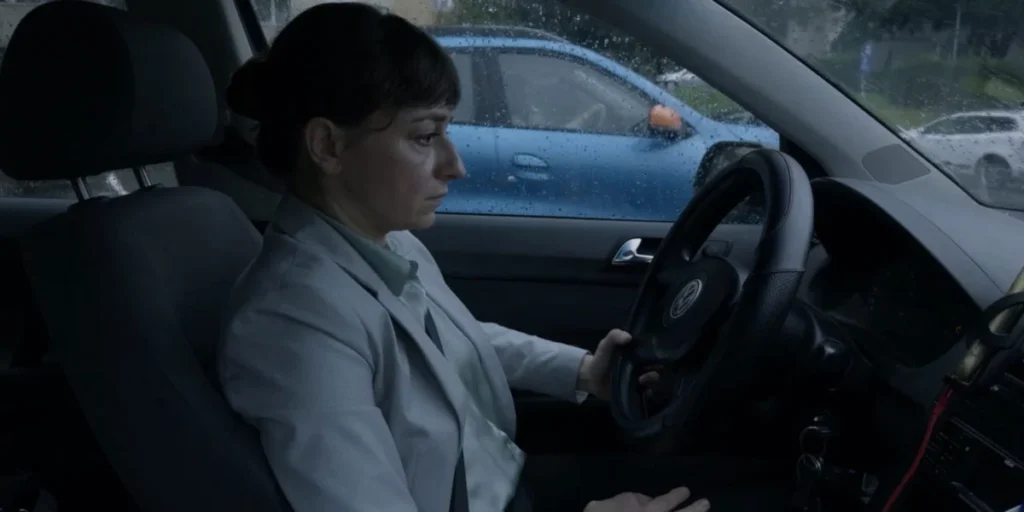
The series centers on Rachel, portrayed by Camila Morrone, a behavioral psychologist who prides herself on rationalism and the scientific understanding of human patterns. This professional background serves as a narrative foil to the events that unfold when she travels to a remote family cabin owned by her fiancé, Nicky, played by Adam DiMarco. The setting is established as an isolated environment, a classic gothic trope that isolates the protagonist from external assistance and heightens the sense of claustrophobia.
Upon her arrival, Rachel is immediately confronted by an atmosphere of mounting unease. The narrative is structured around a chronological countdown, with each episode representing a day in the week leading up to the couple’s wedding. This ticking-clock mechanism is punctuated by title cards that explicitly remind the audience of the show’s titular promise: that a catastrophic event is inevitable. As the days progress, Rachel’s relationship with Nicky is subjected to intense scrutiny, both from herself and from his eccentric family members. The series suggests that the horror is not merely external or supernatural, but deeply rooted in the interpersonal friction and the realization that she may not truly know the man she is about to marry.
Production Background and Creative Pedigree
The creative team behind the series brings a wealth of experience in the horror and thriller genres. Haley Z. Boston, the creator, previously gained recognition for her work on projects such as Guillermo del Toro’s Cabinet of Curiosities and Brand New Cherry Flavor, establishing a reputation for unconventional storytelling. The directorial lineup further reinforces the show’s stylistic ambitions. Lisa Brühlmann, known for her work on Killing Eve and Servant, brings a sharp eye for psychological tension, while Weronika Tofilska, who directed episodes of the acclaimed Baby Reindeer, contributes a sense of grounded, albeit disturbing, realism. Axelle Carolyn, a veteran of The Haunting of Bly Manor, rounds out the team with her expertise in atmospheric, gothic horror.
The involvement of such a diverse group of directors has resulted in a visual style that shifts between various cinematic languages. Observers have noted the show’s innovative use of perspective, incorporating point-of-view (POV) shots from unidentified entities and sequences that mimic found-footage aesthetics. These choices are designed to maintain a constant state of hyper-vigilance in the viewer, mirroring the protagonist’s own psychological unraveling.
Character Analysis and Performance Metrics
The success of the series relies heavily on the performance of Camila Morrone, who has seen a significant rise in her professional profile following her Emmy-nominated turn in Daisy Jones & The Six. In this role, Morrone is tasked with carrying the emotional weight of a character who is simultaneously a victim of her environment and a witness to her own psychological decline. Her portrayal of Rachel is characterized by a transition from controlled professionalism to frantic desperation, a trajectory that critics have noted as the show’s primary anchor.
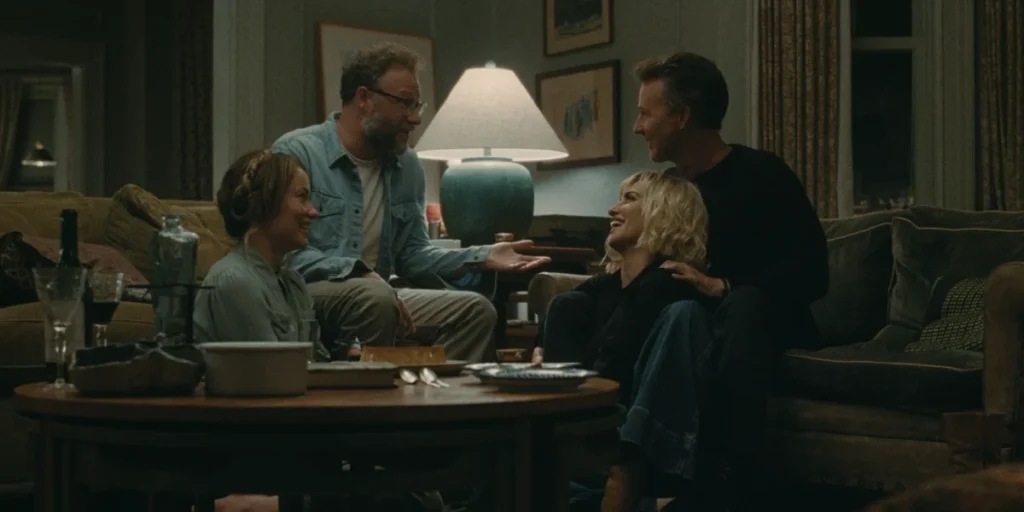
Contrasting Morrone’s grounded performance is Gus Birney as Portia, Nicky’s sister. Portia is presented as a "delightfully fake" character whose performative personality serves as both a source of dark comedy and a harbinger of the family’s deeper instability. A pivotal moment in the series occurs in the first episode, where Portia delivers a chilling monologue regarding a nightmare figure witnessed by her brother, Jules (Jeff Wilbusch), during their childhood. This sequence is cited by industry analysts as a masterclass in establishing tone, as it uses social awkwardness and family lore to create a sense of horror that is more effective than standard jump scares.
The supporting cast is further bolstered by veteran actress Jennifer Jason Leigh and Ted Levine, whose presence adds a layer of "prestige" gravity to the production. The ensemble is rounded out by Karla Crome and Sawyer Fraser, who contribute to the multifaceted portrayal of a family defined by secrets and a collective, perhaps inherited, psyche.
Chronological Breakdown of the Season
The series is designed to peak in its middle act, specifically during the fourth and fifth episodes. This segment of the season is widely considered the narrative and thematic climax, where the supernatural elements and the psychological drama converge most effectively. It is during these episodes that the primary mysteries regarding the family’s past and the nature of the "bad thing" are brought to the forefront.

- Days 1-3: Establishment of the setting and the introduction of the "outsider" dynamic. Rachel’s psychological expertise is challenged by the irrational behaviors of the family.
- Days 4-5: The revelation of core secrets. The pacing accelerates, and the visual horror becomes more pronounced. This period serves as the emotional peak for Rachel’s character arc.
- Days 6-7: The "lose of steam" phase identified by some viewers. Following the major reveals, the narrative shifts into a more methodical, almost inevitable progression toward the wedding day.
- The Finale: The culmination of the titular promise. While the ending has been described as straightforward and conventional, it fulfills the narrative requirements established by the show’s title, delivering a conclusion that emphasizes the inevitability of the protagonist’s dread.
Technical Execution and Visual Language
The technical aspects of the production have received praise for their ability to evoke a persistent sense of dread. The use of lighting is particularly notable, often employing high-contrast shadows and muted color palettes to reflect the moral and psychological ambiguity of the characters. The sound design also plays a critical role, utilizing "screeching" musical cues and unsettling ambient noise to punctuate the tension.
By integrating found-footage sequences and POV shots, the directors create a sense of an "unexpected presence" watching the characters. This technique serves a dual purpose: it provides a supernatural element for the audience to track and acts as a metaphor for the constant surveillance Rachel feels while being "evaluated" by her future in-laws. This stylistic experimentation distinguishes the series from more traditional, linear horror shows, though some critics have argued that the execution sometimes takes precedence over the narrative momentum.
Critical Reception and Industry Analysis
Early data and critical reviews suggest that the series occupies a middle ground in the Netflix horror catalog. With a score of 6/10 from several leading outlets, the consensus indicates that while the show is "addictive" and visually striking, it suffers from pacing issues in its second half. The transition from the high-stakes reveals of the middle episodes to the "glacial" pace of the finale has been a point of contention among viewers and critics alike.
From an industry perspective, the series is viewed as a vehicle for Camila Morrone to solidify her status as a leading actress capable of anchoring a major limited series. Her performance is already being discussed in the context of Emmy prospects, specifically in the category of Outstanding Lead Actress in a Limited or Anthology Series or Movie.
The series also reflects a broader trend in the horror genre toward "familial horror," where the primary source of terror is the realization that the people closest to us—or those we are about to join in a legal union—are essentially strangers with dark, underlying pathologies. This theme has been successfully explored in films like Ready or Not and Hereditary, and the series attempts to translate this into a multi-hour serialized format.
Broader Impact and Implications
The release of this series underscores Netflix’s continued investment in the horror genre as a cornerstone of its content strategy. By hiring high-profile creators like Haley Z. Boston and a cast led by Morrone and Leigh, the platform is aiming to attract both genre fans and viewers who seek character-driven drama.
However, the "conventional" nature of the series’ conclusion suggests a potential challenge for streaming horror: the difficulty of maintaining a high level of subversion over the course of several hours. While the show succeeds in creating an "immaculate" atmosphere and features standout performances, its reliance on a predictable finale may limit its long-term memorability compared to more groundbreaking entries in the genre.
In conclusion, the series stands as a technically proficient and well-acted exploration of psychological and supernatural dread. It highlights the strengths of its lead performer and the creative vision of its directorial team, even as it struggles with the structural demands of the limited series format. For audiences, it offers a compelling, if occasionally uneven, journey into the heart of a "very bad" situation, proving that sometimes the most terrifying thing about a wedding is not the supernatural forces at play, but the family you are marrying into.