Thierry Frémaux, the esteemed 65-year-old French cultural arbiter, embodies a rare duality in the global film landscape. As the General Delegate of the Cannes Film Festival, he orchestrates one of the world’s most prestigious cinematic showcases, an event that will soon unveil its 79th edition, dictating the programming and operational intricacies that shape international film discourse. Concurrently, Frémaux serves as the director of the Lumière Institute and its accompanying Lumière Festival in Lyon, institutions dedicated to the meticulous study and exhibition of film history. This unique convergence of responsibilities grants him an unparalleled vantage point, allowing him to actively shape both the cutting edge of contemporary cinema and meticulously preserve its foundational heritage. His commitment extends beyond administration and curation, occasionally manifesting in the role of filmmaker himself. His latest directorial effort, Lumière, Le Cinema!, serves as an essayistic exploration of the legendary Lumière brothers, Auguste and Louis, whose invention of the Cinématographe over 130 years ago revolutionized moving pictures and paved the way for the communal big-screen experience. This film, a spiritual successor to a similar 2016 project, meticulously compiles approximately 100 of the short films produced by the siblings during the nascent era of the medium, interwoven with Frémaux’s insightful voiceover commentary on their enduring significance. Recently, Frémaux engaged in a remote discussion, offering insights into the broader implications of his latest film and its intricate connections to his extensive career.
The Architect of Film’s Past and Future: Thierry Frémaux’s Dual Legacy
Frémaux’s role at the Cannes Film Festival is monumental. As General Delegate, he is responsible for the artistic selection and overall direction of an event that draws tens of thousands of industry professionals, journalists, and film enthusiasts annually. The festival, founded in 1946, has historically served as a launchpad for countless cinematic masterpieces and a crucial marketplace for global film distribution. His decisions not only influence critical reception and box office performance but also often set trends for the entire film industry. The sheer volume of submissions, typically numbering in the thousands each year, requires an exhaustive and discerning selection process, highlighting Frémaux’s profound understanding of cinematic artistry and cultural relevance.
In parallel, his stewardship of the Lumière Institute and Festival in Lyon underscores his deep reverence for film history. Lyon, the birthplace of cinema, holds a sacred place in the medium’s narrative. The Lumière Institute, housed in the family’s former factory, is a living museum and archive, dedicated to preserving and sharing the pioneering work of the Lumière brothers. The Lumière Festival, launched in 2009, has rapidly become one of the most important classic film festivals in the world, celebrating heritage cinema with retrospectives, restored prints, and masterclasses. It is here that Frémaux champions the meticulous art of restoration and the enduring power of the cinematic legacy, ensuring that foundational works remain accessible and appreciated by new generations. His directorship of both Cannes, a beacon of contemporary cinema, and the Lumière institutions, guardians of its genesis, positions him as a unique figure bridging the historical and the avant-garde.
Lumière, Le Cinema!: A Homage to Genesis
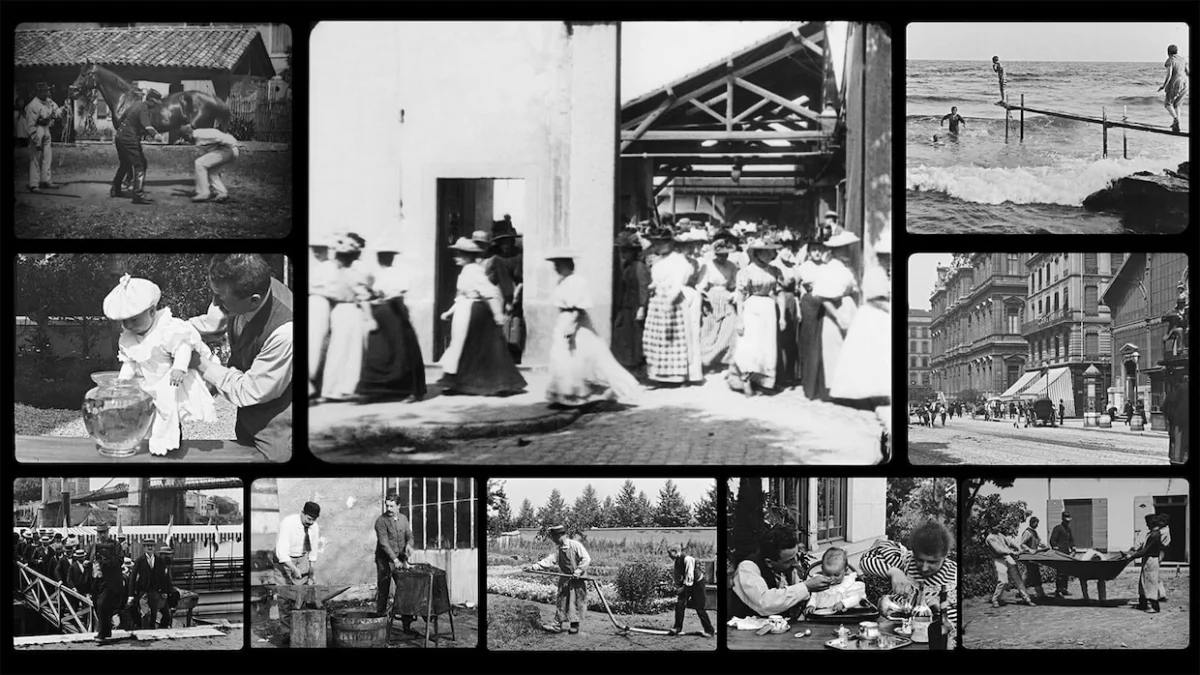
Lumière, Le Cinema! is more than just a historical documentary; it is a meditation on the very essence of cinema. The film serves as an "essayistic" exploration, utilizing the raw, unadulterated footage captured by Auguste and Louis Lumière between 1895 and 1905. These early films, often referred to as "actualities," captured everyday life: workers leaving a factory, a baby’s meal, a gardener being pranked, and trains arriving at stations. Frémaux’s narrative voiceover provides context, analytical commentary, and philosophical musings, elevating these simple moving images into profound cultural artifacts. The selection of approximately 100 short films from the Lumière’s extensive catalogue of over 1,400 productions is a deliberate curatorial choice, designed to highlight the breadth of their vision and their immediate grasp of cinema’s descriptive potential.
The Lumière brothers’ invention of the Cinématographe in 1895 was a pivotal moment in media history. Unlike Thomas Edison’s Kinetoscope, which allowed only individual viewing through a peephole, the Cinématographe was a portable device capable of both shooting and projecting films onto a large screen for a communal audience. This technological leap transformed moving images from a novelty into a shared social experience. Their first public screening on December 28, 1895, at the Grand Café in Paris, featuring films like Sortie de l’usine Lumière à Lyon (Workers Leaving the Lumière Factory), is widely considered the official birth of cinema as a public spectacle. The immediacy and realism of their short films, such as the famous L’Arroseur Arrosé (The Sprinkler Sprinkled), often cited as the first true fiction film, demonstrated the medium’s capacity for both documentation and storytelling, albeit in its most rudimentary form. Frémaux’s film underscores that the Lumières, far from being mere technical innovators, were also keen observers of humanity, capturing moments that resonate with universal themes of daily life, humor, and progress.
Bridging Eras: Historical Preservation Meets Modern Programming
Frémaux articulates a profound connection between understanding cinema’s origins and evaluating its contemporary manifestations. He posits that his work, whether at the Lumière Institute or Cannes, stems from a fundamental appreciation for film as an art form. His approach to programming, he explains, is less about personal preference and more about objective assessment: "It’s not about what I like or don’t like, is it good or bad, but what is it—and is it important or not for us to show this film?" This analytical rigor, he suggests, is rooted in the study of film history, where works like Robert Wiene’s The Cabinet of Dr. Caligari (1920) are judged not by subjective taste but by their historical and artistic significance within the silent German Expressionist movement. This dual perspective allows him to navigate the vast landscape of cinema, from the nascent frames of the 19th century to the complex narratives of the 21st, with a consistent methodology.
From a 21st-century perspective, the Lumière brothers’ legacy is re-evaluated by Frémaux. While they are not traditionally seen as "storytellers" in the narrative sense that Georges Méliès would later champion, Frémaux argues that their work contains overlooked narrative elements, citing L’Arroseur Arrosé as an early example of cinematic fiction. He emphasizes the "simplicity" of Lumière’s cinema, drawing a parallel to Pablo Picasso’s aspiration to "draw like a child." This simplicity, Frémaux suggests, is a powerful and often missing quality in modern filmmaking. "The story of cinema is not the story of images. It’s the story of shots. Good, beautiful, efficient shots. That is the language of cinema. Lumière got that right away at the beginning." This insight highlights a fundamental principle: the power of cinema resides in its basic units—the individual shot—and the Lumières’ mastery of this fundamental element laid the groundwork for all subsequent cinematic language. Their films, though brief, were meticulously composed, framed, and executed, demonstrating an intuitive understanding of visual narrative and temporal manipulation.

The Enduring Allure of the Big Screen: Edison’s Kinetoscope vs. Lumière’s Cinématographe
The historical context of film exhibition is crucial to understanding the Lumière legacy. Frémaux draws a sharp distinction between Thomas Edison’s vision for individual viewing via the Kinetoscope and the Lumière brothers’ commitment to communal projection. Edison’s model, requiring a coin for each private viewing, reflected a transactional, individualistic approach. The Lumières, by contrast, envisioned a shared experience, gathering audiences in a single room to witness the moving image together. Edison reportedly doubted the long-term viability of this model, believing audiences would not return once they had seen the initial offerings. Louis Lumière, however, confidently asserted, "Yes, they will be back, because we will make more movies." This prescient understanding of content creation and audience demand led the Lumières to produce an astonishing 2,000 films, thereby establishing the foundations of a sustainable film industry.
Frémaux contends that this desire for collective viewing remains as potent today as it was in 1895. "The desire of people then is our desire now: to gather together and watch cinema on the big screen." This assertion, however, faces scrutiny in an era dominated by smaller screens. The centennial of cinema, celebrated three decades ago, coincided with the rise of new challenges to the traditional theatrical experience. Cinema, Frémaux acknowledges, has repeatedly confronted existential threats, from the advent of television and video to the internet, DVD, and now, streaming platforms. Yet, he remains steadfast in his belief in cinema’s resilience. "The question Jean-Luc Godard was asking in the ’80s about the death of cinema is not a problem now. Cinema won’t die. Cinema is everywhere. Even an Instagram post has the language of cinema in it." This broader definition of "cinema" as a language of moving images suggests an evolution rather than an extinction, though it simultaneously highlights the challenges to its traditional exhibition model.
Navigating Contemporary Currents: Streaming, AI, and the Future of the Art Form
While cinema as a language may be ubiquitous, Frémaux is quick to distinguish this from the struggles faced by the cinema industry. "The cinema industry is something we have to protect," he emphasizes, citing figures like Sony’s Tom Rothman and director Sean Baker, who have vocally championed theatrical exhibition. The emergence of platforms like Netflix, with their subscription-based, on-demand, individual viewing model, represents, in Frémaux’s provocative analogy, "the revenge of Thomas Edison against Lumière." This reflects a fundamental tension between the communal, curated experience of the movie theater and the private, personalized consumption enabled by streaming services. Even the proliferation of short-form video content, such as "cat videos" or TikTok clips, signifies a fragmentation of the moving image experience, challenging the very "legacy of Lumière" that prioritized shared public spectacle.
Frémaux also ponders the generational shift in cinematic appreciation. He notes that many contemporary filmmakers, unlike their predecessors who experienced their "first shock of cinema" on the big screen, grew up watching films on television or smaller devices. This might suggest a diminished historical awareness or a different aesthetic sensibility. However, Frémaux remains optimistic, observing that the anticipation of a child for a Saturday movie outing still holds immense appeal. This belief is bolstered by the unique cultural context of France, where robust government support for the arts, including cinema, fosters a strong cinematic tradition and infrastructure. French cultural policy often includes subsidies for film production, distribution, and exhibition, as well as a rich network of arthouse cinemas and film education initiatives. This institutional backing, Frémaux argues, cultivates a national appreciation for cinema that acts as a bulwark against encroaching digital trends.
On the emerging threat of Artificial Intelligence, Frémaux offers a measured yet confident perspective. While AI can certainly aid in creative processes, he asserts that it cannot replicate genuine artistic genius. "You can write with a computer, you can write with whatever you want. But if you want to be James Joyce, Faulkner, Hemingway, or Marcel Proust, you have to have the brain for that. Nothing will replace that." He reiterates that cinema, at its core, remains an intensely human endeavor: "One morning, an artist gets up, calls their producer with an idea. A shot to start with. And then you have a film." This reaffirmation of human creativity as the irreplaceable engine of cinema provides a hopeful counter-narrative to anxieties about technological displacement.
The Cannes Conundrum: A Festival in Flux
The operational dynamics of the Cannes Film Festival, particularly its last-minute additions, also reveal Frémaux’s adaptive leadership style. Unlike many festivals that lock their lineups months in advance, Cannes often announces additions closer to its opening. This flexibility, Frémaux explains, is a modern necessity. He recalls a time when directors like Clint Eastwood would present unfinished films, like Mystic River, in January, expecting a confirmed slot for a May festival debut. Today, the technological advancements in post-production allow filmmakers to make refinements right up to the week before their premiere. This accelerated production timeline demands a more agile selection process from the festival, reflecting the ever-evolving pace of the film industry. The constant negotiation between artistic readiness and festival deadlines is a testament to the dynamic environment in which Cannes operates.
Conclusion: An Optimistic Outlook for Cinema’s Next Chapter
Thierry Frémaux’s unique position, spanning the historical preservation of the Lumière legacy and the contemporary curation of Cannes, offers a profound and optimistic vision for the future of cinema. He acknowledges the significant challenges posed by shifting consumption habits and technological advancements, from the "revenge of Edison" in streaming platforms to the potential impact of AI. However, his enduring faith rests on two pillars: the inherent human desire for shared, big-screen experiences and the inexhaustible wellspring of artistic creativity. France’s robust cultural support for cinema serves as a model, demonstrating that collective commitment can safeguard the art form. Frémaux’s confidence that "whenever cinema has faced a crisis, we have always said that it will be saved by the artists" underscores his belief that human ingenuity, much like the Lumière brothers’ initial spark, will continue to innovate and captivate, ensuring that cinema, in its myriad forms, will not only survive but thrive. Lumière, Le Cinema! is not merely a historical retrospective but a timely call to appreciate the foundational principles of cinema, reminding us that its future, like its past, will always be shaped by those who dare to capture and project new visions for the world.