The Cannes Film Festival’s Marché du Film is meticulously preparing for its 2026 edition, scheduled to unfold from May 12 to 20, with a suite of groundbreaking innovations and ambitious offerings. These initiatives are strategically designed to unequivocally reaffirm the Marché du Film’s esteemed position as "the premier hub where creativity, technology, and the film industry converge," according to official statements released by the organizers on Thursday. Among the most anticipated additions to this year’s comprehensive program are the market’s inaugural Creator Economy Summit and what the Marché proudly describes as "the largest VP stage ever presented at a film market." Complementing these new ventures are the return of the highly acclaimed Immersive Competition and Market, now significantly expanded, and the second iteration of the insightful AI for Talent Summit. Furthermore, the market is set to enhance its digital accessibility and networking capabilities through a revamped online experience powered by Cinando, its proprietary industry database.
The Enduring Legacy and Evolving Vision of the Marché du Film
For decades, the Marché du Film has stood as the commercial cornerstone of the Cannes Film Festival, serving as an indispensable global marketplace where film rights are bought and sold, international co-productions are forged, and emerging talent secures vital funding and distribution. Established in 1959, the market has grown exponentially from its humble beginnings, paralleling the growth of the international film industry itself. It consistently draws tens of thousands of industry professionals annually, including producers, distributors, sales agents, financiers, festival programmers, and policymakers, facilitating billions of dollars in deals and fostering countless collaborations. The Marché’s historical significance lies in its capacity to act as a barometer for the global film economy and a launchpad for cinematic endeavors that resonate worldwide.
However, the contemporary media landscape is characterized by relentless technological disruption and shifting consumption patterns. In response, the Marché du Film has strategically evolved, moving beyond its traditional role as merely a transactional hub to become a proactive incubator for future trends and a forum for critical industry dialogue. This strategic pivot is encapsulated by Marché du Film executive director Guillaume Esmiol’s overarching philosophy: "We advocate innovation that serves both artistic creativity and the growth of the industry as a whole. At the Marché, we are dedicated to supporting and driving innovation, from technological advances that have continuously reshaped how films are conceived, produced, and distributed, to a broader mindset that reimagines business models, partnerships, and relationships." This ethos underpins the ambitious program for 2026, positioning Cannes not just as a showcase for cinematic art but as a vanguard for its future.
Chronology of Innovation: A Timeline of Progress
The Marché du Film has consistently demonstrated a forward-thinking approach, gradually integrating technology-focused programs into its core offerings. The establishment of "Cannes Next" several years ago marked a significant commitment to exploring the intersection of technology and cinema. The 2026 edition represents a culmination of these efforts, building on previous successes and introducing entirely new platforms:
- 2020: The launch of the Marché du Film Online platform, necessitated by global events, proved the viability and importance of digital access, setting the stage for hybrid market models.
- 2023: The debut of the "Village Innovation" and early virtual production demonstrations, alongside initial explorations into AI’s potential for the industry.
- 2024: The first AI for Talent Summit was held, acknowledging the growing impact of artificial intelligence on creative processes and business models. The Immersive Market also began to gain traction.
- 2026 (May 12-20): The full realization of these initiatives, with the introduction of the Creator Economy Summit, the unprecedented XL Virtual Production Demo Stage, the expanded Immersive Market and Competition, and an enhanced, two-day AI for Talent Summit. The full migration of the online platform to "Marché du Film by Cinando" also marks a significant digital leap.
These developments illustrate a clear trajectory: the Marché du Film is not merely reacting to technological change but actively shaping the discourse around its integration into the global film ecosystem.
The Creator Economy Summit: Bridging Digital Influence and Cinematic Storytelling
One of the most anticipated new features of the 2026 Marché du Film is the launch of the Creator Economy Summit. This pioneering event is designed to explore "opportunities at the intersection of traditional cinema and the ‘creator economy’," as outlined by the organizers. The creator economy, valued at over $100 billion globally and projected to grow substantially, encompasses millions of independent content creators, influencers, and digital artists who leverage platforms like YouTube, TikTok, Instagram, and Patreon to build direct relationships with their audiences.
As these digital content creators increasingly expand beyond short-form content into long-form storytelling, podcasts, and even preliminary film production, the traditional film industry is recognizing the immense potential for collaboration. The summit will present a comprehensive overview of how these two worlds can converge—from adapting existing digital intellectual property (IP) into cinematic projects and scouting emerging talent from online communities, to engaging highly loyal digital audiences to drive theatrical attendance and exploring innovative marketing strategies that leverage creator influence.
Industry observers suggest that this summit is a timely and crucial development. "The lines between traditional and digital media are blurring rapidly," notes one analyst specializing in media trends. "Creators bring not just fresh perspectives and unique voices, but often pre-built, highly engaged fanbases. For an industry constantly seeking new audiences and talent, ignoring the creator economy would be a significant oversight." The implications are far-reaching: new financing models could emerge, where fan funding or brand partnerships facilitated by creators play a more prominent role. Moreover, the summit could foster a new generation of filmmakers whose understanding of direct-to-audience engagement and viral content creation could revolutionize film marketing and distribution. The Marché aims to be the catalyst for these vital conversations, facilitating networking and deal-making between established film entities and the burgeoning digital creative class.
Village Innovation Returns with XL Virtual Production Demo Stage: Redefining Filmmaking Frontiers
The Village Innovation, a dedicated hub for Cannes Next—the Marché du Film’s innovation-focused program—returns to the Pantiero side of the Village International. Building on last year’s successful debut, this year’s iteration promises an even more immersive experience, highlighted by hands-on virtual production (VP) demonstrations on what organizers have vowed is "the largest virtual production stage ever presented at a film market."
Virtual production, a revolutionary filmmaking technique, integrates physical sets with real-time computer graphics displayed on massive LED screens. This allows filmmakers to shoot actors and practical elements within a digital environment that responds dynamically to camera movements, effectively eliminating the need for traditional green screens and extensive post-production compositing. The technology has been famously employed in blockbuster series like The Mandalorian and various Hollywood productions, demonstrating its capacity to deliver stunning visual effects with unprecedented efficiency.
The sheer scale of the XL virtual production stage at Cannes is significant. It signals a move towards democratizing access to this cutting-edge technology, allowing filmmakers, producers, and technicians to experience its capabilities firsthand. This direct engagement is crucial for widespread adoption. Benefits of VP include enhanced creative control for directors and cinematographers, allowing them to visualize final shots on set; significant cost savings in location shooting and post-production; and even environmental advantages by reducing travel and material waste. "The ability to experiment with such advanced technology in a hands-on environment is invaluable," remarked a veteran producer contemplating the shift. "It’s not just about seeing a demo; it’s about understanding how this can transform our workflows and creative possibilities, especially for independent productions that traditionally face budget constraints." The Marché’s investment in this massive stage underscores its commitment to fostering technological literacy and practical application within the global film community.

AI for Talent Summit Year 2: Navigating the Ethical and Practical Landscape of Artificial Intelligence
The AI for Talent Summit returns for its second, "enhanced edition," expanding to two mornings, Friday, May 15, and Saturday, May 16. This invitation-only event is exclusively for top executives from the film and tech sectors, designed to foster a high-level dialogue between leading technology companies and creative talent. The summit promises to delve into "the latest real-world applications of AI in creative and business processes," reflecting the escalating prominence and complexity of artificial intelligence in the industry.
This year’s edition will concentrate on three critical themes: integrating AI into production workflows, the ethical and responsible use of AI, and education. The integration of AI tools promises to revolutionize various stages of filmmaking, from pre-production (script analysis, casting suggestions, concept art generation) to production (virtual assistants, smart camera systems) and post-production (automated editing, visual effects enhancement, sound design). Industry data indicates a rapid increase in AI-driven solutions for media production, with significant investments pouring into AI startups focused on creative applications.
However, the rapid advancement of AI also brings forth profound ethical considerations. Discussions at the summit will undoubtedly address critical issues such as intellectual property rights for AI-generated content, fair compensation for human artists whose work informs AI models, bias in algorithms, and the potential impact on employment within the creative industries. "The conversation around AI is no longer hypothetical; it’s about practical implementation and responsible stewardship," stated a representative from a leading tech firm expected to attend. "Cannes provides a neutral and prestigious ground for these essential discussions, ensuring that technological progress aligns with artistic integrity and human values." The focus on education underscores the need for industry professionals to adapt and acquire new skills, ensuring that AI serves as an augmentative tool rather than a replacement for human creativity.
Immersive Market Expansion and Competition: The Next Frontier of Shared Experiences
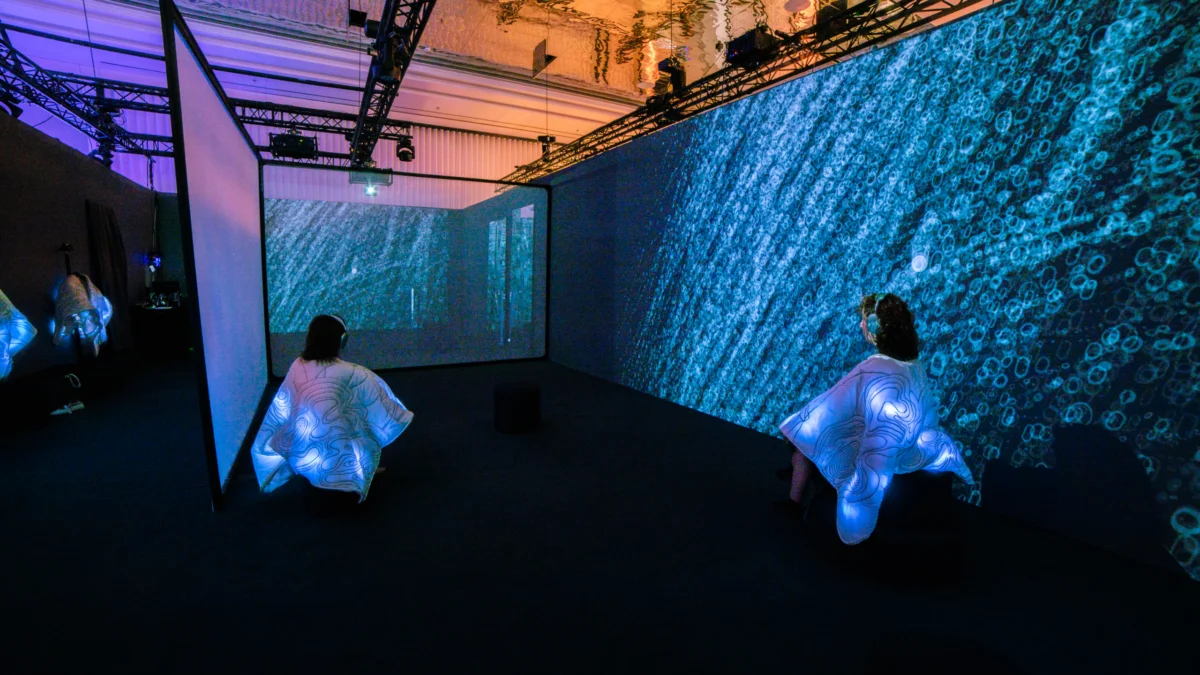
The Marché du Film’s immersive offering is set for a significant expansion, extending its presence to the prestigious Carlton Hotel and introducing a new, dedicated demo space. Crucially, the Festival de Cannes’ Immersive Competition takes a groundbreaking turn this year, "introducing the first competition of its kind at a major international festival, designed specifically for shared audience experiences, in a newly reconfigured space able to host 80 to 225 participants simultaneously."
This focus on shared immersive experiences marks a pivotal shift. While virtual reality (VR) and augmented reality (AR) have often been perceived as solitary experiences, the industry is increasingly exploring communal engagement. This includes large-scale interactive installations, location-based VR attractions, and multi-user AR environments that foster collective storytelling and interaction. The Marché’s decision to host a competition specifically for these shared experiences reflects a broader trend in entertainment, where audiences seek more interactive and communal forms of engagement beyond traditional passive viewing.
Running alongside the 11-day Immersive Competition, the Market aims to be "the most efficient platform for location-based immersive distribution." This will be achieved through high-impact pitching sessions, carefully curated networking events, and concrete business opportunities for creators and distributors of immersive content. The global immersive technology market is projected to reach hundreds of billions of dollars in the coming years, driven by advancements in hardware, content creation, and consumer demand for experiential entertainment. By fostering a dedicated marketplace, Cannes positions itself at the forefront of this burgeoning sector, facilitating deals for installations, interactive films, and other forms of experiential media that can be deployed in museums, theme parks, and dedicated entertainment venues worldwide. "The move to shared immersive experiences is a game-changer," commented an expert in experiential design. "It leverages the power of collective presence, something that cinema has always excelled at, and applies it to new technological formats."
An Updated Online Platform: Marché du Film by Cinando
In recognition of the enduring need for robust digital infrastructure and year-round connectivity, the industry database and networking platform Cinando, initially created by the Marché du Film, underwent a comprehensive relaunch earlier this year with new tools and enhanced features. The Marché du Film Online platform, which was established in 2020 to cater to remote participants, will now fully migrate to Cinando’s rebuilt system.
Operating as "Marché du Film by Cinando," the evolved platform is designed to unify the entire market experience. It will seamlessly integrate online screenings, live and catch-up conference videos, and sophisticated networking tools within a single, cohesive "market environment." This integration streamlines access for both physical attendees and remote participants, ensuring that the benefits of the Marché extend far beyond the nine days in Cannes.
This digital transformation underscores the Marché’s commitment to accessibility and efficiency. It allows industry professionals to continue their market activities, follow up on leads, and discover new content long after the physical event concludes. For smaller production companies or those unable to travel, it provides an invaluable gateway to the global film market, democratizing access to deals and networking opportunities. Furthermore, the enhanced data analytics capabilities of the unified platform could provide valuable insights into market trends, buyer behavior, and content demand, further refining the Marché’s offerings in subsequent years.
Broader Impact and Implications for the Global Film Industry
The 2026 Marché du Film’s expansive program of innovations carries significant implications for the global film industry. By proactively embracing the Creator Economy, Virtual Production, Artificial Intelligence, and Immersive Experiences, Cannes is not merely adapting to change but actively driving it. These initiatives collectively position the Marché du Film as a crucial thought leader and practical incubator for the future of cinematic storytelling and its associated business models.
The convergence of these technologies and new content paradigms suggests a future where film production is more agile, distribution is more diversified, and audience engagement is more interactive. It paves the way for new forms of financing, fosters cross-pollination between traditionally separate creative sectors, and encourages a global talent pool to innovate. The Marché’s role as a nexus for these discussions and transactions will undoubtedly influence investment patterns, curriculum development in film schools, and the strategic planning of major studios and independent production houses alike.
Ultimately, the 2026 Marché du Film is more than just a marketplace; it is a declaration of intent. It signifies a profound commitment to supporting and advancing the art and business of cinema in an era of unprecedented technological evolution. By fostering a dynamic environment where creativity, technology, and industry expertise converge, the Marché du Film aims to ensure that the magic of cinema continues to captivate audiences worldwide, reimagined and revitalized for the 21st century.