Narrative Overview and Character Dynamics
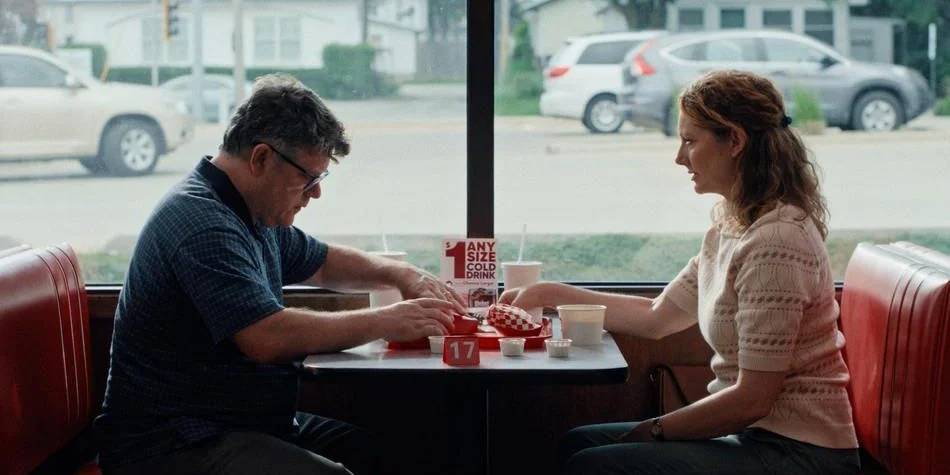
The plot centers on Jessica Lipki, portrayed by Judy Greer, a struggling divorce attorney residing in Wisconsin. The character is established as being in a state of professional and personal ennui, burdened by a roster of difficult clients and the recent departure of her daughter for college in Pennsylvania. The financial strain of tuition and the emotional vacuum of an "empty nest" provide the psychological motivation for Lipki’s subsequent actions. When she discovers a severed finger in her meal at "Blake Junior’s," a beloved regional fast-food chain, she opts against standard legal recourse. Instead, she identifies a strategic opportunity to secure $100,000 through a private settlement, contingent upon the silence of herself and her husband, Ron.
Sean Astin plays Ron Lipki, Jessica’s husband, who is depicted as a "blissfully ignorant" and morally upright foil to Jessica’s burgeoning cynicism. The dynamic between the couple serves as the film’s emotional core. While Jessica views the incident as a "get-out-of-debt-free" card, Ron’s primary concern remains his social connection to the restaurant chain. His refusal to sign a non-disparagement agreement—which would ban him from eating at the establishment—eventually leads to the settlement being inflated from an initial $10,000 offer to $100,000. This friction between Jessica’s pragmatic desperation and Ron’s simple-minded loyalty highlights the film’s thematic interest in the varying ways individuals value their integrity.
The Corporate Response and Investigation
The antagonist force is led by John Goodman, who portrays "the" Blake Junior, the plutocratic founder of the eponymous food empire. The character is presented as a man who takes the sanctity of his brand personally, viewing the "chili finger" incident not just as a legal liability but as an affront to his legacy. Rather than allowing the settlement to conclude the matter, he recruits an old acquaintance, Dave (Bryan Cranston), an ex-Marine with a background in unconventional investigation.
Cranston’s character, Dave, introduces a shift in tone toward the "Coen Brothers-esque" territory mentioned by critics. Sporting prominent mutton chops and utilizing aggressive investigative tactics, Dave begins a clandestine surveillance operation of the Lipki household. The involvement of a private investigator transforms the narrative from a simple fraud story into a cat-and-mouse game involving corporate espionage. Madeline Wise appears as Blake Junior II, the corporate representative who initially handles the settlement, representing the bureaucratic and clinical side of the empire that contrasts with the founder’s more visceral, ego-driven reaction.
Historical Context and Real-World Inspiration
While Chili Finger is a fictionalized account, it draws significant inspiration from the 2005 "Wendy’s chili finger" case, which remains one of the most famous instances of food-related litigation fraud in United States history. In that real-world event, Anna Ayala claimed to have found a finger in a bowl of chili at a San Jose, California, franchise. The incident caused an estimated $21 million in lost sales for the corporation as public trust plummeted. Subsequent police investigations revealed that the finger had been obtained by Ayala’s husband from a co-worker who had lost it in an industrial accident. Ayala was eventually sentenced to nine years in prison for grand theft and attempted grand theft.
The film mirrors several aspects of this chronology but transplants the setting to the Midwest and adjusts the stakes. The "human idiocy" portrayed in the film reflects the actual logistical hurdles faced by investigators in the 2005 case, such as the difficulty of tracing a biological specimen through a complex supply chain. By using this historical backdrop, Benda and Helstad ground their "live-action cartoon" in a reality that audiences recognize, even as the film’s plot spirals into hyperbole.
Production Design and Stylistic Choices
The film’s opening sequence is a critical component of its world-building, utilizing a beer bottling factory setting to establish the origin of the severed finger. In a sequence described as a "fantastic bit of misdirection," a factory worker (Paul Stanko) loses a finger while attempting to retrieve a vape pen from the machinery. This scene is underscored by an "odd yodeling-based score," which sets a whimsical yet grotesque tone. The editing and cinematography emphasize the "cartoon violence" of the moment, distancing the audience from the horror of the injury and reframing it as a catalyst for comedy.
The directorial style of Benda and Helstad leans heavily into caricature. While Greer and Astin are noted for bringing "nuanced humanity" to their roles, the supporting cast—including Bryan Cranston and John Goodman—operates in a more heightened, "over-the-top" register. This tonal duality is a deliberate choice intended to reflect the absurdity of the situation. The film’s transition from a grounded domestic drama to a chaotic thriller in its third act has been a point of analysis for industry observers, with some noting that the escalation mirrors the "spiraling out of control" nature of real-life scandals.
Chronology of Key Events in the Film
- The Factory Accident: A worker at a Wisconsin bottling plant loses his finger in a freak machinery accident involving a misplaced vape pen.
- The Discovery: Jessica Lipki finds the digit in her chili at a Blake Junior’s location.
- The Shakedown: Jessica, leveraging her legal background, initiates a blackmail scheme rather than a public lawsuit, seeking $100,000 for her family’s silence.
- The Settlement Negotiation: A meeting with Blake Junior II results in a settlement, but Ron Lipki’s refusal to stop eating at the chain complicates the legalities.
- The Investigation Begins: Blake Junior, suspecting foul play, hires Dave to uncover the truth behind the finger’s origin.
- The Escalation: Dave’s investigation intersects with the factory worker’s own attempts to reconcile his injury, leading to a violent and comedic confrontation in the final act.
Corporate and Legal Implications
The film provides a satirical look at the vulnerability of regional brands to "bad press." In the world of Chili Finger, the $100,000 settlement is a drop in the bucket compared to the potential loss of brand equity. The character of Blake Junior represents a specific type of American entrepreneur who equates his personal identity with his business. His decision to hire an ex-Marine investigator instead of relying on a legal team highlights a distrust of formal institutions—a recurring theme in modern dark comedies.
From a legal standpoint, Jessica Lipki’s character represents the "insider threat." As a divorce attorney, she understands the mechanics of settlements and the desire of corporations to avoid public trials. Her "legal know-how" is her primary weapon, but the film suggests that her lack of experience in criminal enterprise is her ultimate downfall. The narrative serves as a cautionary tale regarding the "slippery slope" of opportunistic fraud, where a single act of desperation leads to a total loss of control.
Critical Analysis and Broader Impact
Industry analysts have categorized Chili Finger as part of a resurgence in "middle-budget" adult comedies that rely on strong performances and unique premises rather than franchise IP. The casting of Judy Greer in a lead role has been praised as a long-overdue showcase for her range, allowing her to balance "bone-deep weariness" with sharp comic timing. The film’s ability to find humor in "strong human idiocy" places it in the tradition of American satire that critiques the desire for "easy money."
The film also touches on the "empty nest" syndrome and the economic pressures on the American middle class. Jessica’s motivation is not rooted in greed for luxury, but in a desire for stability and the ability to provide for her daughter’s education. This grounding in realistic financial anxiety provides a tether for the audience even as the plot becomes increasingly surreal.
In conclusion, Chili Finger functions as a multi-layered exploration of a bizarre criminal act. By blending the facts of a famous tabloid case with a fictional narrative of domestic desperation and corporate ego, the film offers a commentary on the lengths to which individuals will go to reclaim control of their lives. With its blend of "wacky" comedy and "nuanced humanity," it remains a notable entry in the 2026 cinematic landscape, challenging audiences to consider the thin line between a victim and a perpetrator in the modern age.