Chuck Norris, the legendary martial artist whose formidable presence and iconic roles in action cinema and television cemented his status as a global cultural figure, has passed away at the age of 86. His family confirmed his death on Thursday, sharing a poignant message on social media that conveyed his peaceful departure surrounded by loved ones. "While we would like to keep the circumstances private, please know that he was surrounded by his family and was at peace," the statement read, marking the end of an era for fans worldwide.
Born Carlos Ray Norris on March 10, 1940, in Ryan, Oklahoma, Norris’s journey from humble beginnings to international stardom is a testament to his discipline, perseverance, and undeniable charisma. His early life was marked by the challenges of a military family, leading to frequent moves and a sense of displacement. It was during his service in the United States Air Force, stationed in South Korea starting in 1958, that Norris discovered the transformative power of martial arts. He began training in Tang Soo Do, a Korean martial art, finding in its rigorous discipline a path to self-mastery and a burgeoning passion that would shape his entire future.
Upon his honorable discharge from the military in 1962, Norris transitioned from service member to seasoned competitor. He entered the world of professional karate, quickly distinguishing himself with a formidable fighting style and an unyielding competitive spirit. His early career was a dazzling display of martial arts prowess, accumulating numerous championship titles throughout the late 1960s. By 1968, he had earned the prestigious World Professional Middleweight Karate Championship, a title he held for several years and which served as a powerful springboard for his burgeoning career.
From Championship Rings to Hollywood Screens
Norris’s path to cinematic fame was significantly influenced by his deep and enduring friendship with martial arts legend Bruce Lee. Their fateful meeting in 1964 at a California demonstration event sparked a bond that would lead to one of the most memorable on-screen confrontations in martial arts film history. Lee, recognizing Norris’s exceptional talent and imposing physique, cast him as the formidable antagonist Colt in his 1972 directorial debut, "The Way of the Dragon." The film, a monumental success, culminated in an epic 10-minute fight sequence between Norris and Lee in Rome’s Colosseum, a scene that remains etched in the annals of action cinema and propelled Norris into the international spotlight.
The success of "The Way of the Dragon" opened the floodgates for Norris’s acting career. While Lee tragically passed away just a year later, Norris continued to build upon the foundation they had laid. He embarked on a prolific acting career, starring in a string of low-budget but financially robust action films throughout the 1970s and 1980s. Early ventures like "Breaker! Breaker!" (1977), "A Force of One" (1979), and "The Octagon" (1980) showcased his fighting skills and nascent acting abilities.
His breakthrough into a wider audience came with "Lone Wolf McQuade" in 1983, a gritty Western-tinged action film where he portrayed a lone Texas Ranger battling an arms dealer. The film’s success solidified his status as a bankable action hero. This was further cemented by films like "Code of Silence" (1985), which garnered surprisingly positive critical reviews for Norris’s performance, and the iconic "The Delta Force" (1986), where he teamed up with Lee Marvin as a special forces operative. These films, characterized by their straightforward narratives and spectacular fight choreography, resonated with audiences seeking pure, unadulterated action entertainment.
The Television Reign of "Walker, Texas Ranger"
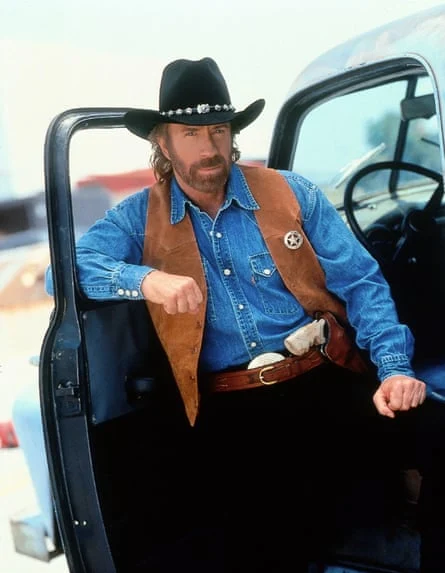
While his film career remained strong, Norris achieved perhaps his most enduring popular success on the small screen. "Walker, Texas Ranger," a television series inspired by the spirit of "Lone Wolf McQuade," premiered in 1993 and became a cultural phenomenon. For eight seasons, Norris captivated audiences as Cordell Walker, a tough-as-nails Texas Ranger who often relied on his formidable martial arts skills to uphold justice. The show, which concluded its original run in 2001, became a staple of Saturday night television and introduced Norris to a new generation of fans.

The immense popularity of "Walker, Texas Ranger" also gave rise to the enduring internet phenomenon known as "Chuck Norris facts." These humorous, hyperbolic statements celebrated Norris’s perceived invincibility and superhuman abilities, transforming him into an unlikely comedic icon in the digital age. This cultural impact underscored the unique place Norris held in the popular imagination, transcending his on-screen persona.
Beyond the Screen: Martial Arts and Political Engagement
Beyond his acting career, Norris remained deeply committed to martial arts. In 1990, he founded his own martial arts system, initially named Chun Kuk Do, a discipline that synthesized various martial arts styles and emphasized moral and ethical development. He also continued to advocate for martial arts education, seeing it as a powerful tool for character building and self-discipline, particularly for young people.
In later years, Norris became increasingly vocal about his political views. A staunch conservative, he lent his considerable public profile to various political campaigns and causes. He publicly endorsed Republican candidates, including Mike Huckabee in 2007, Newt Gingrich in 2012, and Donald Trump in his successful 2016 presidential campaign. Norris expressed strong opinions on national issues, famously warning in 2012 that the election of Barack Obama would lead to "1,000 years of darkness" for the United States. His 2008 book, "Black Belt Patriotism," further articulated his conservative philosophy and his vision for America.
Tributes and Legacies
News of Norris’s passing prompted an outpouring of tributes from fellow actors, colleagues, and public figures, many of whom shared their admiration for his career and character. Sylvester Stallone, who had worked with Norris, wrote on social media, "I had a great time working with Chuck. He was all American in every way. Great man and my condolences to his wonderful family." Dolph Lundgren, another prominent action star, added, "Chuck Norris is the champ. Ever since I was a young martial artist and later getting into movies, I always looked up to him as a role model." Even from a different sphere, horror author Stephen King, who admitted to being politically at odds with Norris, shared a fond remembrance: "Seriously, I thought he was great. Silent Rage scared hell out of my boys… and me."
President Donald Trump, when asked about Norris’s passing, offered his condolences, stating, "He was a great guy. He was a really good tough cookie. We didn’t want to fight him." These sentiments reflect the widespread respect Norris commanded, not just for his martial arts prowess and acting talent, but also for his perceived strength of character and his "all-American" image.
Chuck Norris’s legacy is multifaceted. He was a pioneer in martial arts cinema, a television icon whose character became synonymous with justice and disciplined action, and a cultural figure whose image spawned a unique brand of internet humor. His disciplined approach to life, both in his martial arts training and his acting career, served as an inspiration to millions. He demonstrated that dedication and hard work could indeed lead to extraordinary achievements, transforming from a young man seeking purpose into a global superstar whose impact will continue to be felt.
Norris is survived by his wife, Gena O’Kelley, whom he married in 1998, and his five children. His passing marks the end of an influential chapter in action entertainment and a significant figure in popular culture.