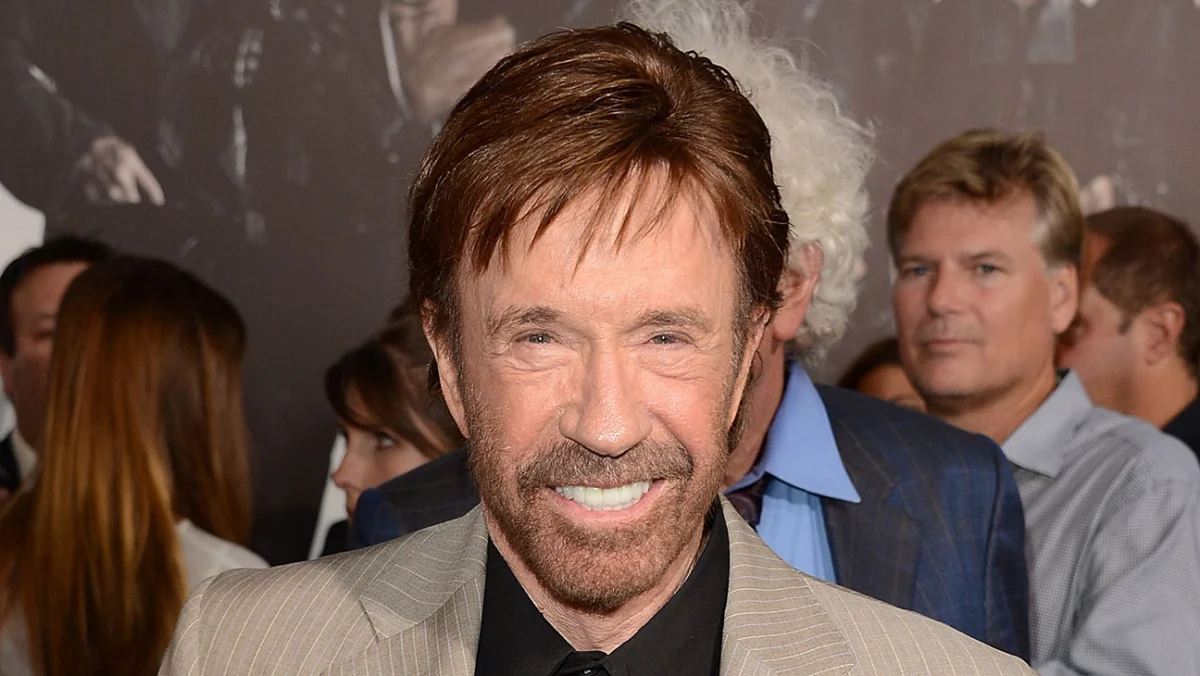
The family of legendary martial artist and action star Chuck Norris has issued a stern warning, imploring the public to exercise extreme caution and skepticism regarding information circulating online about his recent passing. In a statement disseminated via Norris’s official Instagram account, the family directly addressed and condemned the proliferation of artificial intelligence (AI)-generated posts and videos that contain false and misleading narratives concerning the circumstances of his death, his health history, and even who was present during his final moments. This public appeal underscores a growing challenge faced by public figures and their families in an era increasingly dominated by sophisticated digital misinformation.
Chuck Norris, a global icon renowned for his roles in 1980s action films like Missing in Action and the long-running CBS drama Walker, Texas Ranger, passed away on March 19th at the age of 86. The martial arts champion and beloved actor died suddenly in Hawaii after a period of hospitalization, a fact confirmed by his family in an initial, heartfelt statement released at the time. His passing marked the end of an era for millions of fans who admired his stoic on-screen presence and his real-life dedication to martial arts and philanthropy. The initial announcement of his death was met with a wave of genuine tributes and condolences from across the entertainment industry and his global fanbase, reflecting the profound impact he had on popular culture.
The Surge of AI-Generated Falsities
In the wake of Norris’s confirmed death, the digital landscape quickly became fertile ground for a new wave of misinformation, largely fueled by emerging AI technologies. The family’s recent statement highlighted their awareness of this disturbing trend: “We are aware that since Chuck’s passing, there have been a number of AI-generated videos and posts circulating online that contain false and misleading information regarding the circumstances of his passing, his health history, and who was present.” This proliferation of synthetic media represents a significant escalation from traditional celebrity death hoaxes, leveraging advanced algorithms to create highly convincing, yet entirely fabricated, content.
The nature of these AI-generated falsehoods is particularly insidious. Unlike simple text-based rumors, AI can produce deepfake videos, hyper-realistic images, and even synthetic audio that mimics genuine sources. This technological capability makes it increasingly difficult for an unsuspecting public to discern truth from fiction. The Norris family explicitly debunked these fabrications, stating, “These claims are entirely untrue. This includes fabricated reports of past medical issues, as well as false narratives surrounding family relationships.” Such claims not only disrespect the memory of the deceased but also inflict additional emotional distress upon grieving loved ones.
Specific Examples of Disinformation
While the Norris family chose not to specify every single piece of false content they were addressing, certain prominent examples have gained traction online, illustrating the scope of the problem. Following Norris’s death, a series of AI-generated images purporting to depict his funeral circulated widely across social media platforms. These fake photographs were designed to appear incredibly authentic, showing a somber gathering of legendary action stars. In these fabricated images, actors such as Sylvester Stallone, Arnold Schwarzenegger, Jackie Chan, Bruce Willis, and Mel Gibson were shown standing together in front of a casket, seemingly at a memorial service for Norris.
These images, while visually compelling, were entirely artificial constructs. The use of AI to generate such convincing scenes, complete with recognizable public figures, demonstrates the sophisticated capabilities now available to those intent on creating and disseminating misinformation. The intent behind such creations can vary, from malicious attempts to mislead and cause distress to more benign, yet still irresponsible, efforts to gain online traction or generate engagement. Regardless of the motive, the impact is a further erosion of trust in digital media and an additional burden on public figures and their families.
The Family’s Urgent Plea for Verification
In light of this digital onslaught, the Norris family issued a clear and direct appeal to the public. They concluded their statement with a vital request for media literacy and critical thinking: “We kindly ask that you do not believe or share any information unless it comes directly from the Norris family or an official family representative. Thank you for your understanding and for continuing to keep our family in your thoughts and prayers.” This plea highlights the critical importance of seeking information from verified, authoritative sources, especially in an age where digital content can be easily manipulated.
The family’s statement serves as a powerful reminder that not everything seen online, even if it appears highly credible, is necessarily true. Their emphasis on direct communication channels from the family or official representatives establishes a clear benchmark for authentic information, aiming to counteract the pervasive nature of AI-generated hoaxes. This proactive measure by the Norris family is indicative of the growing necessity for public figures to actively manage their narratives in the face of increasingly sophisticated misinformation campaigns.
Broader Implications of AI-Driven Hoaxes
The case of Chuck Norris’s post-mortem misinformation is not an isolated incident but rather a stark illustration of a broader societal challenge posed by the rapid advancement of artificial intelligence. The ability of AI to generate realistic images, videos, and text at scale has profound implications for information integrity, public trust, and individual privacy. Celebrity death hoaxes, while often seen as a morbid curiosity, take on a new, more sinister dimension when underpinned by technology that can create seemingly undeniable "evidence."
Experts in digital forensics and cybersecurity have long warned about the potential for deepfakes and other synthetic media to sow discord, manipulate public opinion, and cause significant personal distress. For grieving families, the experience of witnessing false narratives about their loved one’s death, health, or personal relationships circulated globally is an unimaginable burden. It forces them to not only contend with their personal grief but also to engage in a public battle against fabricated realities. This situation underscores the urgent need for greater public awareness, robust fact-checking mechanisms, and ethical guidelines for AI development and deployment. Social media platforms, in particular, face mounting pressure to implement more effective strategies for identifying and removing AI-generated misinformation, especially when it targets vulnerable individuals or exploits sensitive life events.
Chuck Norris: A Legacy Beyond the Screen
Chuck Norris’s enduring legacy extends far beyond the controversies surrounding digital misinformation. Born Carlos Ray Norris in Ryan, Oklahoma, his journey from a young man in the Air Force to a globally recognized martial arts master and action star is a testament to discipline, perseverance, and talent. He founded his own martial art, Chun Kuk Do, and was instrumental in bringing martial arts into the mainstream American consciousness, both through his dojos and his film career.
His breakout roles in films like Way of the Dragon (opposite Bruce Lee), Missing in Action, and Delta Force solidified his image as an indomitable force on screen. However, it was his role as Cordell Walker in Walker, Texas Ranger that truly cemented his status as a household name for a generation of television viewers. The series, which ran for eight seasons, showcased Norris’s blend of martial arts prowess, moral rectitude, and Texas grit, making him an iconic figure in American television. Beyond his professional achievements, Norris was also known for his philanthropic efforts and his commitment to various causes.
Enduring Impact and Personal Life
In their initial statement announcing his death, the Norris family painted a poignant picture of a life well-lived. “He lived his life with faith, purpose, and an unwavering commitment to the people he loved. Through his work, discipline, and kindness, he inspired millions around the world and left a lasting impact on so many lives,” they shared. They expressed profound gratitude for his life and the moments they shared, acknowledging the immense love and support he received from his global fanbase. “To him, you were not just fans, you were his friends,” they added, highlighting the genuine connection he felt with his admirers.
The family also respectfully requested privacy regarding the specific circumstances of his passing, though they confirmed he “was surrounded by his family and was at peace.” Chuck Norris is survived by his second wife, Gena O’Kelley, whom he married in 1998, and his children: Mike, Dina, Eric (a stunt coordinator who also directed Walker episodes), Danilee, and Dakota. His family represents a private sphere of personal connection that now, regrettably, finds itself navigating the challenging public waters of digital falsehoods.
Navigating the Digital Landscape of Grief
The situation surrounding Chuck Norris’s passing and the subsequent deluge of AI-generated misinformation serves as a powerful case study for the contemporary challenges of grief in the public eye. It underscores the critical need for individuals to cultivate stronger digital literacy skills, questioning the authenticity of content, especially when it originates from unverified sources. For families of public figures, the fight against misinformation is becoming an increasingly integral, and unfortunately, painful part of their grieving process. As AI technology continues to evolve, the distinction between reality and fabrication will become even more blurred, making the Norris family’s plea for discernment more relevant than ever. Their message is clear: in an age of digital manipulation, trust only direct, verified sources, and honor the memory of the deceased by rejecting the proliferation of falsehoods.