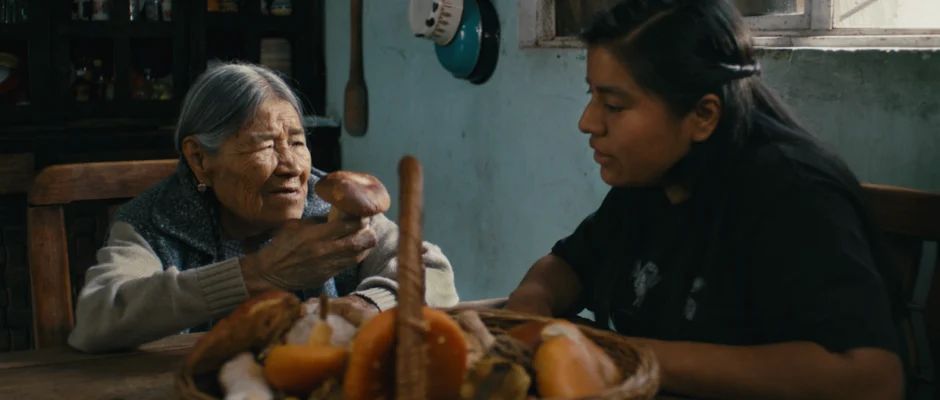
Mexican filmmaker Otilia Portillo Padua’s latest documentary, Daughters of the Forest, offers an intimate and revelatory exploration into the profound ancestral knowledge of mushrooms held by Indigenous women in Mexico, weaving together traditional wisdom with modern scientific ambition. The film, which is set to make its simultaneous premiere at the prestigious South by Southwest (SXSW) festival and Copenhagen’s CPH:DOX on March 13, spotlights the journeys of two remarkable women, Lis and Juli, as they navigate the complexities of preserving and legitimizing their communities’ deep understanding of mycology in a rapidly changing world. Far from presenting a conflict between ancient practices and contemporary science, Padua’s work illuminates a path where these two realms can not only coexist but mutually enrich each other, fostering a vision of a future "rife with possibility" despite formidable challenges.
The Mycelial Legacy: Ancestral Knowledge and its Transmission
For millennia, Indigenous communities across Mexico have cultivated an extraordinary relationship with the natural world, a bond profoundly manifested in their understanding of fungi. This intricate knowledge encompasses the vast power of mushrooms – their medicinal properties, culinary applications, spiritual significance, and even their toxic dangers. This sophisticated comprehension, refined over countless generations, has been meticulously calibrated and passed down through matrilineal channels, much like the unseen yet vital mycelial networks that interconnect individual fungi beneath the rich forest soil. This intergenerational transfer of knowledge, often from grandmothers to granddaughters, forms the bedrock of cultural identity and ecological stewardship within these communities.
Ethnobotanical and ethnomycological studies have consistently documented the sophisticated systems of classification and utilization of fungi by various Indigenous groups in Mesoamerica. Historical records and archaeological findings suggest that the use of mushrooms, both for sustenance and ceremonial purposes, dates back thousands of years. For instance, the Mazatec people of Oaxaca are renowned for their traditional use of psilocybin mushrooms in healing rituals, a practice brought to global attention by figures like María Sabina in the mid-20th century. Daughters of the Forest builds upon this rich legacy, focusing on the contemporary custodians of this wisdom and their efforts to safeguard it against modern pressures. The film underscores that this knowledge is not static; it is a living, evolving system, continually adapted and reinterpreted by each successive generation, embodying a deep ecological intelligence that Western science is only now beginning to fully appreciate.
Bridging Worlds: Academia, Science, and Traditional Wisdom
The core narrative thread of Daughters of the Forest follows Lis and Juli, two women who, despite possessing an immense wealth of ancestral knowledge about mushrooms, aspire to distinguish themselves within the formal structures of academia. Their ambition is not to abandon their heritage for science, but rather to strategically "enmesh themselves in a legitimate field of study." This approach is driven by a pragmatic understanding that academic recognition can amplify the voices of their communities and secure due acknowledgment for the significant strides Indigenous peoples have consistently made in the study of mycology. The film portrays this endeavor not as a tension between homeopathy and science, but as a synergistic integration, where traditional ecological knowledge (TEK) can inform and be validated by scientific methodologies, and vice versa.
This pursuit is emblematic of a broader, global movement towards decolonizing science, advocating for the inclusion and validation of Indigenous knowledge systems within mainstream scientific discourse. For centuries, Western science often dismissed traditional practices as superstitious or unscientific. However, a growing body of research now recognizes TEK as a critical resource for addressing contemporary challenges such, as biodiversity conservation, sustainable agriculture, and climate change. In Mexico, several universities and research institutions have begun to develop programs that actively engage Indigenous students, supporting them in pursuing agricultural sciences, including mycology, with the explicit goal of empowering them to return this integrated knowledge to their communities. This creates a vital feedback loop, strengthening both traditional practices and academic inquiry, fostering a new generation of Indigenous scholars who are fluent in both knowledge systems.
Challenges to Preservation: A Battle on Multiple Fronts
Despite the inherent value and profound potential of this ancestral knowledge, Lis and Juli’s efforts, and indeed the very existence of their communities, face an uphill battle against a confluence of systemic challenges. Illegal logging practices represent a direct and immediate threat, systematically destroying the verdant enclaves that are the natural habitats for these fungi and the traditional territories of Indigenous peoples. Mexico, home to some of the world’s most biodiverse forests, continues to grapple with high rates of deforestation, driven by organized crime, agricultural expansion, and demand for timber. According to the National Forestry Commission (CONAFOR), Mexico loses hundreds of thousands of hectares of forest annually, a significant portion due to illegal activities. This environmental degradation not only eradicates invaluable ecosystems but also disrupts the delicate balance of mycological life and dispossesses Indigenous communities of their land, resources, and cultural heritage.
Beyond environmental threats, institutional discrimination remains a pervasive obstacle. Indigenous populations in Mexico have historically faced, and continue to endure, systemic racism, economic marginalization, and a lack of access to equitable education, healthcare, and legal protections. This discrimination often translates into a lack of recognition for their intellectual property, their traditional practices, and their contributions to scientific understanding. Furthermore, the relentless loss of Indigenous languages poses another critical threat. Language is inextricably linked to culture and knowledge; as languages disappear, so too do the intricate lexicons and narrative structures that encapsulate generations of ecological wisdom. Mexico is home to over 60 Indigenous languages, many of which are endangered. UNESCO estimates that a language dies every two weeks globally, taking with it a unique way of understanding the world. These interconnected challenges frequently render the efforts of individuals like Lis and Juli to preserve and advance their heritage feel, at times, futile. Yet, Padua’s film steadfastly gestures toward a future imbued with resilience and unexpected possibilities.
A Fungal Narrative: The Film’s Unique Cinematic Language
Otilia Portillo Padua, with a background in architecture, brings a distinctive perspective to her filmmaking, describing her work as akin to "ecosystems." This collaborative, interconnected approach is evident in Daughters of the Forest, where the narrative structure itself is dictated by the very organisms it explores. Padua deliberately avoids a linear, traditional hero’s journey, opting instead to let "the fungi guide" the storytelling. This unconventional method aligns with the decentralized, interconnected nature of mycelial networks, making the invisible visible – from microscopic spores to vast subterranean webs – and inviting the audience to perceive these hidden forces that are ever-present yet often overlooked.
One of the film’s most striking artistic choices is the decision to grant the mushrooms a "voice of their own." Through an "unconventional ‘sci-fi’ lens," these organisms meditate on their existence, whispering profound truths like, "Transforming death into life," about their divine purpose. Padua explains that while anthropomorphizing mushrooms was a controversial decision for some, the human voice conveys an emotional depth that abstract sound simply could not achieve. The film’s visual portrayal of this hidden world is equally innovative. The spores and intricate fungal structures are not generated through 3D animation but are meticulously filmed in 2D composites, layered and projected, creating an immersive, otherworldly aesthetic. This painstaking process, involving "many attempts over many years and a lot of failures," underscores the filmmaker’s commitment to capturing the essence of the fungal world through a deeply artistic and experimental approach. By giving voice and visual presence to the mushrooms themselves, Padua challenges anthropocentric perspectives and invites viewers into a non-human experience, expanding the very definition of narrative agency in documentary filmmaking.

The Sacred and the Scientific: Psychedelic Exploration
A particularly electrifying sequence in Daughters of the Forest delves into the spiritual dimension of mycological knowledge, depicting Juli’s consumption of a psychedelic "holy mushroom." This act is portrayed not as recreational but as a sacred quest for guidance, mirroring the experience of her late father many years prior. This depiction resonates deeply with the historical and ongoing ceremonial use of entheogenic fungi by various Indigenous groups in Mexico, particularly the Mazatec people, who have long utilized psilocybin mushrooms for healing, divination, and spiritual communion. The film’s sensitive handling of this sequence reflects a profound respect for these traditional practices, framing the psychedelic experience as a legitimate and powerful source of knowledge and insight.
In recent years, there has been a resurgence of scientific interest in psychedelic compounds, with a growing body of research exploring their therapeutic potential for conditions such as depression, PTSD, and addiction. This modern scientific inquiry often finds its roots in the traditional uses documented by ethnomycologists and anthropologists, drawing a fascinating parallel to the film’s central theme of integrating ancestral wisdom with contemporary understanding. Padua’s decision to visualize Juli’s experience in an abstract yet resonant way, validated by Juli herself as "exactly what my journey was like," highlights the universality of such profound experiences while honoring their cultural specificity. The mushroom’s "voice" during the trip, rendered as a layered chorus of Juli, her grandmother, brother-in-law, and sister, further underscores the communal and intergenerational nature of this spiritual guidance, blurring the lines between individual revelation and collective wisdom.
Filmmaker’s Vision and Intent: Imagining Other Futures
Otilia Portillo Padua’s journey into documentary filmmaking, shaped by her architectural background, emphasizes collaboration and the intricate interplay of elements within a system, much like an ecosystem. Her initial foray into this specific world of mycology was spurred by a desire to move beyond the burgeoning, often "capitalistic" interest in mushrooms during the COVID-19 pandemic, which focused on how "they serve us." Instead, Padua and producer Paula Arroio sought to spotlight "the people that take care of them," leading them to Indigenous women in Mexico. This intentional shift in focus underscores a decolonial approach, centering the often-overlooked guardians of traditional ecological knowledge.
Padua’s categorization of Daughters of the Forest as a "science-fiction work of sorts" is pivotal to understanding her artistic and philosophical intent. She consciously steers away from the conventional interpretations of sci-fi as solely dystopian or machine-driven. Instead, she embraces the genre as a powerful tool for "rupture," for "rethinking the present and the future," and for "imagining other alternatives." Drawing inspiration from theorists like Donna Haraway and Adrienne Maree Brown, and from Indigenous sci-fi and African futurism, Padua sees speculative fiction as a device to explore "other forms of knowledge" that lie beyond the technological. She explicitly rejects the label of "magical realism," viewing her film as a deliberate exploration of alternative realities and ways of knowing that challenge prevailing, often destructive, narratives. Her ultimate hope is that the film will empower young women, particularly Indigenous girls, to believe that "I believe in the holy mushroom but I also want to be a scientist and those two things can coexist." This vision is a powerful call to imagine and actively build different futures, rooted in respect for both ancient wisdom and scientific inquiry.
The Perilous Path of Knowledge: A Case Study in Amanita Mushrooms
One of the most profound insights Padua gained during the filmmaking process underscores the immense knowledge and generations of sacrifice embedded in Indigenous mycological practices. She recounted an experience with the white amanita mushrooms, a species known to have both edible and deadly varieties. While certain white amanitas can be rendered edible through specific and rigorous cooking methods, they are inherently toxic. Padua’s personal attempt to consume one, albeit with limited knowledge, highlighted the perilous "line between life and death" that Indigenous communities have navigated for centuries. A scientist later cautioned her, explaining that the Indigenous people are "more used to them than we are," and that improper preparation could lead to severe liver damage, or worse.
This anecdote serves as a potent reminder of the invaluable, often hard-won, nature of traditional ecological knowledge. The process of discerning edible from poisonous, understanding the precise preparation techniques, and recognizing the nuances of mushroom behavior required generations of trial and error, a collective endeavor where mistakes could be fatal. This accumulated wisdom, passed down through oral traditions and practical experience, represents an irreplaceable cultural asset. The loss of this knowledge, through deforestation, language extinction, or cultural assimilation, not only diminishes human understanding of the natural world but also erodes a vital connection to sustainable living and deep ecological literacy. It emphasizes that traditional knowledge is not static folklore, but a dynamic, scientifically robust system developed through rigorous empirical observation over millennia.
Global Premiere and Broader Implications
The simultaneous premiere of Daughters of the Forest at SXSW and CPH:DOX on March 13 marks a significant moment for a film that so powerfully bridges cultural, scientific, and artistic divides. These festivals are renowned platforms for innovative and impactful storytelling, and their selection of Padua’s documentary signals a growing international appetite for narratives that challenge conventional perspectives and highlight Indigenous voices. The film’s presence at such prominent events will undoubtedly amplify its message, sparking critical conversations about cultural preservation, environmental justice, and the urgent need to integrate diverse forms of knowledge in addressing global crises.
Daughters of the Forest is more than just a documentary about mushrooms; it is a profound meditation on interconnectedness – between humans and nature, tradition and modernity, science and spirituality. It offers a compelling argument for the intrinsic value of Indigenous wisdom, not as a relic of the past, but as a dynamic and essential component of a sustainable future. By portraying the resilience of Indigenous women, the ecological intelligence of fungi, and the transformative power of a unique cinematic vision, Otilia Portillo Padua invites audiences to imagine a world where empathy, collaboration, and a deep respect for all forms of life pave the way for genuine possibility. The film’s impact will extend beyond the screen, inspiring a reconsideration of how we understand knowledge, value biodiversity, and envision our collective future on this planet.