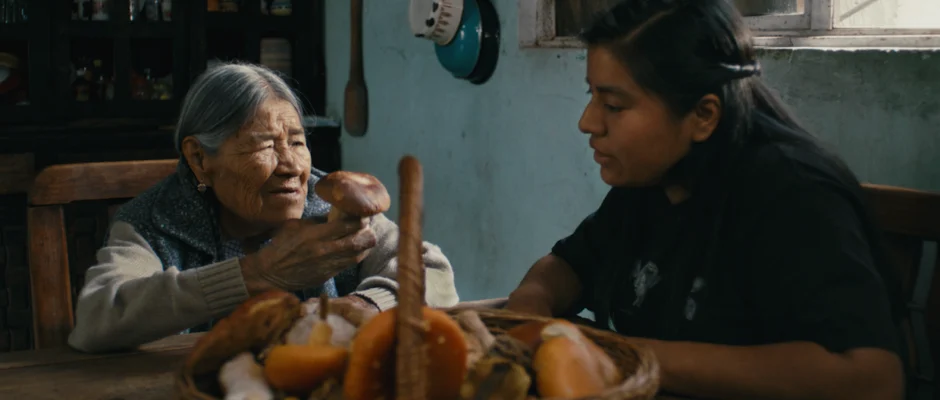
The profound, multi-generational understanding of mushrooms—ranging from their medicinal properties and culinary uses to their spiritual significance and potential toxicity—is meticulously explored in Otilia Portillo Padua’s latest documentary, Daughters of the Forest. This compelling film, which premiered simultaneously at SXSW and Copenhagen’s prestigious non-fiction festival, CPH:DOX, on March 13, delves into the intricate world of Indigenous Mexican women who have historically been the custodians of this vast ethnomycological knowledge. The narrative arc follows two such women, Lis and Juli, as they navigate their ancestral heritage while striving for academic recognition in the modern scientific landscape.
The Heart of the Forest: Ancestral Mycology
For centuries, Indigenous communities across Mexico have maintained an intimate and sophisticated relationship with the natural world, a bond particularly evident in their profound knowledge of fungi. This wisdom, passed down through matrilineal channels, mirrors the very structure of the mycelial network—an intricate underground web that connects individual mushrooms and underpins forest ecosystems. These women, often grandmothers and mothers, have served as living encyclopedias, preserving critical information about edible, medicinal, and psychotropic species, as well as those that are dangerously toxic. Their knowledge is not merely observational; it is calibrated through generations of empirical practice, forming a complex system of sustainable harvesting, preparation techniques, and spiritual rituals.
In many Indigenous cultures, mushrooms are more than just a food source or medicine; they are integral to cosmology, healing ceremonies, and the very fabric of community life. This deep reverence and practical expertise have often been overlooked or dismissed by Western scientific paradigms. Daughters of the Forest seeks to rectify this historical oversight by centering the voices and experiences of women like Lis and Juli, who represent a continuum of this invaluable heritage. The film underscores that this knowledge is not static; it evolves, adapts, and requires continuous engagement with the environment. It is a living tradition, constantly recalibrated through observation, experimentation, and intergenerational dialogue, reflecting the dynamic nature of the fungal kingdom itself.
Bridging Worlds: Academia and Tradition
Lis and Juli, residents of verdant enclaves in Mexico, embody the intersection of deep ancestral wisdom and contemporary aspirations. While they possess an inherited wealth of knowledge about mushrooms, they also harbor a desire to distinguish themselves within academia. This pursuit is not born out of a perceived conflict between traditional homeopathy and modern science. Instead, as filmmaker Otilia Portillo Padua highlights, these women understand that by immersing themselves in a "legitimate" field of study such as mycology, they can amplify the recognition for the consistent strides their communities have made in understanding fungi. Their goal is to validate Indigenous scientific contributions within a broader, often Eurocentric, academic framework.
This endeavor, however, is an uphill battle. Indigenous students in Mexico, despite their unique knowledge base, often face significant institutional discrimination within academic settings. Historically, their languages and cultural practices have been marginalized, and their traditional knowledge systems devalued. The film subtly critiques the systemic biases that require Indigenous people to translate their rich, holistic understanding into a Western scientific idiom to gain credibility. Yet, Lis and Juli’s journey is a testament to resilience and strategic engagement. They are not abandoning their roots but rather seeking to build bridges, demonstrating that traditional ecological knowledge and modern scientific inquiry can not only coexist but mutually enrich each other. Their academic pursuits become a means to empower their communities, ensuring that this vital knowledge is not only preserved but also respected and integrated into broader scientific discourse.
Environmental Pressures and Cultural Erosion
The challenges faced by Lis and Juli extend far beyond academic hurdles. Their efforts are continually threatened by external pressures, most notably illegal logging practices that devastate the biodiverse forests—the very ecosystems where these crucial mushrooms thrive. Mexico, a country renowned for its megadiverse ecosystems, is also a hotspot for deforestation, driven by factors such as agricultural expansion, cattle ranching, and illegal timber extraction. According to data from the Global Forest Watch, Mexico has experienced significant forest loss over the past few decades, threatening not only endemic species but also the livelihoods and cultural practices of Indigenous communities who depend on these forests.
Illegal logging not only destroys the habitat for countless fungal species but also disrupts the delicate ecological balance that allows them to flourish. This environmental degradation has direct and severe implications for Indigenous communities, whose traditional knowledge is inextricably linked to the health of their land. When forests are destroyed, the availability of specific mushroom species diminishes, leading to the erosion of associated cultural practices, medicinal remedies, and culinary traditions. Furthermore, the loss of Indigenous languages—a global phenomenon exacerbated by historical assimilation policies—acts as another critical threat. Each language lost represents a repository of unique ecological knowledge, including specific terminology for fungi, traditional preparation methods, and nuanced understandings of the natural world that cannot be easily translated or recovered. Daughters of the Forest poignantly illustrates how these intertwined challenges make the women’s efforts feel almost futile, yet it consistently gestures toward a future imbued with possibility, against all odds.
A Fungal Narrative: Otilia Portillo Padua’s Vision
Filmmaker Otilia Portillo Padua brings a distinctive perspective to Daughters of the Forest, a sensibility perhaps informed by her background in architecture. She describes both architecture and film as "incredibly collaborative practices," challenging the auteurist myth of cinema and highlighting the necessity of concessions and collective effort. Padua’s work has been characterized as akin to "ecosystems," a natural outcome, she suggests, of her understanding of how individuals situate themselves within spaces. This architectural lens likely contributes to her ability to perceive and represent interconnectedness, a theme that resonates deeply with the film’s subject matter.
Mushrooms, with their complex and often hidden structures, became the ultimate guide for the film’s narrative. Padua explicitly states that fungi "dictated the structure of the movie," allowing for a departure from conventional linear storytelling. Instead of imposing a "traditional hero’s journey or three-act structure," she sought to create a cinematic experience that mirrors the unconventional nature of mushrooms themselves. "Mushrooms defy a lot of conventions," Padua explains, emphasizing her desire to "make the invisible visible." This involved visually representing spores, the expansive mycelial networks beneath the soil, and other unseen forces at play in the fungal world. By allowing the subject to inform the form, Padua crafts a film that is not just about mushrooms but structured like a fungal ecosystem, promoting a sense of organic growth and interconnectedness throughout its narrative. This innovative approach elevates the documentary beyond a mere informational piece, transforming it into an immersive, experiential journey.
The Psychedelic Journey and Speculative Storytelling
One of the film’s most "electrifying sequences" occurs when Juli consumes a psychedelic "holy mushroom," seeking guidance much as her late father did. This pivotal moment, along with the decision to give the mushrooms themselves a voice, categorizes Daughters of the Forest as a work of "sci-fi" or speculative fiction rather than traditional documentary or magical realism. Padua’s intention was not to anthropomorphize mushrooms in a simplistic way but to evoke the profound emotional and existential insights they can offer. The mushroom’s voice, a "controversial thing for some people," is presented as multiple overlaid voices—Juli’s, her grandmother’s, her brother-in-law’s, and her sister’s—reflecting the subjective and often internal nature of the psychedelic experience. As Padua notes, during such a trip, the "holy mushroom talks to you," often in what feels like one’s own voice or the voices of trusted figures, validating this creative choice.
The visual representation of this journey was equally innovative. Padua confirms that "nothing is 3D-generated," with spores filmed in her garage and visuals created through "2D composites—layered, projected, and then confined to this 3D space." The production team meticulously "storyboarded it and tried to film it from the spore’s point of view," a challenging process marked by "a lot of failures." This commitment to tangible, in-camera effects grounds the "sci-fi" elements in a sense of organic reality, further blurring the lines between the observed and the imagined.

Padua articulates her deliberate choice of a "sci-fi" lens as a means to "rethink the present and the future" in a world she perceives as "dystopic, cruel, difficult, and violent." She cites theorists like Donna Haraway and Adrienne Maree Brown, who champion futurism and speculative fiction as tools for imagining alternative worlds and possibilities. This approach diverges sharply from the common perception of sci-fi as solely machine-driven dystopias. Instead, it embraces "the possibility of rupture, of imagining," drawing inspiration from Indigenous sci-fi and African futurism, which often explore "other forms of knowledge" beyond technology. Padua stresses that the film is not "magical realism," a term often misapplied to Indigenous narratives, but rather a deliberate use of speculative fiction to allow viewers to inhabit "another perspective—even a non-human perspective," thereby challenging conventional understandings of reality and knowledge.
Challenges and Triumphs: The Production Process
The making of Daughters of the Forest was an intricate journey of discovery and technical innovation. Padua’s initial fascination with fungi broadened to focus on "the people that take care of them," particularly Indigenous women in Mexico. This shift was partly catalyzed by the global surge of interest in foraging during the COVID-19 pandemic, which Padua observed often took a "capitalistic" bent, focusing on how mushrooms could "serve us." She and producer Paula Arroio sought a more reciprocal narrative, eventually connecting with Indigenous students in agricultural sciences and mycology programs who were bridging traditional knowledge with formal education.
The discovery of the matrilineal transmission of knowledge was a gradual process during filming. While Padua "didn’t immediately" realize the extent of women’s roles, the recurring mention of grandmothers—figures she has long been fascinated by, having made a previous film about her great-aunt—hinted at a deeper story. Ursula K. Le Guin’s famous assertion that she would send a grandmother to space further resonated with Padua’s evolving understanding. The intimate community of women foraging together became a central revelation of the filmmaking process, underscoring the vital, often unseen, role women play in preserving ecological wisdom.
The film’s visual language, especially the complex rendering of the spore’s journey and the "holy mushroom" trip, involved significant experimentation and perseverance. Padua’s team spent "many years" on these attempts, facing "a lot of failures" before achieving the desired abstract yet evocative visuals. Post-trip interviews with Juli provided crucial descriptive details, from which Padua took "creative liberties" to translate the experience into a visual narrative. Juli’s subsequent validation—"That’s exactly what my journey was like! How did you know?"—was a testament to the film’s success in capturing a profoundly subjective and spiritual event, perhaps by crafting a visual language "broad enough where there was space for her to read into it."
The Legacy of Knowledge: A Risky Inheritance
One of the most striking insights gained during the filmmaking process revolved around the preparation of certain mushroom species. Padua recounts a particularly arresting anecdote about the white amanita mushroom, which, while edible for Indigenous communities, is "still toxic" and resembles deadly varieties. Its edibility hinges entirely on specific, generations-old cooking methods. Padua’s own experience of trying it without sufficient knowledge led to a stark realization: "I was eating something that was… definitely poisonous." A scientist later cautioned her about the potential liver damage, highlighting the profound difference in physiological adaptation and inherited wisdom between Indigenous populations and outsiders.
This experience underscored the immense sacrifices made by ancestors to acquire such knowledge. "It struck me that a lot of people might have died for this knowledge," Padua reflects. The precision required in identifying, harvesting, and preparing these fungi represents a painstaking, empirical process spanning countless generations—a delicate line between life and death. This inherited wisdom, honed through trial and error over centuries, is an invaluable form of science that often goes unrecognized. The anecdote serves as a powerful reminder of the deep respect due to Indigenous ethnomycological practices and the profound value of traditional ecological knowledge, which is often acquired at great personal risk and preserved through diligent cultural transmission.
Global Recognition: Premieres at SXSW and CPH:DOX
The simultaneous premiere of Daughters of the Forest at SXSW and CPH:DOX on March 13 immediately positioned it on a global stage. SXSW, or South by Southwest, is a renowned conglomerate of festivals and conferences celebrating the convergence of film, interactive media, and music, particularly known for showcasing innovative and thought-provoking independent cinema. CPH:DOX, the Copenhagen International Documentary Festival, is one of the largest documentary film festivals in the world, celebrated for its artistic quality, critical approach, and focus on films that push the boundaries of the documentary genre.
Premiering at both festivals signifies a substantial recognition of the film’s artistic merit, its innovative storytelling, and the urgent relevance of its themes. Such dual premieres often generate significant international buzz, attracting distributors, critics, and a diverse global audience. For Daughters of the Forest, this exposure means that the vital stories of Indigenous Mexican women, their profound knowledge, and their struggles for recognition and environmental justice will reach a broader public, fostering greater understanding and appreciation for biocultural diversity and alternative forms of knowledge. It also highlights a growing trend in the documentary world to embrace diverse perspectives and experimental narrative forms.
Looking Ahead: Imagining Alternative Futures
Daughters of the Forest concludes with a powerful message of hope and the potential for transformative action. Despite the formidable challenges—illegal logging, institutional discrimination, and cultural erosion—Padua is careful to "gesture toward a future that is, against all odds, rife with possibility." This hopeful outlook is intrinsically linked to her "sci-fi" approach, which champions the "possibility of rupture, of imagining" new paradigms.
The film envisions a future where traditional beliefs and modern scientific inquiry are not mutually exclusive but can coexist and even reinforce each other. Padua expresses a profound aspiration: "If a girl ever saw this film and thought, ‘I believe in the holy mushroom but I also want to be a scientist and those two things can coexist,’ I think that would be very beautiful for me." This statement encapsulates the film’s core ethos: to inspire a new generation to embrace their cultural heritage while also pursuing contemporary knowledge, creating a synthesis that strengthens both. It speaks to the ongoing efforts of "people actively building different futures relating to the environment in different ways, doing very small—like a spore—actions and then transforming their environment around them." The film is a cinematic call to action, urging viewers to imagine and actively work towards "other alternatives," where Indigenous wisdom is revered, environmental stewardship is prioritized, and diverse forms of knowledge are celebrated as essential for navigating the complexities of our world.
Through its innovative storytelling and deeply empathetic portrayal, Daughters of the Forest stands as a vital contribution to contemporary documentary filmmaking. It not only sheds light on the invaluable ethnomycological knowledge held by Indigenous Mexican women but also challenges conventional narrative structures, advocating for a more inclusive and imaginative approach to understanding our interconnected world. The film is a testament to resilience, the enduring power of ancestral wisdom, and the boundless possibilities that arise when we dare to imagine a future where diverse forms of knowledge are honored and integrated.