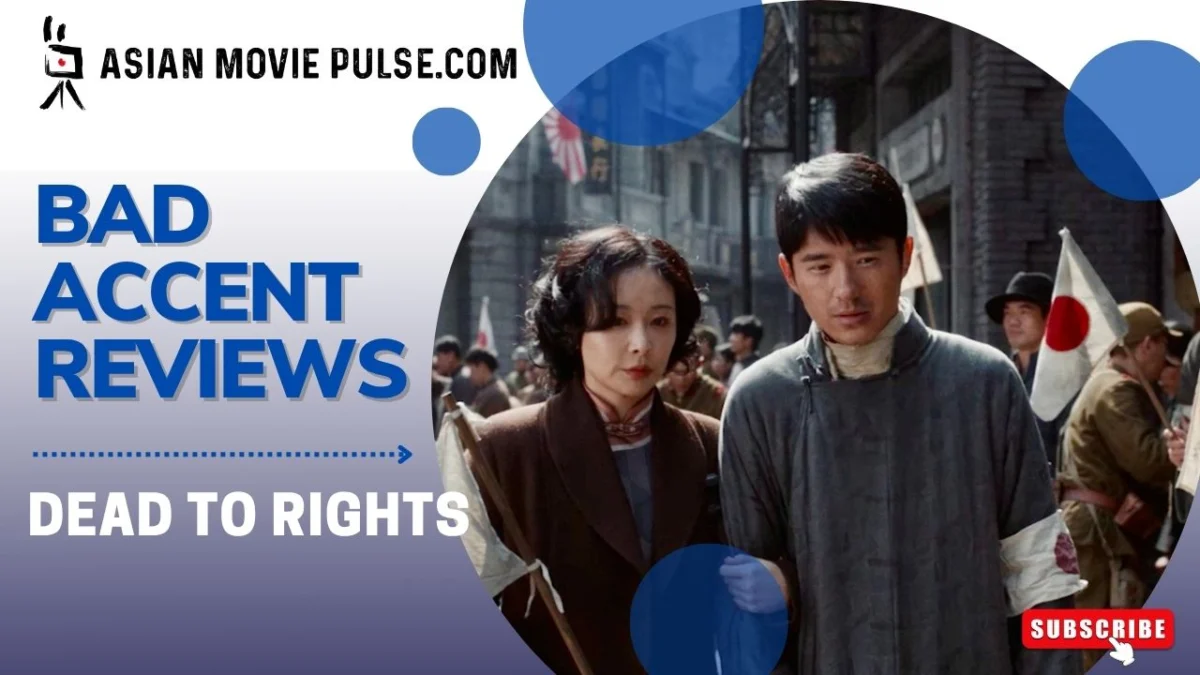
"Dead to Rights" emerges as one of the most significant Chinese historical epics of recent years, offering a poignant and harrowing cinematic portrayal of the Nanjing Massacre through a gripping, character-driven narrative. Directed by Ao Shen, the film features a compelling ensemble cast including Liu Haoran, Wang Chuanjun, Daichi Harashima, and Gao Ye, meticulously weaving real historical events with intense drama, visceral action, and profound emotional storytelling to create a powerful and unforgettable experience. Its release has not only garnered significant box office success, exceeding $300 million globally, but has also ignited renewed discourse on one of the darkest chapters of 20th-century history.
A Deep Dive into the Narrative and Craftsmanship
The film’s strength lies in its ability to humanize the immense tragedy of the Nanjing Massacre by focusing on individual stories of survival, sacrifice, and moral dilemmas. Rather than a sprawling documentary-style recounting, "Dead to Rights" opts for an intimate, character-centric approach, allowing audiences to connect deeply with the plight of its protagonists as they navigate the brutal realities of the Japanese invasion and occupation of Nanjing in December 1937. The performances are central to this emotional resonance; Liu Haoran, known for his versatile roles, delivers a nuanced portrayal that captures both vulnerability and nascent defiance. Wang Chuanjun brings a powerful gravitas, while Daichi Harashima’s presence underscores the complex and often morally compromised positions of individuals caught in the conflict. Gao Ye’s performance is particularly noted for its emotional depth and portrayal of resilience amidst unspeakable horror.
Technically, "Dead to Rights" stands out for its impressive execution. The cinematography, under the direction of a highly skilled team, captures the desolate beauty of a city under siege and the brutal chaos of war with a striking visual language. Gritty realism is balanced with moments of stark beauty, enhancing the emotional impact without sensationalizing the violence. Editing is sharp and deliberate, maintaining a relentless pace that propels the narrative forward while allowing crucial emotional beats to land with maximum effect. The sound design is particularly immersive, recreating the cacophony of war—the distant rumble of artillery, the chilling echoes of gunfire, and the cries of desperation—to envelop the audience in the film’s historical setting. This combination of powerful performances and technical mastery elevates "Dead to Rights" beyond a mere historical recreation, positioning it as a profound artistic statement.
Historical Context: The Nanjing Massacre
To fully appreciate the gravity and historical significance of "Dead to Rights," it is crucial to understand the events it depicts. The Nanjing Massacre, also known as the Rape of Nanjing, was a period of mass murder and mass rape committed by Imperial Japanese troops against the residents of Nanjing (then the capital of the Republic of China) during the Second Sino-Japanese War. The atrocities began on December 13, 1937, following the capture of the city by the Japanese army, and lasted for approximately six weeks.
The historical timeline leading to the massacre is critical. Japan had been aggressively expanding its empire in East Asia since the 1930s. The full-scale invasion of China began in July 1937 with the Marco Polo Bridge Incident. After a fierce and bloody Battle of Shanghai, which lasted for over three months and resulted in heavy casualties on both sides, Japanese forces advanced rapidly towards Nanjing. The Chinese Nationalist government, under Chiang Kai-shek, had largely evacuated the city, leaving behind a reduced garrison and a civilian population estimated at around 500,000.
Upon entering Nanjing, Japanese soldiers engaged in widespread systematic atrocities. Estimates of the death toll vary, but the most commonly cited figures range from 200,000 to 300,000 Chinese civilians and disarmed soldiers. This number is based on assessments from the International Military Tribunal for the Far East (Tokyo Trials) and Chinese sources. Beyond the killings, tens of thousands of women were systematically raped, often brutally, and many were subsequently murdered. Looting, arson, and destruction of property were rampant, turning the once-vibrant city into a desolate wasteland.
Foreign nationals, primarily Westerners, who remained in Nanjing, established an International Safety Zone to protect Chinese civilians. Figures like John Rabe, a German businessman and Nazi Party member, and Minnie Vautrin, an American missionary, played crucial roles in sheltering thousands, documenting the atrocities, and appealing for international intervention. Their firsthand accounts and diaries became vital evidence in post-war tribunals and continue to serve as powerful historical records. The Nanjing Massacre remains a deeply contentious issue in Sino-Japanese relations, with differing interpretations and acknowledgment levels between the two nations.
Cinematic Precedents and the Legacy of Portrayal
"Dead to Rights" enters a lineage of films that have attempted to grapple with the Nanjing Massacre, each offering a distinct perspective and cinematic approach. Two prominent examples often cited are Lu Chuan’s "City of Life and Death" (2009) and T.F. Mou’s "Black Sun: The Nanking Massacre" (1995).
"City of Life and Death," also known as "Nanjing! Nanjing!", is a critically acclaimed black-and-white film that adopts a more epic and documentary-like style. It attempts to portray the events from multiple perspectives, including that of a sympathetic Japanese soldier, a Chinese soldier, and a Western missionary. Its stark visual aesthetic and often unflinching depiction of violence earned it both praise for its artistic courage and controversy for its portrayal of Japanese characters. Lu Chuan’s film aimed for a sense of historical impartiality, exploring the humanity and inhumanity on all sides, a perspective that sometimes drew criticism from those who felt it diluted the focus on the victims’ suffering.
In contrast, "Black Sun: The Nanking Massacre" is a Hong Kong exploitation film known for its graphic and often sensationalized depiction of the atrocities. While it purports to be based on historical events, its focus on extreme violence and explicit sexual content often overshadows any serious historical inquiry. The film’s primary intent appears to be shock value, and while it contributed to raising awareness for some audiences, its historical accuracy and artistic merit are frequently questioned within serious cinematic discourse.
"Dead to Rights" appears to carve a middle path, or perhaps a more emotionally accessible one, than its predecessors. While it does not shy away from the brutality, its character-driven narrative allows for a more personal entry point into the historical horror, potentially making it more palatable for a wider international audience than "City of Life and Death"’s more art-house approach, and certainly more respectful than "Black Sun." It aims to blend the historical gravitas with the emotional engagement of traditional drama, ensuring that the historical context is paramount while allowing the human stories to resonate profoundly.
Box Office Success and Global Impact
The commercial triumph of "Dead to Rights," grossing over $300 million at the global box office, is a testament to its broad appeal and the enduring power of historical dramas when executed with skill and sensitivity. This financial success is particularly noteworthy for a film tackling such a sensitive and often painful subject matter. It demonstrates that audiences are willing to engage with difficult history, especially when presented through compelling storytelling and high production values.
The film’s wide international release, facilitated by distributors like Echelon Studios which made it available digitally, ensures that the story of the Nanjing Massacre reaches diverse audiences worldwide. This international distribution is crucial for fostering global historical awareness and understanding. In an era where historical narratives can be contested or forgotten, films like "Dead to Rights" play a vital role in keeping critical historical events in public consciousness and stimulating educational conversations beyond national borders.
The Filmmakers’ Vision and Thematic Depth
Director Ao Shen’s vision for "Dead to Rights" was clearly to craft a narrative that transcended mere historical recounting to explore universal themes. The film delves deeply into themes of survival, examining the extraordinary resilience of the human spirit in the face of unimaginable adversity. It probes questions of morality, forcing characters and audiences alike to confront the ethical compromises and heroic choices made under extreme duress. What does it mean to retain one’s humanity when surrounded by inhumanity? How does one find the will to live, or to protect others, when hope seems lost?
Statements from the filmmakers, though often indirect through interviews and promotional materials, suggest an intent to honor the victims of the massacre and to ensure their stories are not forgotten. The film acts as a powerful cinematic memorial, aiming to educate younger generations and international audiences about the scale of the atrocities and the courage of those who endured them. This commitment to historical memory, combined with a focus on powerful character arcs, is what gives "Dead to Rights" its profound emotional weight and lasting impact.
Critical Reception and Public Discourse
While a comprehensive critical consensus is still forming, the initial reception of "Dead to Rights" suggests it has been largely positive, particularly regarding its ability to combine historical accuracy with emotional depth. Film critics have lauded its unflinching yet respectful approach to the subject, its strong performances, and its technical prowess. The film’s success also inevitably sparks public discourse, not only about the historical event itself but also about the role of cinema in shaping historical memory and promoting reconciliation or understanding.
Such films often provoke discussions on how history is taught, remembered, and represented. For audiences in China, "Dead to Rights" serves as a powerful reminder of national suffering and resilience. For international audiences, it offers an accessible entry point into a significant, yet sometimes overlooked, chapter of World War II history. The film’s engagement with the complexities of war and human nature contributes to a broader cultural conversation about conflict, empathy, and the imperative of peace.
Availability and Enduring Legacy
"Dead to Rights" is readily available for audiences to experience, notably through digital platforms provided by distributors such as Echelon Studios. This accessibility ensures that its powerful message and historical lessons can continue to reach a global audience, solidifying its place in the canon of historical war dramas. The film’s success, both critically and commercially, underscores the continued importance of confronting difficult historical truths through the medium of cinema. It stands as a testament to the victims of the Nanjing Massacre, a powerful piece of storytelling, and a significant contribution to the ongoing dialogue about humanity’s capacity for both cruelty and courage. Its legacy will likely be defined by its ability to engage, educate, and provoke reflection, ensuring that the harrowing events of December 1937 are never forgotten.