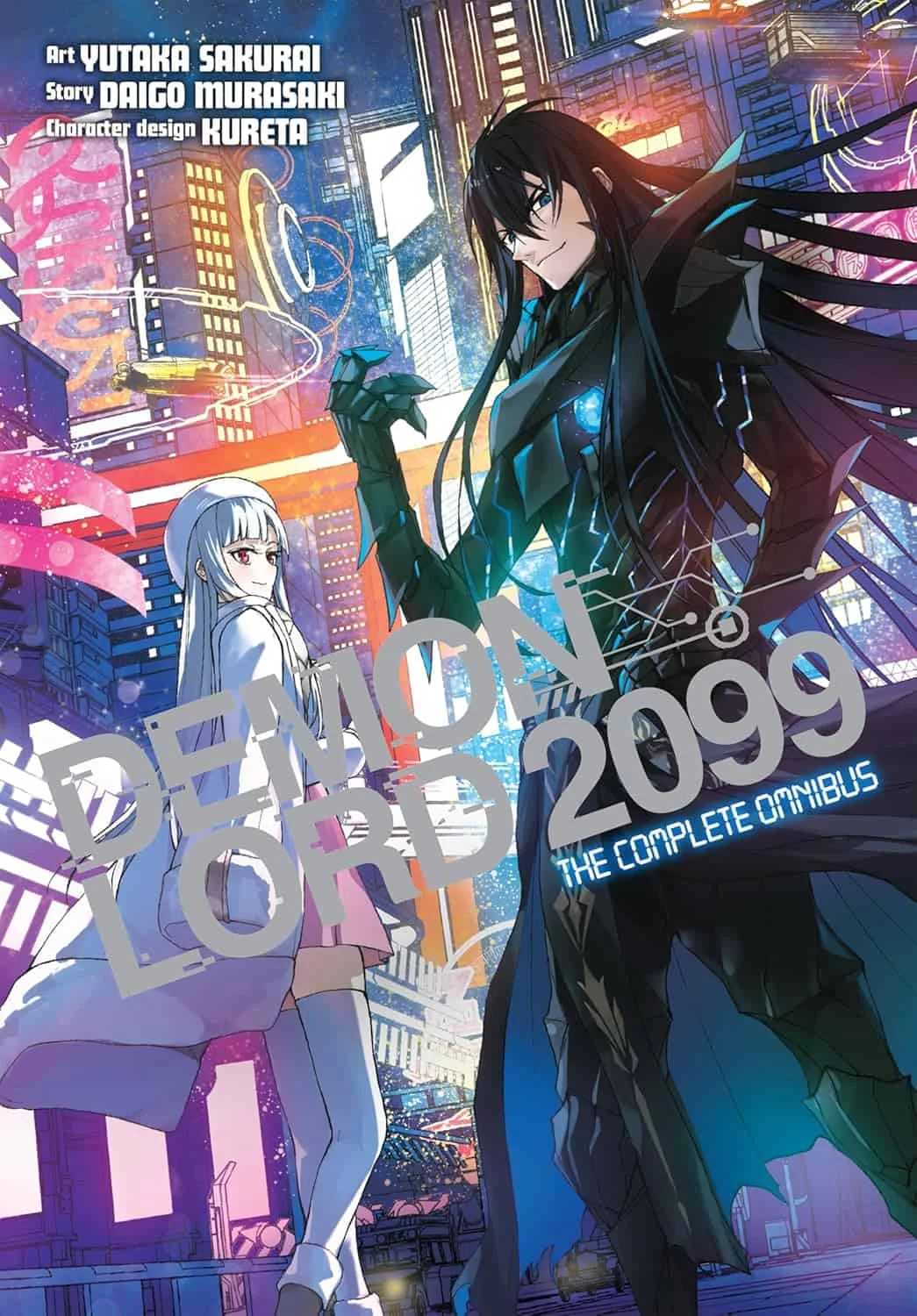
The acclaimed Japanese light novel series, "Demon Lord 2099," penned by Daigo Murasaki and brought to life through Kureta’s illustrations, has rapidly evolved into a significant multimedia franchise, culminating in the release of "The Complete Omnibus" manga edition by Yen Press and an anime television series adaptation by J.C.Staff. This complex narrative, which blends high fantasy with dystopian cyberpunk elements, offers a unique take on the popular isekai genre, positioning its ancient protagonist, the Demon Lord Veltol, in a future far more technologically advanced than his magical past.
The Genesis of a Modern Fantasy: From Light Novel to Global Phenomenon
The journey of "Demon Lord 2099" began with its light novel serialization, establishing the core premise that would captivate audiences. Daigo Murasaki crafted a world where the venerable Demon Lord Veltol, after a five-century slumber following his defeat, reawakens not to a familiar realm of swords and sorcery, but to the neon-drenched, technologically-saturated metropolis of Shinjuku in the year 2099 of the Fused Era. This foundational concept immediately set the series apart, subverting traditional fantasy tropes by placing a powerful, albeit temporarily weakened, magical entity within a hyper-modern, cyberpunk setting. Kureta’s original illustrations for the light novel played a crucial role in visualizing this fusion, laying the groundwork for the aesthetic that would define the franchise. The success of the light novel quickly signaled its potential for broader adaptation, a common trajectory for popular Japanese intellectual properties in a market increasingly driven by multimedia synergy.
Navigating the Multimedia Landscape: A Chronology of Adaptations
The path to becoming a full-fledged multimedia franchise for "Demon Lord 2099" was marked by several key adaptations, each contributing to its growing prominence.
Light Novel Foundations
While specific debut dates for the light novel’s initial chapters are not provided, its existence predates the first manga adaptation in late 2021, suggesting a period of development and audience building within the light novel community. The strength of Murasaki’s storytelling and Kureta’s artistic vision laid a robust foundation, proving the concept’s appeal to a readership eager for genre-bending narratives.
Manga’s Rocky Start and Resurgence
The series first ventured into the manga medium with an adaptation illustrated by Kiiro Akashiro. This iteration was serialized online on Kadokawa Shoten’s Shonen Ace Plus platform, a prominent digital manga publication, from November 5, 2021, to June 24, 2022. However, this initial manga run was notably removed from the website for reasons that remain officially undisclosed. In the competitive and dynamic landscape of manga publishing, such removals can stem from a variety of factors, including creative differences between creators and publishers, shifts in editorial strategy, or issues related to production schedules and quality control. Industry analysts often observe that publishers like Kadokawa Shoten, a major player in the Japanese media industry, are quick to re-evaluate and pivot resources to ensure the long-term success of their key intellectual properties.
Demonstrating Kadokawa Shoten’s continued confidence in the "Demon Lord 2099" property, a second manga adaptation was swiftly commissioned and began serialization on the same Shonen Ace Plus platform on March 22, 2023. This version, featuring the exceptional artwork of Yutaka Sakurai, concluded its run on August 7, 2024. The rapid re-serialization with a new artist underscores the publisher’s commitment to the series and its perceived market potential, particularly given the growing global demand for manga. This second adaptation proved successful, eventually leading to its release as "The Complete Omnibus" by Yen Press, a leading publisher of Japanese light novels and manga in English-speaking markets. The omnibus format is a strategic move, offering Western readers a consolidated and accessible entry point into the series, appealing to both new readers and existing fans seeking a complete physical collection.
The Anime Leap
Further cementing its status as a significant franchise, an anime television series adaptation produced by the renowned studio J.C.Staff aired from October to December 2024. J.C.Staff, known for its extensive portfolio of anime adaptations across various genres, brought "Demon Lord 2099" to the screen, introducing the futuristic fantasy to a broader global audience. The anime adaptation played a crucial role in expanding the series’ reach, translating the dynamic action and intricate world-building into a vibrant animated format, and capitalizing on the immense popularity of anime streaming platforms worldwide. This sequential rollout from light novel to manga to anime is a well-established strategy in the Japanese entertainment industry, designed to maximize audience engagement and revenue across multiple media types.
A Cyberpunk Shinjuku: The World of 2099 Fused Era
The narrative core of "Demon Lord 2099" is built upon the fascinating premise of Veltol’s awakening in a vastly altered world. Five centuries after his dramatic fall, the legendary Demon Lord expects to resume his conquest, but instead finds himself in Shinjuku, a dazzling cyberpunk city-state. This Shinjuku of 2099 is a marvel of the Fused Era, where the mystical energies of magic and the cutting edge of technology have not merely coexisted but have intertwined to elevate civilization to unprecedented heights. Towering skyscrapers pierce the smoggy, neon-lit skies, while advanced machinery hums alongside arcane enchantments, creating a visually stunning and narratively rich backdrop.
Veltol’s initial moments in this new world are a stark demonstration of his predicament: he is no longer the omnipotent ruler he once was. A violent incident early on quickly highlights his diminished powers, forcing him to confront his vulnerability in an era that has seemingly moved beyond his understanding. His salvation comes in the form of his loyal retainer, Machina, a girl whose unwavering devotion to him spans centuries. Her presence offers a tangible link to his past, yet she, too, has adapted to the future, serving as his guide through this bewildering new reality.
Settling into Machina’s small apartment, Veltol attempts to navigate the complexities of modern life. His initial efforts to secure employment are met with comedic failure; the fact that he has been "unemployed for 500 years" and previously harbored ambitions of world domination does little to impress potential employers. This forms a significant portion of the manga’s humor, playing on the absurdity of a powerful fantasy figure struggling with mundane modern bureaucracy. The series brilliantly uses this "fish out of water" trope to explore the cultural and technological gaps between eras.
However, Veltol’s inherent ambition and Machina’s unwavering support soon lead him down an unexpected path. With the assistance of Takahashi, a skilled hacker who embodies the modern era’s digital prowess, Veltol embarks on a career as a live streamer. This ingenious plot device allows him to quickly amass a million followers, a testament to the power of online influence in 2099, and crucially, enables him to regain a significant portion of his lost magical power. The concept of "fame" and "followers" translating into tangible power is a clever commentary on contemporary celebrity culture and the monetization of online presence.
Meanwhile, Veltol’s former comrade and now arch-enemy, Marcus, has established an iron-fisted rule over the city. Marcus’s control is exerted through advanced technology, particularly "familias," devices attached to people’s necks that grant them various abilities. These devices symbolize the pervasive influence of technology in the Fused Era, raising questions about control, freedom, and the societal implications of technological dependence. The narrative subtly hints at a darker secret behind Marcus’s regime: how the city is powered, and its unsettling connection to a mysterious "hunting of immortals" that has been ongoing for years. This element introduces a deeper layer of conspiracy and moral ambiguity, transforming the cyberpunk setting into a battleground for ancient powers and futuristic control.
Artistry in Motion: Yutaka Sakurai’s Visual Masterpiece
A standout feature of "Demon Lord 2099 The Complete Omnibus" is the truly astonishing artwork by Yutaka Sakurai, which elevates the manga experience significantly. Sakurai’s visual storytelling is exceptional, marked by a meticulous attention to detail and a profound understanding of visual dynamics.
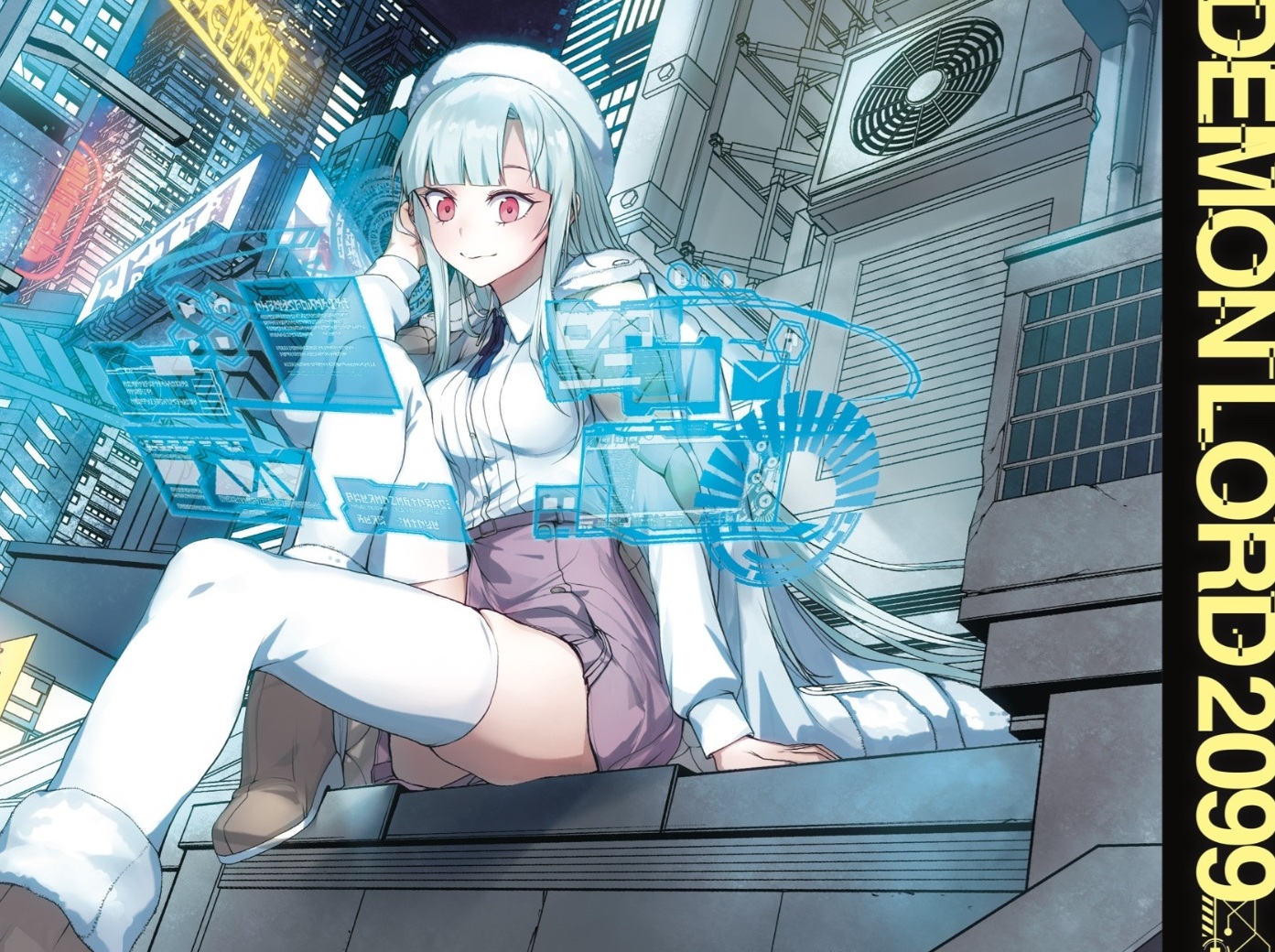
The full-page sketches, abundant throughout the omnibus, are masterpieces in their own right, showcasing a level of artistic quality rarely encountered in the medium. These expansive illustrations are not merely decorative but serve to immerse the reader deeply into the futuristic world of Shinjuku and the visceral action sequences. The dark panels, in particular, are strikingly effective, utilizing contrast and shadow to enhance mood and tension, creating an atmosphere that perfectly complements the cyberpunk aesthetic. Sakurai’s multi-image compositions further highlight his artistic prowess, demonstrating an intricate understanding of panel layout and flow, guiding the reader’s eye seamlessly through complex scenes.
Moreover, the depiction of movement in "Demon Lord 2099" is equally striking. During action sequences, Sakurai masterfully captures the kinetic energy and speed of the characters. The way characters’ hair flows dynamically, the blurred lines indicating rapid motion, and the precise rendering of impacts and reactions result in a series of memorable and impactful images. This attention to detail in conveying violence and speed imbues the battles with a raw intensity that is both thrilling and visually arresting. The implementation of depth of field further cements the quality of the artwork, adding a cinematic quality to the panels, making characters and objects pop from the background and enhancing the overall visual immersion.
Complementing Sakurai’s breathtaking execution, Kureta’s character designs, particularly for the central figures, are exquisite. The various appearances of the Demon Lord Veltol, reflecting his fluctuating power and emotional states, are meticulously rendered. The final battle, predictably involving Marcus, introduces another exceptionally well-designed figure, emphasizing the high stakes and epic scale of the conflict. Machina and the hero Gram are also impressively drawn, their designs conveying their personalities and roles within the narrative. Even supporting characters like Takahashi have their moments of visual flair, ensuring that the entire cast is distinct and memorable. This combination of superb artistic execution and compelling character design makes "Demon Lord 2099" a visual feast for manga enthusiasts.
Beyond the Battles: Thematic Depth and Social Commentary
While initially leaning into humor and eventually transitioning into action, the narrative of "Demon Lord 2099" by Daigo Murasaki delves into several profound thematic elements and offers insightful social commentary, enriching the overall experience beyond its surface-level entertainment.
One of the most resonant themes is the difficulty faced by individuals unfamiliar with rapidly advancing technology in adapting to a new era. Veltol’s struggles with basic modern concepts, his unemployment for 500 years, and his bewilderment at the world of 2099 serve as a potent metaphor for generational gaps and the challenges of technological progress. This narrative thread also subtly critiques the price society pays for such advancements, exploring the potential for alienation and the loss of traditional skills in an increasingly automated and digitally dependent world.
Similarly, the series introduces a compelling notion that the Fused Era of 2099 is an age where traditional heroes have no place. Instead, influencers and streamers—figures like Veltol himself in his new guise—are the new beacons of public attention and admiration. This commentary cleverly satirizes modern celebrity culture, where viral fame often eclipses genuine heroism or profound achievement. It questions what truly constitutes a "hero" in an era dominated by digital platforms and curated online personas, suggesting a shift in societal values and the mechanisms through which power and influence are wielded.
Furthermore, the narrative fearlessly touches upon more grounded societal issues, including political corruption and its insidious ties with organized crime, particularly the yakuza. This element reinforces the cyberpunk context, where gleaming technological facades often hide a grimy underbelly of illicit dealings and power struggles. The exploration of these darker themes adds a layer of gritty realism to the fantastical setting, making the world feel more complex and believable.
The masterful combination of light drama, comedy, and intense action sequences works exceptionally well, creating a genuine page-turner. The gradual shift in tone, from the initial comedic struggles of Veltol to the high-stakes battles that define his resurgence, is expertly handled, maintaining reader engagement throughout. This dynamic tonal balance ensures that the series remains fresh and unpredictable, constantly evolving its narrative focus while staying true to its core themes.
The Business of Isekai: Market Trends and Franchise Strategy
"Demon Lord 2099" stands as a prime example of the successful multimedia franchise model prevalent in the Japanese entertainment industry. Its journey from light novel to multiple manga adaptations and an anime series reflects strategic decisions aimed at maximizing market penetration and audience engagement.
The enduring appeal of the isekai genre, which typically involves a character being transported to a different world, continues to drive significant sales in light novels and manga. "Demon Lord 2099" cleverly twists this trope by having a fantasy character transported into the future of his own world, offering a fresh perspective on the "fish out of water" narrative. This innovation helps it stand out in a saturated market, attracting readers looking for both familiar comforts and novel concepts.
The decision by Kadokawa Shoten to swiftly re-launch the manga with a new artist after the initial adaptation’s removal highlights the publisher’s belief in the property’s commercial viability and narrative strength. Such commitment demonstrates the competitive nature of the industry and the value placed on successful intellectual properties. The subsequent omnibus release by Yen Press is critical for its global reach. Yen Press plays a vital role in making Japanese manga and light novels accessible to English-speaking audiences, often curating popular and critically acclaimed series for international distribution. The omnibus format, in particular, caters to a market that appreciates comprehensive collections and offers a convenient way for new readers to jump into a completed story.
The anime adaptation by J.C.Staff further amplifies the franchise’s visibility, leveraging the global popularity of anime streaming. An anime series not only attracts new fans but also drives renewed interest in the source material, creating a synergistic loop that benefits all facets of the franchise. This multimedia strategy, where each adaptation supports and promotes the others, is a cornerstone of success in the contemporary Japanese entertainment landscape, ensuring "Demon Lord 2099" reaches diverse audiences across various platforms.
Conclusion: A Defining Entry in Contemporary Manga
"Demon Lord 2099 The Complete Omnibus," while perhaps featuring narrative progressions that occasionally lean on familiar genre conventions, ultimately distinguishes itself as an excellent manga. Its primary strengths lie in its truly exceptional artwork by Yutaka Sakurai and a compelling story that reveals considerably more depth and thematic richness than initially apparent. The fusion of high fantasy, cyberpunk aesthetics, and a unique take on the isekai trope creates a vibrant and engaging world.
The series successfully blends humor, drama, and action, offering incisive commentary on technology, societal values, and the very nature of heroism in a rapidly evolving world. From the meticulous details of Sakurai’s illustrations to the insightful social critiques embedded within Murasaki’s narrative, the omnibus provides a comprehensive and highly satisfying reading experience. It is a testament to the creative power of Japanese storytelling and stands as a significant contribution to both the cyberpunk and fantasy genres in contemporary manga. For readers seeking a visually stunning and thought-provoking adventure that challenges expectations, "Demon Lord 2099 The Complete Omnibus" is an essential acquisition.