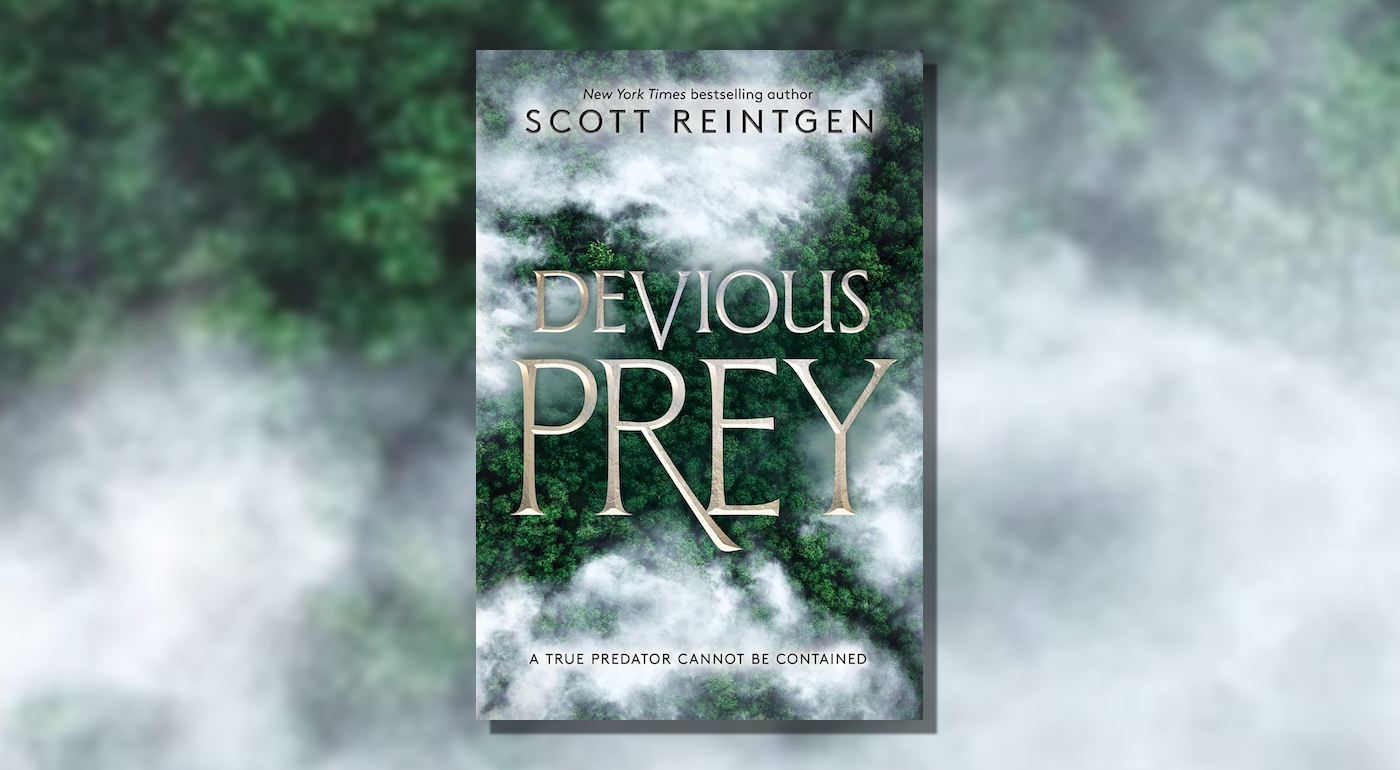
Margaret K. McElderry Books has announced the upcoming release of Scott Reintgen’s latest young adult fantasy novel, Devious Prey, slated for publication on March 31st. The novel plunges readers into a perilous scenario where survivors of an airship disaster find themselves stranded on a desolate island, facing not only the harsh environment but also a dangerous, escaped dragoness. The narrative centers on two key figures: the young woman who secretly brought the dragoness aboard and a mysterious chained boy, both harboring secrets that could prove to be their salvation or their doom.
Stranded and Hunted: An Airship Disaster Sets the Stage
The initial premise of Devious Prey unfolds with a catastrophic event that leaves a diverse group of passengers and crew adrift. An airship, a marvel of advanced aerial transportation, succumbs to a violent storm during flight, leading to the death of its windmaster. The ensuing tempest throws the vessel off course, resulting in a crash landing on an uncharted, desolate island. The immediate aftermath of the crash is compounded by the discovery of a dragoness concealed within the ship’s hold. The creature’s subsequent escape from its damaged cage transforms the island into a hunting ground, with the dragoness preying on the surviving humans in a bid for freedom.
This perilous situation immediately sets a survivalist tone for the novel. The survivors are faced with the dual threats of the untamed wilderness and a formidable mythical beast. Their prospects for returning home are dire, hinging precariously on the actions and secrets of two individuals who were seemingly at the heart of the catastrophe. The young woman, identified as the smuggler of the dragoness, and the enigmatic boy, brought aboard in chains, become the focal points of the unfolding drama. Their clandestine knowledge and pasts are positioned as the only potential keys to navigating the island’s dangers and ultimately, to escaping its clutches. The very secrets that might enable their survival also carry the implicit threat of severe repercussions should they ever manage to return to civilization, hinting at a complex and potentially dark future awaiting them.
An Unsettling Calm and Shifting Sands of Suspicion
The narrative excerpt from Devious Prey highlights a palpable tension beneath a surface of apparent calm. For the second consecutive night, no lives have been lost, a fact Warden Kell, the individual in charge of the survivors, attributes to his own leadership and perhaps divine intervention. However, this perceived security is a mirage, easily overlooked by Kell, whose focus is solely on his own perceived authority.
Marken, a character trained to observe the minute details, perceives the underlying currents of unrest. He notices a clandestine communication network operating within the camp. A whispered word, a subtle nod—a message is being passed from one deckhand to another, deliberately bypassing the heavily patrolled areas guarded by Kell’s men. This secret exchange suggests a coordinated plan is in motion, a “game” that Marken recognizes as far more significant than simple camp gossip about rations or patrol schedules. His keen observation skills are the first indicator that the survivors are not merely waiting for rescue, but are actively strategizing and preparing for something beyond the immediate threat of the dragoness.
Further solidifying Marken’s suspicions is a marked shift in the group’s behavior. Helene and Agnes, two of the deckhands, initiate a game of pegs, a seemingly trivial activity that contrasts sharply with the urgent discussions of survival—building a boat, exploring the island, and rationing supplies—that dominated the previous day. This abrupt abandonment of practical concerns for leisure suggests a deliberate diversion or a calculated change in tactics. The urgency has dissipated, replaced by an atmosphere of organized idleness. Warden Kell, blinded by his self-importance, fails to recognize this subtle yet significant behavioral alteration, even observing the shift without comment and indulging in a nap by the fire.
The Quiet Movements of a Brewing Conspiracy
The third and most critical clue for Marken arrives with the coordinated movements of Pearl Trask and her aunt. They discreetly slip away into the woods during the peak of breakfast activity, their absence extending far beyond a casual break. Their return is immediately followed by a significant exchange: a shared glance between Pearl and Helene, and a decisive action by Pearl. She pulls her hair into a ponytail, a seemingly minor act that, for Marken, accentuates her features and reveals a stark, sharp beauty he had previously overlooked. This deliberate act, followed by a single nod to Helene, signals a completed agreement or confirmation of a plan. Pearl then resumes her position by the fire, observing the ocean, her actions conveying a sense of resolved purpose. This silent communication and the subsequent deliberate grooming suggest a significant decision has been made, likely related to Marken himself, or at least involving his potential role in whatever is unfolding.
Marken’s internal monologue reveals his strategy: “All I have to do now is wait. Be patient.” He understands that the brewing plan, whatever its nature, is nearing its critical phase, and his role is to observe and allow events to unfold.
A Resounding Enigma: The Metallic Shriek
Just as Marken settles into his patient observation, the island itself seems to intervene, presenting a new variable that challenges the existing dynamics. An hour later, the same metallic shriek that was heard the previous day pierces the air. The survivors react instinctively, a surge of primal fear akin to prey sensing an imminent attack. However, the sound emanates from beyond their immediate vicinity, alleviating the direct threat.
Marken initially considers the possibility that the sound is the dragoness, perhaps in an altered form. Yet, a glance at the sun’s position reveals the noise occurred at precisely the same time as the day before. This uncanny regularity suggests a source beyond the unpredictable nature of wild creatures. Marken’s analytical mind immediately dismisses a biological origin, concluding that such precision is characteristic of man-made mechanisms. Humans, he reasons, are driven by systems and consistency.
This realization opens a Pandora’s Box of uncomfortable questions. If the sound is artificial, does it indicate the island is inhabited? Could there be a functioning fishing town or a settlement on another part of the island that has remained undiscovered? The magnitude of the airship crash, described as capable of awakening a deity, raises further questions: if civilization is indeed nearby, why has no rescue party been dispatched? The apparent silence from any potential inhabitants in the wake of such a dramatic event is deeply perplexing.
The Looming Threat of Rescue and the Desire for Escape
The prospect of civilization so close at hand triggers a profound sense of dread in Marken. The “null thread,” a metaphorical constraint he feels, tightens around him, creating a suffocating, claustrophobic sensation. He recognizes that if they are rescued before enacting their own plans, he will find himself back in his original predicament, having gained nothing and facing the potential loss of everything he has strived for.

This internal conflict is brought to the forefront by Wally, an older deckhand, who vocalizes the group’s growing suspicion about the mysterious sound. "That’s got to be machinery," Wally declares, his voice carrying across the camp. "It made that noise at the same time yesterday. Like it’s running on a cycle. There’s something out there that’s man-made."
A Calculated Decision and a Warden’s Fatal Misjudgment
Marken grapples with the dilemma of how to explain the recurring noise. He considers fabricating a magical explanation, but the lack of prior disclosure makes such a lie untenable. He needs a plausible narrative, and quickly. Meanwhile, Warden Kell engages in a hushed conversation with his subordinate, Levi, while the deckhands buzz with anticipation.
Helene articulates the logical deduction: "Machinery means people. Maybe it’s one of those drilling rigs. You know the ones they’ve got in all the northern harbors now. If there’s a little fishing village or something over there, we might be saved."
All eyes turn to Warden Kell, the man in possession of the firearms, and the de facto leader. Marken waits, breathless, hoping Kell will dismiss the idea, clinging to his ingrained stubbornness. However, Kell’s response is unexpected. He permits an expedition: "Go," he states, with a caveat that proves to be his undoing. "If you want to go, I won’t stop you—but no guns. They stay with us. My men and I have been charged to escort a prisoner safely home. We will stay with the ship and the wherestone. I wish you the best of luck if you decide to go on this little—" he pauses, injecting a heavy dose of derision, "—jaunt of yours. I won’t stand in your way, but our guns stay on this beach."
The Seeds of Rebellion and the Warden’s Blindness
A wave of relief washes over Marken. Kell’s rigid adherence to protocol, specifically his refusal to allow firearms on any exploratory mission, inadvertently plays into Marken’s favor. Helene, pragmatic and not as reckless as her sister, is unlikely to embark on a perilous island trek without adequate protection. Spears alone would not suffice, and the implied need for pistols—or Marken’s magic—is clear.
"Fair enough," Helene concedes, her tone signaling a concession. "We keep waiting, then." She turns away from the conversation, dismissing it as a settled matter, and resumes her game of pegs.
Kell, visibly pleased with his assertion of authority, misinterprets Helene’s acquiescence as capitulation. His pride blinds him to the subtle, yet significant, indicators of burgeoning defiance. Marken observes the tightening fists of the deckhands, the chillingly impassive expression that settles over Helene’s face, and the almost violent precision with which Agnes moves her pegs. A hidden smile touches Marken’s lips. He knows, with chilling certainty, that Kell’s misjudgment has sealed his fate. "You’re a dead man, Kell," Marken thinks, "You just don’t know it yet."
This pivotal moment underscores the complex web of alliances, secrets, and power dynamics at play within the stranded group. While Warden Kell remains preoccupied with maintaining his superficial control, a silent, potent rebellion is coalescing, fueled by desperation and a shared, unspoken agenda. The island, a stage for survival, is rapidly transforming into a battleground of wits and wills, with the true nature of its inhabitants and the secrets held by its cast of characters yet to be fully revealed. The narrative is poised for a dramatic escalation, where the perceived safety of inaction may prove to be the most dangerous choice of all.
Background and Broader Implications
The scenario presented in Devious Prey taps into enduring themes within young adult literature: survival against overwhelming odds, the burden of secrets, and the complex nature of trust in crisis situations. The inclusion of a dragoness, a creature steeped in mythology and often symbolizing power and danger, adds a fantastical element that elevates the stakes beyond mere survival. The concept of a mysterious chained boy suggests a backstory of captivity and potential oppression, hinting at a deeper societal or political conflict that may have led to his predicament.
The island itself, an unknown entity, serves as a microcosm for exploring human nature under duress. The interactions between the survivors, particularly the subtle power plays between Marken and Warden Kell, highlight the struggle for control and the different approaches to leadership in a crisis. Kell’s reliance on brute force and self-aggrandizement stands in stark contrast to Marken’s reliance on observation, intellect, and strategic patience.
The mystery of the “machinery” and the potential for a hidden human presence on the island introduces an element of intrigue that transcends the immediate threat of the dragoness. This suggests that the island may hold more than just natural dangers; it could be a site of human activity, perhaps clandestine or industrial, raising questions about the island’s purpose and its relationship to the wider world. The implications of such a discovery could range from the possibility of rescue to the revelation of a hidden agenda or a community deliberately isolated from external contact.
The narrative’s structure, with its focus on Marken’s observational prowess and his anticipation of events, positions the reader as a co-conspirator in unraveling the island’s mysteries. The deliberate withholding of information about Marken’s own abilities and Kell’s past, coupled with the hints of Pearl and Helene’s secret plans, creates a rich tapestry of suspense. The novel promises to explore not only the fight for physical survival but also the psychological and ethical challenges faced by individuals when their deepest secrets are exposed and their lives depend on navigating a world where trust is a luxury and deception is a survival tool.
Excerpted from Devious Prey, copyright © 2026 by Scott Reintgen.