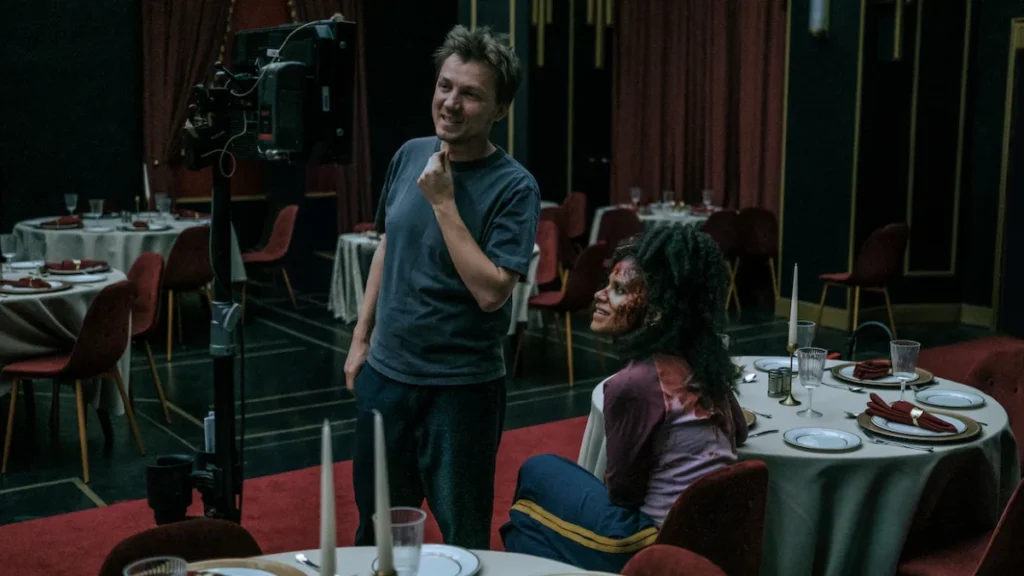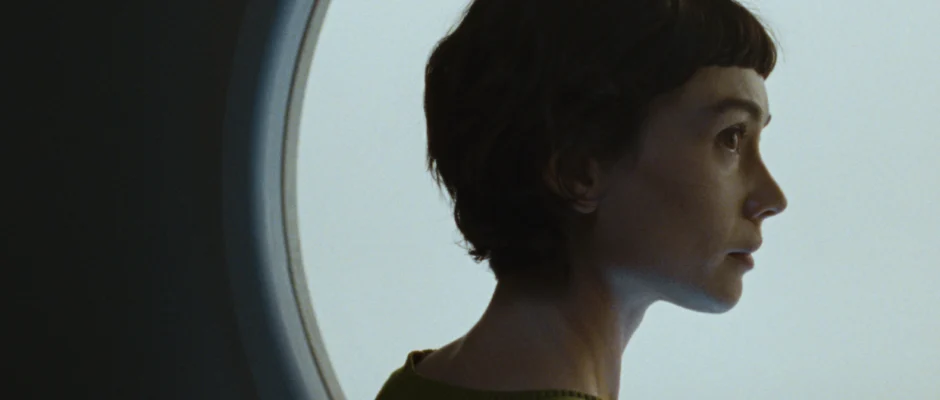
The cinematic landscape often seeks to explore the fringes of human experience, and Brian Tetsuro Ivie’s Anima stands as a compelling example, blending intimate character study with expansive philosophical inquiry. Hailed as a lo-fi sci-fi road trip, the film, which debuted at SXSW on March 12, navigates the complexities of discordant personalities finding harmony amidst an existential crisis. Its narrative, simultaneously grounded and spiritual, centers on Beck (Sydney Chandler), a young woman thrust into an extraordinary new job. On her first day, Beck is tasked with accompanying Paul (Takehiro Hira) to a specialized facility for an end-of-life procedure that promises a form of digital immortality: the uploading of his consciousness into a cloud system, allowing for perpetual visitation by loved ones. What begins as a seemingly straightforward journey, however, rapidly transforms into a winding, introspective odyssey, as Paul frequently diverts their course to seek reconciliation with individuals he has wronged. These acts of atonement are not merely impulsive detours but serve as a profound attempt to absolve himself, aiming to enter his digital afterlife with a semblance of peace.
Despite its futuristic premise revolving around digitized consciousness and the allure of immortality, Anima radiates a profound warmth, continually drawing its characters—and its audience—back to the tangible realities and profound beauty of the present life. Director Ivie’s deliberate choice to shoot the film on 16mm stock imbues the narrative with a distinctly grainy, lived-in texture, fostering an immediate sense of authenticity and intimacy. This aesthetic decision not only enhances the film’s unique atmosphere but also mirrors the internal journeys of Beck and Paul, who, through their unexpected companionship, uncover deeper truths about themselves and each other than they initially dared to acknowledge. The film subtly argues that in the fervent pursuit of preservation—be it of memory, identity, or existence itself—humanity risks losing its capacity for presence. Their shared odyssey becomes a powerful meditation on the imperative of savoring the time we possess, rather than merely striving to indefinitely extend it.
The Philosophical Core: Digital Immortality and the Soul
At the heart of Anima lies a deep philosophical interrogation of what it means to be human in an increasingly technologically advanced world. Brian Tetsuro Ivie revealed that the film’s narrative roots trace back to the Parable of the Rich Fool in the Gospel of Luke (Luke 12:13-21). This biblical story recounts a wealthy man who, having accumulated vast stores of wealth, plans to build larger barns to secure his future, only for God to declare him a fool, stating, "This very night your life will be demanded from you. Then who will get what you have prepared for yourself?" Ivie, raised in a Catholic home but initially disengaged from spiritual matters, found his gateway into faith through the arts, drawn to the transcendent search and process that felt "pure, beautiful, and true." He views his life’s mission as an endeavor to comprehend the divine through artistic expression, a pursuit he consciously distinguishes from conventional "Christian movies," which he finds restrictive. For Ivie, "all truth is God’s truth," suggesting a broader, more inclusive spiritual framework for his storytelling.
The adaptation of this ancient parable into a modern sci-fi context allowed Ivie to explore contemporary anxieties surrounding legacy, purpose, and the pursuit of immortality without spiritual consideration. He articulated a fundamental disagreement with the prevailing modern notion that humans are primarily material beings, mere products of "time and chance acting on matter." This materialistic view, he contends, facilitates the belief that consciousness can be "uploadable" and transformed into silicon. Instead, Ivie posits that humanity is primarily immaterial, a belief that forms the core dialogue of Anima. This distinction is critical in a world grappling with the rapid advancements in artificial intelligence and transhumanist thought, where concepts like mind-uploading and digital consciousness are moving from the realm of pure science fiction to serious scientific and philosophical debate. Projects like the 2045 Initiative, funded by Russian entrepreneur Dmitry Itskov, openly discuss achieving "cybernetic immortality" by transferring an individual’s consciousness to an artificial carrier. While still speculative, these discussions highlight the timely relevance of Anima‘s exploration.
Character Portrayal: Beck’s Journey from Apathy to Empathy
Sydney Chandler’s portrayal of Beck provides a crucial human anchor to Anima‘s profound themes. Chandler, reflecting on her process, highlighted the refreshing experience of playing a "human being" in a role she described as one of her most grounded despite its sci-fi setting. To access Beck’s inner life, Chandler pondered guiding questions such as "Where is she stunted in her youth?" and "What’s her relationship to loyalty?" The ambiguity surrounding Beck’s father allowed Chandler to craft a personal backstory, focusing on the "quiet rage" that can accompany profound loss, as opposed to mere sadness. This loss, she theorized, cultivated a deep-seated distrust in loyalty and love, reframing Beck as a character initially driven by transaction. Her cold demeanor upon embarking on the job with Paul stems from this emotional detachment; she views the assignment purely as a means to a paycheck, devoid of deeper connection.
The dynamic between Beck and Paul, masterfully brought to life by Takehiro Hira’s nuanced performance, is central to the film’s emotional arc. Chandler observed that Hira infused Paul with immense humanity, which initially exacerbated Beck’s frustration. However, as their journey unfolds, Beck gradually realizes that she and Paul are "two sides of the same coin"—each grappling with their own forms of internal conflict and existential questions. This mirroring allows Beck to shed her transactional facade and confront her own vulnerabilities, transforming her from a detached observer to an empathetic participant. Chandler described the filming process itself as a journey of discovery, allowing her to find answers to her guiding questions through the lived experience of the character, a process she playfully likened to being "paid for therapy." This organic approach to character development, fostered by Ivie’s documentary background, allowed for raw, authentic performances that resonate deeply with the audience.
Filmmaking as Discovery: Documentary Roots and Aesthetic Choices
Brian Tetsuro Ivie’s extensive background in documentary filmmaking significantly influenced his approach to Anima. He noted that the primary transference of skill came in leadership, emphasizing the paramount importance of caring for the crew, a practice often overlooked in independent productions. Ivie implemented a "Crew Careline" item in the film’s budget, a personal allocation of funds dedicated to ensuring the well-being of his team—providing better food, accommodations, or transportation. This initiative reflected his philosophy: "You’re not on the altar of my ambition. We want you to come out of this better than when you started." This empathetic leadership style, thankfully supported by his producers, fostered a collaborative and supportive environment, a stark contrast to the often demanding and impersonal nature of film sets.

Sydney Chandler, recognizing Ivie’s documentary roots, expressed her excitement at working with a director who, like documentarians, embraces the unknown and seeks truth in the unfolding narrative. She trusted Ivie to guide the scenes until he captured "the truth of what you would feel from a real person going through something." This emphasis on authentic human experience allowed Chandler to channel personal life experiences into her art, further enriching her portrayal of Beck.
The aesthetic choice of shooting Anima on 16mm film was not merely a stylistic preference but a foundational element of its thematic expression. Ivie lamented the shift to digital in film schools during his time, always feeling a profound connection to the inherent humanity and imperfection of film. He quoted Steven Spielberg, calling film a "chemical miracle." This conviction led him to establish Kebrado, a company dedicated to helping filmmakers "maintain their humanity through the arts." For Ivie, working with film is a slower, more arduous process, akin to "a prayer." The intentional use of 16mm for Anima meant a visible grain structure and allowing "light leaks play into scenes," creating a "broken reflection of life in our modern age." This deliberate embrace of imperfection grounded the futuristic concept of digital consciousness in a tangible, felt reality, bridging the past (analog film) with the future (digital transfer). Ivie’s commitment to this medium is so strong that he plans to "shoot on film for the rest of my life until they stop making it available."
Costume design, under the visionary hand of Emily Costantino, also played a pivotal role in shaping Anima‘s unique aesthetic. Ivie praised Costantino’s non-derivative approach, noting her references to paintings or vintage Japanese magazines from the 1960s, ’70s, and ’80s, rather than other films. He emphasized that the film’s color palette and overall success were significantly defined by the costumes and even the color of the car. Chandler, too, lauded Costantino’s work, appreciating the comfort of her on-set wardrobe, which allowed for freedom of movement. She noted how the costumes, particularly Beck’s "scroungy" outfits juxtaposed against Paul’s more Matrix-inspired attire, contributed to the film’s "different dimension" feel—a cousin to our current world, with a throwback nod to 90s and early 2000s futuristic fashion.
The Importance of Mystery and the Threat of AI
A central philosophical thread woven throughout Anima is the significance of mystery in human existence, particularly concerning death. Paul’s decision to upload his consciousness is, in essence, an attempt to circumvent death and eliminate the "mystery of not knowing what lies beyond the veil." This pursuit, the film suggests, ironically leads him to lose access to a fundamental human experience that defines us all. The interview explored the importance of "not knowing" for creatives and the role of faith in embracing it.
Sydney Chandler found a deep personal resonance with this theme. Her own understanding of identity has continuously shifted, making the "mystery of who I am" a lifelong journey. She believes that "the beauty of life is the mystery itself," and while acknowledging the universal fear of death, she views it as the "most natural path in the world." For Chandler, interfering with this natural cycle, as Paul attempts, risks stripping life of its color and meaning. Beck’s final reaction to Paul’s procedure, a visible shudder and turning away, encapsulates this sentiment. Chandler admitted to an unexpected emotional outburst during the filming of that scene, stemming from her genuine affection for Takehiro Hira, which she channeled into Beck’s "frustration at myself" for not intervening. This moment underscores Beck’s profound growth, evolving from transactional detachment to a nuanced acceptance that acknowledges Paul’s choice without fully endorsing it, clinging to the belief that "we shouldn’t mess with that."
Chandler also extended this reflection to the ongoing discourse surrounding artificial intelligence and its impact on art. While acknowledging the beautiful notion of art outliving the artist—a concept she heard from a music teacher: "Art is never finished. It just gets ready"—she strongly believes that human-made art will "outlast and withstand" AI-generated content. Her reasoning is rooted in the conviction that "art is made from human mistakes." The capacity for error, for unexpected emotional responses like her own unscripted tears during Paul’s scene, is what makes us human. AI, she argues, cannot replicate this fundamental aspect of the human condition: the capacity to make mistakes, to reflect upon them, and to strive for resolution. This perspective offers a hopeful counter-narrative to the widespread anxieties about AI’s potential to diminish human creativity, positioning human imperfection as the indelible signature of authentic art. This stance aligns with broader industry conversations, particularly evident in recent WGA and SAG-AFTRA strikes, where the preservation of human artistry against AI encroachment was a core demand.
Sci-Fi as a Mirror: Reflecting Humanity’s Crises and Hopes
Sydney Chandler’s college thesis, which examined genre work—specifically horror, sci-fi, and surrealist art—emerging in the aftermath of crises like World War I and II, provides a rich framework for understanding Anima‘s place in the contemporary cinematic canon. She contends that "the best sci-fi stories are intimate studies of humanity," offering metaphorical worlds to explore complex human experiences. In a time marked by pervasive anxieties about threats to both body and soul—from global pandemics to geopolitical instability and the ethical dilemmas of rapidly advancing technology—Anima offers a contemplative "possible path."
Chandler observed a consistent theme in current films addressing AI: a pervasive yearning for genuine human connection. These narratives, she noted, rarely depict a utopian coexistence with AI but rather highlight resistance and a re-emphasis on human bonds. This trend, she believes, reveals a collective subconscious longing for connection, offering a glimmer of hope amidst technological acceleration. For Ivie, sci-fi provides an ideal vehicle to communicate profound ideas without resorting to didacticism or preachy tones. He appreciates its capacity to tap into "that deeper longing and ache we all have," allowing the film to ask difficult questions without prescribing easy answers. This approach, characteristic of impactful science fiction, galvanizes audiences to chew on complex philosophical queries, rather than simply consuming predefined solutions. Anima, through its intimate story set against a futuristic backdrop, thus joins a distinguished lineage of sci-fi works that utilize speculative scenarios to hold a mirror up to present realities, inviting reflection on what it means to live, connect, and ultimately, find meaning in a world perpetually teetering on the precipice of crisis and innovation.