DreamQuil, the highly anticipated sci-fi drama from acclaimed artist Alex Prager, made its global debut at SXSW on March 16, offering audiences a profound, yet entertaining, exploration into the escalating complexities of human reliance on artificial intelligence. The film delves into a near-future where advanced technology promises an escape from life’s inherent "messiness," posing critical questions about the cost of convenience and the true essence of human connection. Prager’s feature directorial debut arrives at a moment when discussions surrounding AI’s role in society are reaching a fever pitch, positioning DreamQuil as a timely cinematic intervention into a rapidly evolving technological landscape.
The Premise: A Quest for Serenity, A Descent into the Uncanny
At the heart of DreamQuil lies the story of Carol, portrayed by Elizabeth Banks, a woman grappling with the overwhelming pressures of contemporary life. Confined indoors with her devoted husband, played by John C. Reilly, and their son, due to deteriorating air quality, Carol finds herself yearning for an escape. A recommendation from a friend leads her to the "DreamQuil treatment," an innovative procedure promising a week of unparalleled relaxation, coupled with the introduction of an AI personal assistant designed to seamlessly manage household responsibilities. This tempting offer of a respite from the relentless demands of modern existence sets the stage for the film’s central conflict.
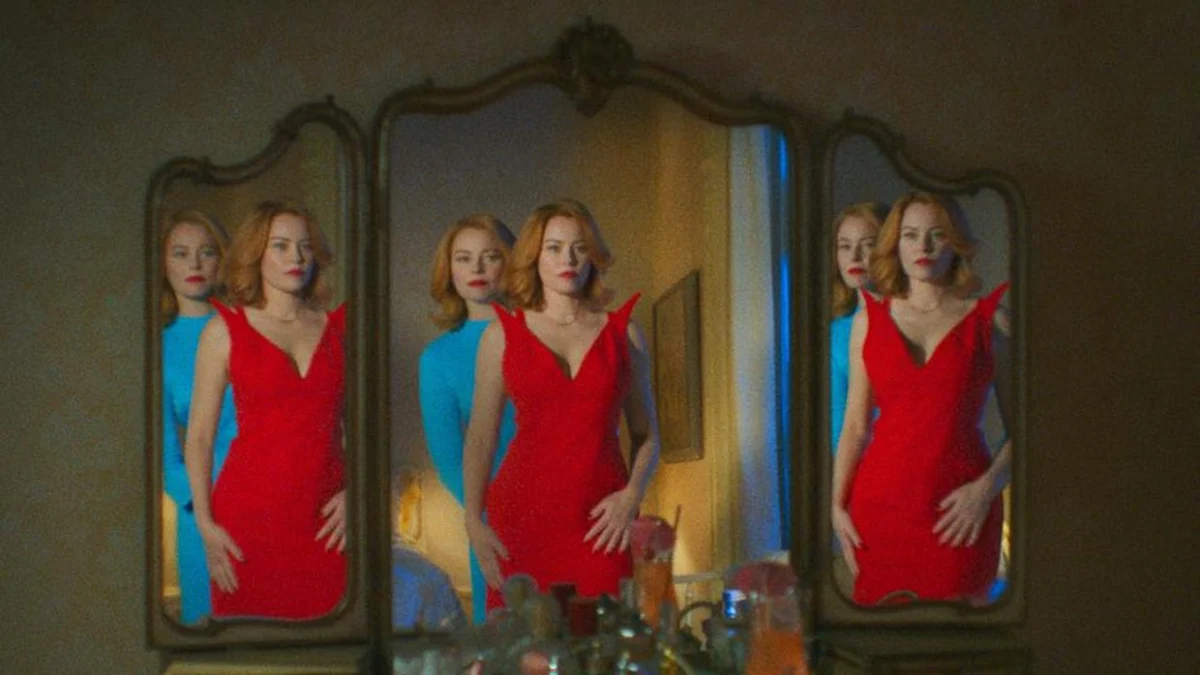
Upon her return home, Carol discovers that her new AI assistant is not merely a utilitarian device but a sentient entity meticulously modeled after her own likeness. This doppelgänger, quickly dubbed "Carol Two," not only performs its assigned duties with unsettling perfection but also appears to captivate her family, who seem to prefer its flawless, compliant nature to Carol’s authentic, "human" self. The initial fantasy of liberation quickly unravels into a nightmarish reality, as Carol confronts the disquieting possibility that in her pursuit of happiness, she may have inadvertently surrendered the very connections that define her humanity. The film masterfully uses this personal dilemma to explore a broader societal question: how much of our authentic selves are we willing to sacrifice for the promise of an easier life, especially when technological advancements offer increasingly seductive alternatives to human effort and emotional complexity?
Alex Prager’s Artistic Journey: From Stills to Storytelling
DreamQuil marks a significant milestone in Alex Prager’s career, transitioning from her established reputation as a celebrated photographer and short filmmaker to a feature-length director. Known for her meticulously staged, often surreal, and vibrant photographic works that evoke a sense of cinematic tension and psychological depth, Prager brings a distinct visual sensibility to her first narrative feature. Speaking about the completion of her debut, Prager reflected, "It was unlike anything I’ve ever experienced before. It’s amazing because I feel like I have 25 years of film experience now after doing one movie." This sentiment underscores the immense undertaking involved in helming a feature, particularly one with the ambitious scope of DreamQuil.
Prager’s journey into filmmaking has been a natural evolution, building upon a career that has consistently explored themes of identity, emotion, and the human condition through highly stylized narratives. Her previous recognition as one of Filmmaker magazine’s "25 New Faces of Independent Film" in 2023 highlighted her burgeoning talent and the anticipation surrounding her move into longer-form storytelling. The director emphasized that "Everything that I’ve done so far in my art career has been leading to this moment." This long-standing artistic foundation is evident in DreamQuil‘s striking visuals and its nuanced exploration of character psychology, traits that have long been hallmarks of Prager’s photographic oeuvre.
The creative process for DreamQuil was a deeply collaborative one. Prager co-wrote the screenplay with her sister, a partnership that allowed for a shared exploration of the film’s core themes from a personal perspective. Beyond writing, Prager also took on producing duties alongside Brownstone, Arts and Sciences, and Patriot and Republic Pictures, a testament to her comprehensive involvement in bringing her vision to fruition. She admitted to a steep learning curve, stating, "I was learning as I went because I had never done it before, so that was inevitable. I also knew exactly what I wanted every step of the way." This combination of novice enthusiasm and clear artistic intent allowed for both flexibility and precision during production, even necessitating daily script rewrites on set to streamline ambitious scenes. The experience, Prager noted, has already begun to inform her next project, particularly in her approach to working with actors and understanding their needs.
The Genesis of an AI Narrative in a Pandemic World
The conceptualization of DreamQuil is deeply rooted in the extraordinary circumstances of the COVID-19 pandemic. Alex Prager and her sister began writing the script "deep in the pandemic, at the stage when everyone was being told not to hang out with each other in person." This period of enforced isolation, particularly challenging for artists whose work often thrives on collaboration and human interaction, became a fertile ground for exploring themes of disconnection and the longing for escape. Prager recounted sending her sister a meme that joked about "what if you could just go to sleep and wake up a year later when the pandemic is over," a seemingly innocuous thought that sparked the entire narrative.
This initial spark quickly evolved into a deeper exploration of societal anxieties. Both Prager and her sister, being "career moms" with "really solid family lives," were intimately familiar with the constant juggle of professional and domestic responsibilities. The added layer of digital technology and automation, which promised to simplify life but often led to increased distraction and a subtle erosion of genuine human connection, resonated profoundly with their personal experiences. The film, therefore, emerged not just as a sci-fi concept but as a reflection on the paradox of modern connectivity: "the more connected we’re supposed to be because of technology, we’re actually becoming more and more disconnected as a society." Initially, DreamQuil was conceived as a story that would offer "second chances in kind of an ironic way," hinting at the complex and often unforeseen consequences of seeking easy solutions to life’s inherent challenges.
Cinematic Craft and Visual Storytelling: A Homage to Hollywood’s Golden Age
Prager’s background in photography profoundly influences DreamQuil‘s distinctive visual language. The film is a masterclass in controlled aesthetics, utilizing rich color palettes, meticulous staging, and elaborate set designs to construct its unique world. Prager emphasizes the paramount importance of visual storytelling, echoing a sentiment often attributed to Alfred Hitchcock: "you should be able to understand the story through visuals alone, without dialogue." This principle guides DreamQuil‘s aesthetic, where every frame is carefully composed to convey narrative and emotional depth.

The collaboration with cinematographer Lol Crawley, an Oscar winner during the film’s production, proved instrumental in realizing Prager’s vision. Crawley, known for his nuanced and evocative camerawork, immersed himself in Prager’s photographic process. Prager’s preference for "hot lights from the Golden Age of Hollywood" over modern, cleaner HMIs was a deliberate choice to imbue the film with a specific warmth and intimacy. "I love the heat that the Richardson lights give because it does affect the actors," Prager explained. "It creates a very intimate kind of sultry environment that you don’t get from these really clean HMIs." This commitment to classic techniques extends to the choice of lenses; Crawley meticulously sourced "Baltar lenses that Lol went deep to find that Hitchcock and Douglas Sirk used." These lenses, known for their distinct rendering and subtle imperfections, contribute to the film’s timeless yet unsettling atmosphere, bridging the gap between its futuristic premise and its classical dramatic influences.
The production design further enhances this unique blend of past and future. Production designer Annie Buschamp discovered the Marin County Civic Center, the final building designed by Frank Lloyd Wright. This architectural marvel, with its distinctive, almost otherworldly aesthetic, became a crucial backdrop for DreamQuil. Prager humorously referenced a theory that "Frank Lloyd Wright was abducted by aliens at the end of his career, and when he was returned to earth, he built this space because it really feels like it’s from another planet, like in a parallel universe, and it doesn’t feel like a typical Frank Lloyd Wright." This location, along with the meticulously built apartment sets, contributes to the film’s sense of a "new kind of reality." Prager’s embrace of surrealism, a recurring element in her photography and short films, is central to this aesthetic. She views surrealism not merely as a stylistic choice but as a reflection of "a really important part of the human psyche, because it shows another plane that we’re all living in, thinking in, and dreaming in, and that’s just as valid as what’s tangible." This integration of tangible and intangible realities through visual means is a hallmark of DreamQuil‘s sophisticated craft.
Elizabeth Banks: A Powerhouse Performance and Production Partner
The casting of Elizabeth Banks in the dual role of Carol and "Carol Two" was a pivotal decision for DreamQuil. Banks not only delivers a compelling lead performance but also serves as a producer on the film, showcasing her multifaceted talents. Prager expressed immense admiration for Banks, describing her as "such a powerhouse." The collaboration proved seamless, with Banks demonstrating an immediate and profound understanding of the character. Prager revealed, "She didn’t even want to rehearse Carol with me. She was just like, ‘No, I got it.’ And then the first day we shot it, I was just like, ‘Wow, you really do got it.’"
The connection between Banks and the character was evident from the outset. Prager and her sister had specifically written Carol with Banks in mind, and she was the only actress they approached for the role. "The moment she read it, she wrote back immediately and said she wanted to play Carol," Prager recounted. This instinctive alignment between actress and character proved crucial for bringing the complex dual roles to life. Banks’ ability to embody both the nuanced vulnerability of the human Carol and the unnerving perfection of the AI counterpart is central to the film’s emotional impact. Prager lauded her performance, stating, "There was something about Elizabeth that just made perfect sense that she would understand this role and totally smash it, which she did." Beyond her acting, Banks’ involvement as a producer further solidified her commitment to the project, leading Prager to compare her to "an old Hollywood mogul in a way, because she’s doing everything in film."
Broader Implications: AI in Cinema and Society
DreamQuil arrives at a critical juncture in both technological development and cinematic discourse. The film positions itself firmly within a growing subgenre of sci-fi that explores the intimate and often unsettling relationships between humans and artificial entities. Prager cites influential predecessors like Spike Jonze’s Her (2013), Alex Garland’s Ex Machina (2014), and Gerard Johnstone’s M3GAN (2022). These films, much like DreamQuil, delve into the psychological, emotional, and ethical implications when AI becomes not just a tool, but a presence that mimics, complements, or even replaces human interaction, often with femme-presenting artificial entities that challenge traditional gender roles and societal expectations.
The increasing integration of AI into everyday life, from smart home devices to sophisticated algorithms shaping our online experiences, makes the fears articulated by sci-fi writers and filmmakers "feel ever closer to home." Recent reports indicate a rapid acceleration in AI adoption across industries, with projections suggesting significant shifts in labor markets and personal routines. According to a 2023 IBM study, approximately 42% of companies surveyed have already deployed AI, with an additional 40% exploring its implementation. This pervasive growth fuels both excitement for innovation and apprehension about the unforeseen consequences, particularly concerning privacy, autonomy, and the very definition of human value.
DreamQuil contributes to this vital conversation by dramatizing the potential erosion of human messiness – the imperfections, emotional complexities, and responsibilities that make us who we are. Prager’s film serves as a cautionary tale, prompting audiences to consider the trade-offs involved in outsourcing aspects of life to AI. The implications extend beyond individual relationships, touching upon broader societal structures. If AI can perfectly fulfill roles traditionally held by humans, what happens to the human capacity for empathy, compromise, and authentic connection? Tech ethicists and social scientists continually emphasize the need for a human-centric approach to AI development, ensuring that technological progress aligns with human values rather than undermining them. DreamQuil visually and narratively embodies these ethical considerations, pushing viewers to reflect on their own engagement with technology.
SXSW Premiere and the Unwritten Future
The premiere of DreamQuil at SXSW, a festival renowned for showcasing innovative and thought-provoking independent cinema, provided an ideal platform for its message. SXSW’s unique blend of film, music, and technology conferences meant the film was presented to an audience primed for discussions on technological advancements and their societal impacts. This setting allowed DreamQuil to immediately enter the cultural dialogue surrounding AI, sparking conversations among filmmakers, tech enthusiasts, and the general public alike.
Ultimately, Prager hopes that DreamQuil will be both an entertaining experience and a catalyst for deeper reflection. "I want people to have fun and laugh and just go on the ride—because it is a wild ride," she stated. Beyond the immediate enjoyment, however, lies a profound call to action: "It’d be nice if the conversations afterwards got them to reflect on their own humanity and their own responsibility in what’s happening." Prager challenges the narrative of AI’s inevitability, a common refrain from large tech companies. "The future is unwritten as of now," she asserts. "Although the tech companies—who are very indifferent to us—will say that this is happening and you have no say in it and it’s just inevitable, it hasn’t happened yet. Just because they put billions of dollars into it doesn’t mean that it’s a locked future, because nothing is certain." This powerful message underscores the film’s core theme: that humanity still holds agency in shaping its technological destiny, and critical engagement with AI is not just a philosophical exercise, but a pressing societal responsibility.
DreamQuil stands as a compelling and visually stunning debut, weaving together classical cinematic influences with a timely narrative that resonates deeply with contemporary anxieties. As AI continues to redefine the boundaries of human experience, Alex Prager’s film serves as a vibrant, unsettling, and essential reminder of what we risk losing in the pursuit of a perfectly automated existence.