The 2003 short film "A Very Slow Breakfast," an early work by acclaimed Indonesian director Edwin, is currently captivating audiences at the Cinemasia Film Festival, resonating with a profound sense of universal truths regarding family dynamics, routine, and unspoken communication across decades and continents. This four-minute cinematic gem, often cited as a foundational piece in Edwin’s distinguished filmography, strips away dialogue to present a stark, yet humorously telling, portrait of morning rituals within a cramped household, where the mundane unfolds with an almost ritualistic apathy. Its screening underscores the enduring relevance of independent short films and the perceptive eye of a director who would later achieve international acclaim for his distinctive narrative style and keen social observations.
A Microcosm of Modern Family Life: Synopsis and Thematic Deep Dive
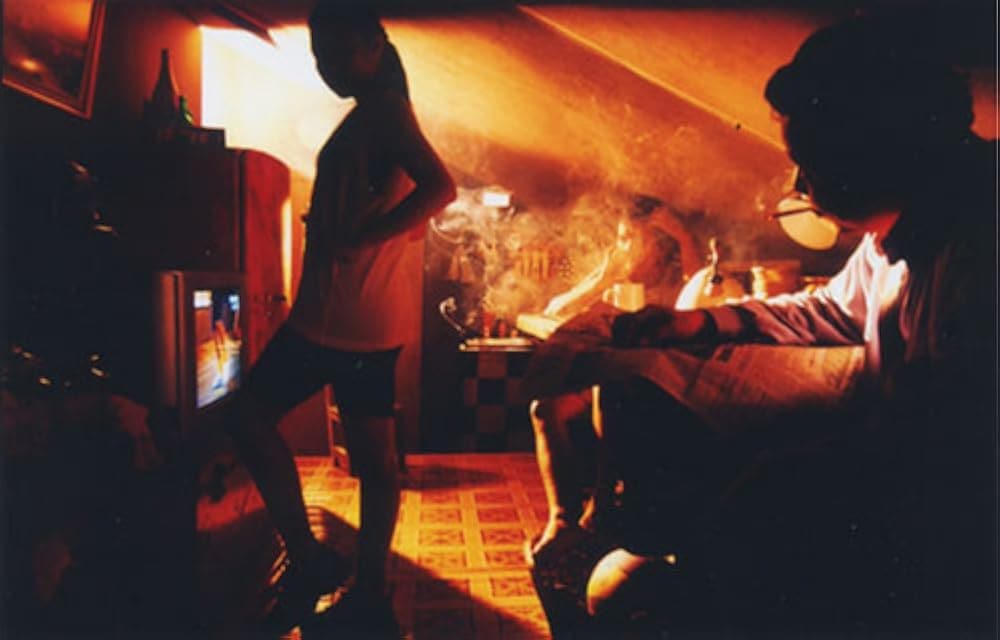
"A Very Slow Breakfast" unfolds with a minimalist narrative, introducing a family of four engaged in their morning routine. Anggun Priambodo portrays a teenage boy, characterized by his disheveled appearance and an unsettling habit of scratching dandruff into his coffee cup. His father, played by Yadi Timo, observes this peculiar ritual with a striking lack of reaction, eventually partaking from the soiled cup himself, a silent testament to a long-established, perhaps weary, acceptance. Meanwhile, the sister, portrayed by Sandra Dewi, vigorously exercises in front of a television screen, her movements synchronized with loud, thumping music, creating a rhythmic counterpoint to the quiet desolation at the breakfast table. In the background, the mother, Iwuk Tamam, moves back and forth, engaged in unseen domestic tasks, her presence a constant, almost mechanical, hum of activity.
The absence of dialogue is a deliberate and powerful artistic choice, forcing viewers to interpret the unspoken dynamics and emotional currents flowing beneath the surface. This technique amplifies the film’s central themes: the erosion of verbal communication, the ossification of routine into ritual, and the silent negotiations of personal space within a shared, increasingly confining environment. The film suggests that this particular morning is not an anomaly but a recurring tableau, a daily performance where each family member implicitly understands their role and the established, unchallengeable order. The father’s inaction, his seemingly detached observation, symbolizes a broader societal tendency towards passive acceptance, where the breaking of routine becomes a greater burden than enduring its discomforts.
The physical setting itself serves as a critical thematic element. The slanted roof, forcing the male figures to stoop at the table, visually represents the diminishing personal space and the inherent discomfort of their existence. This physical constraint mirrors a psychological one, highlighting a lack of privacy and an enforced proximity that has rendered its occupants impervious to its former irritations. This portrayal speaks to the pressures of urban living and the compromises often made in the pursuit of daily life, where individual desires for space and autonomy are subsumed by the collective, if dysfunctional, rhythm of the household.
Patriarchy, Passivity, and the Economics of Affection
A nuanced critique of patriarchal structures is subtly woven into the film’s fabric. The father is presented as a central, albeit largely passive, figure. His moments are often captured in slow-motion, emphasizing his lack of active engagement compared to the dynamic energy of the women. While he is positioned as the head of the household, his contribution appears to be primarily financial, symbolized by the offering of money to his children. This exchange replaces genuine interaction or emotional connection, with the cash serving as a transactional substitute for familial bonds. The daughter accepts her share with a kiss and a smile, a gesture that could be interpreted as a learned performance of affection for material gain. The son, however, takes his money to his room, presumably to add to a personal hoard, further illustrating a disconnect from immediate family engagement and a preference for solitary pursuits.
This depiction raises questions about the definition of value within the family unit. The women, particularly the sister with her energetic exercise and the mother with her constant background activity, are portrayed as the more active and productive members, seemingly engaged in "doing" something of tangible value. The men, by contrast, are depicted in states of inertia or detached observation. This subverts traditional patriarchal expectations, suggesting a shift in domestic labor and emotional investment, even if the structural power dynamics remain ostensibly intact. The film critiques a system where monetary provision substitutes for deeper paternal involvement, highlighting a transactional rather than relational foundation within the family.
Edwin’s Early Vision: A Foundation for Acclaim
"A Very Slow Breakfast" is not merely a curious early work but a vital piece in understanding the artistic trajectory of Edwin, who is now celebrated as one of Indonesia’s most significant contemporary filmmakers. Born in Surabaya, Indonesia, Edwin (who often uses only one name professionally) is renowned for his distinctive visual style, his penchant for exploring societal quirks, and his willingness to challenge conventional narratives. His films frequently delve into the complexities of Indonesian identity, politics, and social mores with a blend of surrealism, dark humor, and profound humanism.
Released in 2003, "A Very Slow Breakfast" predates many of Edwin’s more widely recognized feature films, such as Blind Pig Who Wants to Fly (2008), which earned him critical praise and awards for its satirical portrayal of ethnic Chinese identity in Indonesia. This was followed by Postcards from the Zoo (2012), a visually stunning and melancholic exploration of belonging and alienation that competed at the Berlin International Film Festival. His 2021 feature, Vengeance Is Mine, All Others Pay Cash, cemented his international standing by winning the Golden Leopard at the Locarno Film Festival, further showcasing his unique ability to blend genre elements with astute social commentary.
This early short film, therefore, serves as a crucial blueprint, revealing nascent elements of Edwin’s mature directorial voice. The meticulous framing, the evocative use of silence, the keen observation of human behavior, and the subtle undercurrents of social critique are all present, albeit in a more distilled form. It demonstrates Edwin’s early mastery of visual storytelling, his ability to convey complex emotions and societal observations without the need for extensive dialogue, a hallmark that would define his later, more ambitious projects. The film’s brevity—its end credits are nearly as long as the narrative itself—is a testament to highly efficient and impactful filmmaking, a skill that requires precise execution and a clear artistic vision.
Cinemasia Festival: A Platform for Asian Cinema
The inclusion of "A Very Slow Breakfast" in the Cinemasia Film Festival program underscores the festival’s commitment to showcasing the rich and diverse landscape of Asian cinema, from established masterpieces to emerging talents and historical gems. Cinemasia, an Amsterdam-based film festival, has been a vital platform for promoting Asian films and culture in Europe since its inception. Its mission extends beyond mere screenings, aiming to foster cultural exchange, stimulate dialogue, and provide a deeper understanding of Asian societies through the powerful medium of film.
A spokesperson for Cinemasia, in an inferred statement, might emphasize the festival’s dedication to presenting films that resonate with universal human experiences while also offering unique cultural perspectives. "Edwin’s ‘A Very Slow Breakfast’ is a perfect example of how a short film can transcend its runtime and geographical origins to speak volumes about the human condition," the spokesperson might comment. "Its timeless portrayal of family dynamics, particularly the subtle shifts in communication and the silent struggles within domestic spaces, continues to be remarkably relevant today, making it an essential inclusion in our program that celebrates the breadth and depth of Asian storytelling."
The festival’s programming often includes a mix of contemporary features, documentaries, experimental works, and retrospective selections, providing a comprehensive overview of cinematic trends and historical milestones from across Asia. By featuring an early work like "A Very Slow Breakfast," Cinemasia not only pays homage to a director’s origins but also offers audiences a valuable opportunity to trace the evolution of a significant artistic voice within the broader context of Indonesian and Asian filmmaking.
Broader Impact and Implications: A Universal Mirror
"A Very Slow Breakfast" resonates far beyond its Indonesian setting, touching upon themes that are increasingly pertinent in a globally interconnected world. The breakdown of verbal communication within families, replaced by routine or transactional exchanges, is a phenomenon observed in many modern societies, exacerbated by technological distractions and the pressures of contemporary life. The film serves as a subtle commentary on how families adapt—or fail to adapt—to these pressures, often leading to a quiet resignation rather than active engagement.
Film scholar Dr. Anya Sharma, specializing in Southeast Asian cinema, notes that Edwin’s early work already displayed a profound understanding of societal nuances, often presenting them without judgment but with an undeniable critical gaze. "Edwin has consistently demonstrated a unique ability to capture the absurdities and melancholies of everyday life," Dr. Sharma might observe. "’A Very Slow Breakfast’ is a masterclass in minimalist storytelling, illustrating how the mundane can reveal the most profound truths about human relationships. It speaks to the universal struggle of maintaining connection in an increasingly fragmented world, where proximity does not always equate to intimacy."
The film’s exploration of gender roles, particularly the juxtaposition of the active, productive women against the passive, financially central men, offers a snapshot of evolving domestic dynamics that continue to be debated and redefined globally. It subtly challenges traditional notions of power and contribution within the family unit, inviting viewers to reflect on the often-unseen labor and emotional investment that sustain households.
Furthermore, the film’s success as a short film highlights the critical role of this format in fostering directorial talent and exploring experimental narratives. Short films often serve as a vital training ground for filmmakers, allowing them to hone their craft, develop a distinctive voice, and tackle challenging themes with limited resources. They also provide an accessible entry point for audiences to engage with diverse cinematic expressions, often pushing boundaries that feature films might shy away from.
In conclusion, "A Very Slow Breakfast" is far more than a historical artifact from a director’s past. It is a powerful, timeless piece of cinema that, despite its brevity and lack of dialogue, communicates volumes about the complexities of family life, the erosion of communication, and the subtle dynamics of power and resignation. Its continued presence at prestigious festivals like Cinemasia reaffirms its artistic merit and its enduring capacity to provoke thought and reflection, serving as a poignant mirror to the universal human experience of navigating the routines and unspoken truths of our shared domestic spaces. Edwin’s early vision remains as sharp and relevant today as it was two decades ago, a testament to the universal power of precisely observed, emotionally resonant storytelling.